



Close, Closed, Closure
Search the Site



Newsletter Signup
Sign up to our newsletter to receive updates about what's going on at the NFCT
Archives
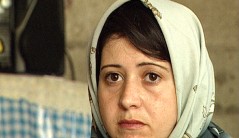
This film examines life inside the closed Gaza strip for both those imprisoned inside and those existing outside of the walls as a joint Israeli-Palestinian film crew observes the human conditions, the politics, and the economics of both sides of the electronic wired fence which encircles one of the most densely populated areas in the world. Palestinians who live under closure, and Israelis who quarrel about it, are chronicled in the film, which asks if the bloody red curtain which stands between the two can ever be lifted and if the peace process will ever succeed.
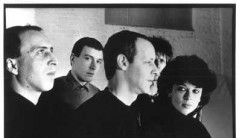
Twenty years after the Israeli rock group “Minimal Compact” was founded, the filmmaker, a lifetime fan, sets out on a journey to uncover the extraordinary story of the band which was popular in Europe in the 1980s, whose members are now scattered around Europe and Israel. Through interviews with former band members Rami Fortis, Berry Sakharof, Malka Spiegel, and Sami Birenbach, the “Rashomon”-like story of the band is revealed. From his childhood in the 1980s as a “Minimal Compact” fan, to his present interest in the band’s history as a filmmaker, the director tells the story of the band’s transformation while simultaneously chronicling his adolesence in Israel.

Mike Brant’s body was found on the sidewalk on Arlanz’e St. in the 16th quarter of Paris, on the morning of Friday, April 25th, 1975. He was lying on his back, facing the sky, in a blue shirt and barefoot. Seemingly intact on the outside, but shattered to bits on the inside, he was 28 years old when he died.
Born Moshe Brand, he was born in a British internment camp in Cyprus and raised in Haifa, Israel. He was the star of the Rondo Club on Mt. Carmel and reached stardom in Paris in the 1970s. His albums sold millions, his music was played on the radio in Europe and Canada, and his songs hit the top of the charts. But fame and fortune soon took their toll. A tale of injustice, aggression, money and the loss of innocence. The film includes original performances, songs and interviews never seen before.
Samuel Makanda is a man living two very different lives. He was born in a small village in Northern Kenya where his wife and children now live in a stone house with no electricity or running water. He visits them for one month each year. For the past ten years, the rest of his time has been spent living with the film’s director, Hai Cohen, who was permanently injured in a diving accident in 1986. For board and a monthly salary, Sam helps Hai accomplish the daily tasks he is now unable to perform, such as showering, squeezing grapefruit juice, or opening presents. The relationship that developed between the two can almost be compared to the one a person might have with his own hands. Samuel’s life includes two such different worlds, and passing between them is almost like traveling through time. He journeys between the two, motivated by a strong sense of duty.

Grisha Starosta was 21 years old when he left his wealthy bourgeois home and followed his dream to become a pioneer in Palestine, but he had to leave the orange groves of Kfar Saba and return to Romania just a few months later when he learned he had a daughter. Many years would pass until he would begin his long journey back to the land of Israel.
Only now, after reading a short article in the newspaper, regarding the story of the ‘Struma’ – a ship carrying Jewish refugees from Romania to Palestine that was sunk in 1942 – will Grisha’s great-grandson begin to uncover the full story.Grisha Starosta was 21 years old when he left his wealthy bourgeois home and followed his dream to become a pioneer in Palestine, but he had to leave the orange groves of Kfar Saba and return to Romania just a few months later when he learned he had a daughter. Many years would pass until he would begin his long journey back to the land of Israel.
Only now, after reading a short article in the newspaper, regarding the story of the ‘Struma’ – a ship carrying Jewish refugees from Romania to Palestine that was sunk in 1942 – will Grisha’s great-grandson begin to uncover the full story.

Purity tells the story of a subtle female rebellion within the religious world, expressed through the personal viewpoint of the director Anat Zuria and three of her friends. Their openness to the camera breaks a profound taboo of silence rooted in two thousand-year-old laws and contemporary social pressures and provides a rare and special look into the world of Jewish religious married life and sexuality while illuminting a hidden path of struggle for religious women in the framework of strict, patriarchal religious law.

Boxer Johar Abu Lashin dreams of winning a world title in Nazareth and then in his hometown of Gaza, but faces challenges amidst the political situation in the Middle East. Can his journey to winning a title prize in the ring make him a hero in the eyes of both Israelis and Palestinians?
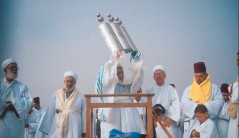
The Samaritans, the world’s smallest and most ancient people, are caught between the State of Israel and the Palestinian Authority. A religious community of less than 700 people, the Samaritans strive to maintain their traditions and rituals which date back to biblical times, including the Passover sacrifice. This film follows the lives of two young Samaritan couples as they face the challenges of the modern world against the backdrop of the Palestinian-Israeli conflict
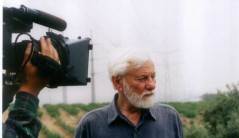
This biography of veteran peace activist Uri Avneri follows both his personal and political life in a detailed account combining new, revealing interviews with original archival footage. At 79, Uri Avneri is still a complex, respected figure of the Israeli radical left who is a lifetime proponent of Israeli-Palestianian peace.He is a controversial figure who embodies the spirit of the era and the quarrelsome history of Israel.

This is the story of a girl who dreamt of being an officer in the IDF, who was a great patriot and who was shot and wounded in a 1978 terrorist attack on an El Al flight crew in London. Now a grown woman with daughters of her own, this mother does not allow them to leave their home for fear of Palestinian suicide attacks. Patriotism, to her, now means trying to reconcile with the terrorist who shot her 22 years earlier, who is still in a UK prison. In a climate of violence and terrorism, she observes the Middle East and sees that hatred is the only universal language. The pain and fear of the past shatter her world. Will she be able to write in support of her terrorist to the parole committee?
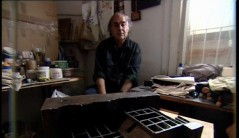
Pinchas Cohen-Gan is an Israeli artist of Moroccan descent and extensive Western education who chose to live in Israel “because here I am a refugee only once and not twice.” In order to examine his identity and position in Israel as an oriental immigrant, Cohen-Gan plans a journey to Germany and an installation of his work at the site of Hitler’s bunker. Tensions rise as plans for the art installation grow increasingly complicated, and Cohen-Gan alternates between enthusiasm and regret as he must decide whether to follow through with his project or not.
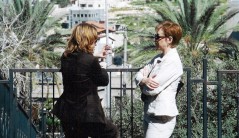
Following the fall of the Soviet Union, Jewish Russian immigrants began arriving to Israel daily by the hundreds. Alice Neiman arrived in Israel on October 26th, 1990, at the age of twenty with 750 others seeking a new life. A decade later, she examines to what extent the hopes and fears of some of those who arrived with her on that day have been fulfilled. Alice’s story provides a panoramic backdrop for the journeys of thousands and forms a larger story within the landscape of Israeli events. Funny, emotional, and at times heart-wrenching stories of the people she meets reach deeply into the history of Israel during a decade beginning with the Gulf War and leading up to the shattering events of the second Intifada.
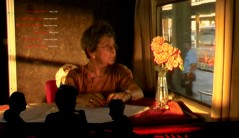
After making an impossible decision to support the man she loves, Eva, a Yugoslavian war hero and human rights activist, is forced to desert her only daughter Tiana when she is sentenced to time in the infamous women’s prison “Goli Otok.” Deserted by her mother, Tiana grew up on the rough streets.
After being released from prison, Eva seeks her daughter’s forgiveness. Through a meeting made possible by Tiana’s daughter, the three women meet in Israel and travel together to Yugoslavia, a journey which enables them to come to terms with their past.After making an impossible decision to support the man she loves, Eva, a Yugoslavian war hero and human rights activist, is forced to desert her only daughter Tiana when she is sentenced to time in the infamous women’s prison “Goli Otok.” Deserted by her mother, Tiana grew up on the rough streets.
After being released from prison, Eva seeks her daughter’s forgiveness. Through a meeting made possible by Tiana’s daughter, the three women meet in Israel and travel together to Yugoslavia, a journey which enables them to come to terms with their past.

In an absurdist romp reminiscent of Nanni Moretti’s Dear Diary, Mograbi sets out to make a film about what it is he hates about August in Israel. After a series of false starts derided by his wife as morbid and uninspiring, the true theme of his project emerges: recording people’s reactions to his own artifice as filmmaker. Arab workers, wealthy Jewish suburbanites, soccer yobs, Palestinian stone throwers and Israeli policemen – no one escapes the dogged gaze of his camera, the acerbic righteousness of his wit. A curious, scathing satire of a society fuelled by hatred, intolerance and misunderstanding.
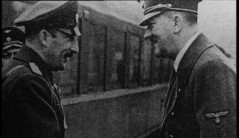
Tami, an Israeli Journalist, travels to Germany to interview Israelis who have chosen to live there: Dr. Ruth Hertz, a judge in Colonge, Dr. Yoram Levi, a plastic surgeon in Garmisch, Naomi Tereza Salmon, a photographer in Weimar, and Prof. Michael Wolffsohn, a history lecturer at the German army Officers’ Academy in Munich.
While Tami is initially critical of their decision to immigrate, she eventually comes to terms with her own guilt stemming from her family’s past in Germany before they perished in the Holocaust. During her journey, she is flooded by memories of her childhood in Tel Aviv, of her parents’ silence surrounding her family history, and of their fondness for German culture. In Germany, of all places, she obtains a deeper insight into the significance of denial and memory.Tami, an Israeli Journalist, travels to Germany to interview Israelis who have chosen to live there: Dr. Ruth Hertz, a judge in Colonge, Dr. Yoram Levi, a plastic surgeon in Garmisch, Naomi Tereza Salmon, a photographer in Weimar, and Prof. Michael Wolffsohn, a history lecturer at the German army Officers’ Academy in Munich.
While Tami is initially critical of their decision to immigrate, she eventually comes to terms with her own guilt stemming from her family’s past in Germany before they perished in the Holocaust. During her journey, she is flooded by memories of her childhood in Tel Aviv, of her parents’ silence surrounding her family history, and of their fondness for German culture. In Germany, of all places, she obtains a deeper insight into the significance of denial and memory.
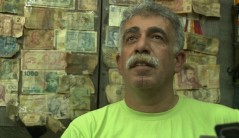
A documentary is a desperate attempt to document that which cannot be documented.
Heresy thoughts of a veteran documentarian.
A neighborhood in the city of Ramat Gan. A grocer, a watchmaker, dancers, sheep, a hairdresser, a furious prophet and more.
Real? Staged?
Fragmentary – like cell phone chats, like TV broadcasts, like life itself.
Finally someone asks – Is God counting us again?
Has the Lucky Number, Heaven forbid, been picked again?
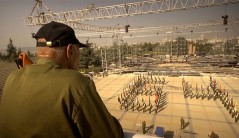
At 80 years of age, Colonel David Rokni prepares to command the national ceremony on Israel’s Independence Day. Just like in each of the last 30 years, he goes through an arduous series of training, routine formation and foot drills for the traditional military parade – a job of which no other person is capable.
A week before the ceremony, a disaster strikes unexpectedly. For the first time Rokni has to cope with an unfamiliar situation during a ceremony that transforms his life.
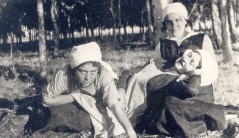
The women pioneers who came here a century ago wanted to build a new world and create a new woman, just as independent as men.
A few dozen of these women established Ein Harod. Writing about themselves and their world, they described their fight for equality and protested against how they were silenced. They struggled against the constraints of the traditional world they came from and the way men interpreted the world that they created.
They lived passionately and experienced many painful failures. In the end, they abandoned their struggle as women to focus on achieving the dream that they shared with men–the dream of creating a new nation. Women/Pioneers tells the story of their turbulent lives through the journals they wrote, which provide a new perspective on archival materials from that time.
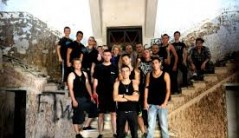
There’s always place for hate – the inconceivable story of a Nazi gang in Israel. The deceivingly peaceful Sea of Galilee is the backdrop of an inspiring story of violence, hope, and rebirth of one young man and the unexpected people who love him.
In the 1990s a million former USSR Jews arrived in Israel. The immigrants, who dreamt of a better future, were despised by the local population who feared their “invasion.” While many embraced the Israeli lifestyle, others were enraged, conforming to a life in self-made Russian ghettoes. These ghettoes were a fertile ground for self-hating Jewish skinheads.
White Panther is the story of Alex, a young Russian immigrant, whose family falls apart after the death of his father in the Israeli army. In retaliation, Alex joins a skinhead gang, led by his older brother. An unexpected meeting with David, a religious Moroccan Jew, gives Alex a chance to pursue his longtime dream of becoming a boxer like his father. Alex finds himself torn between his two father figures – his violent older brother and his new Jewish trainer – only to discover the truth about those he so admires.

A poetic journey in the Israeli desert shot through a thermal camera. In apocalyptic surroundings, detached from time or place, lies a fascinating encounter between ancient mythologies and the political present.
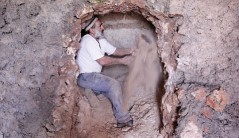
Forty years ago, while searching for his place in the world, Nissim Kahlon (67) made his home in a limestone cliff under the Apollonia National Park, north of the Herzliya coast. Amidst the sound of the waves and the fragile limestone mountain, he dug a cave to live in, to shield him from the heat and cold. For years he lived without electricity or running water. Today the “home” that he built out of anything and everything – rocks, trash, sand – contains countless caves and tunnels, and Nissim insists on continuing to work on it every day. His work never ends. The sea, which he loves dearly, constantly gnaws at his house, threatening his life’s work. The unending building also takes a toll – his body aches and betrays him.
After years of estrangement, Nissim suggests that his son, Moshe (18), who was born in the cave and will soon join the military, move in with him and inherit the cave. Together they work to dig out the cave in which he will live in. Through their hard work, a complex relationship between father and son is revealed.

To this day, only sixteen people in the world have earned the title of World Chess Champion. Boris Gelfand of Rishon LeZion was the first Israeli to compete for the title. All his life Boris prepared for the occasion. From the age of six, he was raised to be a chess champion. His father devoted most of his time to developing his son’s chess skills, setting an ambitious and demanding daily schedule and obsessively documenting every event in the child’s life. This is a film about a clash between the two strongest minds in the world, but it is also a film about parental choices and the dilemma of whether to dictate for one’s child the way to self-fulfillment or to be a liberal and lenient pushover.
Halil Efrat, himself an average chess player, sets out in the footsteps of the fascinating character of Boris Gelfand, and in search of the answer to the question: can every one of our children, with a little bit of good Soviet education, turn into a genius?
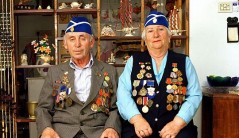
Veterans focuses on WWII veterans, once fighters in the Red Army and now uprooted immigrants, fighting for their place in society. These people, who experienced the twentieth century’s bloodiest war as Soviet soldiers, immigrated to Israel after the collapse of the Soviet Union and found themselves in a society that is totally indifferent to their glorious past. The film offers a close and compassionate look at the veterans’ lives, fueled by complexity, pain, and an almost silent insult, alongside joy and self-deprecating humor. The feeling of living on borrowed time drives the veterans to embark on what may be their last adventure. Through this comic, sentimental, and somewhat sad journey, they will be confronted with the way they have remembered the past and face the new reality in present-day Russia.
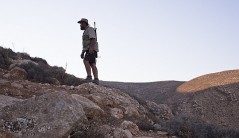
Like all good Westerns, Wild West Hebron challenges the ideas of hero and villain. In the often-violent area of Mt. Hebron, a conflict between Palestinians, Israeli settlers, and anti-occupation activists may seem clear-cut, but the journey of one settler defies common preconceptions.
Yochanan Sharet, born to a Protestant family in Bavaria, visited Israel as a young man and decided to stay. After converting to Judaism, Yochanan made this his home and built a farm on a desolate hill near the settlement of Susia. Soon, he became notorious for his harassment of Palestinians and his clashes with left-wing activist, Ezra Nawi. Two years ago, he suddenly found that the tables have turned. Yochanan’s neighbors from Susia have been attempting to drive him off the land. Accusing him of being a Nazi, these settlers will do everything in their power to evict Yochanan and destroy his farm. With his life and home in danger, his only hope is the settlers’ greatest enemy, Ezra Nawi. Meanwhile, Ezra has been working to bring the Palestinians back to the land they lost, including reclaiming Yochanan’s farm.
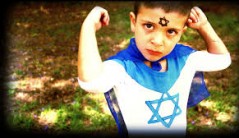
What makes a hero? What is heroism? Against all odds, what compels someone to maintain his/her integrity, go against the grain and fight for what is just? In this documentary, director Yoav Shamir sets out on an entertaining and insightful international travelogue, exploring the notion of heroism.
In a journey spanning three years, Yoav travels from San Francisco to New York City, the Congo, Germany, South Africa, and back to Israel and Palestine, to explore these ideas through a myriad of colorful characters: from those who work with heroes, to primatologists, biologists, neuroscientists, geneticists, egoists, righteous gentiles, everyday heroes, freedom fighters, and ultimately, the transformed hero. As in Yoav’s previous films, his quest leads him to some humorous, dramatic, and unexpected places, while sometimes confronting some hard and perplexing realities.

Magdalena Kopp was married to the most wanted terrorist in the world – Carlos “the Jackal.” She followed him through the birth of international terrorism, of which he became the star. From the small conservative Bavarian town where she grew up, to the 68’ revolutionary zeitgeist of Berlin and the radical leftist cells of Frankfurt, Magdalena was easily influenced. Driven by a need to belong, she found herself in the arms of the man who quickly became the first celebrity-terrorist in the world. She trained with Palestinian freedom fighters, fighting alongside their national heroes. She followed him into dangerous international intrigues, from Damascus to Bagdad and Paris, in a nebulous world of secret services and shady governments, and gave birth to their daughter Rosa on the way. When Magdalena realized that the political ideals were long gone, and only greed for power stood behind their violent struggle, it was too late, she was too deeply involved.
For some, Carlos is a revolutionary, for others, a murderer. But for Rosa, he is a father – one she has not seen since she was five, one she only knows through the media. While Carlos stands trial in Paris, mother and daughter take a courageous journey beyond the shadows of his myth.
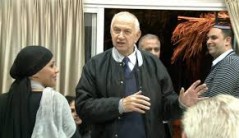
At the very center of Israel is the city of Lod, a city teeming with violence and fear. Lod, where Jews, Christians and Moslems live together (75,000 inhabitants), is a depiction of governmental and municipal despair. Can a newly appointed, 79-year old mayor save Lod and give its people hope?
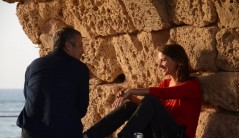
Based on a short story by Efrat Stieglitz
A man and a woman in a car, on their way to a hotel. This will be the first night they have entirely to themselves. She’s filled with anticipation, fantasizing. He’s just happy to be there. Thin cracks are slowly revealed in this portrait of intimacy. Moments of love, passion and disappointment are collected to form a close look at a couple.
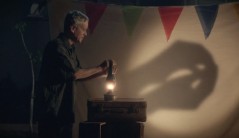
Based on Amir Gutfreund’s short story
A story of a friendship taking place in Israel in the mid 1980s between Uncle Nathan, a Holocaust survivor who communicates only through his shadow puppets, and his day-dreaming nephew. As Nathan’s shadow puppets act become less childish and more eccentric, his last connection to the world and rescue from family alienation lies in the hands of his youngest family member. The film is a mixed work of both live-action and animation.

Based on Avri Harling’s short story
It’s been several days now that Yoav, a freelance real-estate agent, is having trouble sleeping because of obscure crying sounds. His wife, on the other hand, seems to be sleeping a lot more and very deeply so, completely undisturbed by the cries. Even though they share the same space, the two seldom meet. As the days go by and all his attempts to locate or make the cry stop fail, Yoav feels as though he is starting to lose control.

Precocious eleven-year-old Yoav and his family must leave their familiar neighborhood in Tel Aviv for new opportunties in the northern city of Nazrat Elit. Malka, his mother, finds a job in a hotel and with it, new confidence and assertiveness. His older sister Anat falls in love with a romantic would-be rock star whose own sister, Mor, survives an encounter with a talent-hunter with impure intentions. Yoav befriends Nir, a strange and sensitive boy his age, and together with their new friends they undertake an eventful journey to Moon Hill, the best place in the country from which to see the moon. It is also the place where the different stories converge and gain meaning.
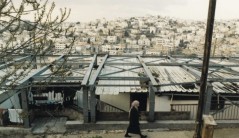
Seven families live in Tel Rumeidah, or “Jesse’s Land,” in a controversial settlement in Hebron. They have been struggling for fourteen years to hold on to this small hill in the center of the town which they believe they hold the right to, and in doing so have stirred much political debate in Israeli society. This film allows a rare and intimate look into the world of this extreme group of Jewish settlers.

Tomer wears two hats as both the manager of a trendy Tel Aviv coffee house and as the youth director for a group of teenagers in the small town of Azur. The film explores Tomer’s personal odyssey over a period of two years as he helps the jaded youth group members navigate moments of estrangement and violence, and eventually helps them stage an original play at the local theatre. The creative process is one of both hurt and healing, as the confusion and chaotic inner world of the kids is revealed through questions of their social and sexual identities. As they open up, so must Tomer.
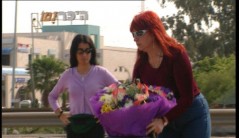
After losing their former business, Gila and Motti resort to selling flowers and strawberries on the roadside to make a living. Motti is a 51-year-old man of honor with a checkered past and Gila is 39-year-old fiery red head divorcee with two kids. She is neurotic, sarcastic, a workaholic and toothless. The couple hopes to make enough money over the Passover holiday to have Gila’s teeth fixed. They must overcome daily clashes with the police, municipal authorities, and the local mob in order to survive. When things become hectic over the Passover weekend, the people who stop to make a last minute flower purchases for the holiday might hold the key to their salvation.

This film explores Israel’s obsession with consumption and consumerism in the 1990s by following Doron Tsabari, a washed up television actor who rose to fame on the show “Harishon Babidur” (The First in Entertainment). During this time, Tsabari realized his dream of becoming not just a film star but the most popular man in Israel. This is a penetrating, funny ,and sad film about a TV star with no limits, whose love for himself depends entirely upon the audience’s love for him, man who has succeeded in capturing the spirit of his own time, and has crowned himself a post-modern king.

Beyond Hitler’s Grasp tells the story of Bulgaria, one of the smallest European nations, and how the country managed to save and protect its Jewish population while under German rule during World War II. A hopeful and inspring story amidst the horrors of the Holocaust, Bulgaria protected its Jewish minority from the death camps despite its pro-Nazi government, the Nuremberg laws, and constant direct pressure from Hitler himself.

Sima and Orly have recently turned their backs on secular life and joined the ultra orthodox “Shas” party. Svetlana is a recent Jewish immigrant from Uzbekistan desperately trying to adopt an Israeli identity and establish an independent life for herself and her two daughters. Jihad is a Palestinian Muslim, born to a family of refugees, searching for a national identity while conflicted by the fact that she is also an Israeli citizen. Having completed law school, she alternates between wanting a career and a strict tradition that does not allow her the freedom she seeks. These four women live in a religious, national, and cultural labyrinth that does not allow them to meet. Their stories are told against the backdrop of Ramleh, Israel, between the general elections of 1999 and 2001.

China is one of the first countries in the world to label overuse of the Internet a clinical condition. To combat what authorities deem the greatest social crisis for youth today, the Chinese government has created treatment facilities to detox and cure teenagers of their addictions to online life.
But what starts out as an already-fascinating look at ways that technology may be destroying the lives of Chinese youth quickly becomes something more. As the unorthodox psychological sessions continue and the teenage boys begin to share with their parents the reasons why they feel more connected to disassociated voices in cyberspace than to their families, Web Junkie chronicles the results of a nation going through one of most drastic transformations in human history. In honest and wrenching ways that transcend national borders, this film is a thoughtful examination of a society in flux and a technology-addled generation on the precipice of an unknown future.
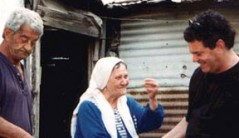
On the eastern skirts of Haifa sits Wadi Rushmia, a region of abandoned quarries from the days of the British Mandate. Throughout the generations this place has been home to a variety of immigrant populations, first to Jewish immigrants from North Africa and Eastern Europe and later from Ethiopia and Russia. Eventually, displaced Palestinian Arabs came to live in the place known as “the dump” as well. Told in three instalments each filmed ten years apart, the film chronicles the changes that occurred in Wadi Rushmia, a microcosm of Israeli society, as well as the changes undergone by the city of Haifa overall.
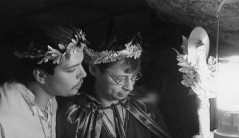
27-year-old Svetlana is a married woman, a mother, and a registered nurse. 17-year-old Vadim works as a garbage man. Though seemingly very different, the two have a unique passion in common: They participate in a live-action, interactive role playing game set in a forest. Players dress up in medieval costumes and infuse magic into an enchanted world of wizards, warlocks, princesses, and knights. Through conniving schemes, devious acts, and alliances, they fight to prevent the loss of the kingdom. Interwoven into the complex plot of the games is also the real life story behind the birth of Vadim’s daughter.

Pole dancing may have started in strip clubs, but over the past few years it has won international recognition as an art form, a sport and a means of empowering women. Director Isri Halpern follows Neta Lee Levy, the founder of Israel’s first pole dancing studio, as she competes for the European title. He discovers an outspoken and frank woman, who challenges the very world she lives in no less than she challenges the world she came from. She demonstrates that, at the dawn of the twenty-first century, a woman in a bikini and high heels may also be made of the same material champions are made of.
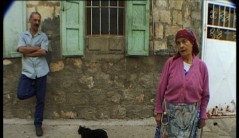
As Margalit and Ilan, the only two Jews in a remote Arab village, fight over the right to own the key to an ancient synagogue, a third Jew decides to build a rival synagogue. This film is a tragic-comic allegory on the human urge to fight and unite at any cost.
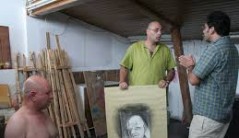
The following story of Aviv Talmor, a frustrated poet and literature teacher from Tel Aviv, is true…mostly.
Aviv is informed that his father whom he had never known, has died, bequeathing him one Israeli lira (less than one penny). Aviv embarks upon a legal battle over his inheritance as part of his brave and painful search for a much desired father figure. He unexpectedly discovers evidence that his grandfather was the illegitimate son of the first Israeli painter Ira Yan and Israeli national poet Haim Nahman Bialik, his spiritual father. As he begins to publish these news, Israel’s literary community is shocked by his claims which threaten to impact the national poet’s reputation.
In a series of obsessive and dangerous efforts to prove his bloodline to Bialik, Aviv loses all grasp of reality.
Did Bialik really have a son? Is Aviv really Bialik’s great grandson?
Will this discovery change our perception of Bialik forever?

Aviv Geffen, the grandson of legendary Moshe Dayan and number one Israeli rockist, is rapidly becoming a mythic figure himself. He was the last person to embrace Rabin before he was assassinated. The charismatic, bisexual singer-songwriter has rapidly become the Jim Morrison or Bob Dylan of his country, a voice that represents peace and integrity for a troubled young generation. Concert footage reveals the depth of feeling that many Israelis have for Aviv: hip, youthful women and men are clearly enamored of his presence.
Directed by Tomer Heymann, this feature documentary follows the life of Aviv Geffen, a controversial Israeli singer whose liberal upbringing led him to refuse to serve in the Israeli military. Geffen has become a spokesperson for the country’s youth, and this film chronicles the rise of his career, his family roots, and how he finds the inspiration to write music.
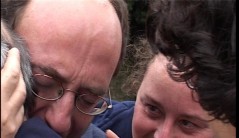
An immigrant from Argentina, Jorge Weller has built a life for himself in Ra’anana, Israel but constantly yearns for the family he left behind in South America — His aging father, his older sister Graciela, and his younger sister Clarisa, a zestful, mentally challenged woman of 30. Clarisa’s genuine wisdom shines through her clinically defined mental disability. With an emotional IQ that is far above “normal,” Clarisa’s penetrating insights shed light on Jorge’s struggle and conflicted feelings between his new life and his past.
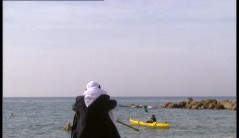
A group of Palestinian tourists on a three-day sightseeing trip to Israel. The tourists come from the Occupied Territories. The windows of the bus open up onto an unknown portrait of Israel. And looking from the outside in, we get an unusual glimpse into the very heart of Palestinian society. Filmed in 2000, just months before the outbreak of the second Intifada, this is simple human tale of a weekend jaunt across the border that becomes an unfinished journey traversing time and criss-crossing between the emotional recollections of a vanished past and the harsh realities of the present day. This is the homeland, but they are visiting it as tourists. This is the state that has occupied them for decades, but it is also a country, just like any other, with people not very different from them.

A group of citizens set out to change the municipal plan to demolish and reconstruct Rabin Square. This film seamlessly connects venue with emotion, exploring the personal stories, national dramas, and every day life of a space which can see, absorb, and experience, but can only tell its story through the people who visit it.
The lives, habits, and philosophies of women from different backgrounds and stages of life are presented in a series of interviews which explore their hardships, fears, hopes, disappointments ,and yearnings. From these varying stories, a complex mosaic of views on matrimony, family, motherhood, old age, faith, and death is created, resulting in a new take on life and purpose.
Through the striking cinematography of Nurit Aviv and a soundtrack composed of beautiful chanting and haunting silence, this film explores the mystery and discretion of forty silent nuns living at the Beit Jamal monastery near Jerusalem. The film attempts to deal with the cinematic challenge posed by their very silence and incorporates texts from the diaries of silent nuns from the Middle Ages through the present.

Newsletter Signup
Sign up to our newsletter to receive updates about events and submission deadlines
Greenhouse Website

Our Facebook




 With the support of the Ministry of Culture - The Israel Film Council