



Why I Didn’t Report
Search the Site



Newsletter Signup
Sign up to our newsletter to receive updates about what's going on at the NFCT
Archives
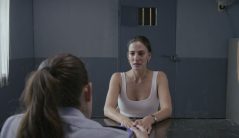
After naming her rapist online, Dana, a crime journalist, is interrogated by a young policewoman who must determine if Dana is a slanderer or a survivor. Once the station chief barges in, the two women realize Dana’s fate will be sealed in the interrogation room.
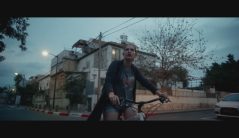
Eden, a teenage dancer, is bullied on a daily basis. Her loneliness drives her long for the attention of Neomi, her dance teacher, in the hope of gaining, through her, the sense of closeness and intimacy she so desperately needs.
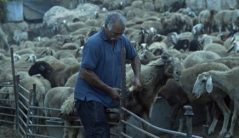
My childhood’s landscapes – the hills of Latrun. The village “Oasis of Peace”, was established on hill 314, and founded on values of coexistence, understanding and acknowledging the Other. Ibrahim, a Bedouin shepherd, has lived there with his family for 51 years. In a settlement signed in 1999 between the village and the nearby Monastery of the Silent Monks of Latrun, the landowners failed to mention Ibrahim and his land and since then he has lived under constant threat of deportation.

On a wild island live four women in harmony.
A bra from different times, washed ashore on a stormy night, violates the balance of life on the island, causing chaos and destruction.
The new object becomes the focus of a quarrel.
“Carried away” is a parable of the immense power inherent in the female collective and its destructive potential.
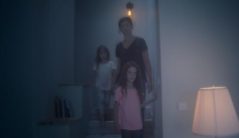
Tamar’s daughters keep trying to tell her of a wonderous land they’ve found, but she is too overworked to hear them. When a strange recurring melody finally forces her to pay attention, she follows her daughters into the depths beneath the film, beyond the story itself. Venturing to the far end of an ancient liminal space, Tamar meets a little girl who’s both familiar and unknown, the one whose mysterious melody (which turns out to be a song) belongs to.
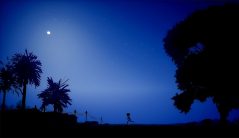
Yoni is a 7-year-old girl who lives in Kibbutz Merhavia in the late 60’s. She doesn’t cope well with the communal sleeping in the children’s home.
During bedtime, Yoni’s mother kisses her goodnight and goes out.
Yoni lies in bed and can’t sleep. Out of the shadows creep the Havzuls. Fear overcomes Yoni and she runs to her parent’s house.
Her mother lets her in. Early the next morning, Yoni’s mother brings her back to the children’s home.
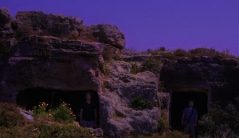
Two teenage brothers play outside on a sunny day until, suddenly, they witness a mysterious supernatural phenomenon. When they try to get closer, their game becomes very dangerous.
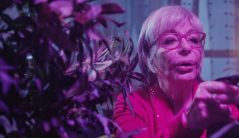
When Parkinson’s disease overwhelms Shoshke’s husband and their financial situation becomes impossible, Shoshke decides to take her fate into her own hands and sell cannabis to survive. But what started as a temporary solution becomes a big business, providing even bigger troubles.
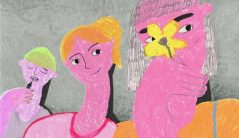
The film follows a day in the life of three young teens living in a neglected ghost town in post-Soviet Europe.
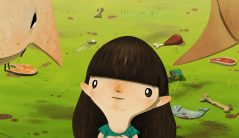
“Let Sleeping Dogs Lie” is a short animated dark comedy, set in a wild and crazy world where a little girl struggles to retrieve her lost dog.
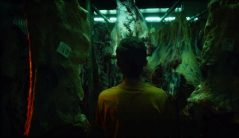
Cousins Gabriel and Omer spend the end of their summer break working in a packing warehouse owned by Omer’s dad, Elisha.
The film follows the two teenagers, during another routine day at the warehouse from Gabriel’s perspective.
Gabriel is a bit of an outsider. He is a slim boy, who likes to observe what’s happening around him while Omer is a much more masculine figure.
they play innocent games that become masculinity tests.
For the first time in their lives, they will have to understand that every act has consequences.

Anna Lysis is a drag queen who meets different men over the course of one night. Some approach her; Some she flirts with. At the end of the night, all encounters unite and raise questions about trauma, identity, and repression.
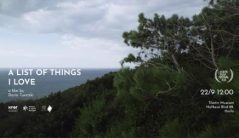
When my 11-year relationship ended, I suddenly found myself in a new city, in an empty apartment. I only have half of my furniture and half of myself. Through observations and a list of things I love, I am trying to rediscover myself.
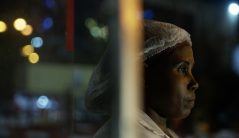
As time draws closer towards the jail release of her violent husband, Kifaya Ayati, a resident of Acre, who has been brutally attacked several times, is looking for a way to survive. She paints women who have been abused and murdered by their spouses and meets their sisters, mothers and daughters. Every meeting becomes a portrait of a murdered woman and an indictment against Israeli society, the police and the courts.
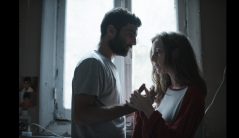
Dina falls in love with Avinoam. She decides to abandon her mother, leave her job and relocate from the southern town of Be’er Sheba to Tel Aviv, to live with him. However, underneath the veil of what seems to be a love story, reality slowly reveals itself as a horrific play in which she must portray the role of a woman-prostitute. She is stripped of her freedom, her body is enslaved, her soul is trampled upon, and she becomes a part of the drug and prostitution scene in the old central bus station in Tel Aviv.
Dina’s fate troubles Avinoam, and he reevaluates his decisions and actions. He is torn between his emotions, which are trying to break through the wall he has been building around him for year, and a violent and dangerous system that devours its victims.
He realizes that he must make a choice.

Near Far is a six-part documentary series focusing on the Y and X generations of the 1948 Palestinians. We follow seven charismatic and opinionated young people, who are debating about where to live: should they stay where they grew up, move to a mixed city or one with a Jewish majority, or return home? The stories we follow encompass the most pressing social and political issues of the Arab society in Israel today: discrimination in building and planning, challenges of education and work, violence, participation in local and national politics and the constant quest for personal expression and freedom in a tightly-knit and quite traditional society.
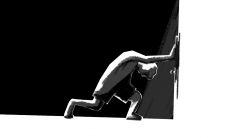
A well known TV host freezes during a live broadcast. Remembering his first show and his disappointment with his mother, who could only focus on her desire to make him a new suit. A story about generational gaps, unfulfilled expectations and an identity crisis told from the points of view of a TV host, a mother and an ugly suit.
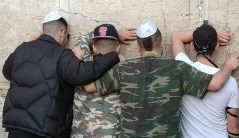
In a Jerusalem suburb, fifteen young American drug addicts, abandoned by their Hassidic families, share both pain and great hope that Eric – another recovering addict – will save them from death.
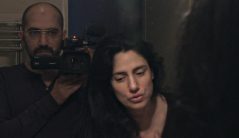
A man learns from a Moroccan fortune-teller that his sister is about to die. Together, they embark upon a fictional journey in an attempt to alter the prediction, revisiting the past and the present to defy an implacable future. But the prophecy still shadows them – as in life, so in cinema.
Black Notebooks – Viviane, 100 min.; Black Notebooks – Ronit, 108 min.
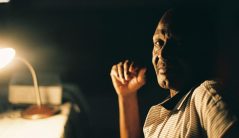
Suleiman El-Abid was sentenced to 27 years in jail for the rape and murder of Hanit Kikos, based on his confession alone. A few days after reenacting the crime he retracted his confession and has been claiming innocence ever since. Did he receive a fair trial or did the justice system incriminate him to whitewash their own failures?
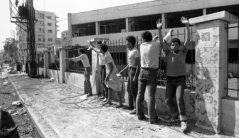
In 1982, during the Israeli invasion of Lebanon, an Israeli paratroop company was ordered to guard hundreds of Lebanese war prisoners for 10 hours.
#Schoolyard: An Untold Story is the anatomy of a murder – the step by step, blow by blow, memory by memory chronicle of a horrible moment in Israeli military history.
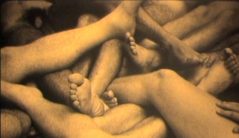
Dr. Rudy was an iconic psycho-guru and founder of “The Rudy Psychoanalytic Institute” – the largest in Israel during the 70’s. His controversial therapy methods forced him to fight for his reputation and the institute’s survival. His demise raises questions regarding abuse of power and moral boundaries.
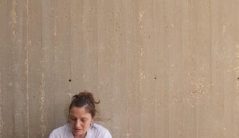
Ruso, a migrant worker from Georgia, begins another cleaning shift at the University.
She keeps her head down, does her job as required, and passes the shift on phone calls with her son. Usually no one notices her. That’s not the case today.

Erez, a rising swimming star, arrives at a godforsaken training camp. The winner of the competition there wins one ticket to the Olympics. And then there is Nevo, beautiful and gifted, who awakens subconscious desires in Erez.
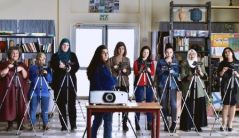
Nine women, Arab and Jewish, take part in a video workshop hosted by Rona, a young film director, who teaches them how to document their lives. With each raw homemade footage shot by the women and shared with the others, the group dynamic forces them to challenge their views and beliefs as they get to know each other.
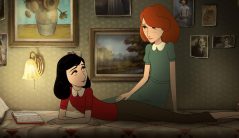
A year from today, Kitty, the imaginary friend that Anne Frank wrote to in her famous diary, comes to life in Amsterdam, in the Anne Frank house – once the Secret Annex. Unaware that 75 years have gone by, Kitty is convinced that if she is alive, then Anne must be alive too. WHERE IS ANNE FRANK tell the story of Kitty’s quest across contemporary Europe to find her beloved friend.
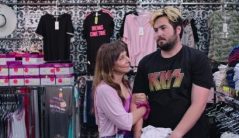
Itamar, a chubby and depressed young man, returns to his childhood home in the suburbs following a mental breakdown. As he struggles to get better under the care of his quirky and overprotective mother, old tensions about his sexual orientation arise – especially when he meets Ronen, a handsome lifeguard who leads him to confront his body image issues.
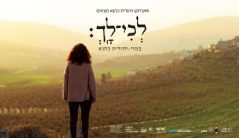
Judith Kahana grew up on the Samaria hills. She was considered a classic “Hill Top” girl: she participated in the resistance movement against the evacuation of Gush Katif, took part in the settlement efforts and was part of a movement of young people, for whom this land was sacred and priceless. But as she matured, something inside her broke and her feelings towards this land of bloodshed became more ambivalent. Judith sets out on a journey to find some answers to the questions that were bothering her: she confronts her mother, who had hoped that her daughter would continue in the path paved for her; she re-examines some of the religious leaders she so looked up to, and who had betrayed her. Torn between the land, calling her to stay, and this new inner voice asking her to leave, she sets out to find a new home.
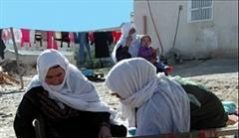
Spring time. The desert sheds its winter foliage, obeying summer’s reign. The local Awassi sheep shearing season has arrived. Khadra Al Sana steps into her pickup truck on her way to oversee the sheep shearing process in the Negev. Shepherd after shepherd, flock after flock. Six months later, Khadra will return to the heart of the desert to weigh and buy the wool from the female weavers. The yarn will go to the Sidrah Bedouin women’s weaving center in Lakiya. Nasij or Naseej is a film about the most underprivileged sector in Israel: Bedouin women. These are working women who maintain a traditional and extremely private lifestyle. They barely make a living off a traditional craft dating back 4000 years. Nasij (Arabic for “weaving” and “the fabric of life”), creates a platform for a group whose voices are never heard and provides an intimate view of a society which few of us know about. The film exposes the viewer to a world of feminine yearnings, passions, pains, colors, and rugs. A world in which every day is a struggle, on the border between advancement and tradition.
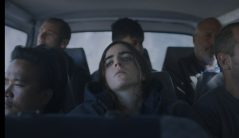
Dvora is a 17-year-old girl who refuses to leave her job at the fish farm on her Kibbutz, even though she promised to return to school. Her last day at work intensifies her fear of life outside the water.
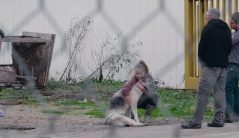
When their senior dog’s condition deteriorates, owners often wonder: is it better to prolong life or mercifully put to sleep? When is the right moment to let go? At “Hofshi” (“Free”), a retirement home for dogs, the stories of owners and their pets convey these dilemmas, which escalate when facing the threat of being put down.
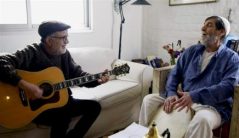
Shlomo Bar is one of Israel’s most important and original musical artists. For forty years, together with his band “Natural Gathering” he has created music that expresses the complex heart and soul of the Israeli experience – a stirring blend of East and West that yields compositions of exceptional beauty, while also expressing social protest and pain.
In the film, which is presented in musical format, Shlomo examines his life’s trajectory through a series of encounters with key figures from the past and present, interwoven with excerpts of his songs that complement and drive the film’s story line.
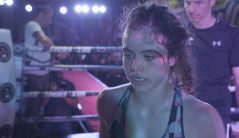
Daniela (16) and Ohad (17) are determined to make their dream come true – win the World Kickboxing Youth Championship. Along with the demanding lifestyle required in professional sports, their studies and matriculation that require dedication and time, they also have to face strong opposition and pressure from their traditional Caucasian families, who disagree with their pursuit of a violent and dangerous sport.
Ohad, who fainted and lost consciousness in the arena, causes his mother great anxiety and she and his father pressure him to stop training and competing.
Daniela has to deal with fears expressed by her female relatives that the sport will harm not only her studies and exams but also put her future chances of getting pregnant at risk.
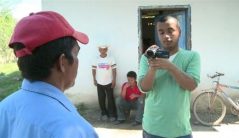
Oren Levi is struggling to find his place in the world. Born in Guatemala and adopted by an Israeli couple as a baby, Oren had a troublesome childhood despite all the love and support of his family. Misdiagnosed with autism and mental illness, put into a psychiatric ward after a suicide attempt, he found it even harder to connect with the world that labelled him as “not normal” in many different ways. One day, armed with a simple video camera, Oren embarks on a journey to meet his biological parents and things begin to change. Tomer Heymann’s film tells a compelling story of a young man coming-of-age and discovering his true self among different landscapes, cultures and languages.
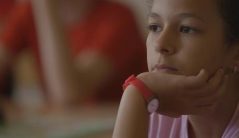
In Israel, one learns at a young age of the country’s constant “state of emergency”. The education system in collaboration with the “Homefront Command Office” are dedicated to inserting that notion into the public’s mind. The film follows a class of fifth-graders in their mandatory course on “Home-Command Education” while at the same time follows the adult world, where through an on-going series of drills and simulations they prepare for the next war to come.
What began as a state-wide program for promoting a “culture of preparedness” to the public, evolved to an everlasting coming-of-age ceremony.
A funny/tragic view on life in Israel, and adulthood in the shadow of the conflict.
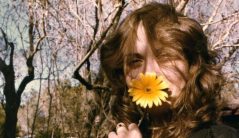
Anat Gov, one of the most influential playwrights in Israeli theatre, is preparing for her death. She asks Arik Kneller, an artists’ agent, to be the executor of her will.
Arik struggles to accept the humor and serenity with which she faces her upcoming end.
Anat, consciously accepting her nearing end, wishes to leave a spiritual legacy: there can be a happy ending.
Almost a decade after her death, her loved ones try to fill the void left by her words with their own.
Through excerpts from her plays and footage of her family & political world, a new script is written: one in which the line between the play and reality is blurred.
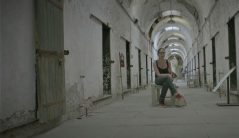
After being convicted of espionage, ostracized by her people, and marked as a traitor, Israeli whistleblower Anat Kamm tried to rebuild her life in NYC. She goes and graduates from Columbia University, but her past still haunts her. Unable to find employment and extend her visa, she is forced to return to Israel.
In her last months in the US, Kamm goes on a cross-country road trip, traveling from NY to CA to meet the American hero Daniel Ellsberg and escape as much as she can the reality of becoming again, Anat Kamm, the traitor.
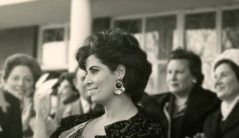
Shoshana Damari was the first Israeli diva. She graced local and international stages, stirring millions with her beguiling voice and spectacular performance. Yet behind the larger-than-life persona and her memorable songs was a woman about whom we know little. She didn’t like to be interviewed and never volunteered details about herself and her family. Hers was the life of a Hollywood legend and she paid the price for it. This is a story about fame and loneliness, acclaim and loss, daring and compromise. For the first time, the woman behind the crown, the cloak and the palace will come to light.
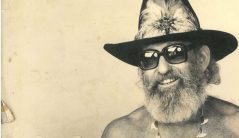
In November ’77, after years of war, Egyptian President Anwar Sadat landed in Israel with a message of peace and a promise to take back the occupied Sinai soil. Nelson, who feared losing his holiday village on the Sinai border, went to war to preserve his bohemian holiday village. He harnessed his comrades at the top of the government to protect the small country he had built. The affair, which lasted nearly a decade, is a web of political intrigue that forced Israel into an entanglement that endangered peace with Egypt. Nelson’s Last Battle is an absurd look at the conflict in the Middle East through a square kilometer of passion.
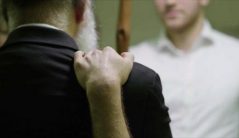
Conversion Therapy is revealed from within for the first time. Lev, a 54 year-old divorced Orthodox Jew, attends conversion therapy hoping to be remarried to a woman. He attends one-on-one therapy sessions and group therapy, believing his unwanted same-sex attractions will disappear.
At the same time, Ben, a 23-year-old social work student, seven years into conversion therapy, starts having doubts. In the Jewish Orthodox world, where he grew up, he was taught homosexuality is a fault that one can “cure”. But when he went to university he was surprised to discover conversion therapy is considered harmful and dangerous. Ben sets out on a quest to discover the truth about conversion therapy, and learns that the way out is harder than he thought.
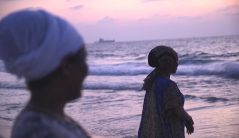
The practices of purity and impurity are the hallmarks of mandatory law and practice in the Samaritan community and the Ethiopian community. The film looks at the Niddah customs in both communities, as we meet protagonists Yafit (47) and Mollya (44). They bring us into their homes and share their experiences of the rituals of Niddah in their respective communities.
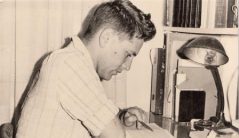
Behind the international success story of Amos Oz, a symbol of the Israeli conscience and a writer translated into 45 languages, lurked a double tragedy. When he was 12-years-old his mother committed suicide, and a few years before his death his daughter accused him of being physically and mentally violent, ending all communication with him. A series of conversations with his latest biographer presented in the film, weaves biographical passages, literature and conversations with the main people in his life, as Amos Oz tells his last story.
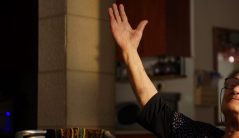
Yamna is an 82-year-old miracle-worker and righteous woman from Sderot. The film depicts her unique character and rituals, her eastern culture and her effort to bequeath her mystical power to the next generation
Yamna’s story is told through the people who come to her for help as we are offered a glimpse into some of her secrets. Yehudit, 40, whose biological clock is running out, hopes that Yamna can help her conceive, after conventional fertilization treatments have failed. Dudu, Yamna’s grandson, asks her for help with finding success in the music industry. Yamna’s daughter, Shula, has the technical know-how of her mother but is still searching for the special spark she needs to honor her birthright and become a righteous woman.
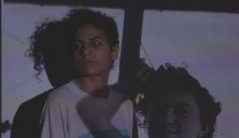
A photo found by the filmmaker in her grandmother’s house after her death seems strange. She has a pregnant belly. But she had told the story of adopting the director’s father because she was not able to conceive. Her old friends explain that the kibbutz decided state-building efforts preclude giving birth, and she had an abortion that damaged her womb. This sets the director’s curiosity about her biological grandmother. The adoption file tells of Shoshana, 16, an Iraqi immigrant who got pregnant out of wedlock. Her sister reveals that the family abused her but she refused to give up the baby, who was eventually taken from her. Both suffered patriarchal oppression and remained silent. Both grandmothers’ stories lead the filmmaker to confront her parents about her own silence on sexual abuse in the family. For the sake of the three, she must break the silence.
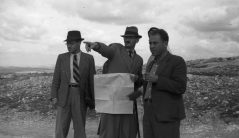
The Jewish National Fund’s Blue Boxes were part of a successful fundraising campaign to support the purchase of land in Palestine. Joseph Weits, the filmmaker’s grandfather, was the man who orchestrated the acquisition and expropriation of Palestinian lands. Weits’s private diaries reveal an uncomfortable truth.
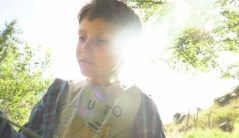
How does the world look through a 6 years old child’s eyes? The movie “Summer Nights” offers a window into a child’s world. A window to his fears, his desires, his way of thinking. A journey into the subconscious of an innocent and ingenuous child, while he drifts into the depths of his own mind.
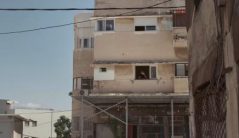
In the 1950’s Haifa’s Hadar HaCarmel neighbourhood was the lively heart of the city. Today it’s abandoned and neglected but its past is still present on every corner. The film tells the neighbourhood through the stories of a few of it’s most intriguing residents.
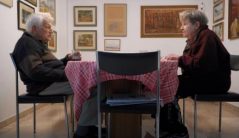
My grandparents, Gila (84) and Baruch (95) lived and worked together for 65 years. Although Baruch suffers from Dementia, Gila lets him go to their architects office every morning.
While Baruch sits in the office coloring in children’s coloring books, Gila experiences the process of mental separation from her partner and the emotional turmoil that follows.
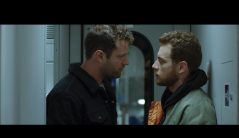
Yonatan is asked to come see his grandmother on her deathbed with his judgmental older brother. On their nightly train ride the two siblings turn against each other, as the looming encounter with death threatens to tear down Yonatan’s walls of apathy.
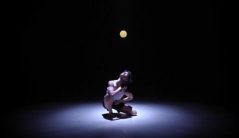
Two professional dancers around the age of 30, lose touch with who they are. Their childhood dreams have been fulfilled and now they are left with a sense of emptiness.
The film follows their internal journey to find a new anchor that will give them their lost confidence back.
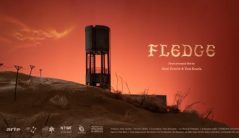
A folkloristic fantasy that takes place during the Russian immigration to Israel in the 90’s.
Elina is a young immigrant who lives with her grandma in a small desert town, trying to fit in with her peers and overcome her mother’s abandonment.
Until a strange genetic phenomena interrupts – her body starts to grow feathers. Elina is forced to choose between the need to belong and her own identity.

Alon Kastiel, a convicted sex offender, operated in Tel Aviv for a whole decade,
unhindered. One Facebook post changed everything, opening up the floodgates.
17 women filed official complaints and for a moment it seemed like justice would be served, but Kastiel was convicted of lesser offenses in a plea bargain. He was sentenced to only 4.9 years in prison and with parole, he will be out soon.
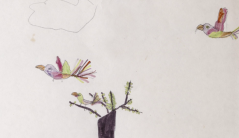
The solar system is shaking, a girl sheds a tear, and a monster is drinking blood. Childhood drawings and stories assemble the author’s personal diary. Phone calls with her grandmother raise questions about hereditary melancholy.
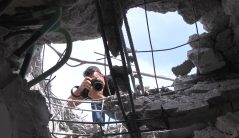
The film tells the story of the world of Israeli journalism – an industry now in
deep crisis – from a unique point of view. Through the stories of two photojournalists,
Eli Hershkovitz (Haaretz) and Eddie Israel (Maariv). Both reside in the south of Israel.
Hershkovitz and Israel are both trying to survive their dying profession, while keeping
their sanity, which forces them to constantly choose between work and family.
The film provides a glimpse into the world of those trying to immortalize historical
moments in the life of an entire country and impact public discourse. But no one
knows them – they will forever be out of frame.
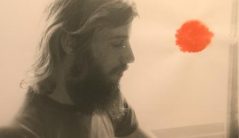
When the Yom Kippur War began, Eli was a tank gunner in the Golan Heights. The filmmaker, who is Eli’s daughter, interviews him about the day the war broke out and paints a collage of his memories.
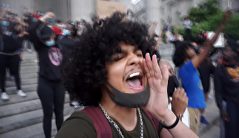
Seven YouTubers from around the world document their lives during the Corona Pandemic: the story of a generation that was born into social media, and now has to grow up in a viral world.
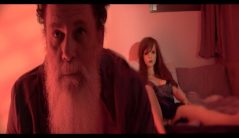
One night, while delivering pizza to a middle-aged man, Ariel, a teenager, spots Olimpia, a hyper-realistic woman-like sex doll lying on the bed. He tells his friends (a boy and a girl) and they decide to steal Olimpia. Soon after, they’re drawn into a youthful game that quickly spirals out of control.
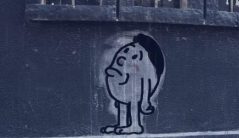
Gruf is a graffiti character that comes to life in animation. Gruf falls in love with the street artist who created him. He desperately tries to find her in the shabby streets of Tel Aviv and discovers that inter-dimensional love is not easy.
A visual poem about a wishy washy relationship, the yearning for childhood and a choir of girls.
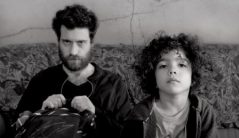
Yochai, a melancholic bachelor in his 30’s, avoids living life. Beyond taking care of the minimum chores of life, he is busy distracting himself with all available means. But today he is required for another chore. He has to get up in the morning and take his nephew, Ilay, for an annual trip. Yochai sleeps in, Ilay misses the trip, and they must subsequently go on another kind of trip during the day.
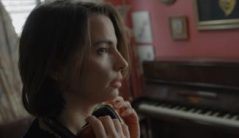
Alice is a young woman dealing with a mysterious chronic pain disease and isolating herself in her deceased grandmother’s apartment. On the day that a piano tuner arrives to fix the old piano in the house, she embarks on a journey between reality and fiction in the different spaces of the apartment to find peace with herself.
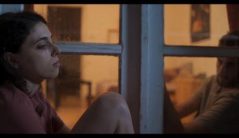
A love story between Yuli, a young woman who suffers from anxiety and doesn’t go outside and Adam- the ghost who haunts her place.
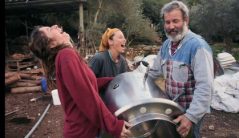
When twenty-three-year-old Ee Ya’aran’s parents lose all hope of winning the legal battle for their family ranch, they decide to dismantle the place and move to Portugal.
Ee, who has lived her whole life on the farm sees it as a central and integral part of her identity. The new circumstances shake her world and force her to find her own path.
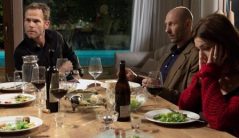
Emma and Gregory, immigrants from Russia, are finding it hard to adapt to life in Israel. Their lives cross paths with Alon, an amateur artist and owner of a high-tech company who is in crisis with his wife Yael. Alon is preoccupied with his business and Yael is having an affair with his good friend Amnon.
In order to survive, Emma starts working as a nude model with Alon in an Art workshop. They become so close that she feels her work as a model is upsetting her life and she decides to leave. By chance, Gregory is hired as a production worker at Alon’s high-tech company.
The truth comes out when Alon invites Gregory and Emma to a festive dinner in his home. The unexpected encounter changes the protagonists’ lives forever.
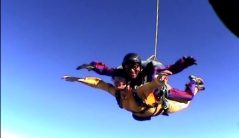
On May 2013, Avner took off in his ultralight aircraft. Above the desert he turned off the engine and jumped. Who is Avner? Why did he choose to end his life so unusually? Avner was paralyzed from the chest down. He was a world champion in skydiving and Base Jumping. When he was 28, he jumped from a bridge in California, and crashed to the ground. In revealing encounters and through rare archival footage, we are acquainted with Avner and his struggle to bridge the gap between his life before and after the accident.

Beneath the Muranow neighbourhood in Warsaw lay the ruins of houses once teeming with Jewish life and culture. While Muranow lives in the present, it seems that its buried past is swarming beneath.
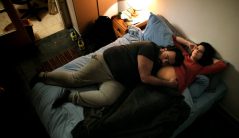
A father and son try to freeze time through cinema, but the father’s illness threatens to cut their quest short.
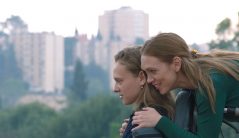
Asia’s motherhood has always been an ongoing struggle rather than an obvious instinct.
Becoming a mother at a very early age has shaped Asia’s relationship with her teenage
daughter Vika. Despite living together, Asia and Vika barely interact with one another.
Asia concentrates on her job as a nurse while Vika hangs out at the skatepark with
her friends. Their routine is shaken when Vika’s health deteriorates rapidly. Asia
must step in and become the mother Vika so desperately needs. Vika’s illness turns
out to be an opportunity to reveal the great love within this small family unit.
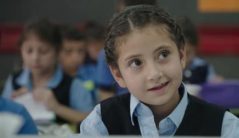
There are children, too, among the Palestinian insurgents. For some time now, the Israeli side has observed minors who take an active part in an Intifada, especially with knives. They are harshly dealt with: prison, hardly any judiciary support. Ada Ushpiz, filmmaker and journalist, comes surprisingly close to some of the Palestinian families concerned. She has accompanied the dubious insurgents over several years .and witnessed terrible pressure.
Freshly released from prison, 12-year-old Dima encounters a crowd of television people. A few months ago, she was caught with a knife. The attack was said to be aimed at Jewish Israelis. Now, in a frenzy of camera flashes, her mother stands close by her side. But instead of offering protection she assumes the role of an agitator, demanding that her daughter report how she was treated by the Israelis. But Dima remains silent. Her family describes the pubescent girl as mentally handicapped. Dareen is younger than Dima and lives with her brothers, father and a few snakes in the immediate vicinity of their Israeli neighbours. Soldiers stalk the house, sometimes stones fly, Shin Bet, Israel’s domestic intelligence service, is allegedly involved.

Salah faces the closed Israeli border crossing. He’s holding a large yellow duffel bag, inside the bag is his son Omar. The grieving father wants to bring his dead son back home, but due to a strict curfew, no one can come in or get out.
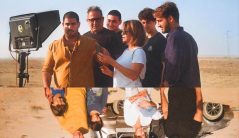
Omri reunites his family for a drive to the desert. He asks them to recollect and talk about the fatal car accident they had on the way to his Bar Mitzvah 15 years earlier, an accident that led to his parent’s divorce.

A young man observes Israeli society from his balcony.
This deep and painful reflection opens past wounds.
On the week between Israel’s Memorial and Independence Day
he needs to focus on himself.
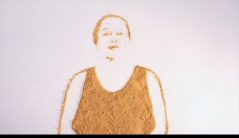
The protagonist of the film is a girl whose home falls apart as a result of her parents’ divorce. Her buried memories are revealed through a sea of grains of sand.
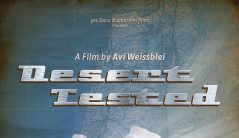
The Susita is well known: for many years it was considered a groundbreaking Israeli invention in the world of industry that had put Israel on the map. Its fiberglass shell, made it an international vehicle. The young State of Israel was convinced it had started a revolution. The Golden Age of the first Israeli automobile began a moment before 1960. The car, with its British engine brought glory to the State of Israel. Today, five decades later, a few Susitas which have stood the test of time still rumble around, hiding the story of a dream and its disillusionment: to create an automobile industry that would take over the world (or at least the country). If so, what is the true story behind the Susita, and why will there never be an automobile that is MADE IN ISRAEL?
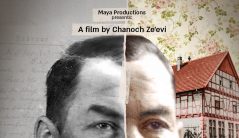
The film tells the story of Wilm Hosenfeld, a Nazi officer best remembered today for having saved “the Pianist” (Władysław Szpilman) in Roman Polanski’s remarkable film.
Recent findings have revealed that over the course of the war he actually saved about sixty people, Jewish and Polish alike. Before joining the Wehrmacht, Hosenfeld was principal of the school in the German Village Thalau, which is currently debating if he should be remembered as a local hero. Many residents would rather not deal with the questions his story raises about their past. There is a minority that want to commemorate Hosenfeld by naming the school after him. The passionate debate forces skeletons out of closets, reflecting the diverse and often conflicting ways that Germany deals with its past.
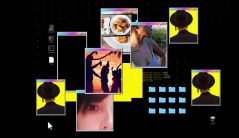
Ultra-Orthodox Rabbis had banned the internet right from the start. They did the same with Television and national Radio, and no one said a word. But when it comes to the digital world, it seems like they are losing the battle. The recent Covid-19 epidemic just made it clearer: the Haredi society refuses to stay unplugged. This 3-part series examines the Ultra-Orthodox community in Israel and how the online culture is fundamentally changing their world.
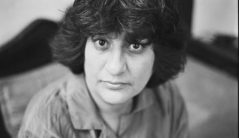
In 1999, after a 23-year absence, gifted musician Ahuva Ozeri is planning a comeback. She’s recording a new album – The Bells are Ringing.
Ahuva, considered the queen of the Middle Eastern music, sits at home and makes a living as a cook at a meat restaurant.
She hopes to break out again with the new album. But at the end of the recording, she is diagnosed with throat cancer and undergoes surgery where her vocal cords are cut. She loses her voice forever, but the album is very successful. It managed to cross audiences and becomes a consensus.
This film is based on rare never before-seen materials, sketching her life’s course.
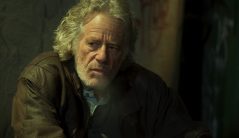
Shalom is a lost and lonely soul. He spends his nights collecting empty bottles. One night, Tikva, a street girl gets into his car, and from that moment Shalom’s world is turned upside down. A complex father-and-daughter-like relationship develops between the two.
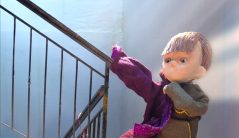
Three kids are playing in the buildings’ stairway. During the game While playing, they discover an old coat, which leads them into a world full of adventures.
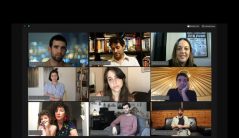
Nine filmmakers, confined to their homes during the Covid-19 lockdown, share fragments of their isolation experience:
Manya is on the phone, speaking in Russian to lonely elderly people; Omer is on the phone to his Grandmother, infected with Covid-19. On the other side of town – Danny is smoking alone on her balcony and Reuven has to find a way to cut his own hair. On the other side of society – Rachel’s brother must study the Torah on his own. Ilan is on a mission to decipher the symptoms of a mysterious illness he is suffering from; Eti is at home with her husband and daughter, after undergoing an abortion; Yoav and Rommy are dealing with an unwanted pregnancy.
And at night, while everyone is asleep, Yochai’s camera drone returns from a nocturnal mission over the Dead Sea with secrets from the outside world. All he has to do now is to find out what they mean.
Artistic Director: Noit Geva//Sound Design: Rotem Dror
Chilik//Rachel Elizur
Crisis//Tommy Shles Shafrir
Haircut//Reuven Brodsky
Have no Fear of Walking Alone into that Dark Night//Omer Cohen
It’s Just Me//Hadar Baruch
Medical Autobiography//Ilan Rubin Fields
Sour Strawberry//Eti Tsicko
The Water Mark//Yochai Shalom Hadad
Voices from the Balconies//Manya Lozovsky

From Moment in Isolation, Israel, 2020//Artistic Director: Noit Geva
As the world contends with the Covid-19 pandemic, a young man suffers a cardiac-arrest-like episode that no medical test seems to be able to explain. A tongue-in-cheek investigation into his own medical history helps him interpret the scientific language and rekindle his faith in the modern religion.

From Moment in Isolation, Israel, 2020//Artistic Director: Noit Geva
Danny (31, AKA “Sweetie”) is desperate to meet another
human being after spending 14 days in quarantine. All she can see on the balconies
of the buildings across the street are couples. Staring at them only underlines how
difficult it is for her to be single – especially during this lockdown. When Noam, her
next-door neighbour rings the doorbell, she can’t help but develop high
expectations.
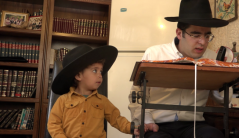
From Moment in Isolation, Israel, 2020//Artistic Director: Noit Geva
For the first time in his life, my brother Chilik (26), a married Yeshiva student, is at home. For a month now, he has had to endure criticism from the secular society in Israel, even though he is studying the Torah on his own.
Studying on his own and spending time with his family, allows him to see things from a new perspective.
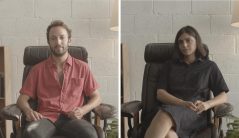
From Moment in Isolation, Israel, 2020//Artistic Director: Noit Geva
Yoav and Rommy are passed the “honeymoon” phase of their relationship. They are both unemployed and stuck together in a one-bedroom apartment. To make matters worse, Rommy’s period is late.
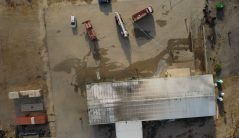
From Moment in Isolation, Israel, 2020//Artistic Director: Noit Geva
Isolated in his faraway home near the Dead Sea, the filmmaker’s conciseness drifts through the desert with the aid of his camera drone, which broadcasts live images from the outside world. Now all he has to do is figure out what these images mean.
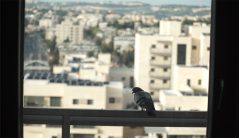
From Moment in Isolation, Israel, 2020//Artistic Director: Noit Geva
My grandmother contracted the coronavirus. She lives alone. She’s in a risk group. These are difficult days. I am in a tower at one end of town, and she’s at the other end. Communication between us is done over the phone. It’s hard to be apart, but the conversations bring us closer together. This is a story of a grandson and his grandmother, who, despite the unknown future and isolation, find a way to feel close to each other.
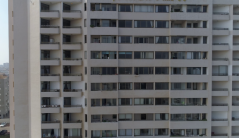
From Moment in Isolation, Israel, 2020//Artistic Director: Noit Geva
Thousands of lonely Russian-speaking elderlies have become even lonelier due to the pandemic. Stuck at home on their own and unable to communicate in Hebrew, the situation has forced a double isolation on them. The radio, the TV and phone calls with volunteers are their only lifelines.
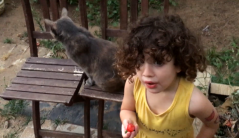
From Moment in Isolation, Israel, 2020//Artistic Director: Noit Geva
The pandemic caught me in between a miscarriage and my next pregnancy test. My daughter’s naïve use of my camera captures little intimate moments of pain and grace, uncertainty and expectation.
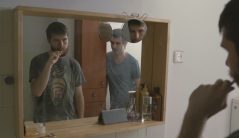
From Moment in Isolation, Israel, 2020//Artistic Director: Noit Geva
I have never gone to a hairdresser. My mother is one, so I’ve never had to. For 40 years, her soft fingers have caressed, pinched and cut my hair in styles once fashionable in a distant land. During the lockdown, she cuts my hair from afar.

A stoner teenager before army recruit and his ex-military career father are forced to stay together alone for the first time when the mother goes on vacation. The tension between them reaches an explosion – but not the kind they expected

As war rages between Israel and Gaza, Roni does all she can to support her boyfriend, Guy, who is returning home from the army for 24 hours. A video clip of a woman in Gaza rattles Roni and deteriorates her relationship with Guy
A six-part series about six Israeli Prime Ministers, who try to look back on and examine the biggest decisions they made in office, how justified they were in real time and whether their outcomes stand the test of time. The series deals with Prime Ministers David Ben-Gurion, Levi Eshkol, Golda Meir, Menachem Begin, Shimon Peres and Yitzhak Rabin. In addition to examining their decisions, it also tries to view them through the current scrutinizing media lens, test their integrity, state of health and the way they did politics.
“Little Victories” is a dramatic-comic film that tells the story of Tamar and Michal, two Tel-Avivian mothers and members of a catch-ball team, and of “Coach Moodie”, a charismatic and somewhat odd man, who is determined to release them from their net of daily battles and make them fall in love with a completely different net.
Moodie is convinced that they can handle everything, and they start to believe him. As training becomes more intense and the team starts to win, life summons them both trials and challenges: Tamar is trying to cope with being a widow, Michal is fighting cancer, and they learn that if they want to become real players, on the court and in life, the most important thing is to keep playing
Osher, Michelle, and Eitan were taken out of their homes as children and transferred to foster families. Their biological families are dysfunctional and absent. The foster families are supportive and stable, but this guardianship ends at age 18.
The film follows the three over the last year of foster care and the first year of independence.
The threat of the loss of familial support affects all aspects of their lives. Past trauma and dislocation erupt from time to time affecting the relationship of the three friends.
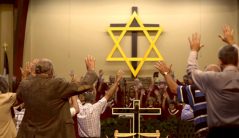
Millions of American Evangelicals are praying for the State of Israel. Among them are the Binghams, a dynasty of Kentucky pastors, and their Evangelical congregants in an impoverished coal-mining town. They donate sacrificially to Israel’s foremost philanthropic organization, the International Fellowship of Christians and Jews because they fervently believe the Jews are crucial to Jesus’s return. This film traces this unusual relationship, from rural Kentucky to the halls of government in Washington, through the moving of the American Embassy to Jerusalem and the annexation plan of the West-Bank. With unparalleled access, the film exposes a stunning backstory of the Trump and Netanyahu administrations, where financial, political and messianic motivations intersect with the apocalyptic worldview that is insistently reshaping American foreign policy toward Israel and the Middle-East.
A random trance party in a living room is fairly common when it comes to young people. But what happens when the young people are Israeli soldiers, when the living room is owned by a Palestinian family that is locked up in one on the rooms of the house? 18 years after serving in the army, Eran Paz finds a box of videotapes with rare footage of himself and his squadmates, invading Palestinian homes in the Territories.
Now Eran sets out on a journey in the footsteps of the people, the memories and the places that inundate him and give him no peace.
A couple drives in the desert in a reality show, while filming themselves with head cameras. A Fata Morgana (mirage) on the road causes an accident. To avoid consequences, they hide the evidence and re-shoot everything the footage. But like the mirage they saw, nothing is as it seems.
Esther, Emmanuel and Michal were born in Israel to migrant parents from Nigeria. In a moment of despair, they were torn away from their Israeli existence to a Nigerian reality, unable to continue their studies, living for a time on the streets. When Esther celebrated her eighteenth birthday she managed to return to Israel on her own. Israel is not the same home she remembered, but despite everything she is determined to reunite her family in Israel.
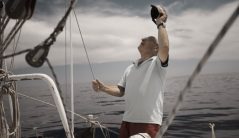
The tale of an old Captain sailing out to open seas for the last time on his beloved self-built boat.
His voyage is dependent on no place, time, or destination; his aim isn’t to reach any particular place, and perhaps not even to return.
Surrounded by sounds of depths, he refuses to accept what is less predictable than the winds and more frightening than the waves – growing old.
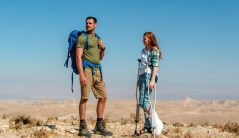
A young couple, Stav and Avi, are preparing for their dream honeymoon through Central Asia. When Stav fractures her foot a week before the flight, the two of them embark on an alternative journey that complicates matters even further.

The day in the life of Adi, a young woman trying to survive a disastrous day. She’s late for work, a pipe in her flat bursts, the dog pees on the floor and she fights with her manager at work. Her emotional instability leads to chaotic and devastating choices. Exhausted from medication and shrinks, Adi doesn’t seem to be able to live up to society’s expectations of her and is trapped between her wish to be better as expected, and her true, authentic character, which seems to fail her every time.
Two con-artists, a Haredi Jew and a Muslim, perform (false) exorcisms and rituals for naive God-fearing people, until one day they are confronted by a real live Dybbuk that exposes their most private sins.
On the day his mother dies, Alex can’t gather enough people for the funeral, to say the
traditional Jewish Kadish prayer on his mother’s grave. So at the Rabbi’s suggestion, Alex sets out on a journey to find people to help him. However he soon comes to realize all he wanted wasn’t the Kadish, but not to be alone.

Seven years ago Boaz cut all ties with his previous life – his parents, his brother and sister and his friends. The film tracks the story of his disappearance and embarks on a surreal journey into the memories he left with his family.
Omer is post a breakup. Trying to free himself from the memories.
It is Purim Eve, Omer is wearing a bear costume.
Hila, frustrated by the holiday and the people around her, tells him of her breakup.
Omer stops her and says that they’re going to burn all the memories of her ex.
In a succession of bonfires he helps girls to release their exes and memories.
One day the bear gets a message from Noa (his ex).
after his meetings with the girls and Noa, he burns the letters he still has left of her and takes off the bear costume.
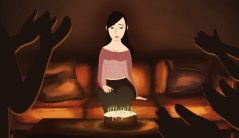
This is Millie’s story, the story of a young woman dealing with the pain and loss that have tormented her since the prenatal death of her twin sister. On her birthday, Millie is drawn through her birthday cake into the depths of her memory. This journey exposes her coming of age process in the shadow of the lost twin, her feelings towards this lost opportunity brought about by fate, and her thoughts of what could have been.
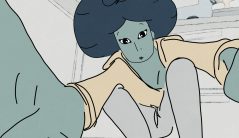
The relationship between a woman and the kitten living at her home.
An intimate and spiritual encounter of a Japanese director, a member of the Makuya community, who believe in the Hebrew Bible and in the New Testament, with an Israeli fisherman in the Sea of Galilee. The director has had only one question since his childhood.
Why did Jesus choose his first disciples from the fishermen of the Sea of Galilee?
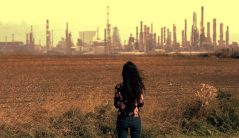
Haifa Bay, the third biggest metropolis in Israel is a polluted and sick area, the back yard of the country. In its heart 25% of Israel’s most polluting industries, morbidity is souring and the population is decreeing.
What is the future of Haifa Bay? Engulfed in governmental cessation, overrun by powerful industrial moguls?
A group of activists led by a few brave women take on the challenge to change the destiny of Haifa Bay- A struggle for clean air.
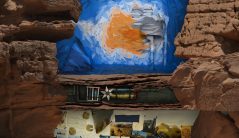
On October 2015 Yael Gotman and Safi Hosh created the Desert Ark Community – a community that isn’t connected to the national infrastructures, thus creating an alternative way of life and a new vision of security, in the shape of a rock. Due to their extreme measures of security, this Utopian home soon turns into an environment, in which fact and fiction, panic and utopia, collide.
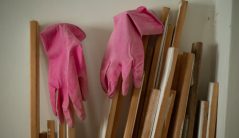
Two women are cleaning up the dirty and run down house, in which one of them lives with her 12 cats. The house’s condition is the result of years of neglect. One woman’s wish to help the other is met with her friend’s inability to cope with her own neglect, which in turn creates a Sisyphean process, during which the dirt clears and a new consciousness seeps through.
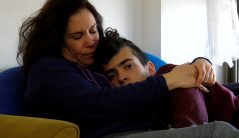
Avi and Yuval’s relationship was solid, until the devastating news arrived.
Their son Nadav, a soldier in the Israeli army, was killed in Gaza.
For three years, they each tried to cope with their individual pain, a process which slowly drove them apart.
Then Yuval (47) announced: “I want another child.”
The film follows the couple and their children as they go through an emotional journey of change. The film follow their couples therapy and the process they undergo in order to be born again as a new couple and a new family.
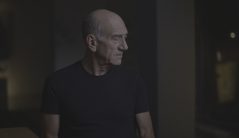
The film tells the story of former Israeli Prime Minister Ehud Olmert’s unexpected rise to power and his dramatic fall from grace, from the highest office in the land to Ward 10 at Maasiyahu Prison. Set as a political thriller, it follows the incredible events that elevated him to power and set the stage for his epic fall, creating a portrait of a multi-faceted man and providing a behind-the-scenes look at the mechanisms and machinations that control politics, justice, war and peace.

AIPAC (American Israel Public Affairs Committee) is the spearhead of the pro-Israeli lobby in the U.S. What started out as a liberal grassroots organization, has become one of the most influential lobby organizations in America.
For the past 60 years, AIPAC has maintained a strict “no interview” policy, but now, for the first time, the founding fathers of AIPAC are speaking out – granting us full access to the untold story of the organization and to the turbulent relationship between Israel and the US.
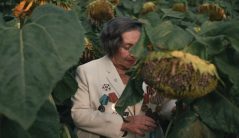
A young filmmaker meets and follows Raya, a 94-year-old Soviet war heroine who fought in the Siege of Leningrad. As Head of the World War II Disabled Veterans Club in her city, she introduces him to a vanishing generation in Israel. Her own fighting spirit and willpower are still fierce. As Raya faces the loss of her last comrades and her health deteriorates, the two become involved in a spiritual process that awakens the young woman within her; Through her eyes and dreams, they create their own reality in which time and age lose all meaning. Their growing closeness transforms a film about war and loss into a mystical story of love and friendship.
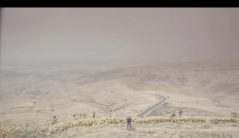
Artist Eli Shamir paints the views from his studio balcony – fields stretching to the horizon, ancient oak trees, and a generation of farmers that is disappearing from the vistas of the Jezreel Valley. His large oil paintings are treasured by collectors worldwide.
It was director Ben Shani’s encounter with one of Shamir’s works that spawned the idea of documenting the artist at work. Neither of them had any idea that everything would change as the filming progressed, as an unforeseen danger threatened to rob Shamir of his talent.
Filmed over the course of ten years, A lullaby for the Valley focuses on the fascinating figure of Eli Shamir and his paintings. As time passes, like the endless fields of the valley, they are transformed before our very eyes.
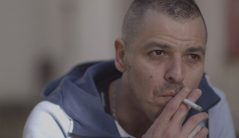
This sociological journey back in time began over twenty years ago when several families were evicted from their homes. They got together and squatted in an abandoned building in Jaffa for two years. The children of all ages who lived there grew up around violence and poverty —but also solidarity. They saw the power of people fighting the establishment for their right to a home.
They first became the subjects of a documentary film back in 1999 (the film was screened at the very first Docaviv Festival). Now, their journey continues: what has become of them? What chances does a poverty-stricken child have to make it in the world?
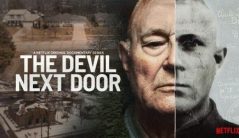
THE DEVIL NEXT DOOR is the true story of John Demjanjuk, a retired Ukrainian-American autoworker living a peaceful life with his family in Cleveland, Ohio suburbs in the 1980s. When a group of Holocaust survivors identify Demjanjuk’s photograph as “Ivan the Terrible” – a notoriously cruel Nazi death camp guard who tortured and killed nearly one million Jewish prisoners during World War II – Demjanjuk’s American dream is shattered and he is extradited to Israel to stand trial for crimes against humanity.
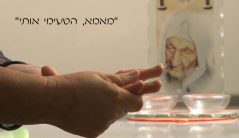
Mom’s food, the touch of her hands, Taste of her stories.
Six women from Yeruham take the stage with the spotlight on them.
Cutting tomatoes, frying garlic and hot peppers, with the smells filling up the nostrils and the mouth salivating.
They cook and tell each other of themselves. The music rises and so does the screen. At the end of the show, they go down to the audience with the pots, so they taste their stews and the stories.
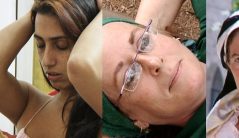
They give birth to children year after year.
Raising them, carrying on their shoulders ever-growing household and serving their husbands who spend their days praying and learning.
Even though the higher purpose of raising an ultra-Orthodox family with multiple children, they remain independent.
A documentary four-year in the making reveals the unconventional struggles with unconventional difficulties of those who, many years ago, chose to repent, move to the secluded and religious city Safed, and of their children – the second generation to repentance already born into a dictated reality.
The series presents the dark side of repentance, the one that is not a decree of fate or of a deity but human actions.
Because the people who make up the ultra-Orthodox society, even though they received the burden of Torah and Mitzvah and devote their lives to it, are, so the series shows, first and foremost, human beings with their many weaknesses, lusts and harms.
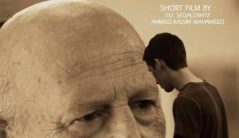
A simple hairdresser in a small village succeeds in rehabilitating a youth with a social deficiency, in a place where society and its institutions have failed.
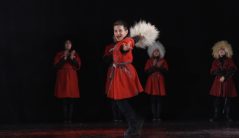
Simon danced in front of thousands in the prestigious theatre halls of Tbilisi, but in 1972 he left his home of Georgia and migrated to Israel.
With a lack of stages and audiences for the craft he brought with him from Georgia, Simon was forced to give up his career as a dancer and become an instructor instead.
In the town of Or Akiva, he opened a dancing class, where year after year he taught the town’s children the dance he so admires.
During all these years, he never gave up his love for the stage; and so decided to make his dreams come true through his class and turn his small group to a successful and famous dance group.
Victor, a male fairy, becomes depressed and files his resignation letter. He doesn’t want to work anymore – to help people. He feels disappointment for himself and the world.
One morning, a fairy social worker barges into his apartment, telling him that his resignation letter has been rejected and that he must return to his job.
Victor finds himself in the streets, unable to find a place of his own. He is unaware, that by the end of the day, his life will completely change.
In the basement of the Abu Kabir Forensic Institute, every day initiates a new journey in search of truth and justice.
There, in the autopsy rooms, the institute’s doctors are trying to solve a mystery: what caused the death of the still figure lying in front of them and what cut his life.
Through intimate and close documentation, “The Forensic Institute” accompanies the doctors who chose forensic medicine as their profession; examining how the death surrounding them impacts their lives, their sense of mission motivating them and the defense mechanisms needed to live, love and laugh at their workplace and in their personal lives.
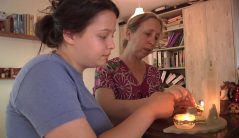
The film will focus on 8 months in the life of Liad (13) a girl on the autistic spectrum. During which she and her parents are required to choose between secular high school studies in Hod Hasharon and a religious high school in Petah Tikva – both educational institutions adapted to the disabled. Liad’s family has a religious life, while she does not know the difference between religiosity and secularism.
At a moment of anger, Julie decides to flee from a mentally ill mother and from a strangling home, which leads her to the world of prostitution –filled with opportunities.
There, Julie faces many confrontations, some good and some scarring.
this is the fate Julie has determined for herself.
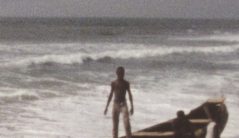
Johnny believes in the future of Africa. He lives in Israel, but dreams of returning with modern fish farming techniques. His wife, Thérèse, sees little hope back home. She is determined to create the best possible future for their children, whatever the price may be. When their visas expire, tensions between the two arise, leading to an inevitable clash. Emmanuelle Mayer’s directorial debut is a moving documentary portrait, pieced out of ten years of intimate footage. Emphasizing the profound gap between developing Africa and the West, the film contrasts male and female narratives and raises ideas of choice versus fate.
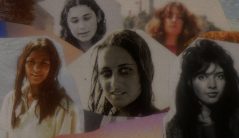
A chain of unsolved murders of women along the Israeli coastal road, raises suspicions of a serial killer who had never been caught.
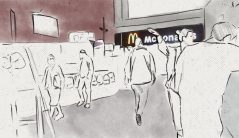
Experimental documentary film that combines video and animation.
The film documents wandering around Tel Aviv’s Central Bus Station.

After his father’s death, a grown up restless clubber offers his web-cam model to meet for the first time. She sets him hard to obey conditions, on the way to an unforgettable night.
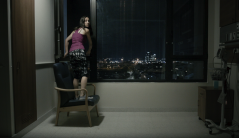
A young woman’s life is forever changed as a result of a traumatic event. She loses control of her life, and begins to lose distinction between reality and illusion; until she reaches a breaking point, looking down and trying to decide whether to jump or continue living with her scars.
Dorin takes great care for her beloved sick father.
She will do everything she can to postpone their seperation, however, the upcoming chain of events will make her face reality and her greatest fears.
Alonna (28), a romantic who clings to old habits, tries to beat Tel Aviv. The city fights back with cyclists, parking inspectors, and guys who don’t believe in love. Losing hope, she downloads a dating app. Her date with “Mr. Perfect” seems promising, but an unexpected incident changes everything.
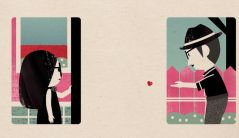
Yaffa (80) lives in a care home. She relives her childhood through postcards sent by her father from all over the world.
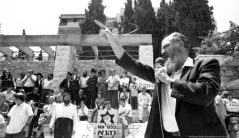
Rabbi Meir Kahane began his career in the USA, where he founded the Jewish Defense League. As the league’s violent activities turned into terrorism, he was forced to leave America. In Israel, he became the most radical politician the state has ever known. He united the right and the left against him, and was banned by the media.Today, thirty years after he was barred from Israeli parliament, Kahanism has seeped into Israeli society, and Kahane’s prophecy about the divide between Judaism and democracy is echoed in the halls of the Knesset.

The tale of a giant spider living with an abusive partner is pushed to her limits.
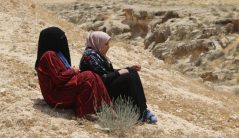
When the Israeli government forms a plan to urbanize Bedouin villages in the Negev, the lives of 120,000 citizens are on the verge of radical change. Othman, a local young man, is appointed to convince the people of Bir Hadaj to embrace modernization. Soon, he realizes that the true potential for change lies with the village women. Together with his younger sister Aisha, advocating for literacy and integration, the two manage to spark a movement. While the men continue fighting with each other, and with the government, Othman and Aisha start shaping a positive alternative.

July 2014. My brother Uri, an IDF soldier is wounded in the Gaza war. In the hospital, he is welcomed and treated as a hero.
One family’s encounter with war unveils the face of a nation consumed by its ambition to achieve an ‘Image of Victory’
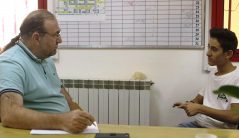
The village of Beit Jann in the mountains of the Galilee holds the highest record of high school graduates in Israel, and possibly in the world. While the school only held a 12% graduation rate up to a few years ago, it has now climbed to 100%.
Beit Jann inhabits a population of 12,000 Druze, an Arabic speaking ethnic group scattered around Israel, Lebanon, and Syria, suffering from systematic discrimination. But is the goal worth the extreme measures being taken? Do the students possess a real chance for a better future? And what will be the place of Druze tradition in light of the liberal values the school is promoting?
This is the story of a closed society trying to find its way in a changing reality.

Thirteen years after his death, the great actor Yossi Banai comes to life for one final encore, with a cinematic memoir led by his own deep iconic voice. Pieced together from numerous archival sources – films, plays, radio, songs, and comedy shows – Banai directs the spotlight on to his own image.

The story of a couple giving birth to a stillborn baby. From this moment, begins their long journey in a parallel world, facing their sorrow and facing the life that continues around them. An abstract journey, in their inner world, from the loss of this long-awaited child, to its setting in the ground and the acceptance of its disappearance.
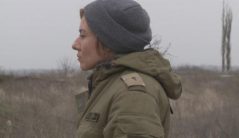
The story of an Israeli woman and a mother of two girls leaving her country in search of her boyfriend who disappeared in the chaos of the civil war in eastern Ukraine. Her journey leads her to decide to enlist in the rebel forces and devote herself to the war.
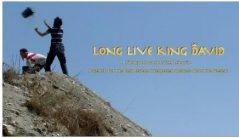
King David, the famed sovereign, united all tribes of Israel into one kingdom.
However, a growing number of scholars now believe that this story is no more than a fable. The film is trying to reveal the truth and discovers that where famed biblical battles were once held, archeologists now vie for prestige and honor, left-wing and right-wing proponents wage ideological battles, and Palestinians and Jews fight for the land and for a place in history.
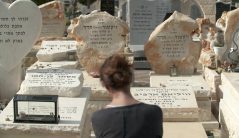
When my dying mother, Alegria, asks me, Meirav , a former detective, to stop the curse on the family, and on my brother Victor, I give her my word. My mother doesn’t remember that the curse already took my brother’s life. As I try to understand what this terrible thing was that my grandfather Victor did, and for which everyone who bears his name died, I discover that there is still one living Victor and he is in danger.
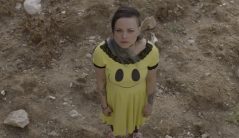
Drenched in guilt and longing to his beloved Nadia, who was murdered by an unknown killer, Alex slowly takes on her identity one step at a time. While her family mourns, Alex estranges himself from them, becoming a loner in his home which is slowly becoming an absurd temple to commemorate Nadia. After a failed attempt to end up with the same fate as Nadia’s, Alex decides to go share his sorrow with her family.
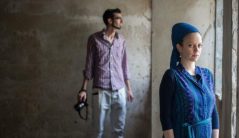
Sonia meets the love of her life, Ariel, the Jewish Agency volunteer. She follows him to Israel and they start a secret relationship until Sonia has finally converted to Judaism. There are many obstacles in their path. Will Sonia find herself in Israel? The search for a Home begins.
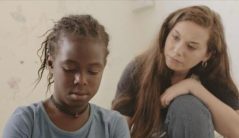
When a Tel Aviv family decides to evict a tenant, a single mother Sudanese, after a year of evading her pay, the family’s liberal ideology cracks. Noga (17) confronts her mother Dalia (52) to prevent the eviction but finds an overwhelming reality.
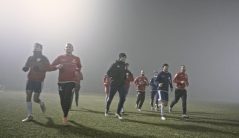
“The last league” is a documentary series that follows team owners, coaches, players and fans in four different teams competing for the last league of Israeli Soccer.
The Druze and Muslims in the north and the Jews in the south, all of them share the desire to rise from the last League to the upper leagues, but this is not a series about soccer. It’s a series about the mosaic that makes Israel’s periphery, a reflection of the Israeli society.
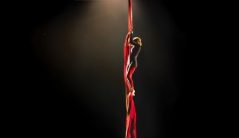
Tzipporah longs to stretch her wings and fly but knows that without solid ground to return to, she will be lost.
Caught between two seemingly incompatible worlds, the stable orthodox Judaic lifestyle that she lives and the soaring thrill of Aerial Acrobatics, she feels incomplete in either place and struggles to find her true identity.
How will she achieve balance? What part of herself must she sacrifice
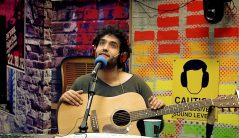
Israel Bar-On, a past winner of the Israeli version of “American Idol”, sets out on a journey back to the music industry and the limelight.
Rachel and Leila are two Jewish girls that live peacefully in Iraq and Iran.
They run away due to different historical threats and immigrate to Israel.
They both lose their homes and cultures but find comfort in Tea, and each other.
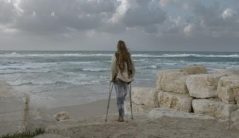
Yael returns from India to the Kibbutz, where she lives with her mother, with her leg in a cast. She yearns for a room of her own, outside her mother’s house. Will Yael be willing to pay the price for her own space?

Gabi Abudraham, a dreamy young man from Beit She’an who is obsessed with Elvis and virtuoso musical virtues, creates an eccentric character named Charlie Megira and sets out on a rocky musical journey to conquer the world while fighting demons from the past.
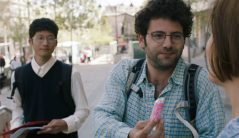
A dark romantic comedy following the life of Ronen Matalon who starts conducting tours of famous terror attack sites along Jerusalem’s Jaffa Street.
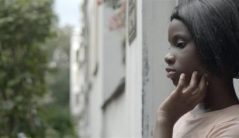
Three characters produce a portrait of the Siemens workers’ neighborhood in Berlin, which became an open museum of the International Style buildings. A lonely worker who yearns for the good old Siemens days, a Jewish single mother who lives in a building from the Nazi regime, and a girl from a family of Ghanaian immigrants who lives in Hans Scharoun’s original apartment. Their stories of detachment reveal the transformation of the German working-class family within the Utopian habitat for which it was created.
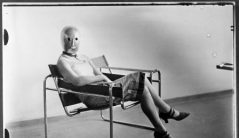
In a luxurious furniture store in the small town of Weimar, human beings are trying out Bauhaus chairs. In-between customers, signs of life re-emerge from the past.
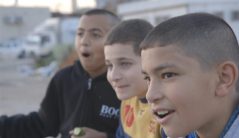
Omar, Muhammad and Yazan are three 12-year-olds from Lod. The boys are in their last year of elementary school, beginning to confront the challenges of life: Omar will deal with his father’s illness, Yazan will need to overcome the consequences of his violent behavior and Muhammad will prepare to leave Lod and the friends he loves so much. When Ella, a Jewish woman who emigrated from the former Soviet Union founds a choir in their school, she invites them to a safe and fantastic environment that will challenge the stark reality awaiting beyond the classroom walls and the real journey which occurs in the souls of the children.
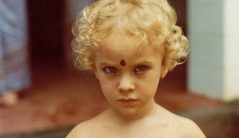
For 20 years, Jonathan, the filmmaker grew up in Jerusalem and in an Ashram in India, which he had to keep secret. In the Ashram he was taught to dedicate his life to the Guru, to always think of him. That way, Jonathan could finally reach his goal in life, awaken from the illusion, realize the “truth”, and become enlightened.
20 years (and a lot of therapy) later, the director sets on a journey to understand the secret he was forced to keep about India throughout his entire life, the effect it has on him even now, to find out what happened to the other Ashram children, and to learn if one can ever stop believing in the Guru and finally understand: had he been raised in a cult?
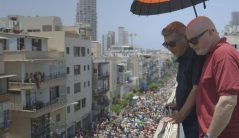
The film tells the story of six Gay men that were born in the days of the establishment of the State of Israel. Their stories serve as the film’s background for the depiction of the clandestine and undocumented lives of homosexuals in Israel during the 1960-70s; From the time that their sexual identity was considered illegal and a mental illness, up until 1979, when a few brave ones dared to go public and demonstrate for their rights, as the history of the Gay community in Israel began to be told and documented.
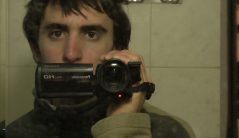
The film follows Yudale, a religious youth from the settlements, as he experiences a crisis of faith. As he receives a camera from Michal, a Tel Aviv director who teaches him how to film,
Yehuda documents his life on the line between the settlement Tko’a and Tel Aviv: his final conversations with his dying father—Rabbi Menachem Fruman– their joint study, and saying goodbye to him. When his father dies, Yehuda chooses to take off his kippah.
During the year of mourning, he continues to document his life outside the religious world: exploring Tel Aviv, talking to Michal, and his new perspective on his family and their way of life.
Elisheva, a newly observant Jew orphaned from her mother, comes into his life as a soul mate exactly at the moment when he loses hope of finding his way.
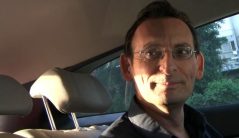
Goddamned communist. Internal enemy. Privileged Tel Aviv Ashkenazi.
It seems Dov Khenin has been called almost everything during his 13-year tenure as Member of Knesset for the Jewish-Arab party ‘Hadash’.
For years, director Barak Heymann has been following this leading legislator, creating a film that examines the open wounds of contemporary Israeli society: from the forced removal of the residents of Givat Amal to turbulent meetings of the Knesset’s Finance Committee, and down to the violent events at Umm al-Hiran.
Comrade Dov is a surprising, thought-provoking portrait of a unique politician, who refuses to give up even as reality deals him one cruel blow after another.

It’s only a half hour drive from Bnei-Brak, a closed Orthodox city, to Tel Aviv’s shore. But for the women going there it’s light years away. “The Kosher Beach” is a gated and secluded 100 meter-long strip of beach with dedicated days for women and men to bath separately, only a wooden fence separates between the freedom of the gay beach and them.
The “Brave Bunch”, a secret female orthodox sisterhood, arrive to what is a source of quiet sanity for them and they consider it a safe haven away from social and family problems: their own private and free heaven. Here they can be themselves, take a deep ocean breath and open their hearts to the sea, until the day the Rabbi’s try to close the beach. What will the girls do? Will they give in or fight?

Chasing Yehoshua begins in the West Bank during September 2004 when Yehoshua Elitzur, a settler who shot an innocent Palestinian taxi driver dead, was found guilty and put under house-arrest until the court’s verdict. On the day of the verdict Yehoshua doesn’t show up…
From that point on, Shay Fogelman, who covered the story for “Ha’aretz,” will do anything to find Yehoshua. The journey will carry Shay across continents, to places he never thought he would find himself, and to the realization that he’s probably the only person who is still chasing Yehoshua.
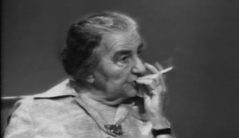
Shortly before her passing, Golda Meir was interviewed for Israeli television. After shooting ended, the cameras kept rolling, recording an intimate talk with the first and only woman to ever rule Israel. As she lit one cigarette after the other, Golda spoke freely, pleading her case for her term as Prime Minister – five turbulent years that secured her place in history, albeit at a high personal cost.
Based on these never-before seen materials, testimonies of supporters and opponents and rare archival footage, GOLDA tells the story of Meir’s dramatic premiership – from her surprising rise to power and iconic international stature as “queen of the Jewish people”, to her tragic and lonely demise.
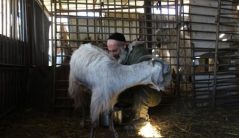
Ibrahim Yassin was born in a small village in Lebanon and was destined to follow in his father’s footsteps as a farmer and shepherd, but fate had something else in store. As the course of his life turns against him, death becomes his only wish. But just when it seems as if the story’s over, a new one begins that sounds like a work of suspense fiction, placing Yassin at the heart of some of the most daring, dangerous and secret operations Israel attempted in Lebanon in the 1980s and ’90s. When once again the earth trembles beneath his feet, he is forced to start all over again.
The film sketches an intimate portrait of a man who through tribulations, coincidence and choice became one of Israel’s leading spies.
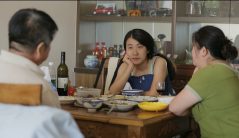
The film follows three successful Chinese women who despite their thriving careers still live with the derogatory label: Leftover Women – a term used in China to describe educated, professional women in their mid-20s who are not married.
With 30 million more men than women, the social stability of China is under threat, and single women are perceived as the solution to the problem. As they search for “Mr. Right”, they struggle to stay true to their personal and professional ambitions, while dealing with pressure from their families, friends, and a government that has launched a campaign to stigmatize unwed women.
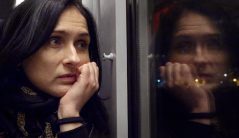
When Chile was 22, she was kidnapped from a pub in Hungary and sold to a group of Israelis who trafficked for prostitution. Today, twenty years later, Chile is a different woman, one who has managed to get out of the drug abuse cycle, celebrating 10 years of sobriety, and volunteering at the Levinsky Clinic to try and help women on the street.
When the Ministry of Interior in Israel refuses to give Chile a resident certificate and to believe that she is a victim of trafficking in women, she goes looking for her kidnappers to obtain proof. The journey to the past forces Chile to return to the scene of prostitution, only this time with a little more power and a camera in hand. Chile begins to document and work through the trauma, but can you go back to your most painful place and stay alive?
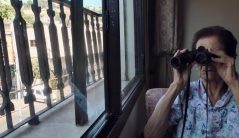
Unable to accept her slow and meaningless death, Hiam Jarjoura (85), a perpetual housewife and a hopelessly devoted mother – resorts to unexpected encounters with her own past, and a gradual flirt with death, all of which lead her to look for light in a world that she so detests.
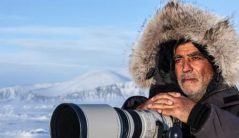
He swam with crocodiles and killer whales, with anacondas and with great white sharks. But one major predator has always eluded Amos Nachoum.
The legendary wildlife stills photographer had always dreamed of swimming underwater with a polar bear and capturing it face-to-face on film.
He tried before and barely escaped, but now, as he nears the end of his career, he is determined to give it one last shot.
The danger is real, perhaps more real than ever, but this is his last chance to get the picture of a lifetime.
As the journey unfolds, Amos contemplates the series of unspoken events that drove him here, to the end of the world.
It has been a long and painful journey, but where others find fear, Amos finds redemption.
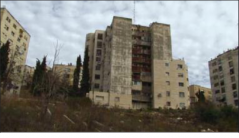
The film focuses on Stern Street in Kiryat Yovel, a Jerusalem neighborhood hastily built to accommodate the waves of Jewish immigration in the 1960’s.
45 Stern Street has been my home since 1972, although in recent years I have divided my time between Stern and France.
One day in 2008, I stood at the window that faces the building’s entrance, and watched the residents coming and going, and started to film what I was seeing, capturing the changes that were taking place over time, changes relating to the identity of the residents and to the power of religion…
Aaron, an American hunter, enters the dark heart of the African bush, on a surreal neo-colonial expedition, emulating thousands of years of indigenous rite of passage rituals, as he hunts the ultimate trophy – the king of beasts. With intimate access and never before seen footage, the film question man’s very nature, as well as our place in the animal kingdom.
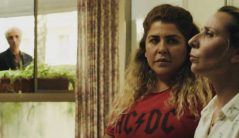
Lea is forced to commit her mentally ill father yet again, expect this time she is not willing to do it alone. She drags her younger sister, Batya to come with her to face him once and for all. Their father’s refusal to cooperate forces them closer together.
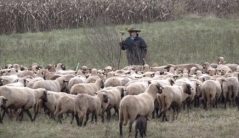
The film “Refugee Lullaby” is a story about human compassion, about Hans Breuer, who cannot sleep at night knowing there are refugees who need help, two hours’ drive away from his bed.
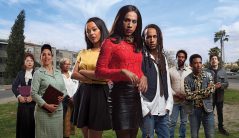
It seems that race and racism are issues that do not disappear from the news all over the world. But Worko does not care about race. He is a 27-year-old man from Ethiopian origin who lives in Tel Aviv and has one dream – to become a famous singer. He borrows money to create a video-clip that he thinks will brings him his big break. Meanwhile, the people he borrowed the money from are catching up with him and threaten his life. Worko realizes he doesn’t have a way to return the money, so he decides to run and hide where his mother lives and where he grew up, a neighborhood which is an Ethiopian ghetto. When the underworld thugs arrive and try to find him in the ghetto, Worko dresses up as a sexy and provocative woman named “Titi” and becomes a coordinator for an Ethiopian women empowerment group. This is the moment when he meets the love of his life.
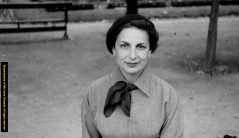
She lived in Cairo, Paris and New York, but died in an old age home in Givatayim. She was admired and beautiful, but only few knew her during her life and even less after she passed away. She was the first to write of Levantine and Mizrachi identities, like no one else before her. Director Rafael Balulu goes on a journey in the footsteps of the Levantine thinker and author Jacqueline Kahanoff and through encounters with her elderly friends in Paris, leading intellectuals in the Mizrachi discourse in Israel and fascinating Levantine women artists, he not only draws a portrait of this impressive thinker, but also discovers the fate of Levantine identity in Israel as a cultural option of Pride And and Honor.
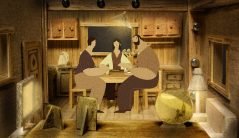
A crisis in a young woman’s life forces her to return to her parents’ home. Her reappearance destabilizes the delicate balance in the family nest.
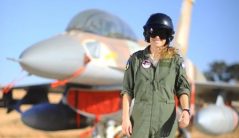
Tamar Ariel grew up in a religious home on a moshav in southern Israel. Encouraged to follow her dreams, she did a two years voluntary National Service and then joined the IDF air force, where she served as the first-ever Jewish Orthodox combat navigator.
In 2014, wishing for new experiences after her military service, she traveled to Nepal. She reached the peak of the Annapurna mountain range with a group of Israeli and international hikers, only to encounter an unexpected snow storm. Tamar and her companions found themselves in a life and death struggle against the elements.

Yonatan escapes the army in an attempt to reunite with his ex-boyfriend. After it turns into a failure, he finds himself alone in Tel Aviv, without a place to sleep. Broken and confused, he goes on a wild night’s journey looking for consolation.
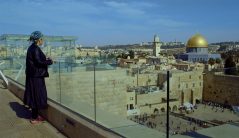
The four Aharonov sisters are committed to a singular cause: Rebuilding the Holy Temple in Jerusalem on the Temple Mount, where the Dome of the Rock now stands. To fulfill their dream, they are willing to pay a steep price.
A boy meets a girl, meets a pita.
Produced in the framework of “Short and Edgy 2018” in collaboration with the Lod Social Film Festival

A family of Eritrean refugees gets a confirmation for their asylum request. A few minutes before their flight to Canada, the airport clerk tells them they can’t get on the plane because their baggage is overweight. Their emotional argument is the trigger that causes the mother of the family to leave her children and her husband and go all the way back home to find what she has lost.
Produced in the framework of “Short and Edgy 2018” in collaboration with the Lod Social Film Festival

The A-Salim family has been typing requests for visitors at the Israel Ministry of Interior Affairs in East Jerusalem for three generations. This film tells the story of a family typewriter, which has been passed on from father to son and follows Abed A-Salim, head of the family, and the Mukhtar of the Gypsy community in East Jerusalem.
Produced in the framework of “Short and Edgy 2018” in collaboration with the Lod Social Film Festival
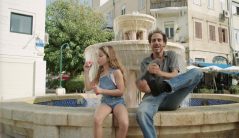
A divorced father tries to contend his daughter’s mistrust, in the short and rare time they spend together.
Produced in the framework of “Short and Edgy 2018” in collaboration with the Lod Social Film Festival
Haim is an eighteen-year-old boy who lives with Dalia (his mother) and Alon (his older brother) in a small apartment. The joy of Haim’s youth is disturbed by the terminal illness of his brother. Dalia’s decision that Alon’s place is at home puts Haim to face the consequences of the disease. Haim finds it hard to see his brother’s agony. When the situation deteriorates, the family values on which they were raised, are put to the test.

A man steals flowers. His appetite grows as he steals more. We follow him as he picks the flowers of different women. From a thief who is sensitive to the gaze of passersby, the man’s gaze becomes more intrusive, penetrating homes and intimate spaces.
Finally he empties the city of flowers and offers a bouquet as a gesture to a woman.
She takes the flowers and eats them, momentarily seeming like a spider.
then she dismissively throws back the flower stalks and leaves the man behind.
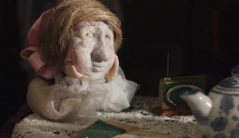
In a little Jerusalem apartment, surrounded by dolls and cats, Miriam Yalan-Shtekelis wrote children’s songs that have captured Israeli hearts for many generations – The Doll Named Zehava, The Soap that Cried a Lot, Michael, and many more. The director, photographer, editor, designer and writer Reuven Brodeski creates a Russian legend about Yalan-Shtekelis, using miniatures that he created especially for the film, interviewing people who knew her, and telling the story of Israel’s most important figure in the field of writing for children – Miriam Yalan-Shtekelis.
Only four biographical details are known about Rabbi Shalom Shabazi. We do not have any drawings describing his features. However, it seems that 400 years after his birth, Shabazi is still an extremely popular poet who continues to live the hearts of an entire community. Who was Shabazi? A poet who committed filicide? Maybe a wedding singer looking for alms? Perhaps a fundamentalist Kabbalah scholar? An author whose primary influences came from Islam? Director Israela Sha’ar Meoded tries to answer these questions and embarks on a surprising and imaginative journey in the footsteps of the greatest poet of Jewish Yemen, who wrote over 800 poems, combining Arabic and Hebrew – a poet who has become a legend.
From building towers out of bottles, to marriage proposals, reminiscing or fishing, Shore Stories introduces us to characters who have left the reality of their homes for the serenity of the shores of the Kinneret.
Another episode in Dr. Zussman’s mysterious talk show: Who will be the unlucky guest tonight?
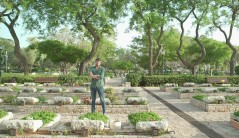
“I decided to start sending letters… until my long-awaited release”. Ami wrote these words at the age of 18, before he was killed in the 1967 War. Through stories, Memorial Day ceremonies, and his letters, Ami was always a present absence for his nephew Shaked, the film’s director. Following his grandmother’s declining health, Shaked applies to the Defense Ministry for nursing care. His claim is rejected. Their refusal leaves him confused. Fifty years after Ami’s death, a shocking truth is unveiled.
Decades after leaving the entertainment world to become an ultra-Orthodox Rabi, Uri Zohar, one of the founders of Israeli cinema, is once again directing a film. With the help of a group of young film school graduates, Zohar directs a film about a successful dancer discovering her faith who, much like Uri Zohar’s own personal story, finds herself torn between two opposing worlds – religion and art. On the road from Tel Aviv to Jerusalem, Uri Zohar shares his story for the first time. His life’s milestones are accompanied by shots from his films, where there is almost always one protagonist, usually played by Uri Zohar himself, battling his inner demons.
Benny (17), an only child who lost her mother at birth, lives with her fundamentalist father in a Jewish settlement inside an Arab neighborhood in the heart of East Jerusalem (Silwan). As her father becomes more and more obsessed with a red heifer that he believes will bring the redemption, Benny drifts further away and into the arms of Yael, a young new woman in her life and embarks on a personal journey that will shape her religious, political and sexual consciousness.
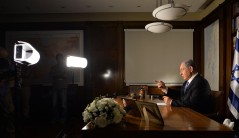
Twenty years before the spectacle of Donald Trump, Benjamin Netanyahu already understood the political benefits of a toxic relationship with the media, and direct communication with the public. King Bibi explores Netanyahu’s rise to power, relying solely on archival footage of his media performances over the years: from his days as a popular guest expert on American TV, through his public confession of adultery, and his mastery of the art of social media. From one studio to another, “Bibi” evolved from Israel’s great political hope, to a controversial figure whom some perceive as Israel’s savior, and others – as a cynical politician who will stop at nothing to retain his power.
On the night of March 5, 2002, an armed terrorist opened fire on civilians dining in a Tel Aviv restaurant. Druze policeman Salim Barakat quickly arrived on the scene and bravely eliminated him. However, he was killed by the terrorist. For ten years, Jamal, Salim’s brother, has been attending annual police ceremonies in commemoration of his brother. Suspecting they may be withholding information, he decides to go on an investigative journey to find out who killed his brother. This is the story of a bereaved brother facing the Israeli security establishment, of a Druze facing the State of Israel, and more than anything, of a man facing himself.

Hidden behind heavy metal doors of an old Jerusalem bomb shelter, lies a tiny animation studio. Every week several children of Russian immigrants meet to create a colorful carnival of monsters and earthquakes. “Wild Kids” illuminates the subversive world of two talented teenage artists, Zalman and Aharon, and accompanies them over a period of one year, as they discover their own identities. Zalman must decide whether to stay in Israel and Aharon strives for recognition of his radical artistic path. The studio leader, Max, lives art as an alternative way of life. The images they create together are integrated into their uncompromising world view.
Hila (14), an empathetic and sensitive girl is trapped in an inappropriate relationship. Hidden from the eyes of the kibbutz in Liat’s apartment (26), they’re locked in a whirlwind of intense nighttime sessions. When the demands and the manipulations escalates, Hila is shaken and tries to keep her distance.
Omar is visiting his parents’ house with the baby girl of his departed lover, Ma’ayan, a Jewish woman. The presence of the baby in his childhood home brings up old tensions between him and his parents and opens up Omar’s wounds.
An experimental and intimate docu-art closely follows six years in the life of a unique family. This reflective self-documentation deals with the unbearable gaps between dreams and body limitations. Surprisingly, it might offer solace, or even raise a smile.
63-year-old Jonathan Katzenelson leads a double life. As a dentist, he travels to Jerusalem every morning to care for his patients. When he returns home in the evening, he puts on a crimson robe and becomes Tenzin Teckchock, a Buddhist monk and the head of an Israeli Buddhist community. With the death of his father, Jonathan is finally free to fulfill his heart’s desire – to immigrate to the ‘Nalanda’ Monastery in the South of France.

Miri Ben Simhon was born halfway between Morocco and Israel, in the city of Marseilles. She died halfway between Tel Aviv and Jerusalem, at the age of 46, in a car accident that looked more like a suicide. In her life and poetry she wandered restlessly, in buses, taxis and hitchhiking, feeling out of place. In a rare recording from 1988, discovered by accident, Miri reads a touching love letter, dedicated to the poet Meir Wieseltier. This love letter constitutes the heart of the film and exposes a central axis of her poems and her wounded soul.
A conspiracy thriller, based (mostly) on a true story.
The story of reserve soldiers, who volunteered to take part in an anthrax vaccine experiment during their military service. 7 years later they discover the vaccine has disastrous side effects. They set out to expose the truth and save their own lives.
In the hot and humid days of August in Tel Aviv, while her parents are going through an ugly divorce in a small apartment, 17-year-old Noga is searching for a place of her own.
Irina Volkov (24) is a film student at the Ariel University. She has Asperger Syndrome and decides to make a film through which she will show the world what it is to live with this syndrome. Her peers at university are “regular” people, as she refers to them, but she feels that there is a glass wall between them, which she cannot break through. The film shows two points of view: Irina’s point of view on the one hand, and the point of view of Hadas Afari (27) and Adi Amran (26), who are making the film with her and film Irina as they see her.
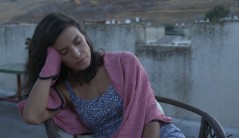
Before Uncle Evyatar knocks on their door, Abigail and her daughter Liat are both lonely and estranged from one another. But as soon as he walks into their tenement building apartment in Kiryat Shmona, things begin to change. The fact that Uncle Evyatar is a fugitive from justice makes what transpires between him and the two women during the time he spends with them only more dangerous, more riveting and more morally complicated.
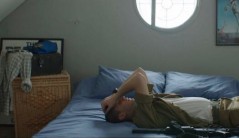
‘Moment to moment’ tells the story of Yoav, a young combat soldier who returns to his Jerusalem home for the weekend. On his way back he witnesses a stabbing by a terrorist, freezes and fails to react. He flees the scene, runs home and tries not to think about the event, but it keeps coming back to haunt him.
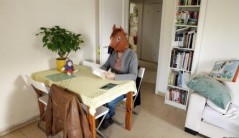
Five prominent Israeli poets present their POV on poetry, culture and life in a way never before seen.
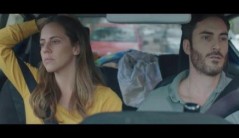
Rona and Amnon (30), young parents, are trying to break through their economic and social status with an improvised business for cooking and distributing lunch to the elderly in the area.
The daily encounter with the sights of the old age and her elderly clientele, brings Rona together with unfamiliar and repressed places within her, and the race to build a new life, in the shadow of her encounter with the elderly couples, overshadows her and Making it difficult for her to function as a mother, as a spouse, and as a worker in her business.
The intimacy of Rona and Amnon, who are divided in their worldview, is steadily deteriorating, to the crucial point where they are forced to stand together and each one in front of painful decisions. make painful decisions.

At first glance Dormagen is a perfect, green and pastoral town just a short distance from the big city. Its residents opened the gates of the city with love to the stream of refugees that filled Germany, but the warm welcome carries with it a hidden fear from the future.
On one bus line that crosses the entire city one can witness a social microcosm. From refugees, who have just arrived to adult Germans, all are destined to travel in this metal pipeline that forces intimacy on its inhabitants. Through the stories of the passengers on this bus line, the story of Germany post the wave of immigration unfolds.
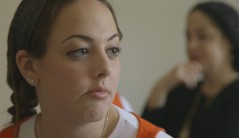
Rachel, a graduate of Beit Ya’akov, entered an ‘arranged’ marriage, wishing only to be ‘a kosher woman doing the will of her husband’. Finding herself in a marriage that did not succeed, she divorced, after which she asked permission to remove her wig– an unusual move in Ultra-Orthodox society. The opposition of her parents, Halakha, and society left her feeling conflicted, and set her out on a personal and social quest: to understand the issues of coverage and disclosure, repressed femininity, beauty and modesty, marriage and divorce, marriage at a young age, extremely large families, livelihood or career.
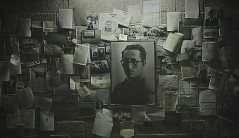
On Friday, June 16, 1933, while walking with his wife Sima on the beach in Tel Aviv, Chaim Arlosoroff—a promising leader and a rising star in the Zionist movement—was shot dead at the age of 34, by two unknown assailants. The assassins quickly fled through the side streets of the city, taking with them the answer to a question that has been left unresolved to this very day: who killed Arlosoroff? Now, 85 years later, it is time to revisit the investigation and remove the cobwebs off the past.
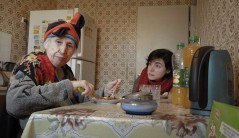
The more that she was forced to fit within her strict patriarchal Georgian community, the more Jane resisted. Refusing to marry, she joined the army, studied film, fell in love and at the age of 38 decided to have a baby. After years of running away from her past, and a moment before motherhood, Jane returns to her roots. Equipped with a camera, she finds the confidence to confront her family and her past for the first time. Using the camera, she tries to break decades of silence in an attempt to better understand her mother and herself in relation to the men in their family, and maybe even find forgiveness as well.
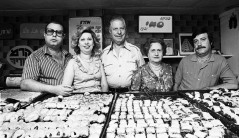
The film follows the rise and fall of the Alkolombris – a proud family of Bulgarian bakers that immigrated to the newborn state of Israel, introducing to its residents their famous Bourekas pastry. Their success was rapid, and the family bakery in Jaffa soon became a well-known establishment, drawing crowds from all over the country. This led to the first franchised food chain in Israel – “Sammy Bourekas & Sons”. Run by the younger generation, Sammy’s two sons and son-in-law, bakeries selling Bourekas popped up all over Israel. Money started to flow, accompanied by an extravagant lifestyle and celebrity-packed parties with Israeli high-society: politicians, soccer players, actors and models. They even opened an automated Bourekas factory. But as the rival siblings began to clash, jealousy, honor and greed began to tear down the family empire.

Water is the basic, necessary element of every known life form. We ourselves are made of water. Water means life and the lack of water unequivocally means death.
In the shadow of the Flood that took place thousands of years ago, four characters, floating between Heaven and Earth, are confronted with the drought of their land and with the changes of Nature.
The film follows three protagonists whose lives are bound together forever: Elad, who went in for a simple operation, but ended up disabled . Despite his plight he chooses life. Rinat, his former girlfriend, decides to get back together with him, despite his condition. She wants to make sure he can father children, but it turns out she’s the one who’s barren. And Einav, a single mother who decides to become a surrogate mother for Rinat and Elad. The film follows all three as they share intimate moments on the way to the surprising ending.
A political detective thriller that goes back to the Shin Bet Security Service interrogation that led to the arrest of the Jewish underground, an organization that operated in the early 1980’s in the West Bank. The Jewish Underground carried out a series of terror attacks against Palestinians and conspired to blow up the Dome of the Rock on the Temple Mount. The film reveals how, over the years, the members of the underground became influential members of Israeli politics, pulling the strings from behind the stage of the current government in Israel.
“Southern Winds” is a short drama that takes place on the beach of Israel and portrays the complex relationship between a father, the local legendary surfer and his only son, who hasn’t seen him in over a year. It’s about big dreams, small Mediterranean waves, and one father who tries to save the one good thing in his life, his son, but ends up proving once again, all he cares about is himself.
Rajae Sanduka struggles with the daily hardships of a Palestinian resident of Jerusalem during the Holy month of the Ramadan, upholding a 120-year-old family tradition of firing the Ramadan cannon. In order to confront his frustrations without risk, he puts on a satirical play at the only remaining Palestinian theatre in the city.
Five prominent Israeli poets present their POV on poetry, culture and life in a way never before seen.

Ruchama, an elderly and devoted wife, tries to maintain a normal life for her and her paralyzed husband in Tel Aviv. A French tourist by the name of Piere reminds her of all she has given up on for the sake of her marriage.
She is swept away for a moment, but having re-discovered her lost sexuality, she must face the consequences of her actions.
Over the nearly seven decades of its existence, the Mossad has cultivated its image as a daring, all-powerful intelligence agency for which no ‘mission impossible’ exists. This four part documentary brings to the screen for the first time the stories of 24 former spy-chiefs and operatives and with them a first-person perspective of the personal and operational challenges they overcame, the ethical dilemmas they faced and the personal price they were forced to pay for the rest of their lives for their chosen career path.
A cinematic delirium. “Even those who have survived find out they have died, eventually”
From the Project: “A sonnet for Yuda”, a cinematic visual tribute to the poems of Yehuda Amichai

“Heavy and tired with a woman on a porch/ ‘Stay with me’. Like men, paths also find their end. With silence or with a snap/ stay with me. I want to be you”
The afternoon routine of a very loving couple in their late 70’s. Loving, but in a different way. More different than anything the screen has shown before.
From the Project: “A sonnet for Yuda”, a cinematic visual tribute to the poems of Yehuda Amichai
From the Project: “A sonnet for Yuda”, a cinematic visual tribute to the poems of Yehuda Amichai
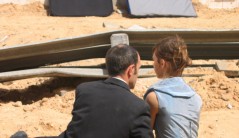
Video-dance artwork by the poem “A man’s life is very long”
From the Project: “A sonnet for Yuda”, a cinematic visual tribute to the poems of Yehuda Amichai
At birth we are tossed into a complex, demanding reality. This is our verdict. In our lives, do we get the chance to sweeten our sentence?
From the Project: “A sonnet for Yuda”, a cinematic visual tribute to the poems of Yehuda Amichai
“I am tired as an ancient language/ invaded by foreign words…” video-art interpitation of the poem “I’m Tired”.
From the Project: “A sonnet for Yuda”, a cinematic visual tribute to the poems of Yehuda Amichai
A poem about love that has died. Banished without leaving a mark. But we saw it as a requiem for life. “The world closes behind us, the sand straightens itself”, these words we felt in our bodies, and not with our brains.
From the Project: “A sonnet for Yuda”, a cinematic visual tribute to the poems of Yehuda Amichai

The little people “living” inside the model don’t care about the revolution. The House has not yet been built, but they’ve been living in it for many years…
From the Project: “A sonnet for Yuda”, a cinematic visual tribute to the poems of Yehuda Amichai
“people use each other as a cure for their pain…”
A couple. Him and Her. One large bed. An option for attraction. He is special and beautiful, she is special and beautiful. An option for love
Video dance from the Project: “A sonnet for Yuda”, a cinematic visual tribute to the poems of Yehuda Amichai
A visual version with footage from the Tsunami Disaster. Following the publication of the poem at “The New Yorker” magazine.
From the Project: “A sonnet for Yuda”, a cinematic visual tribute to the poems of Yehuda Amichai
A story of love and friendship that could only take place in the social and political reality of Israel 2005. A surprising relationship forms between Chaim- a 90 year old jew of German descent with a speech impediment, and Sally, A transsexual woman from The Philippines, Fueled by their passion for the Hebrew language.
From the Project: “A sonnet for Yuda”, a cinematic visual tribute to the poems of Yehuda Amichai
A visual cinematic tribute to the poems of Israeli poet Yehuda Amichai.
“Wonderfull and hard are the days of my life…”
From the Project: “A sonnet for Yuda”, a cinematic visual tribute to the poems of Yehuda Amichai
A visual cinematic tribute to the poems of Israeli poet Yehuda Amichai.
This project includes a collection of short video clips that vocally and visually illustrate the songs of one of the greatest Israeli poets of all time, Yehuda Amichai, who past away on September 22, 2000. Artists from different fields have joined the project and created their own interpretation of Amichai’s poems in versatile genres: Feature, documentary, video-art, video-dance, or music video. Most of the clips are abstract, some surreal, attempting to forward the feelings and sensations of the poems to the audience. Each clip is like a “Poem-Clip” that enables a live, surprising, concise touch between the poem and the audience, forming it into a ‘Piece of life’.
- Poems about myself / Sharona Berger
- Rain on the battlefield / Yoni Ziegler
- A different love poem / Ori Bar On
- Like our bodies’ imprint / Lina and Slava Chaplin
- Love song / Emanuella Amichai, Amnon Weiner
- Songs for a woman / Tomer Heimann
- Young David / Avi Dabach
- Hourglass / Zohar Brant
- Life’s verdict / Assaf Shaffir, Michal Klein
- I’m tired / Doron Solomons
- The model / Regev Contes
- Now, when the waters are pressing mightily / Hadara Levin- Arady, Yonatan Bar-Giora
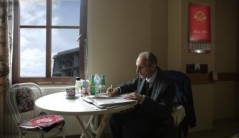
This haunted Tarkovskian reverie drops us inside an Istanbul retirement home, where the battle-scarred residents bask in the camera’s attention. A creaky- voiced woman confides her personal account of the Armenian genocide. A sweetly deluded old Casanova still tries to charm and seduce. A blind photographer fiddles with his flash as he points his own camera back at us. This playful, immaculately controlled film finds hypnotizing rhythms in the residents’ limbo-like state. Meanwhile, outside, ominous construction equipment transforms the land.
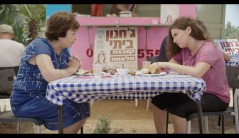
Grandmother Nadia is a strict Russian woman who refuses to accept the fact that her grand-daughter suffers from mental illness. She decides to take the matter into her own hands and tries to cure her the only way she knows how, the Soviet way.

A female couple is celebrating their anniversary in nature, along with their dog Nala. They find themselves in a hidden grove on the edge of a beautiful lake. Slowly they give themselves up to nature and each other until they experience a shattering change in their relationship.
Dima and his family are forced to move out of their apartment, where they’ve been living for 20 years, ever since migrating from Russia. Where their house currently stands, a new residential tower is going to be built.
At the age of 60 Fuad’s wife Aliza decides to travel abroad. Hurt and upset Fuad is left with his plants, boxes of food and the void created by Aliza’s absence.
A patholog’s daily routine is being interrupted when he encounters a body in his image.
Ilan is a drunk taxi driver On Valentine’s Day he decides to surprise his former lover with a bouquet of flowers but this time his lover will surprises him.
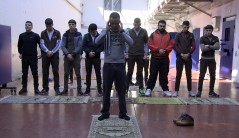
Megiddo is the largest security prison in the world, a microcosm of the painful experience of the two nations.
The fates of Benny, the tough prison commander, and Abdal Basat, the leader of Hamas, are intertwined in one another, depending on common or conflicting interests, all in order to fulfill the yearnings they have, each to his own “freedom”. Their opposing world views lead to a constant struggle while each one strives for a way to survive the prison routine.
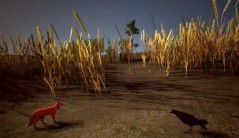
Fox and Crow are pushed into the same landscape. The two fight for their territory in a video game that plays itself. A wildlife computer generated simulation with an open-ended narrative.
This video art piece connects two distinct processes: the humanization of virtual forms, and the process of human motion capture technologies, which is a virtual movement that is disguised as “organic.” The video follows an interview with a psychologist working at a company aiming to investigate how virtual bots can be made human-like. This interview is interlaced with an intimate movement of animated characters. The connection between the parts examines the relationships between stimuli and responses, both human and computerized, and the power and control relations that subsequently develop.
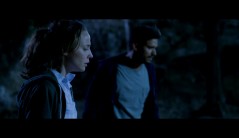
A young couple camps in the countryside. At night their dog goes missing and they find someone else is walking the woods… the couple sets out to confront what lurks in the depths of the forest.
Mali Shamay died of cancer during her military service, finally succumbing to the disease she had been suffering from for several years before enlisting. By army and government rules, she is considered a fallen IDF soldier and her parents are active participants in all national commemoration ceremonies and activities.
But her sister, Adi, finds it difficult to bridge the gap between her personal pain and grief over losing her sister – who just happened to die of cancer during her army service – and between the “national industry of bereavement” – leading to severe friction with her parents.
Adi embarks on an emotional journey to find out, for herself and for her parents, whether being part of this national bereavement family – even if the soldier did not die in combat – actually relieves the pain.
She joins a support group for sisters of fallen IDF soldiers. Among them is Efrat Avraham who, according to her, is Israeli bereavement “nobility”. As single daughters, they both have to deal with a tense relationships with their bereaved parents and with the constant presence of the tragic deaths of their loved ones and feelings of guilt.
After several years of estrangement, Adi returns to her parents’ home and asks them to move closer to her, their only surviving daughter, but they feel that if they leave the house that has Mali’s room in it – a room that has been left unchanged – they will be betraying her memory.
As Adi progresses on her journey, she finds that she is able to gain a new, somewhat more realistic and compassionate perspective of the different ways of coping with loss.
Shimon is hospitalized with severe pains. Roni, his daughter, stays by his side while they wait for his treatment. The time spent together forces them to face with the past conflicts and acknowledge the distance that has come between them over the years
Noni and Tamar live a quiet life with their little girl. One evening, they hear screams in the street and Noni opens the window and asks for silence. After a brief moment, they hear someone knocking at their door. Two young men, drunk and nervous, enter the room.

Movements inside a virtual space, and scenes of events in a living-room invites to skip over the intimacy of family life, mess, laundry and screens. The two dimensional surfaces are being built as a new pseudo three dimensional place. It combines two kinds of logical systems that come into collision and creates transitional situation that departs from the physical and refers to a movement through space as a mental condition. The objects function simultaneously as real and unreal.
Hard to say exactly when did Israel turn from a country based on socialist ideals to a capitalist country, living the ‘work-shop-throw out’ dream. Is it the constant security threat that brings us to live and shop as if it was our last day? Why do the Banks and the authorities encourage over consumerism? And how does the fact the every third Israeli has no credit have to do with it?
“More & More” tracks back the rise of Consumerism in Israel, from the first austerity days of the young country, to the piles of garbage of today.
A cinematic puzzle made up of hundreds of Israeli feature films from the 1960’s till this day. Fragments of shots, pieces of scenes, and short clips from different periods, styles, and colors, are assembled together to create a new narrative: the story of the Israeli man, as seen on screen, searching for love; between wars, from recruitment to marriage.
Cut to the Chase is a love song to cinema, to Israeli filmmakers, and to the heroes of its screen; a cinematic poem built from classical, as well as forgotten moments, in the compilation tradition, that in this new context emphasize and elucidates additional meanings.
It is simultaneously a light and serious look upon the Israeli man; amusing and heart rending.
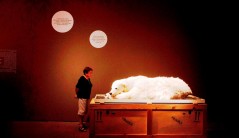
The Museum is a film that observes, examines and ponders Israel’s most important cultural institution, the Israel Museum. The film follows the visitors, observes the observers, listens to the speakers and descends to the storerooms, labs and conference rooms.
The American museum director, the singing security guard, the Jerusalemite curator, the Haredi kashrut inspector, the Palestinian guide and the visitor who lost her vision are some of the characters that take part in a chain of activities which add up to the museum. For about 18 months director Ran Tal collected footage of the daily routine of the museum that seeks to both reflect and mold the Israeli legacy and culture.
In the dead of night, my parents left the house my father had built in the Bedouin village, Tal-a-Sabeh, and moved, perhaps “fled,” to Omer, a Jewish town, very bourgeois, located only 5 km away. For 10 years of dealing with breast cancer, my mother’s only wish was to be buried in Omer. The town never dealt with this issue, of where to bury its Muslim residents.
The film documents an entire family torn between fulfilling the mother’s last wish and social codes that cannot be ignored. During the process of separation from the mother, the film reveals the family intimacy, secrets and dilemmas, raises serious questions about women’s identity, nationality and the meaning of home.
Hybrid film, combining both fiction and documentary.
The story of three good friends, homelessness, from the suburbs of Israel, that decided to go to a trip to The big city Tel-Aviv in order to fulfill their dreams.

A documentary journey about friendship and madness in the digital age.
The film follows real Facebook conversations between me and Ray over the years 2011-2012. The content of the conversations moves from a state of openness and closeness, to mutual accusations, while in the middle ,there’s a video clip for Dudu Tassa, which we must finish.

Miriam (33), leaves her family home heavily pregnant, and moves in with Nevo (31), her terminally ill brother, in a village in the south of Israel. Their connection creates a charged, emotional reunion, during which she can’t decide whether to give in to the pressure and move him to a medical facility, or keep him home, by her side.
The film “Ben David” tells the story of the complex relationship between a religious Israeli Secret Service officer, and his teenage settler informant.
The film present the difficulties in recruiting ISA (‘Shabak’) source from the ‘Hilltop Youth’ for information about ‘price tag’, while presenting the Israeli-Palestinian conflict from a new angle, as an internal conflict within the religious zionism segment of the West Bank.
Anat, a young woman, looks outside her bedroom window, Her grandfather, who passed away, appears outside the window and the city disappears.
“Stains” takes place between two summers. In the summer of 2008 the director left for Ukraine with her camera to tell a story of abandonment: the relationship of an abandoned daughter and an alcoholic runaway father. But as he started telling his stories of escapes, lies, and life as an anarchist fugitive under Soviet rule, the director’s confrontation with her father turned out to be the story of a man who chose to rebel and live under an assumed identity. With the fall of Communism, something in him fell apart. It is the story of an entire generation of men who became helpless, and turned to alcoholism to try and cope. Eight years later, she returns to him in order to complete the portrait, to understand, and to experience that pain once again.
In recent years Anti-Semitism in France is on the rise. Charismatic leaders such as Dieudonne and Alan Soral, are no longer hiding in the shadows but displaying their agenda in public. Tension is felt on the streets of Paris, but the real battlefield is online, where hatred has no limits or censorship. This reality gives birth to a new kind of vigilante: A militant-Zionist hacker by the name of “Ulcan”, who declares a one-man-war against the leaders of the Anti-Semitic movement… “The Patriot” is a dark tale of extremism and vengeance in the Cyber Age.
82-year-old Elisheva Rise passed away. After her death, her children clear out her home, and find some journals she secretly wrote to each of her seven children, documenting 57 years from their birth to the day she died. It was her life’s work. Every evening she would sit in her home in Kibbutz Ein Tzurim and write to her children, whom she had never hugged nor kissed.
Now, they open the journals for the first time.
Following the treasure she left behind, they embark on an emotional and painful journey, learning about childhood, motherhood, and parenting.

Haim Hatuel started stabbing his kids at age 5. This is Delila and Maor Hatuel’s family childhood memory. They are now Israeli fencing champions.
Haim Hatuel is a native of Morocco who arrived in Acre when he was 15 years old. A day after his release from the Israel Defense Forces, Haim saw an ad that changed his life: “The best for fencing.” Haim was accepted into a fencing academy, which was a social sport initiative aimed at turning street kids into law abiding citizens who would go on to pursue a career.
Over the next 45 years, Haim Hatuel built a fencing empire in Acre. Just before the Rio Olympic Games in 2016, the family empire is about to crash.
A literary-documentary journey into Block 461 in Ma’alot. The film presents cooperation and confrontation between documentary expression and the literary text written by the novelist Sara Shilo.
The Neighborhood – “This is a tolerant neighborhood, like the seashore. Wave after wave of immigrant families have broken on it for decades.”
Snow-White – “Snow fell in southern Lebanon the day she was born, so they called her Snow-White. The silence of snow falls in her name, with whiteness and purity.”
The Indians – “They’ve solidified into a close group, tuned to a frequency known only to them. They listen constantly to their own songs, as though they were penetrated with the air of the neighborhood.”
Larissa – “She embraces her notebook, and with its help, as though by magic, she reinvents herself wherever she goes.”
Hidden among the viral videos of YouTube are the most private teenage diaries, which slowly and gently follow them growing up. For years, the camera is pointed towards them allowing us to be with them during their most fragile, painful, confusing and amusing phases of growing up, trying to become the person they dream of being.
In My Room weaves the diaries of six teenagers into one big coming of age story, as it unfolds inside their rooms.
When El-Ad was small, his mother told him: “Raising you is like raising three kids.” Ever since that moment, he felt guilty for being deaf, and tried extra hard to be like everyone else. He became even more alienated after the tragic death of his mother and the breakdown of his family. El-Ad later started a family of his own, becoming a father through a shared parenting arrangement with his friend Yaeli, who is also deaf, surrounded by their deaf friends. The film is his first-person account of the life he created for himself, and his attempt to show viewers his version of family and parenthood.
For the first time on screen, second-generation children of Holocaust Survivors open up about their abused childhood suffering. Only now, decades later, they dare confront the memory of both physical and mental abuse. Their parents, who had survived the Holocaust, had inadvertently turned from abused Nazi victims into the abusers of their own children. The film sheds light on the emotional and psychological consequences on the second generation, as they now dread passing on the pain, abuse and horror to the next generation.
Michal a young single mother, raising her daughter, Keren-Or, between the old depressing tenements of Afula and Jerusalem. Michal is on a journey toward her independence Trying to give Keren-Or the life she never had. Michal wants to give Keren-Or a stable family experience, unlike the one she knew due to her difficult relationship with her mother. Michal is determined to do anything to break the intergenerational cycle for her daughter. Things become more complicated and Michal finds herself dealing with new difficulties she did not expect, giving new meaning to the term parenting. It is a film about love and compassion in the most challenging moments, a film that brings up the question of human existence in the cycle of those who have a poor starting point that keeps them stuck in the outskirts of society through generations, and mainly the question of if will is enough to stop the cycle and give Keren-Or a brighter future.
When Zina immigrated to Israel from the former Soviet Union, she envisioned her son settling down with a blonde-haired Jewish girl. Her vision is suddenly shattered when Gennady announces plans to marry his girlfriend of four years, Nurit, an immigrant from Ethiopia. Now Zina attempts to prevent her son from committing what she believes will be the biggest mistake of his life. Zina’s misplaced desire for her son’s happiness results in this frank, outrageous and occasionally funny documentary.
One year inside the women’s section of the Western Wall in Jerusalem, the biggest confessional in the world. The director, a woman who is breaking-up her marriage, documents the dramatic year in her personal life, juxtaposing phone conversations she has with her husband, family and friends, with occurrences at this unique and volatile site. Wall is a double portrait of a place and of a woman, an encounter between sound and image, the private and the public, God and His absence.
At 80 years old, the actor and holocaust survivor Shmuel Wolf loses his ability to stand on stage. Also his marriage to Miki, who is 20 years younger than him, is going through a transformation forcing them to redefine their roles. Directed by their daughter, Roni Wolf, the film chronicles Shmuel’s journey as an artist, husband and father, and the age gaps in the family, which have become so tangible. A personal film dealing with old age, parenthood, love and art
Five Darfurian refugees must attend Holot detention center. When they arrive they discover that they are late and that they will have to spend the night outside. When the darkness surrounds them, the desert becomes a mirror of their souls, accompanying them on a spiritual journey in search for answers.

A young French Israeli actress, is visiting Israel for an auditionr during one of the recent Israeli-Palestinian wars.
The omnipresent atmosphere of war sends her on a hopeless quest for Jouissance, a journey into her own unconscious as it reflects the outside world.
Shuli and Moti are a young ultra-Orthodox couple and parents of three children. One evening they decide to change their identities and travel to the other side of town for a night out. They want to feel the freedom and temptations that secular nightlife has to offer. Slowly they start to do things their religious beliefs forbid. Exposed and confused, they will have to deal with the consequences.
Hananel, a young religious Jew, is hurrying home for Shabbat. An unexpected encounter with Mundir, a stubborn Palestinian hitchhiker, leads Hananel on a series of mix-ups that eventually teach him a lesson in communication, friendship and love.
Shira is a 19-year-old young religious woman who volunteers in a school as part of her national service. When one of the girls there shares her dark secret with her, Shira tries to help, but things get out of hand and end in disaster and painful disillusionment

The Impure is a documentary film which brings to life a dark story which took place in Argentina in the early 20th century. The “Impure” was how the Argentinian Jewish pimps were called by the “normal” Jewish community. They were vicious organization leaders and brothel owners who practiced religious lives while trafficking thousands of unfortunate Eastern-European Jewish women. One of them was a relative of mine. Those women were unjustly also referred to as “Impure”, and the Jewish community tried – and is maybe still trying – to bury this story in history.
The story of the founder of the political party Ale Yarok, Shlomi Sandak, and his twenty year struggle for the legalization of cannabis in Israel. Shlomi’s son, Uri, became mentally ill after using hard drugs, and committed suicide.
Four short films that were born in a workshop held in Yeruham by film directors Robbie Elmaleh and Meital Abukasis. The local participants’ films present personal stories dealing with childhood, adolescence and the search for identity. They examine the importance of grace and charity in this life and in the Hereafter; the secret that attracts youth to participate in the Selichot prayers in the local synagogue; the fragile relations between the town’s veteran community and the new, fervently religious, Garin Torani; and the power of a woman’s basketball team as a source of female empowerment.
A woman spends her 50th birthday with a stranger and a little boy.
As his almighty father becomes paraplegic, Eliran Zaken’s world turns upside down. At the age of 15, he has to provide and take care of his family, even if it means crossing all the red lines.
Dalia gives her little daughter Ela a head lice treatment in the bathroom. When Ela’s father surprisingly arrives to pick her up for a Saturday hangout, the intimate lice treatment becomes a divorce fight
What happened to the worn sofa we discarded after our visit to Ikea? What became of the kitchen dishes we left by the dumpster? Cast-Offs depicts the journey of discarded items from the heart of consumerist Israel to the periphery and the Palestinian Authority, where they come back to life.
The film exposes an underworld that exists alongside our consumer reality – a transparent existence of transparent people whose livelihood depends on the objects we discard offhand, without even giving a thought to their fate.
Women of Freedom follows the stories of women who were murdered in the name of ‘honor killing,’ women whose lives are under threat, women who survived murder attempts, even that of a killer expressing remorse.
The documentary tries to unravel the social and political circumstances that have led to this custom. The murder of a young woman in my hometown of Nazareth 43 years ago has left me agitated. In order to investigate the causes for this enduring phenomenon, I embark on a physical and emotional journey through Israel and the Palestinian Authority.
If you ever thought that love and attraction between a man and a woman are spontaneous and irrational, think again. An entire industry of books, workshops and tutorials is teaching men how to be successful with women and how to become ‘Seduction Artists’.
The film follows the story of three young men that have become part of the seduction industry in Israel. When the search for human connection becomes a competition over achievements, men who take part in this exploitative contest may find that they have become even lonelier.
In Ae’bleen, an Arab village in the Galilee, Rageb and Ward are best friends, and their Christian families enjoy excellent neighborly relations. One night, during an argument, Ward’s brother, provokes Rageb, cursing his sister. Rageb pulls a gun and kills him. Now the victim’s family must avenge. It’s a cultural norm. Their honor is at stake. Only the Sulha, a unique Arab ancient peacemaking procedure can stop the bloodshed. If it succeeds, the families will declare peace. Should it fail, the whole village will immerse in blood. It’s the first time a documentarian has been allowed to follow the complicated Sulha procedure.
The story of the pork industry in Israel, an industry that has raised ethnic tensions and heated struggles over the country’s short history. Sitting firmly between Israel’s most essential identity issues and the fundamental right to freedom of choice, how did the unsuspecting pig turn into such a central taboo in the Jewish tradition and one of the secular state’s most prominent symbols? Praise the Lard is a film about the Zionist movement’s attempt to create a “new Jew” in the land of Israel, unbeholden to old traditions, and about this new identity’s struggle to survive in the face of fierce resistance from religious and observant Jews. Praise the Lard presents a sharp take on the outsized role one farm animal came to play in the Holy Land.
Part of “Hunger Project.”
At the age of 27,Meir decides to limit his needs to a minimum. Fasting becomes an act of defiance and a declaration of independence: to be hungry is to suffer, but fasting is strength and a form of rebellion against abundance. Meir is portrayed by an actor who become homeless in Tel Aviv.
Part of “Hunger Project.”
The famine in Ethiopia was first discovered by the Western media in 1983. It took a long time for the story to reach the headlines and by then many had died. What were the circumstances that led to that hunger’s exposure in the media and why are there still millions of diseased and hungry that live in refugee camps around the world?

Part of “Hunger Project.”
This animated short tells the story of a mother who wakes up in the middle of the night to discover she is missing one of her breasts.
Part of the “Hunger Project“.
A film about victims in a disorienting and distorted reality using surreal imagery, and sound and text from “The Society of the Spectacle” by Guy Debord.
Part of “Hunger Project“.
A mock talk show that brings together a moderator and experts in various fields to discuss the disappearance of the art of hunger, once a popular public performance, that for some reason has become extinct. A part of the text is quoted from Franz kafka’s “The Hunger Artist.”
Part of the “Hunger Project“.
A portrait of a fabulously stubborn Indian woman who gathers the working children of the slums surrounding the hi-tech city of Bangalore for afternoon studies in a makeshift classroom.
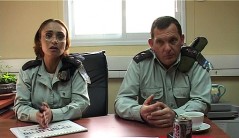
Part of the “Hunger Project“.
A documentation of the actions and activities that have brought the Palestinian population in the Occupied Territories to a state of near hunger. A series of interviews with various functionaries brings forth the story of the current food distribution mechanism in the Territories.
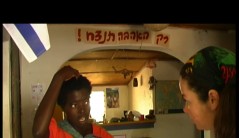
Part of the “Hunger Project“.
In September 2001 Irit Rabinovitch started a day care center for the children of Cape Maclear in Malawi. In one of the world’s poorest and underdeveloped countries hunger is evident in the bloated stomachs of the Cape’s children. Though they sing children’s songs they mature into a grim future set against a backdrop of paradise landscapes.
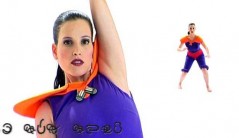
Part of the “Hunger Project“.
Hunger for communication in an increasingly technological world is portrayed by the artist gliding through a white space, seeking contact with an evasive female dancer.

Part of the “Hunger Project”
Three hunger stories relating to art, the holocaust and a childhood memory. A doctor and a psychologist attempt to explain the cognition of hunger and its pure physical experience.
Part of the “Hunger Project”
Filmed in a single observational high angle shot a theatrical group of chickens peck and pick at the ground in search of grains. It’s a battle with strategy and tactics where the clever and strong gain the upper hand, or do they?
Part of the “Hunger Project”
David Hemo, a Marxist sociologist and the director’s father, presents his sarcastic and shocking analysis of the inevitable link between hunger and politics; one that is corrupt and infused with convoluted concepts that are gradually destroying the existence of a welfare state.
Part of the “Hunger Project”
A food messenger in New York makes his round of deliveries in various neighborhoods, most of which are way above his own financial capabilities. On his journey he recounts his illegal entrance into the United States across the Mexican border in search of freedom and wealth that remain beyond his reach.

Part of the “Hunger Project”
“This is the place I’ve dreamed about…Youkali.” Foreign construction workers on their lunch break, a Filipino woman condemned to serving an aging woman. Life is forever somewhere else. How do you look at the camera? What do you sing?

Newsletter Signup
Sign up to our newsletter to receive updates about events and submission deadlines
Greenhouse Website

Our Facebook



 With the support of the Ministry of Culture - The Israel Film Council