



Hunger Project
Search the Site



Newsletter Signup
Sign up to our newsletter to receive updates about what's going on at the NFCT
Archives
A special project made by 14 filmmakers and artists, about ”Hunger” – in its physical and concrete sense, but also about its political aspects as well as its conceptual and metaphysical manifestations. Hunger has a spectrum of individual and collective aspects, ranging from the basic survival impulse – “eat or die”, that precedes the need for shelter and love, to the ethical – the satiated world becoming increasingly satisfied while refining its exploitation of hungry societies, in turn becoming increasingly unsatisfied as it is continuously flooded by an abundance of consumer goods and overfed with temptations. It seems that humanity is condemned to unsatiated hunger, always wanting more.
Curator: Naomi Aviv
- ABC Bangalore/Timna Rozenheimer
- Cape Maclear/Liran Barlev and Ariel Glikson
- Consuming Hunger: Getting the Story/Ilan Ziv
- El Camino Real/Ofri Cnaani
- Fast/Avi Dabach
- Grains/Nurith Aviv
- Hunger As Art/Daniel S. Milo
- Hungers/Yvonne Miklosh
- Mom/Tal Barli
- Reality Show/Sharon Hemo
- The Code/Masha Yozefpolsky
- The Food Chain/Ariella Azoulay
- The Garden/Uri Katzenstein
- Youkali/Dana Goren
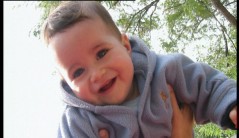
Part of “Moments, Israel 2004: The Face of the Nation.”
Michael Shlomo Oppenheim is one year old. Through a series of portraits of his family members we get a picture of the dynasty, a collection of people, the exploits and the genes that brought Michael to the world. Furthermore, we see the world as seen through Michael’s eyes: faces that together tell a story, the story of the Jews in the twentieth century and the story of the State of Israel. The face of all of us: fighters, victims, and human beings.
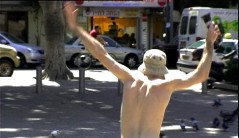
Part of “Moments, Israel 2004: The Face of the Nation.”
The story of a young man who lost his shame after babysitting the king’s children. Instead of shouting “The King is Naked” he did something else…

Part of “Moments, Israel 2004: The Face of the Nation.”
A young girl is driving a jeep and putting on make-up. She races along the creases of the face of the nation. She waves goodbye to the wrinkled face, and takes off to another face. She immediately discovers that on another face, her own face turns into the image of the place from which she came.

Part of “Moments, Israel 2004: The Face of the Nation.”
Jerusalem, 2004. From one terrible bombing to the next we try to carry on our everyday routine. But how can you sit on a bus today without looking around all the time for a potential suicide bomber? So who are the people who do take the bus? Those who have no choice.
Part of “Moments, Israel 2004: The Face of the Nation.”
Outside is noisy. A cacophony of car horns, talk, shouts, steps, the chirping of birds and explosions come together to work on the senses. And we are not satisfied. God whispers “listen to your heartbeats, knock, knock, it’s me knocking. Knock. I’m in here, not outside.”
Part of “Moments, Israel 2004: The Face of the Nation.”
“I had an Arab. Actually Two. An Israeli Arab and an Arab from the Palestinian authority. And I’ve been with a Druze. Now he’s a major in the army. I haven’t been with an Ethiopian. I had an Afro-American though, in New Orleans.”
Part of “Moments, Israel 2004: The Face of the Nation.”
Rafah, a city so close yet so far from Tel Aviv. For many, it is so far that they don’t really care what’s going on there. Only a great disaster puts it on the map. The city and its refugee camps paid the price of the political conflict… perhaps because it is located on the border, perhaps because it is too far away.
Kinneret and Shahar, a young couple in a longtime relationship, find out that their memories and thoughts are mixed, and they do not know how to distinguish what had happened to whom. The film moves between past and present time showing the sources and results of this discovery.
Director Amir Stolar tries to recall the event of the day when his father abandoned him and fled the country, 12 years ago. His digging into this old wound blends with the inter-continental relationship he has with Victor, his Swedish partner.
Gradually, things turn into a bureaucratic struggle intended to get Amir’s father to attend the wedding of Amir’s brother, Roni.
Not a Minute More is the honest, uncensored depiction of one average Israeli family’s attempt to confront a complex, arduous reality and to overcome it, making a better future for itself in the process.

Part of “Moments, Israel 2004: The Face of the Nation.”
Equality. Working the land. Solidarity. Jewish culture. These are the sublime values that drove the founding fathers of the State. These figures are etched on the Israeli bills. What are these values, compared to the value of money? And what is the face of the nation? The portrait on the bill or that of the person holding it?

Part of “Moments, Israel 2004: The Face of the Nation.”
“I’ve been living in Berlin for six months now. It is the most German city of all. Being an Israeli woman in Berlin is to feel sick upon entering the U-Bahn (the underground), but to ride it anyway, while watching memories that aren’t mine go by. But I know that things happened here, not so long ago. To ride and to remember, to ride and to hear: that Israel is the greatest threat to world peace…”

Part of “Moments, Israel 2004: The Face of the Nation.”
“The Channel 2 reporter arrived first, with his cameraman, a lighting guy and make-up person. He asked to bring out the hard lines of my face. I didn’t protest. At eight in the evening, precisely, he gave me my cue to start.” Based on a story by Yossi Levi.

Part of “Moments, Israel 2004: The Face of the Nation.”
What seems beautiful `en face` is not necessarily beautiful in profile. Can a rhinoplasty change one`s character?

Part of “Moments, Israel 2004: The Face of the Nation.”
The Israeli’s most typical characteristic is his cell phone. He takes it everywhere. A musical-cinematic work composed entirely of cellular ringtones. It begins in harmony, slides into dissonance and ends up in horrifying cacophony.

Part of “Moments, Israel 2004: The Face of the Nation.”
Migrant workers share with us the first words they learned in Hebrew and tell us how we look in their eyes.

Part of “Moments, Israel 2004: The Face of the Nation.”
The director, Regev Contes, arrives at the police department and asks the police illustrator to help him construct the face of the State of Israel – as a police sketch. It soon turns out that the cop and the director have something in common…
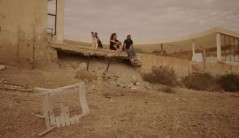
A restaurant that was built on the waterfront of the Dead Sea years ago, now stands abandoned in the wilderness. Ronnie Carmel and Zouheir Amad remember, each from their own time spent there, portraying a place that survived wars and conquests, but finally succumbed to the elements.

Part of “Why don’t you say it?” Project
Interior and exterior scenes from the director’s home on the outskirts of Tel Aviv. Illusive sounds and testimonies of the director himself, the rain, the front facade of a brothel, the police in action, and a fire.

Part of “Why don’t you say it?” Project
Through an imaginary conversation between five women, the film touches upon the physical and emotional experience of being abandoned on a sexual basis.

Part of “Why don’t you say it?” Project
The commodity on sale is a “woman of valor.” The woman of valor (the director), is always on high heels, always flirting, and always has something stuck in her mouth or next to it – and she loves it.

Part of “Why don’t you say it?” Project
The portrait of a conniving woman (the director). The film challenges the prevalent view of the artist as a man/woman of morals, in continuation of her film “Charity.”

Part of “Why don’t you say it?” Project
A strange story about the sorrow of penetrability. Pupa-men in a primordial landscape (“They are not devoid of desire”), sound recorders (“who effectuates and who is effected?” and a singer (“his own ghost director”).

Part of “Why don’t you say it?” Project
The director’s mother gives a lesson in preparing gefilte fish. Her voice comes out of her son’s mouth. On “gefilte fish Oedipus” and the Norman Bates “Psycho” Syndrome.

Part of “Why don’t you say it?” Project
“I’m here,” a woman sings out of the director’s apartment in two cities, Berlin and Tel Aviv. The camera reveals the woman time and again, waving a red cloth, marking her spot from afar.

Part of “Why don’t you say it?” Project
A newspaper picture of a sale in a mall in Philadelphia, 2003, captures the director’s eye. A woman is crushed to death by the mob while trying to purchase a DVD player for her son. Reconstruction of a similar situation in the shopping mall of the city of Lod, Israel.

Mili, “damsel in distress”, moves between lonely scenes in the snow-covered forests of Finland and the tough male-dominated Wild West of Israel. On her road trip to Yeruham, a small town in the Negev desert, she meets cowboys, herdsmen, hunters and a sheriff, all of them more pestering than charming. Armed with a Colt and a camera, this shy, sugar-sweet Calamity Jane succeeds both in softening men’s hearts and gaining their respect. A young woman on a quest, torn between the desire for closeness and distance. A provocative portrait of tough guys and unerring pleasure seekers that brings a smile to the face.

In the year 2047, the government passes an amendment to the law of return stating that all Jews around the world must immigrate to Israel by the end of 2048. Through the stories of four young people, we learn what happened to Israel in the last hundred years and if it is the same Israel we know.

July 2014. Eitan, a young IDF commander, is about to enter Gaza with his troops, during operation “Protective Edge”. He is suddenly overwhelmed by memories of his childhood home, in Gush Katif. He is thrown back in time to the evacuation from the settlement he grew up on and these memories are disrupting the pre-battle briefing he is giving his soldiers.

Part of “Why don’t you say it?” Project
The “Stripes” and the “Hoods,” two gangs with a long history of conflict, fight one another in the urban space of an imaginary, conceptual territory.

Part of “Why don’t you say it?” Project
Seven patients shift from a state of wakefulness to a state of sleep while receiving general anesthetics in a hospital, exploring the moment in which a person gives total control of his body to another.

Part of “Why don’t you say it?” Project
The portrait of a woman at the moment of orgasm; a mute, forced scream, extracted from dozens of pornographic films, corresponding with Edvard Munch’s painting.
A 100-min. long film program, curated by Michal Heiman, in which the NFCT invited visual artists to work under its auspices. “Now, when the moving images introduced by the digital revolution are shifting from screening halls to exhibition spaces, a new definition of film may be generated – not from the restricted field of the history of cinema, but from the expanded field of the history of art.” Ariel Schweitzer, “Interview with Philippe-Alain Michaud,” Studio 159, 2005
The films:
1. 2 Flags/Rona Yefman
2. Aishet Chayil/Ariela Plotkin
3. Candy House/Karen Russo
4. Che-Che the Gorgeous/Gilad Ratman
5. Gefilte Fish/Boaz Arad
6. In My Home/Elyasaf Kowner
7. Odds and Ends/Yael Bartana
8. Scream/Dana Gilerman
9. Still under Treatment/Aya Ben Ron
10. When Night Falls/Ariella Azoulay
11. Zoom Zoom/Michal Rothchild

Part of “Moments, Israel 2005-Jerusalem.”
Yaacov discovers he is the legal owner of the Wailing Wall. Now he must do something with it…

Part of “Moments, Israel 2005-Jerusalem.”
An original look at the events in the Wailing Wall’s plaza, as seen via the contradiction-filled character of Aliza, who is in charge of the repair and maintenance of the Wall’s stones.

Part of “Moments, Israel 2005-Jerusalem.”
13 year old Mussa is forced to work day and night doing odd jobs in order to help out his family. This film follows a day in a life of a boy, who’s been forced to grow up prematurely.

Part of “Moments, Israel 2005-Jerusalem.”
Moshe the cantor, and Avner the rap singer live next door to each other but don’t seem to have anything in common. However, an incident which occurs the eve of the Sabbath may change everything. Can the music bridge the differences?

Part of “Moments, Israel 2005-Jerusalem.”
A journey following the photos taken by Ilia Kavidan, an Armenian photographer, who documented Jerusalem from 1925. This journey aims to compare between the past and the present and thus tell the story of Jerusalem.

Part of “Moments, Israel 2005-Jerusalem.”
The days of the fall of the third temple, police robots besiege a desolate Jerusalem. They are the only ones to have survived…

Part of “Moments, Israel 2005-Jerusalem.”
A 30 year old man sits in the Azrieli towers in Tel Aviv and reflects on his days as a student in the Bezalel school in Jerusalem. He decides that in his old age he will return to the city and set up his private souvenir shop.

Part of “Moments, Israel 2005-Jerusalem.”
The Wailing Wall is Jerusalem’s eternal symbol, but was this always the case? What have we done to preserve this situation, fix it in our consciousness and turn this wall into a religious and historical symbol and what has changed since 1967 in our attitude towards it?

Part of “Moments, Israel 2005-Jerusalem.”
“Who needs to go abroad? The Old City of Jerusalem is so close, and so beautiful, and it’s ours. And everything’s so cheap!”

Part of “Moments, Israel 2005-Jerusalem.”
The director’s personal journey to the Machane Yehuda market, where her father used to work, and her reconciliation with the market and her father’s profession which caused her embarrassment when she was younger but today is a source of pride: pride of a father who worked very hard in order to provide his children with a better education and life than he had.

Part of “Moments, Israel 2005-Jerusalem.”
What’s up with Laider, the biblical zoo’s lion? And who is Denis, his caretaker? And how is it that in a place of such machoism, the director succeeds in finding an impotent lion and a homosexual sensitive lion tamer?

Part of “Moments, Israel 2005-Jerusalem.”
A unique view of the heart of Jerusalem’s old city, in which the densely built houses provide a tour of the city from roof to roof.

Part of “Moments, Israel 2005-Jerusalem.”
A Saturday in the life of Taha Zar, an Arab fan of the Beitar Jerusalem football team.

Part of “Moments, Israel 2005-Jerusalem.”
Mahatma Gandhi pays a visit to my friend Danny in Jerusalem. Danny takes him on a tour of the city. What will Gandhi think of Danny and the way of life in Jerusalem 2005?

Part of “Moments, Israel 2005-Jerusalem.”
The director follows the preparations for Jerusalem Day in a kindergarten in the Hakerem neighborhood and asks the children what Jerusalem means to them.

For the fourth year in a row, we are pleased to present the “Moments” project. Each year a theme is chosen; in 2002 it was “Moments – Israel 2002”, in 2003 “I Have a Dream” and in 2004, “The Face of the Nation.” The theme chosen for 2005 is none other than “Jerusalem.”
The participating artists bring us the various faces of Jerusalem, as seen through their cameras’ lenses. Each filmmaker presents his or her own Jerusalem, both in content and in genre, from animation to personal documentary. They invite the viewer on a journey to Jerusalem: Jerusalem the sublime, Jerusalem the earthly, the seam line, the Western Wall, the market, the soccer field, the alleyway, the Old City and the new city.
Jerusalem as it is seen in this series of short films reflects the inner worlds of different filmmakers as well as the ways in which the city defines its borders and contours. A look at Israel 2005 reveals a situation yearning for a common denominator, searching for a basis for identification and, after four years of “Moments”, still looking for hope.
- All about Danny and How He Killed Gandhi/Nir Matarasso
- A Trip/Hadas Rehes
- Beitar Al-Quds/Eilat Feller
- Berale, Berale/Yehuda Groveis
- Elia’s Treasure/Nimrod Shanit
- Hisham in Somewhere/Michal Rothschild, Rafi Aboulafia
- Holy Stone/Nurit Jacobs-Yinon
- Jacob’s Wall/Daniel Sivan
- Jerusalem Above My Greatest Joy/Rona Tamir, Alon Benari
- Jerusalem of Metal/Sigalit Lifshitz
- Lion in Zion/Osnat Eitan
- My Fair Dad/Daniel Avitzur
- Romi and Jerusalem/Omri Levi, Galit Klapfer
- The Souvenir Shop/Regev Contes
- Under the Blue Sky/Rima Essa

“Conversion,” an experimental cinema project of the New Israeli Foundation for Cinema & TV, centered on a call to artists to create works addressing transformation, metamorphosis, and reversal. Its point of departure was the question whether internal conversion—private, cultural, or political—is at all possible. The term “conversion” is derived from the theological discourse. Conversion embedding the potential for personal and/or collective redemption has taken many forms over the years, and continues to play a central role in language and culture. In contemporary popular culture it is manifested in the reality TV genre and in the advertising world. In addition, the project sets out to explore conversion as a metaphor, examining its feasibility and relevance to the Israeli reality.
The works in the exhibition differ from one another in many aspects. Nevertheless, in all of them conversion and change emerge primarily as a performative act as part of which the transformation is signified by repetition of acts. Another interesting aspect is the distortions occurring in the work with regard to the perception of time. They refuse to settle in the category of diachronic temporal perception, thereby introducing change and conversion as constantly oscillating between past and an eternal present, between the personal and then social, between fantasy and the everyday. The curatorial text accompanying the show is a filmed text comprising short interviews conducted by the curator, Maayan Amir, with psychologists and other therapists from various schools concerning the question whether a man can change. Instead of trying to signify the works, this choice strives to form an anecdote, accentuating the problematicity and complexity involved in the attempt to trace transformation.
Curator: Maayan Amir
1. A Moon Over Galilee/Shady Srour
2. Con-ver-sa-tion/Michal Heiman
3. Dear Jennifer/Dor Guez
4. Flesh and Blood/Rona Segal
5. Rebirth/Raida Adon
6. The First Home/Nurit Sharet, Tami Gross
7. The Soldiers and the Holy Spirit/Eitan Buganim

From the “Conversion” Project
Eitan Buganim’s work, The Soldiers and the Holy Spirit, displays three parallel narratives, all centered on the longing to create an encounter that is not realized due to a number of unidentified spirits that prevent it from happening. The unrealized encounter can be seen as the artist’s / the photographer’s fantasy, as the one who often remains in the position of the viewer.

Pinkas Goren is a 75-year-old farmer from the village of Rehov in the Beit Shean Valley. One morning he wakes up from a dream about his sister Simcha, who is married to a Muslim and lives in Kurdistan. After his dream and despite his sons’ protests, Pinkas sets off on a dangerous journey back to the village where he was born, hoping to learn what happened to his sister, whom he has not seen for over 50 years. He finds his sister living in the remote Kurdish hills, surrounded by a large family, and decides to bring them all to Israel. Now he has to contend with his own shattered dream and some very surprising revelations.

This is the story of oriental music in Israel, from its humble beginnings in Tel Aviv’s Kerem HaTeimanim neighborhood in the 1960s, through its breakthrough and popular appeal in poorer neighborhoods and the periphery in the 1970s, to the eager reception it received from the musical establishment over the last few years, a reception that may have caused its death. The film encompasses the widest range of people representing the genre: singers, musicians, lyricists and managers, all trying to understand and reconstruct the long years in which the musical establishment ignored them, their struggle for acceptance, and their supposed reconciliation. Questions of identity and cultural imagery run throughout this series – what is oriental music? What is Israeli music? Who is a Mediterranean singer? And who is an Israeli singer?

The documentary film describes the process of creating the exhibition ‘A Tale of a Woman and a Robe’ and, by means of video-art segments, also integrates women’s voices on the issue from a personal, Jewish, historical and artistic point of view.
Each of the women attempt, in their own way, to give voice to the cry of the woman convert immersing before the dayanim, and to raise awareness vis-à-vis the ineligibility of women to serve as witnesses or rabbinic judges, both in this specific context and in Judaism in general.
As an artist and as a woman ineligible in the eyes of the halakha to bear witness, not to mention serve as a judge, I wish in this film to offer artistic and cinematic testimony that both exposes and examines the place of the woman in the conversion process – the one present at the ceremony and the one absent from it.

Avri manages to pass the weird qualifications for the IDF’s secret unit and is accepted into the cheer leading squad of the unit, where his father and grandfather both served before him.

The moment Neurobiologists discovered how to copy human memories to a hard drive, Mankind began abandoning the physical world for a virtual reality called Second Life. In the wake of a growing shortage in memory storage, it was decided to minimize human interaction, and speech was outlawed. When finally remained in the physical reality, only those who were responsible for the ascension of humanity to a virtual paradise, Daneel an experienced upload technician teaches a young worker named Ariel how to speak, and in a world empty of people flickers one last spark of humanity.

Ben (35), a talented animator, dreams of publishing his comic book, titled “The Dream Factory”, but keeps getting rejected. His daughter Maya decides to take him into their own fantasy world and together they journey to The Dream Factory, in order to make his dream come true. On the way, Ben realizes that his dreams come with a price.

On a Spring’s day, a boy finds a bear tied to a tree in the forest – and sets it free. Through the changing of the seasons, the film follows the developing relationship between the civilized child and the untamed beast, and their naïve desire to coexist.
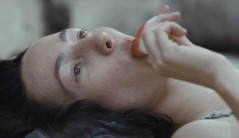
Anna has created a world of her own – a free, impulsive and sexual world, in which she controls everything, even time itself. Aware of the difficulties it may cause, she decides to take into her home her schizophrenic mother. The encounter between them destabilizes Anna’s world and forces her to reexamine their relationship.
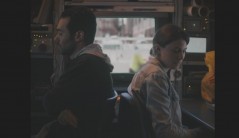
Hagar works at a photo store where she converts old video tapes to new digital files. A lonely, quiet young woman, she finds herself fascinated by watching the videotapes people have forgotten to pick up. A young man she sees in one of these tapes haunts her, and when she tries to find him, the search turns into a life changing journey.
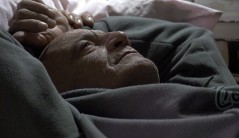
Long after he was locked in jail, isolated from society, Sami won his freedom, but he still had a hard time forgiving himself. Sami lives his life in a small container in the middle of the desert, while the big house he built for his wife Kohava, stands empty. Sami suffers from manic-depressive psychosis that is causing him to experience his life in a unique and uncompromising way. His letters to Kohava, which he sent from all around the world, while he was imprisoned, contain his wounded soul’s stories, past and present.
Timor (37), an Academy of Music dropout, now washes dishes in the Jerusalem
Central Bus Station. After 10 years without performing, Timor decides to put on a
solo show. His opera critic mother doesn’t believe in him. Timor’s voice teacher Ella
takes things into her own hands. Will Timor perform?
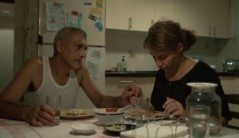
How far will a man go to provide for his family? Sahsha and Rita are new immigrants from Dagestan, trying to deal with a foreclosure order and Sasha’s job loss.

“Never in my life have I come in contact with a being so noble, so strong and as selfless as he was” Albert Einstein.
Wilfrid Israel, the owner of a department store in the center of Berlin, was one of the great saviors of Jews during the Holocaust.
However, very few people have heard of him and his story was kept secret.
filmmaker Yonatan Nir takes us on an investigative journey as he searches for the mysterious hero and his disappearance from history.
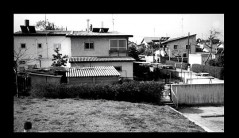
The intolerable ease with which people can ruin a person’s life with one hasty accusation and the dilemmas that this creates. Ramat Hasharon, 1992: A well-known kindergarten teacher is accused of severely abusing the children in her care. An ambitious police officer obtains incriminating testimony from the parents. The kindergarten teacher is thrown into a detention cell with prostitutes and drug addicts. Twenty-four years later, every morning the kindergarten teacher leaves her home, which is next door to the kindergarten that is no longer under her supervision, and wanders the streets without hope.
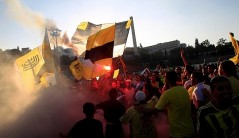
Beitar Jerusalem F.C. is the most popular and controversial football team in Israel, the only club in the Premier League never to sign an Arab player. Mid-way through the 2012/13 season, a secretive transfer deal by the owner, Russian-Israeli oligarch Arcadi Gaydamak, brought two Muslim players from Chechnya. The deal inspired the most racist campaign in Israeli sport that sent the club spiraling out of control. One season in a life of this famed club is a story of Israeli society, personal identity, politics, money and a window into how racism is destroying a team and society from within.
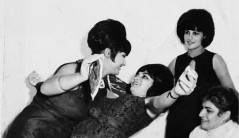
Seven women arrive in Israel by ship in the 1950s and 1960s and are sent straight to Dimona, a town recently established in the desert. They now open up and share their life stories that have never before been told from their perspectives. What happened during the first fifteen years to the girls and women who arrived with their families from North Africa and Poland and found themselves building a town in the middle of the desert? They talk about the pain of leaving their homes behind, about poverty and the difficulties of adjusting in their new homeland, and about their determined attempts to create rich and meaningful lives. In the film Dimona Twist, which mixes between conversations with the protagonists and private and public archives, they recount the struggles they took part in and the insights they gained, with humor, sorrow and dignity.
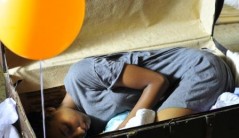
Surni, 14, wakes up to the first day without her love, Eli. She is in an Israeli absorption center. She keeps her eyes and ears closed, she won’t leave her bed, she just tries to shut out her new reality and pretend she never left Ethiopia. Her family attempts to get her out of bed. As the hours go by, her mother, who was at first blind to Surni’s suffering, finds a way to reach out and helps her say goodbye to the world they left behind.

Anastasia is trapped in an abusive relationship with Noam – a talented pianist haunted by his past. At the steps of the Rape Crisis center, Anastasia meets the pop-star Libby. Their encounter helps her to break free from the constraints of Noam, but also results in her adopting aggressive patterns of her own.

Argentina, 1980. Anna, a teenage girl whose father was taken by the military regime, wants to taste life and fulfill her desire to dance. She is torn by her wish of a colorful life and the monotone wait of her mother and grandmother in their stuffy apartment.

Like many of those who survived the horrors of the Holocaust, Moshe Knebel has difficulty talking about his past with his children. They each have collected bits and pieces over the years, but none have the complete picture. Unlike other survivors, Moshe Knebel’s story is not just a story of survival, it is a story of revenge. After the war Moshe Knebel returned to his village and killed those men who took the lives of his family. He lived his life in the shadow of this revenge, but he feels no remorse, and no regret. He feels that what he did was right. Now, after all these years, he prepares to embark on a journey back to Poland, and tell his children his whole story for the first time.
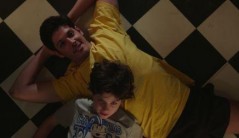
Dory packs his parents’ house and breaks up from his partner, whilst he still finds it difficult and unsettled, the most magical thing happens to him: his childhood room turn to a time portal, Dory becomes a child again and meet his late brother the night before he fell in battle. This opportunity becomes a turning moment for him, which he could save his brother and perhaps even himself.
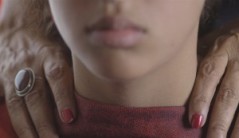
These are the memories of a lost girlhood. When they were only five or six or ten years old, their parents snatched them from the playground and handed them to much older men to be married. They recall the violence and fear they were subjected to, the pregnancies at the age of eleven or twelve, becoming mothers when they were still little girls themselves.
It was an open secret but one they put aside forever, because revealing it might tear their family apart, causing commotion and creating chaos. The memories of their tragic childhood never healed – they were simply suppressed for the sake of their children, their livelihoods, and their husbands. No more.
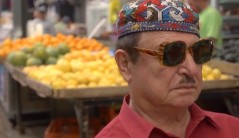
Tajikistan’s answer to the Jackson Family. A modern-day Shakespearean tale about a famous Tajik musical family, controlled by their charismatic, funny, yet overbearing patriarch, Papa Alaev, who at the age of 80 is starting to lose his grip on the ‘family business’, sending the clan on a rocky and unsure transition from Monarchy to Democracy.
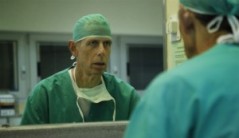
Ami Shinfeld was a young boy from an ultra-Orthodox family in Bnei Brak who managed to fulfill his dream and become a top cardiac surgeon at Sheba Hospital. A few years ago, when the town of Sderot came under missile fire, Dr. Shinfeld decided to help its residents. Since then, he’s volunteered as a community doctor, helping his patients receive public care on par with private medicine. He may clash with the bureaucracy of the public medicine system, but he refuses to go into private practice, despite all the money it offers. He is saving people’s lives, but he is also giving up his free time. Now, with the steep financial cost and the burden his work imposes on his family, he is left to wonder whether he should abandon his patients in Sderot and go into private practice.
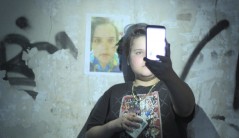
He calls himself TRA. He is 13, and he always was a little different. People tried to tame him. They hurt him quite a bit. “I was a fat kid who loved to daydream and draw fairies instead of playing soccer, and no one wanted to play with me. They bullied me, and then the monsters came out.” It was out of this pain that he discovered the power of art. He’s been drawing monsters ever since, though he later added other characters as well. At age ten, he defied a world that pushes us to perfection by creating the iconic character “Botox”, and became part of the artistic community that chooses the street as its canvas.
Armed with the belief that art will save the world, just like it saved him from himself, he discovers the hope and strength hidden deep inside him.

For the first time, director Ohad Milstein points his camera at his own home. His partner Rahel, the daughter of a Swiss bishop, is pregnant with identical twins. In her 23rd week, she learns that one of the fetuses died in utero. Doctors say that in those rare cases when the other fetus doesn’t die right away, it is almost certain to be born with severe brain damage and other disabilities. They are therefore unanimous in their recommendation that the couple terminate the pregnancy.
This presents the couple with a critical dilemma. Should they really end the pregnancy by aborting the surviving fetus?
Clinging only to faith and her maternal instincts, Rachel confronts everyone around her over the right of her surviving fetus to live, regardless of how perfect or imperfe
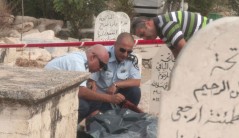
The Romans called Lod “The City of God”. Today, however, this dilapidated town is central Israel’s forgotten backyard, a mere 10-minute drive from prosperous Tel Aviv. Acute poverty has helped to cultivate racism, bigotry, and violence, so that many of Lod’s 75,000 inhabitants – Jewish, Muslim, and Christian alike – live in a constant state of fear and misery. Filmmakers Uri Rosenwaks and Eyal Blachson delve deep into the entrails of this small, hardened city. For four years, they follow the brave men and women who refuse to give up hope for their impossible and beloved hometown.

On October 18, 2015, a terrorist armed with a gun and a knife entered Beersheba’s bus terminal. Within 18 minutes, Omri Levy, a soldier, was killed, and Abtum Zarhum, an Eritrean asylum seeker, was lynched after being mistaken for a terrorist. This film presents a tense, minute-by-minute, Rashomon-style account of that tragic day. It tells the story of people caught in the wrong place at the wrong time, who experienced panic and fear. Their testimonies are incorporated into security camera footage to present a surprising and complex picture that dismantles the concept of “lynch”, and challenges our ability to judge what happened during those fateful moments.

“Jaffa Gate Is Ours!” screamed the headlines in 2005. Greek Orthodox Patriarch Irineos was accused of selling church property to Jewish settlers. He denied all the accusations. But for the first time in the church’s 2000-year history, its leader was ousted. For 11 long years, Irineos was imprisoned in his chambers. In this first-person account, filmmaker Danae Elon unravels what really happened to the former Patriarch. With unprecedented access to the inner workings of the church, a riveting, mysterious, disturbing, and often humorous story is revealed about an unknown world within the walls of Jerusalem’s Old City.
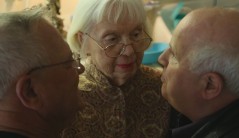
Two brothers, Izak and Shepsel, were born in a displaced persons camp after World War II. They lived their entire lives in the shadow of secrets kept from them by the people closest to them. The brothers were separated as babies, neither was told the other existed. An investigation into the mysterious history of their birth family led to an amazing reunion after six decades. The film offers a rare glimpse into the displaced persons camps in post-World War II Germany, showing the vibrant and sometimes wild social life that flourished among the young survivors. This period has hardly been dealt with on screen until now.
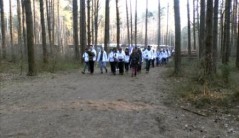
Thousands of young Israelis join “The journey to Poland” each year to learn about the Holocaust. Looking into the journey through the videos they upload on YouTube reveals a moving and troubling image of the Israeli narrative and the way collective memory is formed in the web age.

In 1946, Rudolf Franz Ferdinand Höss, the longest serving commander of Auschwitz concentration camp, is awaiting trial in a Polish prison. Albert, a young and successful Polish investigation judge, is appointed to interrogate Höss and get a perfect confession out of him. The encounter between the two men will unveil the frightening routine and banalization of evil that took place in the camp.
By introducing the use of Zyklon B in Auschwitz, Rudolf Höss carried out the most efficient mass killing process ever known, which claimed the lives of approximately 1.1 million people. The film is based on the memoirs Höss wrote before his execution.
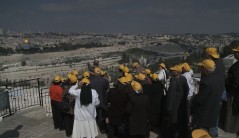
Mount of Olives – overlooking Temple Mount and the absent Holy Temple.
Tradition proclaims this is the closest point on earth to heavenly sanctity, and burial here ensures proximity to eternity. Yet among the tombs we find the living: those who have chosen this holy mount for their home, who have elected to live in the shadow of death in the hope of finding redemption. Ibrahim Abu Al Hawa has lived his whole life in A-Tur village at the mount’s summit, and runs the Peace House, a guesthouse open to all. Aviya and Amital Cohen, a young couple, have made their home in Hoshen Settlement at the top of the Mount and preach resurrection prophecies to tourists. Nun Mother Catherine has made pilgrimage to Jerusalem and lives in Gat Semanim, the closest place to God. Each character acts under the influence of the Mount’s sanctity to promote its own personal redemption. But the earthly reality of conflicted Jerusalem cracks the holy aura that engulfs the place and delineates the characters’ way of life.
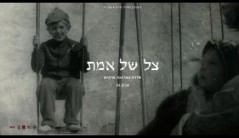
Shadow of Truth is a 4-part documentary that deals with the murder of Tair Rada, a 13 year old girl whose body was found in the toilet of the school she attended in Katzrin.
The series revolves around this murder, exploring the case in depth and breaking it apart.

Gili dreams of becoming an independent woman. Noam, her husband, cannot possibly think of releasing his hold of her, he loves her to death. The film ‘Cheer Me Up’ reveals a 48-hour glimpse in the life of a family living in the shadow of domestic violence.

A boy arrives to an empty field, with nothing around him. In the distance he sees a Large Dark Cosmic Orb, It is the grand storyteller that tells a tale about love.
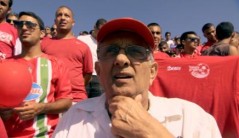
Located in the city of Rehovot lies the Marmorek neighborhood. Its Yemenite residents pride in the Hapoel Marmorek Soccer team with its director, Hanan Adani, 73. A veteran of many battles. Players and coaches alike have changed multiple times while he stays in a little room within the stadium dominating the group with an iron fist. The only thing bothering him is retirement. The director, Ruben Brodsky draws a portrait of a man defined by his eternal love: Hapoel Marmorek.
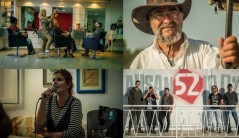
Four stories intertwine in the small town of Yeruham. Abraham the fisherman; Debi the hiardresser and a part time matchmaker; Boris and the teenagers from Mahsan 52; and Theila the blind singer.

Avraham, Ziggy, Schreiber and Robinson form the uncrowned governing council of the “Teheran Children.” The four represent 217 Holocaust orphans who are now bringing legal action against the State of Israel for funds received from Germany for their rehabilitation.
In their old age, they have set out to battle the State of Israel, a state which they helped establish through their own hard work. The confrontation with the State brings up painful childhood memeories, but the long years spent struggling for their rights, have transformed them into a group surrounded by love, a shared fate, and consolation.
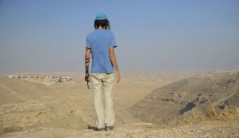
Since Israel’s decisive victory in the 1967 Six-Day War, hundreds of thousands of Israeli citizens have made their homes in the Occupied Territories of the West Bank. With unprecedented access to pioneers of the settlement movement and a diverse group of modern-day settlers, religious and secular alike, The Settlers is a comprehensive exploration of the controversial communities that exert inordinate influence on the sociopolitical destinies of Israel and Palestine.
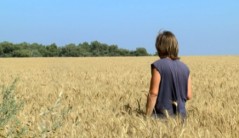
An IDF veteran and combat medic drives across the country in his car, chasing ghosts from his past.
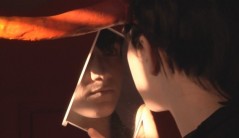
Leon a 15 year old is part of the Cosplay community, teenagers who dress up as characters from comics and Japanese Anime, meet and role-play. Leon writes a blog, where he appears as a French character from a web show. Leon’s blog has over 100,000 fans from all over the world that know him as the character- bold, sassy and colorful, totally different from his own personality. As the character he is being asked about topics such as confidence, love, friendship and personal relationships, which he answers with great confidence, while his big secret remains unrevealed between the lines.
As he becomes a well known virtual character and appreciated cosplay, he begins to unfold and take off his costume understanding who he reallys- he is a boy trapped in the body of a girl. Now Leon can look deep within with great honesty , explore his true self and share it with the world.

The Story of the Israeli women’s national football team.
In the first game of the season Noam is injured. Her ADHD and losses on the football field discourage her. Opal, her team mate, realizes that expectations from her religious family may interrupt her professional aspirations. An important upcoming tournament in Russia prompts the girls to deal with their self doubts. In the moment of truth, when the adrenalin explodes on the field, the answers arise.

In the late 1970’s, after thousands of years of praying and longing for Jerusalem, the first Ethiopian Jews arrived in Israel.
“Was it worth it?” their children now ask, for the first time.
They are brave and direct and their words pierce through the heart. Words shifting between the great happiness of village life and the longing to see Jerusalem. Words Stirred by fear and loss while making their way in the desert only to be forced into the great despair of a refugee camp in Sudan.
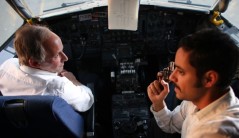
On the eighth of May 1972, 4 hijackers from the Palestinian organization “Black September” took control of Belgian Sabena Flight 571 from Brussels to Tel Aviv.
The hijacking marked the beginning of thirty nerve-wracking hours, bounding together fascinating human, military and political drama inside and outside of the plane.
Sabena Hijacking – My Version presents a cinematic reenactment of the events, weaved with genuine archive material and exclusive interviews three revered Israeli political leaders who were in charge of the rescue effort at the time, as well as the only surviving hijacker.
Sabena Hijacking – My Version is a captivating, fast-paced docu-drama full of suspense, which poses significant political and historical questions that are not only still important, but have shaped the Israel of today.

Three women of Middle Eastern origin journey back through time and space into their memories of an impoverished Greek village at the turn of the century, Jaffa’s Ajami neighborhood, and the Tel Kabir neighborhood in southern Tel Aviv. The journey is from one woman’s childhood (Eleanor, a 15 year old girl) to the golden years of another (Ida, the director’s 88-year-old grandmother), all the while describing the ethnic conflict plaguing Israeli society. The three accounts converge into a portrait of impoverished neighborhoods, which still suffer from neglect and political and social alienation.

In a deserted military company, far from any jurisdiction, the midget digit is all that matters! Shechter, a newbie soldier tries every way to earn his long waited seniority. But when Levi, his company “buddy”, gets the title before he does, Shechter enters a demonic race of washing dishes to prove his justify eligibility. In the end of the night Shechter proves that he will do everything he can to be a veteran.

Listen to me: there is life without love. Loneliness is the soul’s forgotten desire. You don’t need anyone. Don’t search, don’t hope, don’t dream; and only then, perhaps, you too will learn how to be alone.”
Based on Screenplay adapted from the short story” How To Be Alone” by Orna Coussin.

The film evolves as a mysterious journey revealing a hidden matriarchal figure, inspired by my late grandmother and her memories of Oran, her native city on the northwestern Mediterranean coast of Algeria. The viewer experiences the journey through the perspective of a seeking figure, by passing along four miniature domestic spaces: the workplace, the shower, the kitchen and the living room. In each space there are clues to the mysterious woman that come together to form her discovery through the fragments of the memories.

A short documentary about a house and characters that cannot be shown. Two israeli tenants create a miniature world of found-objects. On a desk, with changing sceneries, they tell the story of the different narratives colliding in the Palestinian house they rent.
Nadav Bin-Nun’s work, [%#@!^ &*:)^%(, presents an unstable world where the borders between reality and fiction, inside and outside, mother and son are blurred. Television infiltrates reality with recorded sound effects that pervade the living room, whereas the grey and bleak reality ominously and confusingly invades into the televised fiction.
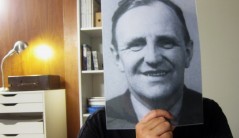
Michal Heiman’s work, Reality and Playing No. 3- Looking for Sarah – A proposal for a Visual Reconstruction of a D. W Winnicott Cae Study, reflects the artist’s continuous preoccupation with the interface between psychoanalysis and art. Her film refers to psychoanalyst and prediatricain Donald Winnicott’s text, “Interview with an Adolescent: ATherapeutic Consultation,” published in his last book, Playing and Reality (1971). During the interview, Winnicott invited Sarah, a sixteen-year-old girl, to join him in a “squiggle game,” a technique he invented for communicating with children through drawing. In his book, Winnicott depicts and verbalizes all the stages of squiggling without showing the drawings themselves. Their absence, contends Heiman, does not allow her (a reader for whom the visual aspect is an important tool) to have a critical and more complex look at Winnicott’s interpretations of Sarah’s drawings and dreams. Moreover, the therapist decison to omit them from the book erases an essential part of the joint process. “Was there a Sarah?”

In Efim Graboy & Daria Turetski’s film, Life in a plate, a bored youg girl creates an imaginary world of her own from the veggies on her luncheon plate. Her wandering thoughts and daydreaming shift us to another world made entirely of animated vegetables, fruits and other foodstuffs: the girl is made of a potato and sweet red pepper; the meadow where she runs- of lettuce and cabbage leaves; the trees- of rye bread; and the bunny she rescues and takes with her on her journey is made, in its entirely, of brine cheese. The way the landscape is designed in the film might remind one of the portraits of 16th century Italian painter Giuseppe Arcimboldo that were made of various objects such as fruits, vegetables and flowers.
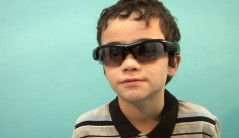
In her Glasses Camera, Ruti Sela combines two optical devices: eyeglasses and built-in-hidden camera. She lets her two nephews shoot most of the film, thereby allowing us to see the world through the eyes of a child for a few minutes. Sela interweaves several discrete and seemingly incongruous genes: children’s films, documentary reportages, hidden camera, home made videos and science films.
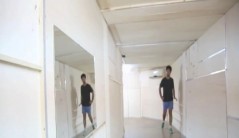
In his work, mirrors, of Shay-Lee Uziel hybridizes children’s instructional film and a film documenting an artistic action. The artist, wishing to illuminate his dark studio with a set of mirrors, shares with us his plan and dilemmas. Like many other activities, the mirror games he plays with his daughter stree the joint playful aspect of the world of art and that of children. As far as children are concerned, beside the pleasure they derive from it, a game is a sensuous means of getting acquainted with the world: a discovery and exploration tool, child engages in a dialog with him- or herself.
Elyasaf Kowner’s work, On The Way Back, deals with one of the central fears and experiences of childhood- those getting lost. Kowner constructs the work alphabetically. Alphabet is a system that introduces the child into language. On the other hand, it enables and teaches him or her to orientate in the world. Yet, on the other handby giving names to things, it establishes a gap between the thing or experience and their representation- the word, the language. Knower’s work reflects this ambivalence regarding language: the young girl gropes her way both in the physical space and in the linguistic domains. Language helps her put in order her thoughts and sort them according to patterns, but at the same time also restricts and blocks these very thoughts.
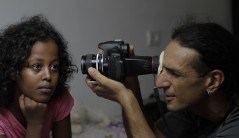
Anver Shahaf’s work, Dream, is based on a technique devised by the Surrealist Movement-the “exquisite corpse.” In this method, a group of people draws together an image of a person. Each member discreetly draws, in turn, a different part of the human body and then folds the paper over leaving only the edge of his or her drawing showing before passing it on to the next person. Passing from hand to hand, the peice of paper is folded over and over again and is gradually filled up. Finally, when the folded sheet is opened and straightened, the deformed and artificial figure is revealed -the “exquistite corpse.” The surrealists utilized this principle of chance to compose images devoid of any casual logic.
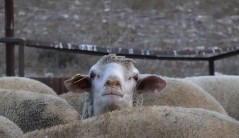
Keren Gueller’s work, Counting Sheep, corresponds with one of Israeli children’s constitutive albums, Ha’Keves Ha’shisha Asar(The 16th Sheep). The work alluds to the gap between the idyllic superficial picture we have of childhood and the cracks that are formed within the image and reveal a reality that is usually censored and deemed unfit for children’s eyes. Bringing together two innocent entities -children and animals-the lyrics of the album’s title song, written by Yehonatan Geffen, depict a boy who tries to lull himself to sleep by counting the sheep passing over his head.

At the heart of Maya Tiberman & Shai Hershkowitz’s work, A Shell, there is a boy who transforms reality with the help of his imagination and inner world. A shell he has found on the beach functions as a magic tool. Using it enables him to change realtiy and materialize the figments of his imagination. It works like a cinematic machine that alters spatial proportions, producers transformations and creates a new reality. The boy uses his magical wand, the shell, the way it was used by the pioneers of early cinema and especially Melies, who was a magician by trade. The interest of these filmmakers did not lie so much in the narrative, but rather in the cinematic image and the pure visual element of a cinema that was meant to create sensation and visual shock. Film historian and theorist Tom Gunning has labeled their films the “cinema of attractions.”
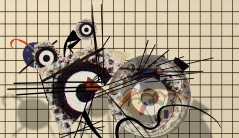
Ori Drumer’s three films, After Mondrian, After Kandinsky and After Klee present adaptations of three abstract artworks: Transverse Line (1923) by Wassily Kandinsky, Fugue in Red (1921) by Paul Klee, and Composition in Lines (1917) by Piet Mondrian. Drumer breathes motion into these paintings using 3D animation. Already in the original work, the painters attempted to create a feeling of movement. Hence time and motion have potentially existed in these paintings from the very start. Drumer’s works draw a parrallel between painting and music, compositions and rhythms, and colors and motion in the spirit of early 20th century German avant garde films.
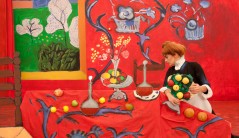
Orit Adar Bechar’s Matissa is an adaptation of Henri Matisse’s painting Harmony in Red (1908). The artist resurrects Matisse’s painting and recharges it with her own interpretation. She leaves intact the painterly and plastic components of the original work, and therefore the world in which the maid is moving about is actually a painting. Adar Bechar refers to Matisse’s “flattening” style that abolishes the realistic depth and traditional perspective by using a monochromatic palette, which blurs the distinction between objects. The world thus created deludes the spectator’s visual perception and makes it difficult to distinguish between two-and three- dimensionally, between depths and flatness. The game and flattening factors of this delusion correspond with children’s games and children’s painting respectively.
“It was all as if a childlike picture,
the mood wore an opera hat that eight reflections ricoheted off across the surface of ponds.
The ghost dressed in a natty shroud, Was smoking a cigar at the window of his room,
At the castlekeep’s top story, Where the sagacious crow told the cats their fortunes.
There was a child in her nightgown lost in the snow’s paths, Having searched inside her shows for the silk fan and the high heels.”
-Robert Desnos, “Cuchoo, “translated by John Hayes
Children’s inner world, feelings, dreams imaginary realms and idiosyncratic childhood experiences are some of the themes dealt by the works on display in this exhibition.
Curator: Chen Sheinberg
Artistic advisor: Ben Hagari
‘Matissa‘/ Orit Adar Bechar
‘After Mondrian, Kandinsky & Klee‘/
Ori Drumer
‘A Shell‘ / Maya Tiberman, Shai Hershkowitz
‘Counting Sheep’ / Keren Gueller
‘Dream‘ /Avner Shahaf
‘On The Way Back‘ /Elyasaf Kowner
‘Mirrors‘ /Shay-Lee Uziel
‘Glasses Camera‘ /Ruti Sela
‘Life in a Plate‘ /Efim Graboy, Daria Turetski
‘Reality & Playing No.3 – Looking For Sarah‘ /Michal Heiman
‘%#@!^ &*:)^%(,‘ /Nadav Bin-Nun

Three prophets of rage offer three economic revolutions to restore Israeli society When you look forward on Israeli society, are you optimistic or pessimistic? Do you believe that women & man in Israel will ever reach true economic equality? Do you think Israeli economy is in good or bad shape? Can it be improved? What needs to be done for Israel to thrive economically and socially? Is it possible? The silver platter is a documentary series with great aspirations. It aspires to tell a complex economic story clearly, in a language understandable and accessible for all. It also aspires to shake the viewers to their core, get them to realize that if they will not take to the streets demanding a substantial change in current economic market structures – a gloomy financial future awaits both them and their children. Have you seen the matrix film? Remember the scene when neo, the hero, wakes up to understand the true image of reality? Like that. Each chapter of “The siver Plater” is led by an acclaimed economist and thinker, whose philosophy and perspective challenges the current, common, outlook. All three have made a name for themselves – each in his specialty – without representing any sector or veiled interests. Every chapter of the series is devoted to one of them, with whom we embark on a journey to view Israeli socio- economic world: The “big money” politics, hidden “fat” reservoirs, and in to the harsh reality behind the numbers, data and statistics. Towards difficult choices and decisions the Israeli public needs to make, if wishing for Israeli economy to flourish.

The relationship between a young girl and her father is being reflected as they spend time together in a car, driving on an endless road.
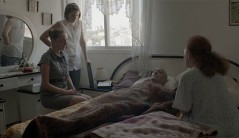
House calls are routine for Rita, a nurse working for Social Security. Mali, a young trainee, joins her and Rita is determined to pass on her philosophy on how to get the job done. At the end of the day, after an emotionally charged visit in the afternoon, Rita decides to make one last visit, against her stern philosophy, pushed by the principle of grace
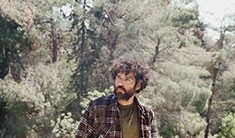
Fearing the consequences a married couple try to conceal a fatal accident. The father, a poultry farmer from the Galilee, is repressing all feelings and looking at the death of his son as a way of nature, but finely is being expelled by his wife, who cannot stand the absence of the loved one and the death of love itself. Out in the wild nature he has to deal with inner and outer demons.
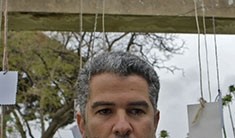
Obsessed with the disappearance of his uncle Yisral some 65 years ago, filmmaker Eran Barak returns to his family’s old neighborhood. In his search he turns to his various relatives:
Uncle Gavriel, who was just released after 35 years in prison; Uncle Aryeh, wallowing in thoughts while lounging on his mother’s sofa; and uncle Uri who makes a living collecting scrap-metal and looking for a meaningful relationship.
The Poetic quest for a long-vanished uncle inspires questions of identity, fate, dreams and hopes.

“A family’s story is the starting point for a discussion of the moral and political ideas (and clichés) that shook Europe and the Middle East throughout the 20th Century and still reverberate today.
The story begins in the 1930s in the Warsaw Pawiak Prison where Igal Bursztyn’s mother was incarcerated for illegal Communist activities. It ends in an Israeli jail on the West Bank, where Bursztyn himself served as a jailor to Palestinian prisoners as part of his reserve duty. How did my mother’s son become a jailor? “
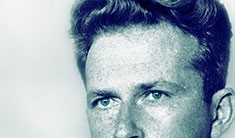
20 years after his assassination, Yitzhak Rabin himself tells his dramatic life story.
Without commentators or mediators, director Erez Laufer brings to the screen the story of one of Israel’s most prominent leaders in his own words.
Through a combination of rare archive footage, home movies and private letters, his personal and professional dramas unfold before the viewer’s eyes – from his childhood as the son of a labor leader before the founding of the state, through a change of viewpoint that turned him from a farmer into an army man who stood at some of the most critical junctures in Israeli history, through a brilliant diplomatic career as Israeli ambassador to the United States and his entry into the Israeli political arena, through his later years in which he made moves that enraged a large portion of the public, until the horrific moment when his political career and life were suddenly brought to an end.
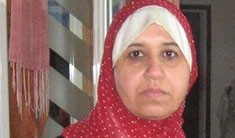
The film portrays the story of Safaa Dabour, a religious Muslim from Nazareth, struggling to fulfill her dream of personal independence and to establish a cinematheque in Nazareth, the first of its kind for the Arab population in Israel. Safaa’s father and husband both died while she was still a young mother of two boys and she chose to take charge of her own fate and establish the cinematheque.
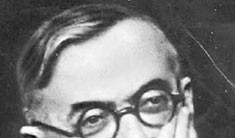
Ze’ev Vladimir Jabotinsky? Most people don’t know much about him. Most people know he was the father of Herut movement, a revisionist. And who really knows what revisionism really means. A few people know that he translated Allan Poe’s Annabel Lee; even fewer read his historical novel, Samson.
The Raven tries to fathom Jabotinsky’s deceptive character. The film follows his conflicted, controversial character, the meaningful choices, desires and abilities that eventually led him to end his life prematurely but left a huge mark on Zionism and Israel.

Naama Barash is 17 and her hobbies include alcohol, drugs and useless friends. When her sister goes missing and the whole family is busy looking for her, Naama meets a new girl from school and falls head over heels in love.

Three generations of fighters .Trained by his father in a method developed by his Holocaust surviving grandfather, Idan had no choice but to become a martial arts champion. But how do you react when your father is your coach, and he in turn was taught by his own father? The film follows an extraordinary childhood of rigorous training entangled by complex family relationships in the arena that is shadowed by the past.

14 Israeli Filmmakers present 14 different faces of Israel, as they are reflected in each filmmaker’s lens. All the 4 minutes movies create together a mirror in every cinematic genre possible, from documentary and drama to satire and animation. In “Moments, Israel 2004” the filmmakers invite the viewer to look through them. Each of the films is an x-ray, on the sensory and experiential level. Each offers its own view, with its own universal or personal aspects, and tries to connect through them to the faces of the past, the present and the future. The series of films tries to define the non-geographic contours of the nation as they are expressed in its self-portrait. The variety of faces is as vast as the number of their makers, from downcast faces to an optimistic regard, from pain to a smile. These are all the faces of the nation, Israel 2004.
- Common Language / Noa Ben-Hagai
- Condensed / Zvulun Moshiashvili
- Cover Up Story / Yoni Zigler
- Her face / Noam Meshulam
- Israeli in Berlin / Ayelet Bargur
- “Just not Another Bombing” / Amit Drori
- Meet Michael Oppenheim / Roni Aboulafia
- On the Face / Jachin Hirsch
- Politically Correct / Rona Tamir
- Ringtones / Dov Gil-Har
- Shameless / Asaf Shafir, Michal Klein
- Silence / Suha Arraf
- The Value of Values / Hani Mor-Silverman & Maya Arad
- Wanted / Regev Contes
Part of “Moments, Israel 2003 – I have a Dream.”
“Racial segregation is a capitalistic conspiracy”, Che, Tel Aviv, 2003
Part of “Moments, Israel 2003 – I have a Dream.”
However you look at it – some dreams appear to undermine our existence but at the same time reveal our strength. Simone de Beauvoir wrote: “One is not born, but rather becomes a woman” and I know that there is one thing missing to complete my identity as a woman: a child.
Part of “Moments, Israel 2003 – I have a Dream.”
Boaz never kissed a man. Neither did Gali. Gali has a problem kissing Arabs and Ibrahim feels that if he kisses Gali he would give away Palestine.Yehudit fears that the kiss will disgust Maor, and Maor thinks it’s strange to kiss a 72-year-old woman. Because of all that, I asked them all to kiss.
Part of “Moments, Israel 2003 – I have a Dream.”
This short film is the reflection of my thoughts throughout the 33 months of the Intifada. In 1993, I thought I would have a nice life and become part of the world’s joy, prosperity and opportunities. But now all my dreams have become null and void.
Part of “Moments, Israel 2003 – I have a dream.”
This film is my father’s dream, the same one he had for 65 years, a dream for a better world, a dream we dream for our children. At the beginning of the 21st century, my father wishes this dream to his son, and maybe to himself.
Part of “Moments, Israel 2003 – I have a Dream“.
A meeting takes place between two women in the middle of the water, between dream and nightmare, between liberation and burden.
Part of “Moments, Israel 2003 – I have a Dream.”
In two schools, one Jewish and one Arab, in one courtyard in Jaffa, children await the arrival of the fairy. Their illustrated requests transform into animation and open up a window into their inner worlds.
Part of “Moments, Israel 2003 – I have a Dream.”
In 1889, a kidnapped child from Austria namd Moishe was adopted by a Jewish family in Poland. Moishe lived a peaceful and simple life, but he turned out to be the most influential man of the 20th century for the things he didn’t do, and he didn’t even know it.
Part of “Moments, Israel 2003 – I have a Dream.”
All of a sudden I’m starting to realize what draws me to this place. The dream is getting clearer. I want to wake the city up. I want to make a movie here. To bring back the atmosphere that was here when Kazablan was filmed. Maybe even an action film… a period action film.
Part of “Moments, Israel 2003 – I have a Dream.”
“In those dreams on a cold bench, in those dreams we will put our past to rest, until one day, looming and familiar, it will again shower our necks with kisses.” Yaakov Orland
Part of “Moments, Israel 2003 – I have a Dream.”
For example… a cure for AIDS, the smart bomb, the Mossad, the number one Air Force in the world, and the Israeli Michael Jordan. When God is on our side… the chosen people have a solution for everything
Part of “Moments, Israel 2003 – I have a Dream.”
By returning to experiences that have become trite over time, we can discover a vision that is a refreshing alternative, for which we are thirsting these days.
Part of “Moments, Israel 2003- I have a Dream.”
“Hmm, how good it feels to penetrate your brain. I enter your right hemisphere. Once again, your desire is not your own; I force my desire onto you.”
Part of “Moments, Israel 2003- I have a Dream.”
Not so many years ago, the dream was close to realization. Perhaps we were naive? Today a dream remains: simple people, human beings, and maybe someday – friends.
The “Moments, Israel 2003 – I have a Dream” project emerged as the continuation of “Moments, Israel 2002”. This time, the project tried to transcend the boundaries of despair and focus on dreams for the future. Once again, each filmmaker approaches this question from his or her own unique vantage point. Through this project, the filmmakers invite the viewers to enter their dreams and visions and connect to some kind of utopia. The project comprises 14 4-minutes shorts by 14 different filmmakers.
- In My Dream / Roni Ninio
- Making Peace with G. Yafit / Avner Bernheimer
- Alrida (Satisfaction) / Tha’ir Zoabi
- The Jewish Mind Invents Patents / Eliav Lilati
- Strangers’ Dreams / Oded Davidov and Shlomit Altman
- I Have a Dream, Tel Aviv – Yaffo / Yoni Zigler
- Moishe Adolph / Avida Livne
- Fairytale / Tami Bernstein, Gilat Pereg
- Waterdream / Shiri Zur
- Letter to a Child Who has Gone / Ayelet Bargur
- Bedroom / Sausan Quoud
- A Kiss is a Kiss / Uri Bar On
- Pumping, Recycling, Diluting, Pumping / Dorit Hachim
- There is no grace in race / Gur Bentvitch
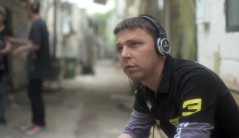
Igor, Avner, Kipnis and Leon are residents in the psychiatric ward ‘Brosh’ in the Abarbanel Mental Hospital. Each one has a dream. This film traces their pursuit of their dreams. The film evolved from a creative collaboration with the residents of a mental institutions.

When the son of the Kapo of the death block in Auschwitz arrives to the place his father ruled unrestricted, bribed the Nazis to save the prisoners from certain death, he meets, in the very same dark rooms, the lives of those saved by his father, but also listens in pain to those willing to talk in favor of his father’s controversial character.
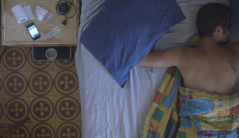
Guy (21), a bulimic homosexual, decides to leave his parent’s home and set out on a new journey in Tel Aviv but becomes enslaved to his eating disorder.

“Warm snow” is an animation short about the relationship between a father and his grown up daughter. It starts out in an ordinary situation with the father and daughter sitting at the kitchen table. The daughter is waiting for her food to get warm and is annoyed by her father’s questions and suggestions. The situation then develops and transforms into a surrealistic world full of love and pain.

Short documentary “Dirty Business” follows the traditional coal industry scattered around Israel and the West Bank, and sheds light on economic relations between two sides, exploring distorted processes and situations in which people are caught up.
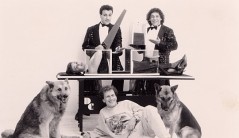
In the 1980s magicians Chicko and Diko were huge stars. They were regulars on the hit TV show “Shminiyot Ba’Avir,” had hundreds of sold-out shows with Ofra Haza – Israel’s biggest pop star, won the Israeli Emmy award, received thousands of fan letters, and owned a thriving magic business. Every kid knew them. Then came the fall. Chicko was charged with rape, pressed with criminal charges, ran away from Israel, and his career ended abruptly.
Today – 20 years later – his father Diko sits in his small magic shop, planning his comeback with his loyal sidekick “The Legendary Yoav,” still believing their star will shine again. The magic store is now a meeting place for has-been magicians, kids shopping for cheap tricks, and various oddballs who enjoy the magical atmosphere.
The film relates the implausible, fantastic rise and fall of Mordechai and Itzik Zohar, a father and son from Tel Aviv, who became Chicko and Diko, Israel’s most famous magical duo.

One night, one apartment and one mystery.
A psychological drama set entirely during one night in one apartment in Tel Aviv. The apartment belongs to young couple Shir and Rami. Shir is woken up one evening by the doorbell. An angry neighbor hands over the dog Rami had taken out earlier in the evening. Rami has suddenly disappeared. The film follows the events in the apartment during the night, where a series of visitors join the woman waiting: friends, family, the police, and unexpected guests. In the powerful dialogues and occasionally fierce confrontations, humiliating secrets come to the surface. An increasingly clear and complex picture emerges.
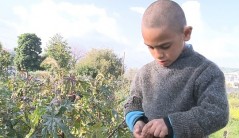
Yichia (14) and Hamam (8) come from a village in the area of Tul Karem, in the Palestinian Authority. While their parents and elder siblings cannot cross checkpoints to enter the state of Israel, the two brothers work as child beggars. The young children find themselves serving as the sole providers for their family of eleven. From dawn to dusk, soaked in rain or scorched by the sun, they stand at intersections and rely on the kindness of drivers to make their living.
Yichia is a very smart boy who has been working as a beggar since he was 9 years old. In this tough profession as younger the kid’s age as better he earns. The father has decided to use his experience.
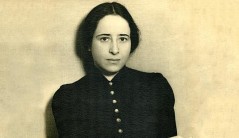
A personal spiritual biography of the Jewish philosopher, Hannah Arendt, who coined the controversial phrase “The Banality of Evil,” in her book Eichmann in Jerusalem. The movie tracks the connections between her life story and her thinking, through rare archival footage demonstrating the Banality of Evil. Her Ideas on the nature of Evil, pluralism, Freedom, etc., are relevant today more than ever.
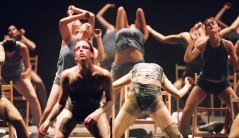
Enter the world of Ohad Naharin, renowned choreographer and artistic director of the Batsheva Dance Company. “Mr. Gaga”, eight years in the making, captures the elusive beauty of contemporary dance and immerses the audience in the creative process behind Batsheva’s unique performances.
Using intimate rehearsal footage, extensive unseen archive materials and stunning dance sequences, acclaimed director Tomer Heymann (Paper Dolls, I shot my Love) tells the fascinating story of an artistic genius who redefined the language of modern dance.
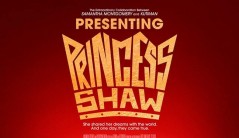
People all over the world post video clips online. They cram their video notes into virtual bottles and toss them into the boundless ocean that is the Internet. All they want is for someone to find the hidden treasure and to be seen.
Samantha (38) lives in New Orleans and works as a caregiver. She often uploads her songs and musings online. None of her clips get more than a few dozen hits. She doesn’t imagine that someone, on the other side of the world, is about to expand the number of her listeners by millions.
Kutiman, an Israeli musician, discovered Samantha’s songs on YouTube. He weaves her songs with audiovisual symphonies composed of musical clips that people posted online.
Presenting Princess Shaw is a film about loneliness and long-lasting anonymity in a world that is constantly creating new stars. It is also about talent, persistence, and the arbitrary connection to success – at least as we define it.

Young Max belongs to an Israeli neo-Nazi gang headed by its charismatic leader, Judah. While they are abusing an innocent black man, Max has to make a difficult decision.

A frozen memory raises a journey of longing for a present-absent father.
Twelve-year-old Mussa doesn’t speak, and no knows why. As African refugees, he and his parents have been living in Tel Aviv’s worst neighborhood for the past six years. In a strange stroke of luck, however, he is bussed to an uptown school every day. Leaving behind addicts and prostitutes each morning, he silently navigates to within an upscale world, befriending privileged kids with gestures, reading and writing in Hebrew, and making a considerable bond with his teacher Anna. Trying to fit in, he wordlessly connects with his classmates and friends, and bravely witnesses the random deportation of fellow African students. Little solace is found at home as his largely absent parents work during all hours, leaving him even more alone with his voiceless thoughts. When a series of unexpected crises hit, Mussa’s precarious place between two separate worlds is heartbreakingly revealed through this look at the human cost of immigration policy.
From `Short:Long` – a tribute to Israeli cinema. A Tribute to The Dress – 1969. Thomas returns to his apartment to collect the last of his belongings. Encountering the new additions to his old roommate’s life, he reminisces upon their complex relationship and looks for closure.
From `Short:Long` – a tribute to Israeli cinema. A Tribute to The Policeman – 1971. Albert, an aging parking inspector from Tel Aviv is retiring after many years of loyal service. Worrying about life without work, he starts peeping at his neighbor Maya and her son, fantasizing about the day they’ll all become one big happy family.
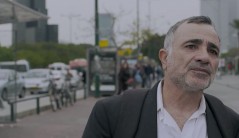
From `Short:Long` – a tribute to Israeli cinema. A Tribute to Lovesick on Nana Street – 1995. The Sabbath is a few hours away. Victor, a confirmed ultra-Orthodox Jew, is stuck in cosmopolitan Tel Aviv after missing the last bus home. Seeking to find his way out, he encounters a different everyday reality that evokes long forgotten feelings.
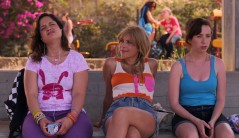
From `Short:Long` – a tribute to Israeli cinema. A Tribute to Lemon popsicle – 1978. The Sabbath is a few hours away. Victor, a confirmed ultra-Orthodox Jew, is stuck in cosmopolitan Tel Aviv after missing the last bus home. Seeking to find his way out, he encounters a different everyday reality that evokes long forgotten feelings.
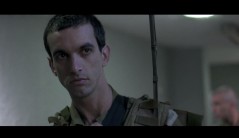
From `Short:Long` – a tribute to Israeli cinema. A Tribute to Avanti Popolo – 1986. It’s a little known fact that within the already conflicted reality of Israel, Arab soldiers also serve in the Israeli army. On the memorial day of Yom Kippur, a small unit is sent to reinforce a remote army post alongside the Syrian border, but they discover it surprisingly abandoned. Inexplicably, the commander decides not to report the situation, and from that moment on every possible complication arises.
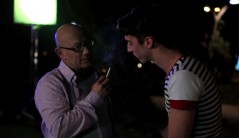
From `Short:Long` – a tribute to Israeli cinema. A Tribute to Drifting – 1983. Robie, a gay film director, is asked by the Gay Association to direct a vampire musical in Independence Park (an old cruising site in Tel Aviv). When betrayal and lust on the set takes over, Robie’s attempt to direct the musical turns out to be a story about love and old-age.

From `Short:Long` – a tribute to Israeli cinema. A Tribute to to ‘Late Marriage’ – 2001. It is the night of Gur and Dikla’s engagement ceremony . The two Georgian families are tense, waiting for Gur. Outside, Gur’s father is scheming to wed Madonna – his mistress’ daughter, to Gur. Will Gur keep his sexual identity hidden for the sake of tradition? In this tragic comedy Gur has to choose his destiny.

From `Short:Long` – a tribute to Israeli cinema. A tribute to Big Eyes – 1974. Baruch, a past basketball star, left the big city in the 70s and became an ultra-Orthodox Jew. He now returns to find Sivan, one of his mistresses that he left behind. This desperate attempt to savor some of his old life again fails, when she doesn’t let him back into her home, where she lives with his estranged son.
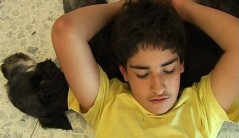
The film follows the preparations for the Bar Mitzvah of Guy, the director’s younger autistic brother, from the moment his parents decide to have Guy do the ceremony in the synagogue up to the day of the Bar Mitzvah itself. During the course of preparations for this unusual event, the daily and complex reality the family must cope with is revealed, paved with difficulties and humor, and Guy’s unique view of the world is discovered.
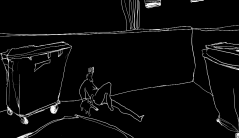
Adam and Eve move in together. Only this time there’s no Garden of Eden
No snake to blame and not much of a god to be afraid of.Just two people struggling to get along together, one apple and some fig leaves.
Based on a new story by Jonathan Safran Foer, this short film is a part of a new cultural venture called ‘StoryVid’, combining a short story reading with visual videography.
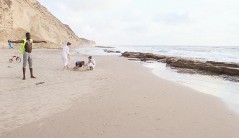
In his interpretation to Ben Marcus’ story, director Nir Bergman brings a disturbing apocalyptic world in which the individual no longer exits. This description of what our world might look like in the near future, deals with the authorities’ control, with the invisible marginalized people in a society, and the suppression of the ‘other’.
This short film is a part of a new cultural venture called ‘StoryVid’, combining a short story reading with visual videography.
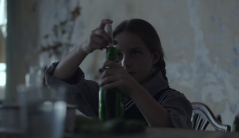
Based on a story by Lydia Davis, the film depicts a surreal symbolic deconstruction of the society through the eyes of a little girl.
This short film is a part of a new cultural venture called ‘StoryVid’, combining a short story reading with visual videography.
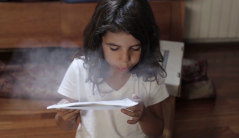
“Appleless” by Aimee Bender is a story of a girl who is victimized in an apple orchard. In a somewhat parallel plot the film follows two young brothers who discover the power of dangerous play, while wondering in their grandparents’ house.
This short film is a part of a new cultural venture called ‘StoryVid’, combining a short story reading with visual videography.

A tribute to Israeli cinema upon reaching its 80th anniversary.
A unique artistic project of young, vibrant filmmaking, which stems from Israel’s cinematic past. 9 Young filmmakers showcased 8 short films, inspired by local classics.This homages bring together the next generation of Israeli cinema with past legends such as Uri Zohar, Savi Gabizon, Boaz Davidson, Raffi Bukai, Dover Kosashvili, and breathed new life into their work.
- Elevation / Ophir Ben Shimon
- Cherries / Noa Osheroff
- Benched / Gill Weinstein
- Cherries/ Noa Osheroff
- Zazaland / Maayan Cohen
- Inta Omri / Adiya Imri Orr
- The Inspector / Ori Ben Yossef, Elad Goldman
- The Garden / Hod Winter

The Holocaust of the Jews in the former Soviet Union has remained a mystery even many decades after the war has ended. Due to ideological and political reasons, the Soviet regime did not recognize the unique and tragic nature of the extermination of Jews by the Nazis. It was only after the dismantling of the Soviet Union that efforts towards documentation and commemoration of Holocaust victims in these areas were possible. Following seven years as the head of a project at Yad
Vashem to recover the names of Holocaust victims in the Former Soviet Union, Boris Maftsir sets out on a journey never seen before on the screen – a journey to restore the memory of a Holocaust that was all but forgotten. In the
“Guardians of Remembrance”, the first film of the project “The Holocaust in the Soviet Union,” Boris Maftsir offers a comprehensive and accurate picture of the events of the Holocaust in Belarus. The memory keepers depicted in the film are both Jews
and non-Jews along with local individuals who work towards commemoration. The film “Guardians of Remembrance” was filmed at the actual extermination sites and precisely illustrates the sense of time and place of the tragic events.
About The Holocaust in the Soviet Union:
It can be said that a man dies three times: The first time, when he actually dies. The second time, when he is buried. The third time, when his name is no longer remembered.
This is the essence of the project: to remember and recall the fate of nearly half of the victims of the Holocaust. This is the last chance to bring back the story that was excluded by Josef Stalin and his collaborators after the end of WWII – until the collapse of the USSR.

“Relaying: Testimonies on Motherhood Lost, Meadows Museum of Art, 2014
A Four-Channel Video Installation by Israeli artist
Mali De-Kalo”.
Confronting the boundaries between the art world and social action, Relaying presents testimonial monologues by mothers whose children refuse to have any contact with them as a result of the breakdown of the family unit .De-Kalo’s installation puts video art to work, relaying the harsh realities of motherhood interrupted, of families blown apart, and of secrets made public in order to heal.
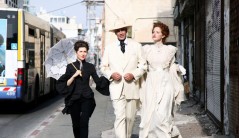
Documentary series.
A look at the historic and cultural evolution of the Israeli society as reflected through fashion. What does a look in the mirror of fashion and clothing trends tell us about social development? From the Jewish community in Palestine, through the early settlers, national austerity, the “Tzabar”, the big city scene, the beaches, through to modern day fashion markets, the series will take a close look at the Israeli wardrobe and its ongoing dialog with cultural, social and political change.
A fascinating story of bereavement and mysticism, FOG tells of the quest to unravel the fate of a missing soldier. First Sergeant Mu’in Halabi disappeared at the beginning of the Yom Kippur War during an abortive IDF attempt to conquer Mount Hermon from the Syrians in October 1973. Two weeks later the IDF announced that Mu’in’s body had been found. A casket was buried in Mu’in’s hometown, the Druze village of Daliat el-Carmel. A month after the battle for the Hermon, a child was born in the Galilean village of Mrar. At the age of four, this child declared that he was the reincarnation of Mu’in, and, indeed, was able to relate almost everything about him. But in 1985 inhabitants of Daliat el-Carmel testified to having heard Mu’in speak on the Syrian State Radio. Veteran newsman, Rafik Halabi set out on a journey into time, memory, the Druze religion, and harsh Israeli realities in an attempt to uncover what lies behind this multi-layered story or, put more directly, whether Mu’in Halabi is alive

The work presents a metaphoric stage for examining the processes of coherency decay in the communication among people.
The installation creates an ongoing conversation among a number of computer-driven characters who exchange verbal messages through speech. Due to noise and speech mannerisms, messages become slanted and gradually get stripped off their original meaning.
The work seeks to question widespread narratives, in so far as these have been coloured through perpetual reinterpretation.

Black to Back deals with replication and imitation, as they are manifested in Youtube video comments. It is a 5 channel video installation, showing 5 women making an “Amy Winehouse Hairdo”. Together they keep spreading Winehouse’s figure through the internet, long after her 2011 physical death in. The women are “taken” out of the internet and are given a prestigious stage to perform on’ while their videos are played backwards, letting them take down their hair and return to their original unique look.
From the first hand-print
on the cave wall, through the footprint on the moon, into our Facebook wall full of memories of our lives – we are trying everything possible give our temporary and crumbling body, a print into time.
Our work creates a space where people can experience giving a physical expression to body memory, through movement.
Participants are invited to ’embed’ parts of their bodies into a unique archive of physical memory. This archive is on one hand of anonymous and on the other hand allows physically intimate interaction between people who were in the same space in the past and never met.

Audio-Video performance – A solo performance work for a performer, an HD projection, A microphone and a few musical instruments; A song cycle and a soundtrack for a synthetic and exotic world.
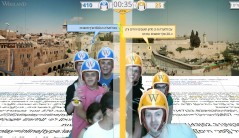
Wikiland is an arena for physical Wikipedia edit wars.
Anyone can edit any entry on Wikipedia, and an edit war occurs when editors who disagree about the content of a page repeatedly override each other’s contributions, rather than trying to resolve the disagreement through discussion. Using sensors and software, Wikiland is an interactive project that projects such Wiki-wars on a screen, forcing the people who stand in front of it to become physically engaged in fighting for the right revision.
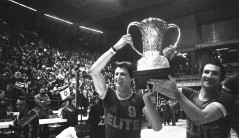
The story of 1977 Maccabi Tel-Aviv Basketball team making history by beating the Soviets and wining the first European title in a dramatic year which contains within itself the watershed of the State of Israel.
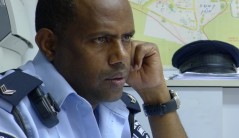
One neighborhood, one cop, one night.
The Kiryat Moshe neighborhood of Rehovot is undoubtedly the most homogeneous neighborhood in Israel, always was. It was never officially defined, but when you look at the history of the neighborhood, you discover that virtually every decade there has been a population turnover in Kiryat Moshe and it has almost always remained homogeneous – Holocaust survivors, followed by immigrants from Arab countries, Russian immigrants, and in the past 20 years – Ethiopians. The neighborhood contains the largest concentration of Ethiopian immigrants in the country.
The story of the neighborhood is told during the night shift of the local cop. Rafi Mells, an Ethiopian beat cop, is the only person in charge of the neighborhood, but unlike most cops, whose task is to maintain law and order, Rafi’s work revolves around helping the residents of Kiryat Moshe adapt to life in Israel.

The Queen Has No Crown is a documentary film of Tomer Heymann’s that navigates the intimate lives of five brothers and their mother, as they experience the pains of exile and the joys of family bonding. Three of the Heymann sons take their families and leave Israel, one after the other, for “better” lives in America. They fulfill their dreams, but shatter those of their mother. A divorcee, she is left alone in Israel with her two bachelor sons — one straight, and the other, Tomer, gay. Exploring the politics of belonging, displacement, and sexuality, throughout, Tomer frames this quest in terms of its greater social and political significance: the Israeli-Palestinian conflict, tensions between Israel’s Arabs and Jews, its secular and ultra-orthodox citizens, and the struggle for gay/human rights. Combining 8 and 16mm footage with his own work of a decade, shows how the strength of the Heymann Family depends on forces greater than the nuclear family itself.
Passing time fills a central role in The Way Home. Using old 8 mm. films and an intimate portrayal of the significant events in his personal life over the last fifteen years, director Tomer Heymann (It Kinda Scares Me, Paper Dolls, Bridge Over the Wadi), reveals a charged and surprising emotional world. Shooting with a small video cam gives the film a feeling of great intimacy with the main characters and the director himself, who deals with personal, familial, and national crises through his obsessive filming, constantly seeking his way back home.

A documentary film which examines the clear concept of an obsessive sensation. The film explores different kinds of obsessions: obsession with love, death, food, knowledge, money, sex, control, exposure, cleaning, fame, and more. The film sketches a line that connects obsession to the Zeitgeist and to our modern lifestyle, binding them together, while considering the idea that obsession is the most common “disease” of the 21st century. The viewer is taken on an intense journey that examines how obsession is created, what feeds obsession, how obsession serves the obsessed, and how it is motivated by the endless aspiration to achieve salvation.

“Normalna” tells the story of a Russian immigrant family in a small town that is located in the Galilee area in Israel. While the people of the town enjoy the annual folklore dance festival, the family faces inner conflicts that threaten its stability

On Christmas eve 2013, some 10,000 asylum seekers from Eritrea and Sudan gathered in Levinsky Park. From there they marched in an orderly fashion to Ha’Aliya Street, and continued across downtown Tel Aviv, until they reached Rabin Square, where they gathered around Yigal Tomarkin’s looming statue, “Holocaust and Rebirth.” It seemed as if every monument along the way, the names of every street and building added meaning to the demonstration, and transformed these hapless refugees into yet another link in the chain of Tel Aviv’s history.
Rabbi David Buzaglo was the greatest Hebrew liturgical poet of the twentieth century. Born in Morocco in 1903, his literary output had a major impact on a community of hundreds of thousands of people. From his prolific period in the Diaspora to the years he spent in a ruptured Israel, Buzaglo’s poetry has initiated an abrupt shift in Sephardic liturgical writing, but it also served as a vital link between the modern era and a tradition that dates back to Spanish Jewry’s Golden Age. But Buzaglo was more than just a great poet. The actions he took at seminal moments in history had a critical impact in shaping the identity of Maghreb Jews. This film is an intimate look at Buzaglo’s life and career, from its roots in the rich tradition of Hebrew poetry in Morocco through the liturgical revolution in Israel.
Nissim Aloni was a king of the Hebrew theater. The magical realm he created onstage brimmed with imagination and poetry, giving voice and vision to the loftiest dreams. But in a world dominated by a mundane, populist democracy and controlled by functionaries, Aloni found he was a king in exile, without a kingdom, without an audience, without critics, and without theater managers to share his whimsical dreams.
A shocking video of a double murder in Russia appeared on YouTube in 2007. The police investigation reached a dead end; two years later, director Vladi Antonevicz and his friend Dima “Shurabi” set off on a daring investigation of their own. Snooping around the darkest crevices of Russia’s neo-Nazi underground, they are determined to find the killers.
Micha, the director and protagonist of this film, is very disturbed by historian Uri Milstein’s upcoming, in-depth investigation into what really happened during the Battle of Sultan Yacoub, during the First Lebanon War. In the name of military camaraderie, he supports Ira, the battalion commander, as he prepares for his interviews with Milstein. After all, Micha was Uri’s second in command. But then the nightmares return, and they are filled with memories he tried to suppress. In conversations with other soldiers who were there, he encounters Zagagi, the chief operations officer, who stuns him by saying, “You abandoned your comrades on the battlefield!” Now Micha must contend with the accusation. Can there really be such a disparity between his persona as a bold, charismatic individual and the facts? As he looks his friends and daughters in the eye, he hopes that they will understand. Most of all, he hopes that thirty years later, he can say that the story of Sultan Yacoub is finally over.
Itzik is the proud father of young twins. Conceiving seemed an impossible task, but after fifteen years of trying, his wife Ruthie got pregnant. She was already in her mid-fifties, while he approached 70. Suddenly, their home is flooded with joy. Despite their meager means and late entry into parenthood, they are able to provide their children with abundant warmth and love. But then fate takes a turn for the worse, and to Itzik’s misfortune, an unexpected development threatens his custody of the children.
This is a story of faith, love and dedication, against all odds.
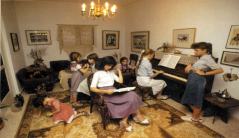
The film tells the story of how, 30 years ago, the divorce of a woman who went on to become a renowned author, and her husband, an esteemed rabbi, shook the religious city of Bnei Braq and affected the lives of their seven children. It follows a family divided between the two conflicting worlds of the Ultra-Orthodox and the secular. One of the couple’s daughters embarks on a journey among the ghosts of her childhood, trying to reunite her fractured family and, finally, to start one of her own.

This film contains rare documentation of the Hilltop Youth of Gilad Farm, the most radical Jewish outpost in all the West Bank. Due to American and European pressure, the threat of evacuation hangs over their heads. They confront the Israeli government, its security forces, and the Palestinians, and pose a rebellious, sometimes violent and lawless challenge to their foes, always guided by an ideology that knows no compromise. As they see it, they are God’s representatives on Earth.
The settlement was founded by Itay and Bat-Zion Zar in 2002 to avenge the murder of Itay’s brother. Although it was dismantled on several occasions, Gilad Farm was never abandoned.

Noga returns home to Israel and finds out that her good Palestinian friend Fahres, an illegal resident from the West Bank, had gone missing.
Anxious for him, Noga ventures on a surreal and surprising journey to Qibiyeh, his remote home village in the heart of the occupied territories.
This is a story of an exceptional friendship, revealed in a journey that begins in Tel Aviv, continues with hitchhiking with Jewish settlers and Palestinians in the territories, entangles in shooting clashes with the IDF and ends up in a remote chop shop in Qibiyeh.

An episode from the series MADE IN ISRAEL
The story of the establishment of the Israeli energy industry. The way in which the local industry dealt with having to supply the residents with energy, albeit poor natural resources; the effects it has had on Israel’s other industries and the changes it has undergone throughout the years, with new forces, such as the growing awareness to environmental issues on the rise; the attempt to find alternative energy resources, such as solar energy or wind and the effect that discovering natural gas resources had on the industry. The episode also provides a critical look at the profits distribution from these new energy resources between the state and its tycoons.

An episode from the series MADE IN ISRAEL
The story of the establishment of the Israeli High Tech industry. How did a small country like Israel manage to build within two decades, one of the most successful high tech industries in the world? This is a journey following the historic development of this industry, through several important milestones in its short history. The effects of the Israeli high tech industry on the global one and some of its major achievements: the first “Zionist” computer and the Disk on Key. The film will also focus on some of the problems that exist in this industry, such as the “Exit Culture” and the personal price the local entrepreneurs have to pay in order to survive this competitive world.

An episode from the series MADE IN ISRAEL
The story of the establishment of the local diamond industry. The episode follows the journey each diamond makes from the bowels of the earth to the finger of nearly every woman in Israel; from the local mining attempts, through the polishing workshops and the workers and all the way to the local merchants and jewelry shops. The people who shaped this industry, turned it into one of the most influencial industries on the Israeli economy. The episode will take viewers through this industry’s important milestones, its successes and the crises it has had to survive and will also provide a critical look at how closed the industry is, the segregation it maintains and its controversial trading methods.

An episode from the series MADE IN ISRAEL
The story of the establishment of one of Israel’s largest industries, which started out the new country’s need to survive all its enemies. This industry soon became one of the most influencial import-export industries in Israel. The episode will take us through some of the industry’s major milestones, such as the Uzzi, the Merkava Battle Tank, the Lavi jet, the Iron Dome and more. The film will look at this industry’s contribution to the Israeli economy and will also provide a critical debate on this industry structure, its simbiotic relationship with the USA and will raise some moral questions like who is Israel will to sell the weapons it produces to.

An episode from the series MADE IN ISRAEL
The story of Israel’s food industry that managed to overcome many hardships and become a prosperous local industry. The episode follows the food industry from its early days: establishing large factories such as Tnuvah, Ossem, Strauss, Thelma and others; exporting Israeli food products overseas; and the crucial role the large food chains played in the chain of production. The film also provides a critical view on the centralized structure of the industry and its influence on the high cost of living in Israel and on the entire Israeli economy.
“Made in Israel” is a documentary series that features the history of five Israeli industries. Each 50 min. episode is dedicated to a different industry, telling its story from the early beginning in Israel to the present. The way to the heart of each story is told as an exciting voyage through production lines, hardships and the unique historic situations that led to the development of each industry. The series features interviews with key personalities that their vision and contribution that played a significant role in the development and success of each industry.
Food – Avida Livny
High Tech – Gidi Yehoshua
Diamonds – Adi Frost
Energy – Tor Ben Mayor
Defense – Tor Ben Mayor & Ofer Weizman

The film follows several Israeli and Palestinian teachers during a school year and the way they teach their national history. Through dialogues and challenges with their students, debates with the ministries curriculum and its restrictions, the viewers obtain the long lasting and profound effect that the Israeli/Palestinian conflict transmits onto the next generation.
Is That You? Is a comical and moving road movie, a retracing of “the road not taken.”
Newly unemployed, Ronnie, a 60-year-old Israeli projectionist, decides to travel to America to find Rachel, the love of his life.
A frustrated street-artist releases a facial expression that without his knowledge spreads over to the faces of the people.
This is the story of three sensitive teenagers who are forced to deal with violence: violence at home, at school. A story of friendship, love and hate, where the adolescents’ world is revealed as cruel and beautiful; a world where the desire to die or kill and the will to live will define their fate.
In this documentary mosaic of a continued social disintegration, seven filmmakers bring to the screen protagonists and stories that live in an abyss of despair, in the chasm between those who have and those who do not.
An old man rummaging for food in bins; a father who cannot give water to his infant daughter because he’s been cut off; an overcrowded ER that cannot cope under the pressure; a man who nearly buys an expensive Lexus and may yet decide to buy a Mercedes; a realtor in a well-fenced villa; and a mother sitting in a small crowded house with a hungry baby in one arm and a canister of gas in the other.

In April 2002, following a series of Palestinian terror attacks in Israeli cities, the IDF invaded the West Bank with heavy forces in order to destroy Palestinian terror bases. The operation, known as Defensive Shield, lasted 40 days during which Palestinian sources mislead the world with false Information about thousands of casualties and about a horrible massacre taking place in the refugee camp of Jenin.
Mohammad Bakri, a famous Palestinian actor residing in Israel, entered the refugee camp with a film crew and created his controversial documentary Jenin, Jenin. The film generated enormous anger and five Israeli reserve soldiers, who fought in Jenin and lost thirteen of their friends, sued Bakri for the amount of $700,000, claiming that Jenin, Jenin is libelous. For five years Bakri and the soldiers confronted each other in court.

Miriam El Kwader, a Bedouin wedding photographer and mother of seven, living in an unknown and neglected Negev village, reveals through her camera lens, the world of Bedouin weddings; the most distressing issue revealed is polygamy.
This is the story of three, relatively educated and independent women, trying to survive, each in their own way in their world – a life of polygamy. One is a “first wife”, living in constant fear that her husband will bring home a second wife. The other two are pushed into marrying already married men, and become “second wives”, forced to cooperate within a structure they despise or are afraid of.
The family tragedies presented in this film, highlight the strength and survival of the social structures and their injustices; leaning usually on the victims’ partial cooperation.

Winding is the story of the most infamous river in Israel, the Yarkon. Our film begins with the arrival of the Zionist settlers to the Promised Land at the end of the 19th century and their attempt to build a new society on the banks of the Yarkon.
We sail the full length of the Yarkon’s winding path to tell the unknown story of its water; water that no longer springs from the earth’s depths, that is associated with fear and death. Water that remembers, accumulates, and then avenges.
Through the use of archival materials and social and personal stories, we paint a portrait of a river that flows in the heart of our society.
“A journey through Kabbalah, heroin, chaos and redemption. For 10 years I’ve filmed my mother’s and my own life change dramatically. Mom, a holocaust survivor, married Rabbi Ashlag when she was 45 and he 40 years older. He taught her the secrets of Kabbalah and then passed away. Since then mom, Rebbetizin Faiga, has been trying to save the world from self-annihilation by teaching Kabbalah. Yet, every birthday she fights her desire to disintegrate into shreds of chaos and choses life. Mother wanted me to be the messiah. Instead, I ran away at the age of 14 to the streets of Tel Aviv to become a heroin addict. Finally, I found myself living in Jerusalem, a filmmaker, telling my life-story through film. This is a film that explores and strives for the concept of home.”
Two women, an Israeli and a Palestinian, are trying to build a business partnership. Brought together by a shared business acumen and knowledge of the logistics industry, the two combine forces to help Palestinian businessmen navigate the everyday absurdities of Israeli control of the West Bank. But while they help their clients to overcome the obstacles of bureaucracy, who will help them overcome their own disputes?

Ariel Orr Jordan, a 51-year-old Israeli, has restlessly wandered through life for years, without ever knowing why. At the age of 37, in New York, after attending dozens of workshops, a horrible memory suddenly emerges from the black hole where it had been buried. He is shocked to learn that as a child, he had been the victim of sexual abuse. Now he tries to create a whole new world for himself – in his various relationships, at his job as a counselor for victims of incest and his artwork. For the first time after thirty long years, he takes a bold step and returns to the place where he grew up – back to the scene of the crime…
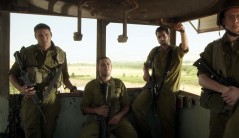
Matan, a soldier in the IDF, travels with 3 soldiers whom he doesn’t know to a base in the north of Israel. Vulnerable and homesick, Matan becomes an easy target for his peers who start playing pranks on him. However, it is not long before strange and inexplicable things begin to happen in the lonely base, and the group realise they need to watch their own backs. As the week progresses, their worries intensify, and the soldiers begin to question whether they will make it out of this experience alive.

This is the story of how Israel’s orange groves developed, with an emphasis on the relationship between employers and employees, Jews and Arabs, manual labor and technology. The possibilities for the development of Israel’s orange industry in the wake of the new political arrangements in the Middle East are intertwined with relevant literary texts and the occasional close-up shot from the world of botany and with historical photos and biographical anecdotes related to growing oranges. This film, which recreates all these elements, tells the story of the Israeli orange as a metaphor for the Land of Israel, from the end of the nineteenth century until today.

“Life is over, and we haven’t managed to get anything done,” says Esther, 70, the youngest of the sisters. Karola, the eldest sister (78), is silent. Fruma (75) tries to capture her memories in writing. The three sisters are Holocaust survivors who, after more than fifty years, still have a hard time telling their story. Their relationship was forged after World War II, when they all fell in love with the same man, but only one of them, the director’s mother Fruma, actually won him, even though he really loved Esther, the youngest. The sisters speak on the phone on occasion, but have never met, each trying to live out their old age, each in her own special way.

Israeli teenagers usually distance themselves from their parents to assert their independence. When they finish their army service, they set off on a tour to discover the world, then return to their parents’ embrace. Helen Kra, the director of this film, never saw her son return. Amir Kra was only twenty years old when he was killed in an attack on the Dilaat Outpost in Lebanon’s Security Zone. In this film Helen sets out to find her son, Amir, who never returned and whom she never really knew. Her quest raises many personal, ethical and national questions that extend far beyond Amir’s own family.

A group of women from the Jaffa C Community Theater put on the play “Hide and Seek,” using pain, humor and their professional acting abilities. Their story reflects the culture of their neighborhood, with a special focus on the problems these women face as wives. By following the cast hard at work up until the opening night, the film reveals three strong women on a course of self-discovery leading to a whole new life. The changes they experience often include bitter struggles with their husbands, who are forced to contend with a new breed of independent women that upsets long-established traditions of home life.

While visiting his father in a retirement home, Eli reminisces about his childhood in Dimona and the relationship he had with his father’s family in France. The height of the story is when Eli visits Paris to confront his family about the inheritance that David, their father, his uncle and the owner of David’s Fashions, left to his Israeli relatives.

Dr. Tamar Safra is a gynaeco-oncologist. She cures women from cancer, but spends most of her time at the clinic telling one patient after the other how much time they have to live. She sees a patient every 15 minutes, sometimes 20 patients a day like in an assembly line. Huge dramas are confined into one moment on both sides of the table. From the patient’s point of view, her life is unique, yet from Dr. Safra’s point of view, the patient – as dear as she would be – is another name on the infinite stack of files piling on her desk. One day she meets Meirav Refael, a beautiful young woman determined to beat the statistics. Will Meirav win? Will Dr. Safra start believing in miracles?

A 12 year old girl, must complete a family history assignment for school. The boring task slowly becomes a sweeping drama embodying many secrets during three generations of one family, beginning before the Second World War, continuing as Holocaust refugees and ending with the fall of the collective kibbutz idealism. What does this heavy historical burden mean for a young girl today, living on the social networks, soap operas and telenovelas? A first-person documentary about the unsettling thought that life is a chain of events governed by coincidence.

An old tape reveals a practical joke that went terribly wrong. The revelation leads to an unexpected search – not only for the prankster, but for the filmmaker himself.

67 Ben Zvi Road is the address of the Israel Institute of Forensic Medicine. The bodies of 2,500 people, who died of unnatural causes, arrive there every year for an autopsy. Following the Institute’s day-to-day routine provides a kind of x-ray of Israeli society. It is a brutal mirror, reflecting Israel in the most unflattering way imaginable. And yet, as harsh as it may seem, one cannot help but be fascinated by the significance of this gruesome image. By its very nature, the Institute deals with those things that society is determined to conceal. Lying here is the tension between what is taboo and how it is desecrated, between the repulsive and the possible. It offers an intrusively revealing look at the human body.67 Ben Zvi Road is a jarring film that is often unpleasant to watch. Nevertheless, it is a powerful statement about life itself.

Sivan, a 22-year-old ex Kibbutz member, lives in Tel-Aviv and works in a small Laundromat. She leads a seemingly ordinary life, but Sivan is caught between the reality of her everyday life and her past, which consists of love, confusion, and the unbearable pain caused by her father, who sexually molested her. The reality of what she experienced afflicts her again and again, while the institutions she approaches for help aren’t sensitive to her needs. Her Kibbutz hides behind a wall of impenetrable silence, the police and legal system are indifferent to what happened, and even her own family doesn’t know how to react. With unusual grit, Sivan and her family break the silence, fight back and contend with the past.

A Palestinian family is scattered around the world in a bitter struggle to reunite, having lost their homeland. Their story reveals the underlying factors behind the Palestinian exile and reflects the catastrophe that befell a nation whose land was taken from it. Ostura (Arabic for “legend”) deals with the Palestinian refugees’ right to return to their homeland. Told with the psychological and political boundaries of time and place obscured, this personal story emerges as a national legend.

A woman leaves her husband after thirty years of marriage to rekindle an old love affair she had as a girl in Baghdad but her daughter’s sudden return from a trip to India changes her plans.

The relationship between a father (75) and his son (43) as seen through an intimate encounter in a shower stall. Due to his illness, the father can no longer wash himself, so his son is forced to wash him. The father’s fear of loneliness and of death, the family’s sense of helplessness, and the unresolved relations between them all disappear in a tender moment of kindness, as the son helps his father in the shower.

Arik Bar Adon (65), a poet from Tel Aviv, stopped writing a few months before the birth of his son Adam (17), who was born with Down Syndrome. When Adam was 6 years old his mother died. The father, a powerful man and Director of the Israeli Institute for Arts, is left alone in the house with a son with special needs. Adam is secluded in his own bizarre world, until he discovers that his father was once an artist. Suddenly, there’s a radical change in their lives, as Arik decides to write again.

On Saturday May 18th 1996, Ziad Wahash from the village of Kaabiya was supposed to put a ring on Manal Nimr’s finger. Instead, in the presence of hundreds of guests, the engagement ceremony turned into a bloodbath. Although these two powerful families had intermarried before, they were also engaged in a bitter struggle over control of the village. This is the shocking story of the power contest between the men of these families and the desperation of the women who have lost their sons. It’s about pain and vengeance, the horror of blood feuds, the hope for change and the overwhelming fear that the village of Kaabiya will never be reunited. It’s a rare opportunity for the villagers to speak candidly about how they really feel.

During the War of Independence in 1948 the residents of the village of Biram were evacuated and received an explicit promise that they would soon be allowed to return to their homes. The village was destroyed and the promise never kept. The saga of Biram has turned the ruins into a pilgrimage site for the villagers and their families. They gather there every Easter to shake hands in the solidarity that guides them, and find solace in the words of the New Testament that one day, “The first will be the last.” Among the refugees are elders in their long white gowns and a younger generation, including actor Yussuf Abu-Varda and Linda Aissa, a probation officer now living in Tel Aviv. They are all faced with the dilemma of how to preserve the experience of being expelled from their village while integrating into the Jewish society around them.

A Unique look at one of the most intriguing turning points in the history of the state of Israel, through the eyes of Nabil and Hisham, two of Jordan’s most accomplished theater personalities. On the evening of November 4th 1995, the two were preparing for their first tour of Israel with their political satire “Peace, Oh, Peace”, scheduled for the next morning. That night Prime Minister Rabin was assassinated. But the two decided, in spite of the tragedy, to set out on their trip. This film follows their encounters with the harsh reality that followed the assassination and their rave performance at the “Cameri” Theater. But the personal sense of reverie was shattered the next morning, when Hisham received word that he has been expelled for the Jordanian Writer’s Union, an event foreshadowing the eventual destruction of their careers.

A few days spent with artist Moshe Gershuni become a summary of his life and work – a kind of rehearsal as he prepares to depart from his art and, indeed, from life itself. Gershuni is one of Israel’s most prestigious artists. Both his work and his life provide a varied and often conflicted portrait of what it is to be an Israeli. Gershuni is a total artist in the sense that it is impossible to distinguish between his art and his life. The major issues with which he contends daily – his constant search for understanding, or his attempts to tackle the concept of memory – pervade every work of his.
Gershuni’s work often contains lines from songs and references to musicians, so it is only natural that music plays a dominant role in this film. The pace and style of the film make it impossible for the viewer to distinguish between art and life itself, an accurate reflection of Gershuni, the person and artist.

A father and his son set off to Germany to find out whether their family participated in the Nazi atrocities. The father, born a German Christian in the last days of World War II, learned as a teenager of his people’s brutal past, deserted the German army and fled to Israel. Despite all the difficulties, he settled on a kibbutz and married the daughter of Holocaust survivors. Their son was called “Split” by the other kibbutz children, because he was half-German and half-Jewish. “Split”, now a TV cameraman, returns to Germany with his father to learn the truth about the rumor that uncle Wolfgang was a cameraman for Nazi propaganda films.

During 1996, while political and social changes take place in the region, Zehava Ben, the “Queen of Israeli Mediterranean Music,” sets out on a concert tour. She succeeds in winning a whole new audience among the Arab public and opens a window to peace between Israel and her Arab neighbors. The camera follows Zehava, who is at a major milestone in her career, and tells her personal Cinderella story.

Tami, the director’s mother, lost her vision at the age of forty. The long process of going blind lasted for nearly ten years, during which time she made every effort to ensure that her children were not affected by any change to their routine. The first time the word “blind” was mentioned was when Tami began participating in lawn bowling competitions for the vision-impaired. The high point of the family’s struggle to cope with blindness is documented from the unique perspective of Ran, the son. With great sensitivity, Ran captures his mother’s determination to win a medal at the Special Olympics in Atlanta.

During World War II many European Jews found refuge in Shanghai, the only place in the world that immigrants could enter without a visa and without paying an exorbitant amount of money. Many European Jews found refuge there. Most of the refugees lived in the Honku neighborhood and created their own version of Viennese-German culture. In late 1943 the Japanese government succumbed to German pressure and created a ghetto for the city’s 14,000 Jews. When the ghetto was dismantled after the war, the Jews had nowhere to go – some managed to emigrate to North and South America, while others waited helplessly. Once the State of Israel was established, many of the Shanghai refugees finally decided to settle there.

Jenny and Jenny meet every day; Jenny and Jenny speak every day; Jenny and Jenny correspond; Jenny and Jenny share heartbreaks and happy times. Jenny and Jenny are 17-years-old cousins, living in the town of Bat Yam. This film follows one summer in their lives as they make the transition from girlhood to womanhood. How do they interpret the world? What kind of emerging awareness do they have of their position as women? What do they love, and what can they tolerate? What are their dreams and what are their fears? How do they, and we, perceive the tragic side of being a woman, along with the charm that it entails? And what is the very thirst for life, the vigor, and the passion quivering within them that this film tries to capture?

Fifty years ago in Skopje, Macedonia, Solomon Adizes and his son Isaac were sent by the Italians and Bulgarians to a concentration camp. Disguised as Muslims, they managed to escape to Albania, where they found sanctuary with Muslim villagers. Solomon pretended to be a doctor and was known throughout the entire region. After the war, they returned to Yugoslavia and from there immigrated to Israel. Fifty years later Professor Isaac Adizes and his father Solomon return to the concentration camp in the heart of Skopje, and from there back to Albania to meet the family that saved them from the Nazis.

Emile Habibi was a political leader, a member of Knesset for the Israeli Communist Party, and an outstanding figure in modern Arabic literature. In the last weeks of his life, he set off on an introspective journey into his past and his own self. This film traces the inner conflicts posed by the duality that composed his life: He was a man of literature and a politician; he was an Israeli Arab, who remained loyal to his own people, the Palestinians. He had a passion for the city of Haifa, where he was born, and for its sun and sea, which offered refuge from the political turmoil that beset him. Presented from his own perspective, these diverse elements sketch a portrait of Emile Habibi, the man.

As the elections approach, director Avi Mograbi sets out to make a documentary film about Israel’s most maligned politician, Arik Sharon. Sharon, a figure admired by many, is a legendary warrior and officer. Mograbi, who was a conscientious objector to the Lebanon War, has personal issues with Sharon, the mastermind of that war. Nevertheless, while making the film, he discovers that Sharon is warm and friendly and completely different from the man he thought him to be. As the elections approach, Mograbi sets aside his left-wing sentiments. In a surreal scene he finds himself dancing with the ultra-Orthodox Breslaver Hassidim and singing songs supporting Bibi Netanyahu. This is the story of the impossible encounter between right and left in the reality of contemporary Israel.

Twelve years after arriving in Israel from Montreal, Patricia checks into “Bridge of Life,” a drug rehabilitation center, to finally part with what she defines as “her best friend” – drugs. Ophir is Patricia’s charismatic and assertive therapist, who has never been an addict himself. Their conflicts and reconciliations echo with the dynamism of that well known relationship between therapists and patients, and the addiction to drugs is replaced by an addiction to therapy. The film documents Patricia’s rehabilitation, peeling away layer after layer until it reaches the very kernel of her being, surprising and predictable at the same time. It reveals the most terrible secret of all …

An obituary about the mysterious death of a young poet named Shaul Havilio sends actor-director Daniel Wachsman on an investigation in the Galilee. During the investigation and a meeting with the five suspects, he uncovers a conspiracy of silence surrounding a dark mystery (one of the great legends of Jewish history: the fate of the Temple treasures). When a group of extremists attempts to silence him, Wachsman is forced to go undercover and finish his film as quickly as possible, seeing as it’s the only thing that can ensure his safety.

Iris, a professional burglar, falls in love with Avi, a pilot and CEO of a computer firm. Determined to win his love, she hides her true identity and poses as a wealthy society woman. Then she finds out that her supposed pilot and CEO is also a crook.This romantic comedy of errors is set against an Israeli backdrop of Ashkenazi and Sephardi Jews and of cops and robbers.

In the Sheikh Jarrah neighborhood in East Jerusalem, a beautiful building was allocated for a theatre and cultural centre. But, rather than fulfill its original purpose, the building has become home to Palestinian families who have found themselves with no roof over their heads. Some of them, natives of Jerusalem, have lost their permanent resident status; others have lost their homes to the municipality bulldozers; all of them are poor and disenfranchised. They are a reflection of the grim reality faced by Palestinians in Jerusalem.

Menachem Begin gets up in the middle of the night. After years of living as a hermit in his Zemach St. apartment, he finally makes a promise to himself to reveal the secret behind what caused him to withdraw into his home, and to live out his life in total isolation. He accounts his troubled past, while settling the score with figures such as Ben Gurion, Jabotinsky, and others.

This is the story of a free-spirited, independent woman, straddling the boundaries of good and evil, who uses trends to overcome the distance between her and the world around her. The film examines passing trends in an attempt to find some logic behind the reality of Israeli life.

Yael and Shlomit, two young secular girls, share a spacious apartment in the heart of Tel Aviv but are forced to find a third roommate to help them cover the high rent. They meet Malka Kahanastein, a Mysterious ultra-Orthodox woman, who succeeds in striking a chord with Yael, while arousing Shlomit’s suspicions. Malka seems so quiet and reserved, and Yael is immediately drawn to her. Jealous of the bond between them, Shlomit decides to follow Malka. After many twists and turns she discovers Malka’s great secret. Now the fate of this young ultra-Orthodox woman touches her as well. Together with Yael, she decides to help.

On the evening of her ex-boyfriend’s wedding, a Tel Aviv woman reconstructs her relationship with him to reveal the touching story of the three men in her life.

A Tel Aviv left-wing man uses demonstrations in support of the peace process as a cover up for an affair with a right-wing counter-demonstrator, until Rabin’s assassination ruins his scheme.

Roni Yacobi, (43) is a secular lawyer, married with two children, who is told that he has only one year to live, a year in which his body will degenerate until he loses control of all its basic functions. Roni, a profound skeptic, considers suicide and the right to die with dignity. His wife Tami, totally rejects this option. She wants to show Roni that death is also a part of life, and brings a video camera into their home. The two of them set off together on a journey leading to their final parting. Along the way they contend with modern theology and the social insights showered upon them by family, friends, psychologists, and mystics. What was supposed to be a painful experience of loss becomes an encounter with sacrifice and exaltation and their struggle for every last breath strengthens the bond between them.

Daniel Oren, a conductor in great demand in Europe’s famous opera houses, is the son of a Muslim father and a Jewish mother, living the Arab-Israeli conflict. He’s often been called a “stinking Arab,” but also a “stinking Jew.” This film is built as a dramatic, musical adaptation of La Bohem, an opera Oren himself conducted in the Opera House of Tel Aviv. Its story and emotions converge to portray the many facets of Oren’s persona – a musical genius. The twisting plots of the melodramas he conducts shy in comparison to his own life story, itself an opera, from which and through which he seeks be released.

A journey through the life and work of Abraham Halfi, the unsung hero of Hebrew culture whose greatest yearning was to shrink “into an unknown point,” as remarked in one of his poems. He was revealed to the public only in his final years, by the popular singer Arik Einstein, who recorded Halfi’s poem “Atur Mitzchech” (Your Forehead is Decorated) – the most beloved Israeli song of all times. The film tells the story of this song and the man who created it.
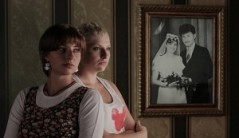
Ever since they can remember, Dasha (22) and Natasha (21), have felt unrelated, not belonging to anyone or any place. The difficult relationship between their parents in the Ukraine tore up the family. One day, without warning, their father decided to take them to Israel, along with his new wife. The girls were separated from their mother and her existence was hidden from them since. Even in Israel, as they matured, they felt like strangers, wandering between boarding schools and foster families. They knew nothing about their mother and never heard a word of love or longing.
After 16 years, following their father’s death, the girls yearn to fill the empty space in their hearts, and reunite with their mother. But it is a strangers’ rendezvous. The emotional detachment has built a wall between them. The empty space will not be easily filled. For 3 years, the film follows the belated relationship between mother and daughters, raising questions about parenthood and the patterns parents pass on to their children. Most of all, this is a film about the human need for an emotional core, a family.

Eye for an Eye is an action thriller that depicts the final hours of Oded Tsur before he must end his life.
Oded was in financial trouble with his failing business and was forced to take out a loan from a ruthless loan shark, Muki Zaken.
Muki forced Oded to purchase a life insurance policy and commit suicide by 9pm that day in order to repay his debt. Failing to do so by exactly that time would result in Muki killing his wife and kids as well.
Romi Dor, a sharp police detective tries to pick up all the pieces of the investigation, holding Daphne, Oded’s wife, who is found beside her husband’s burned body. The police investigation reveals that Daphne is a manipulative ruthless adulteress, who used her husband’s situation to murder him.
This action packed thriller leads us on a wild goose chase around a “un holy” dark Jerusalem, during a 24 hour period, where all hell breaks loose.
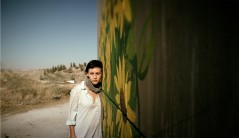
Michal is a renowned Jerusalem artist. One morning, her bed breaks, she falls, and consequently loses her memory. She orders a new bed and discovers that a screw is missing. She complains to the furniture factory, leading to the dismissal of Nadine, a young Palestinian woman, who works packing screws into plastic bags.
This event signals a point of no return for both women until their fates cross again at a border checkpoint. A soldier’s mistake sends Michal to Nadine’s refugee camp and Nadine to Michal’s home in Jerusalem. The switch leads them to discover their innermost desires, the ones they could not access in their previous lives.

Since 9/11, the Israeli arms industry is doing bigger business than ever before. Large Israeli companies develop methods and test the vessels of future warfare, which are then sold worldwide by private Israeli agents. At the same time Israeli theoreticians explain to various foreign countries how to defeat civil and para-military resistance according to the extensive Israeli experience.
The film reveals The Lab, which has transformed the Israeli military occupation of Gaza and the West Bank from a burden to a marketable, highly profitable asset.

Michla and Feiv’ke Schwarz, sister and brother, could have re-met in Lodz in 1945. But they didn’t. She migrated to a Jewish state in the Middle East and started a family there, while he returned to East Germany, changed his name to Peter, married a German woman and lived the rest of his life in the camp where he was once a prisoner. But that is just the beginning. The outcome of their decision affects the course of lives for generations to come, in the here and now: The children who struggle to deal with their parents’ silence and their own unasked questions; their grandchildren who are haunted by family secrets and forced to question their own identity.
Farewell, Herr Schwarz is an epic documentary by Yael Reuveny, the granddaughter of Michla Schwarz, a personal journey between Israel and Germany.

A border is a place where one strip of land ends and another one begins. The people that live there develop their own additional borders of fear and acceptance, danger, love and faith, boundaries that represent a longing for freedom and others that are obscured. Israel shares 1,171 kilometers of border with four countries. This film roves the lines between Israel and it’s neighbors, along with the people living in these charged and sensitive areas – from war-torn Southern Lebanon, that bustles with machinations to the Syrian border – stark and threatening – that only a solitary Druze bride from the Golan Heights can cross; From the border with the autonomous Palestinian Authority, filled with hatred and hope, to the Jordan River. Among the roadblocks, barbed wire, minefields and crossing points live Israelis, Lebanese, Jordanians and Palestinians.

From the birth of their fourth child, Nachman, to the birth of their fifth child, Yoseph, Rivki and Motta, an Ultra-Orthodox couple from Jerusalem’s “Meah Shearim” neighborhood, opened up their home and let in a camera, allowing a rare glimpse into their world. They talk about their “shidduch”, their engagement and their wedding. It is unusual for an Ultra-Orthodox couple to let a “secular” camera into their home and to share their daily routine with the viewers: everything from the ritual hand-washing that they perform every morning to the festive occasion when Nachman is taken for his first day of school.

Chmara (Arabic for alcohol) is a neighborhood coffee house. There the men of the neighborhood get together to drink, play backgammon and cards, and act the role of armchair philosophers. There are dozens of Chmaras in the market and along the main street of Tel Aviv’s Hatikva neighborhood. A stranger would have a hard time finding them. Our Chmara serves as a microcosm for life in the neighborhood: Azulai the owner, Gezer who is in the process of receiving sheltered accommodation for the elderly, Yehezkel, who is looking for his girlfriend who disappeared in the Philippines, Uri the “Nigger” – a veteran biker and Jojo, who is still waiting for his house to be renovated. These colorful figures sketch an intimate portrait of an entire neighborhood.

Avi Mograbi, a documentary filmmaker whose birthday coincides with Israel’s Independence Day, is hired by an Israeli producer to direct a film about Israel’s 50th anniversary. He is also asked by a Palestinian producer to direct a film about the 50th year since the Nakaba – the catastrophe of the Palestinian people.

Gadi Abaje is a 23-year-old Ethiopian immigrant, whose Christian mother was forced to stay in Ethiopia. He lives on the margins of Israeli society – in Tel Aviv’s Central Bus Station, supporting himself by petty thefts, and has a dream of turning the bus station’s P.A. system into a radio station that will serve as both a cultural symbol and an outlet for the anguished cry of a minority group. He misses his mother and writes her long letters, waiting vainly for an answer. This film follows Gadi as he returns to Ethiopia for an emotional encounter with his mother.

Company 44 of the Border Patrol is home to Druze, Muslim, Circassian, Bedouin and Jewish policemen, mostly from poor neighborhoods and development towns, as well as new immigrants from the former Soviet Union and Ethiopia – a coalition of Israeli minorities living a bleak life. Israeli society has sent them to perform the thankless tasks that no one else will do — they are one of the most blatant symbols of Israeli occupation of the Palestinians. This is a film about the Border Patrol and their activities along the thin line, separating Israel and the Palestinians, caught there in a bitter conflict between two uncompromising extremes.

Footsteps in Jerusalem is a tribute to David Perlov and to his 1963 revolutionary film “In Jerusalem”, made a few years before the ‘67 War.
The film, which won the bronze medal at the Venice Film Festival in 1963, was produced at a time when Jerusalem was divided between Jordan and Israel by “no-man’s land” and sniper fire.
In Jerusalem offered a change from the “Zionist” patriotic, propagandist and outdated cinema to a cinema that is personal-artistic. It paved the way for dozens of documentary filmmakers and for the success and recognition Israeli documentary cinema receives worldwide today.

Following a long string of illnesses, Shmulik Leshed decided, at the age of 55 and following a health book he read, to turn around the course of his life. In addition to his occupation as a well-known plumber in Haifa, he became a street player and a clown. Since then and to this very day, at the age of 100, he goes around Israel and the world, armed with an accordion, playing and making people happy.
For the past 15 years, Shmulik is accompanied by Mira, a Russian immigrant who is his faithful but exhausted caregiver, forced to follow him in his unexpected adventures and travels abroad. Shmulik refuses to take the tranquilizers his psychiatrist recommends and like the famous bunny in the battery commercial, he never tires. What is Shmulik‘s secret charm?
This unpredictable film exposes the demanding, humoristic and compassionate relationship between Shmulik and Mira. It breaks stereotypes surrounding the issues of aging and challenges the reflexive way people perceive Shmulik, dismissing him as a “curiosity item” or just another nutty street beggar.

Haya and Israel met in Alaska. When their son, Avihai, was born, they discovered he had Down Syndrome, so they decided to adopt Keren, a baby girl who was also born with Down Syndrome, so that Avihai wouldn’t grow up on his own. The family then decides to immigrate to Israel, despite the fact that it means Haya has to leave behind her children from a previous marriage. In Israel, they settle in Safed and adopt four more children with Down Syndrome. A few months ago, Avihai married his adopted sister Keren.
* The short clip that appears here does not have English subtitles at this point.

This is a story of the struggle of a well-to-do woman, mother to Asaf, a disabled child, who from the day he was born has devoted every waking moment to giving him a normal life. Now she’s about to fulfill her dream and see Asaf married to a regular girl, Liat. Her maternal instincts want to see him happy and all his needs met, but many difficult questions arise: did Asaf’s mother even think about her future daughter-in-law and everything that is happening to her? Do Liat’s own dreams and desires have any place in her considerations? Where would fate have led Liat had she not been introduced to Asaf? A film about love and contending with

All that Daniel ever wanted to do was to make movies. All he ever did was sit at home, waiting for rejection slips from the foundations sponsoring young filmmakers, until …. One day, Quentin Tarantino appears in Daniel’s dream, and tells him to break into a video store and steal a camera. With glazed eyes and an M16 rifle, Daniel goes into the local video store and takes hostages, in order to get money from the Israel Film Fund, to finally shoot his film. He manages to befriend his hostages, but problems arise when the underground movement, the “Fighting Israeli Cinema”, joins the fray and declares a revolution.

Dudu Peled has a secret. In a military action during reserve duty he accidentally shot and killed his commander, Amnon Rifkin. The official investigation absolved him of responsibility, but since the incident he is tormented by an overpowering sense of guilt. Fifteen years later, the delicate balance that he created to pull his life together suddenly falls apart, when his wife Naomi meets Amnon’s widow Ruthie. As the two women become close friends, Dudu has to free himself from the tangled web he’s caught in, and he has to do it fast …

Every year in May, the six Dvash sisters leave their homes, husbands, children, and grandchildren, as well as all of their work and worries, for a luxury vacation in Eilat. For a brief time they forget about the world around them and even drop their names – calling each other “ikhchi” (Arabic for “my sister”). Behind these magical times together lies a miserable childhood in the shadow of their mother Fortuna, who betrayed her maternal role. Their painful stories of a traumatic childhood are intertwined with the optimism of sisterhood, friendship, sacrifice, strength, survival, intimacy, love and victory.
The Clique was an Israeli punk/new wave band in the 1980’s. The songs carried anti-social and political messages and after two albums, masterpieces of Israeli counter-culture, The Clique broke up. Thirty years later, at the age of 57, the musicians reunites for a final journey, determined to achieve one more thing together before it’s too late.
Dani Dothan, co-director of the film and lead vocalist of The Clique, wants to return to the stage and the protest he has abandoned in the 80’s. The film follows the rebirth of The Clique while the past keeps pushing in, wreaking havoc and causing despair. The Last Click is a film about friendship, music, aging and the story of those young rebels who have destroyed their world and now hope for a second chance.

This is the story of Tsiporra Bat Israel, a member of the Black Hebrew Community of Dimona. After twenty one years of marriage she wakes up one morning to learn that her husband, Hazriel, is marrying a second wife, fourteen years her junior, as part of the polygamy tradition of the Black Hebrews. This film attempts to understand how two women can share one husband. How much pain does it inflict upon them? How much feminine wisdom is needed to cope with the situation? Will Tsippora and Arela ever be able to build a bond of sisterhood between them? How much choice do they really have? This is a film by women about women, who live in an unusual community, yet at the same time it reflects the experiences shared by women everywhere.

Masks play an important role in the lives of the three protagonists of this film, which deals with identity, appearance, essence and everything in-between…
Salim Dao is a well known, talented Arab-Israeli actor, who specializes in masks; Yoram Binur is a journalist who covers the West Bank for Channel 2 News, and who spent 6 months living under the identity of a young Palestinian; and Dr. Amir Zelikovsky is a plastic surgeon and sculptor. In the film the characters remove their masks and merge into a human mosaic of Israeli identity.“Sometimes the masks we wear in our everyday life reveal more than they conceal.”

Following a newspaper advertisement: “Wanted, for a documentary film – people with a true story that has to be made into a movie”, the director finds hundreds of personal, moving, surprising and incredible, happy and sad stories. The best of these stories find their way into this film, which attempts to link between documentary and feature filmmaking, between the personal and the universal, and between reality and dreams.

This is a nature film set in an urban landscape. The heroes of this film, Tel Aviv’s street cats, straddle the boundaries between street smartness and the law of the jungle. Our typical city streets are the forces of nature that they contend with every day.They roam our gutters and live off our leftovers. Their struggle for survival takes place in the very heart of our own urban jungle, as seen from the perspective of its survivors – the perspective of the cats.

Revised Diary: 1990 – 1999, is a continuation of the director’s series Diary: 1973-1983, which deals with the director’s family, Israel, and his country of origin, Brazil.
Part One: Sheltered Childhood
The director’s grandchildren – Alma, Nadia, Lia, and Hillel – from the time they were born until today.
Part Two: Day-to-Day and Rituals
The director portrays day-to-day life in his neighbourhood and the rituals of modern Israel, all the way from the annual memorial ceremony for Yitzhak Rabin held in Tel-Aviv’s Rabin Square through to the elections (1996-1999). The episode ends in the Lag Ba-Omer celebrations on Mount Meron.
Part Three: Brazil
The director returns to the land where he was born and visits three cities – Rio de Janeiro, Sao Paulo and Belo Horizonte – representing birth, childhood and adolescence.

For immigrants to Israel, the transition from Europe to the Middle East is axiomatically a trauma. Author and director Arieh (Leopold) Lahola gave voice to this ordeal through his films at a time when so few Israeli films were made, and he became a well-known author in Slovakia. Lahola came to Israel in 1949 and tried to make films in Israel, about Israel, but later left to continue working in Europe. This route, Europe to Israel and back to Europe, taken by a noted filmmaker and author after the trauma of the Holocaust, is in itself rare and worthy of our attention. This film concentrates on Lahola’s Israeli films, his books, and his remarkable life.

This film is an Israeli coming-of-age story. The 1990s saw the birth of a new youth culture in Israel – Trance – based on enormous parties set in nature, on computerized music, on New Age ideas and on drugs. In a short time, the trance party phenomenon in the Israeli periphery grew to proportions with no parallel in any other country.As Israel prepared to celebrate its fiftieth anniversary, the police decided to eliminate the Trance phenomenon. During a period of one year, the camera followed Berto from Kiryat Motzkin, Yoni from Moshav Hazon, and Revital from Tiberias, three owners of companies that produce Trance Parties fighting for their “independence,” i.e., the right to keep their Trance culture alive. This is a story with a sad ending about a confused generation that just wants to escape…

Haim Dokomanji arrived in Moshav Ajur from Turkey in 1953. Haim, who arrived with a suit and tie, was shocked by what he found in Israel, and was soon contemplating his bitter fate. Some time later, he met Salome Jamo, who arrived at the Moshav from Iraq with her family just a few years earlier. It was love at first sight, and despite both their families’ reservations, the two were soon married. When the Jewish Agency declared Ajur to be a cooperative village, the two families found this marriage useful. They reached a political agreement between themselves and ran together for the village council. It was a pact that lasted several years, until the start of political in-fighting between the village residents over control of the council. This is the story of ordinary people, who arrived in Israel because of their beliefs and found themselves accepting the values and rules of a reality they had never anticipated. A simple tale about the realization of an ardent belief reflects a truly tragic fate that repeats itself again and again.

The Battle of Tel Hai (1920) is one of the best-known legends of Jewish settlement in Israel. Issa, who took part in the battle, knew the legendary hero Joseph Trumpeldor, but does not know whether he actually said the famous saying “it is good to die for one’s country”, a sentiment that has since been ingrained in generations of students and soldiers.Issa did not hear Trumpeldor, and was not interested. What interested him more was Dvora Drechsler. Her story may not be as famous as Trumpledor’s, but without her, history might have turned out very differently.

Yossi Henkin was born in 1913. The son of Yehezkel Henkin, founder of HaShomer organization, he was raised against the backdrop of the Galilean hills at a time when the Turks and then the British ruled the country. At the age of 80, Yossi, the director’s grandfather, reacquaints himself with the landscapes that shaped his life from the day he was born. He takes us back to the legends surrounding his father, a famous hunter, to his own life as a warrior and farmer, and to his little garden in Petach Tikva, where he plays host to his grandchildren and serves them finely diced Israeli salad and chunks of bread spread with oil, garlic, and lemon.

This film describes the career of two Nazi physicians, one a young doctor who acquired his “professional skill” during a euthanasia program and then went on to become the first commandant of the Treblinka concentration camp, the other a renowned gynecologist who performed experimental sterilization procedures in Auschwitz. The film examines key questions of medical ethics raised by the responsibility of German physicians in creating the mass killing machine that was the Holocaust. Set against these facts, the film then goes on to examine contemporary medical ethics.

40 years old Daniel and 27 years old Orit are going on a month-long Journey to the Far East. Daniel suffers from a head injury that among other things disrupts his vision on the left side. Orit his companion (and director of the film) is there to accommodate that need .The intensity of the journey and the lack of prior acquaintance builds up moments of conflicts, drama, intimacy and love.

During the Intifadah, after the signing of the Oslo Accords, two of Jerusalem’s leading theater groups – the Khan Theater (Jewish) and the Al Kasaba Theater (Arab) – met to produce “Romeo and Juliet in Jerusalem”. While working together in the microcosm that is the theater and contending with the rampant hatred of the city of Verona, where love could well mean death, the actors probed the depths of their own frustrations, hatreds, and anguish. The theater’s “convention of lies” reflects the complex and charged relationship between the two groups of actors. Finally, the boundaries between the external world and them, between reality and imagination are blurred. As the project progresses they reach the conclusion that the only way they can really work together is to compromise.

For most Europeans, the final victory at the end of World War II was a happy, hope-filled event. For the Jews, however, the hope was overcome by a traumatic sense of mourning and loss. Some felt an irrepressible urge to settle the score. Bent on vengeance, they organized into small cells for just this purpose. Soldiers from the Second Regiment of the British Army’s Jewish Brigade even created an “Executioners Squad.” Dressed in British uniforms, they captured and tried dozens of Nazis in hasty field courts. They called themselves the “Avengers,” and their most deadly squad was Nekama (Revenge), numbering about sixty Jews, including former partisans and other “professional survivors”. The group made its way to Germany to carry out large-scale, complex acts of vengeance against the perpetrators of the Holocaust.

Thirty-two days in the bunkers, positions, patrol vehicles and barracks with a group of reservists stationed along the Syrian border on the Golan Heights. Gradually, and not without difficulties, they open up to this woman who suddenly “invades” their world, and provide fascinating insights into the world of a group of 35-45 year old men: how they view male identity, friendship, family and what women really mean to them. Here is an amusing look at Israeli male society as seen from a totally unfamiliar perspective – the perspective of a woman.

In May 1994, one of the most significant voices in the Israeli cultural scene was silenced abruptly. Hezi Laskaly, a poet, artist, choreographer, and critic, died of AIDS at the age of 42. In February 1996 a film crew set off on the trail of the words he left behind. “Yakantalisa” is a cinematic portrait of a poet, an attempt to extricate his secret and an unyielding effort to uncover the genetics of beauty itself. Laskaly understood that life and art demanded their “pound of flesh,” and as a total artist, who obscured the boundaries between the two, he paid a heavy price.

Every Afternoon, a very ordinary radio, placed in a living room, becomes the center of Rivka Solarsky’s life. All the broadcasters of all the radio stations know her, and that’s because ever since she got over her initial phobia, she hasn’t stopped calling them. She solves their riddles, recites limericks, and wins prizes. Rivka may not have a proper job, but she hopes her expertise in radio quizzes can earn her a decent living. This is a true-life story, set against the backdrop of Israeli culture in the prosperous 1990s.

Three soccer players, their coach, and his son and assistant coach, relay the experiences of a youth soccer team throughout an entire season. Yaakov, the coach, sees himself as an educator and the fatherly attention and professionalism he brings to his job earn him genuine esteem. His 15-year-old son, Guy, wanted to play but failed in the try-outs. Since then, he’s been helping his father with a team of ten-year-olds. Elad, the team captain, has difficulty concentrating at school; Idan is an intelligent boy, but fails to win the coach’s support; Ido from the Shikun Lamed neighborhood hopes that Yaakov will notice him and allow him more time on the playing field. Through the players, their drills, personal interviews, visits to their homes and social events, this film takes a look at one season of youth soccer.
The battle between rich and poor takes place on a grassy field. The town of Beit Shean’s soccer team is fighting for its life to stay in the National League. While grappling for control of the ball, the players are really engaged in a bitter class struggle. Beit Shean versus Tel Aviv, versus Haifa, and versus the rest of the world. The team has the whole town behind them. This is the story of a war with a happy ending.
On Purim 1994, Dr. Baruch Goldstein fired 119 bullets at a group of Arab worshippers at the Cave of the Patriarchs. The horrible massacre motivated Prime Minister Rabin’s government to ban the “Kach” and “Kahane Chai” movements. However, Israel’s extreme right reorganized immediately to oppose the peace process, culminating with Yigal Amir shooting three bullets, killing Prime Minister Rabin, on November 4th 1995. Work on this film began a year and a half before the assassination. Originally an attempt to examine the danger of civil war in Israel, it culminates with the assassination that brought the internal conflict in Israeli society to a peak.

This surreal drama takes place during the Purim festival. Gabi, a 25-year-old woman, was only five years old when her mother died and she is still haunted by this tragedy. She makes a living providing catering services and support to mourners during the “Shiva”, the Jewish 7 days of mourning. She is there with the bereaved in their most intimate moments, only to leave them a week later. This film tells the story of the seven days of a “Shiva” for a cellist who played with the Israel Philharmonic Orchestra. Gabi finds herself emotionally involved with the family and swept into an intimate relationship. The spirit of the dead cellist hovers over everyone but Gabi is the only one who is able to communicate with it.
“When we came here, we were pioneers, later we became residents, and we’ve already been called settlers. Once they start talking about money, we’ll be called greedy, and when the struggle against the withdrawal begins, we’ll be considered traitors.” That’s what five residents of the Golan Heights said during a month-long stint of reserve duty in the Golan during the winter. For a month they reflect on the lives they’ve built for themselves in the Golan Heights, while change looms on the horizon and the peace talks are progressing and an agreement would mean returning the Golan Heights to Syria. This is a humorous and touching film about people who take themselves and their predicament with a pinch of salt, but cannot conceal the pain.

Friedl Dricker-Brandeis, a talented Bauhaus artist and a communist, was deported by the Nazis from Vienna to Prague, then sent to the Theresienstadt concentration camp. Friedl devoted her life to the camp’s orphans. She taught them how they could use drawing to express themselves, their fears, their memories, and their hopes. In one of the intriguing paradoxes of history, it was only in the camp that she was able to implement the principles of the Bauhaus technique and become a pioneer in art therapy. Some five thousand of these children’s drawings were found after the war, hidden in an attic in two suitcases, and they testify to the creative vigor that existed amidst the horror. Friedl and most of her students perished during the war, but their spirit and legacy survived thanks to their art.

This film is a quest for the quintessential cup of Israeli coffee. It’s a random, open-ended journey, which takes the crew to various places, events and people, providing a short escape from all the tension over a steaming cup of coffee. Gradually that longed-for drink becomes just an image, the local stories and characters – the main issue. The crew slowly uncovers Israeli society frothing and bubbling, seething with tension and opposing interests, with the very ground boiling beneath their feet, and really longing for the sweet taste of reconciliation.

The rise and fall of Balfour Halfon, the director’s father and owner of the 778 Beit Yitzhak jam factory, from his days as assistant and driver to Fay Isaacs, maker of the jams and the company’s original owner, through his meteoric rise as owner of 778, and to the company’s eventual bankruptcy – the end of his life’s work. His son, Eyal, tells the story of the factory’s last few months. It is the story of the Israeli industry – a story of disappointment, despite commercial success.

Abed al-Aziz from the Judean Desert is suspected of turning his tribe over to the Israeli Secret Service; Aql al-Atrash from the Negev wants to be cleared of a charge of murder; Sa’ed from the Egyptian village of Fanara is accused of committing adultery – the lives of these three people now depend on the ordeal of the Bisha. The Bisha is a test to detect the truth and it stands at the forefront of the Bedouin legal system, the haq al-orfi (the law of knowledge).During this test, all the accused lick a piece of white-hot metal. A burnt tongue is proof that they are lying; a clean tongue will serve as incontrovertible evidence that the suspects are blameless.

Famous Israeli singer Danny Bassan was born in Brazil and immigrated to Israel with his mother after they were abandoned by his father. Forty years later, in November 1994, Danny returns to Brazil to search for his father. This film, which follows his personal drama as it occurs, investigates concepts such as love, family and belonging.

This film takes us on a journey following the unresolved murder of Hanit Kikos, an 18-year-old girl from the small town of Ofakim. The film portrays the story of her family, who has nowhere to mourn their daughter, as they are caught in the midst of the police and media hubbub. It shines a spotlight on Ofakim itself, a town little known to the Israeli public.

In the winter of 1978 a Polish farmer demolishes a flight of stairs leading to his cellar and finds an old vodka bottle crammed with dozens of notes in Yiddish. Yaakov Gutterman, today an artist and teacher living in Kibbutz HaOgen, hears the news and is certain this is the bottle hidden by his father with the notes describing in detail what he witnessed during the Holocaust. The story of the search for these notes is also the story of 7-year-old Yaakov and his family’s six-year struggle to survive the war in Krakow.

Nachshon Wachsman: Countdown To Death presents the chilling events of the 1994 kidnapping of a 19-year-old Israeli soldier by members of the Izz ad-Din al-Qassam Brigades, the military wing of the Hamas. The group demanded the immediate release of their religious leader, Sheikh Ahmed Yassin, as well as other Palestinian prisoners in exchange for the life of the abducted soldier. The abduction lasted six days until its inevitable tragic ending. Six intensive, hectic days that created painful human dramas: Between hostage and abductors, with families hanging between hope and despair, and the drama of decision-making that determines human life. Countdown to Death is both a documentary thriller and a detailed investigative film, where real lives are at stake and every event is true.

A year after the death of his baby, Nachum, 31-year religious, wants to become an undertaker. His struggle between the dead and the living becomes the core of this story.

Every year, tens of thousands of young Israelis travel abroad to fulfill a dream of hitting the jackpot – making a maximum amount of money in a minimum amount of time through aggressive sales jobs.
They travel to different counties around the world in order to work, often illegally. The film follows four characters during the most intensive sales period of pre-Christmas time in Huston, Texas, and Dublin, Ireland.
The lie-infused interaction with the local population, and especially the immense pressure to chase the money, causes the film’s main characters to feel extreme emotions. Are these young street salespeople Israel’s real ambassadors?

10 documentaries in which Arab and Jewish teenagers tell their own personal, intimate and authentic stories, while revealing their inner worlds, dreams and frustrations. The documentaries were filmed and recorded by the youths themselves, empowered and coached by professionals, thus creating, in their own unique cinematic language, rare documentary moments that highlight the power of frankness and sincerity.

Newsletter Signup
Sign up to our newsletter to receive updates about events and submission deadlines
Greenhouse Website

Our Facebook



 With the support of the Ministry of Culture - The Israel Film Council