



Tarab
Search the Site



Newsletter Signup
Sign up to our newsletter to receive updates about what's going on at the NFCT
Archives

The Journey of author Eli Amir and Filmmaker Boris Mafstir in search of identity and memory. Boris Maftsir sets out to trace the memories and personal identity of his friend Eli, and in the process encounters his own buried memories from the distant past in the Former Soviet Union. TARAB is a heightened spiritual and sensual state induced by Arabic music. TARAB is the music that ‘Fuad Elias’ heard as a young boy in Baghdad before becoming the renowned and respected Israeli author, Eli Amir. And TARAB is also the way in which Maftsir gains entry into the inner world of his eldest daughter Orit, one of the world’s most well known belly dancers.

The story of seven friends from the town of Yavne who were the first to bring black music and rap to the Israeli music scene, changing it forever.

This film is based on testimonies of women who have experienced rape or incest, and of Greek myths of rape that results in metamorphosis. Arachne, the narrator of the film, is a mythological figure who was transformed into a spider by the gods as punishment for spinning their acts of rape into webs. In the film, Arachne spins the testimonies alongside the mythological stories of rape as one cultural continuum, creating a web which is a powerful and profound indictment. Netalie Braun attempts to locate a forgotten voice, to tell the story from the inside, to allow a space for a narrative that is difficult to hear and which illuminates the rotten outline of culture.

A grandmother dies leaving her only daughter the sole beneficiary of a sizeable will, provided that the daughter must learn to swim and overcome her fear of water in order to receive the estate. If she doesn’t, the money will be invested in building a water theme park instead. While the woman initially refuses to succumb to her mother’s wishes, her own daughters are willing to do absolutely everything to get her to take swimming lessons and receive the money. An amusing, sad and bitter story about relationships, family and money.
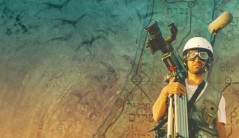
A tribute to the classic: “Man with a movie camera”/ Dziga Vertov (USSR 1929). A naïve documentary filmmaker, heavily armed with 3 cameras and a purple draped stage, sets out to roam his beloved country on his cheap motorcycle in order to bring to the screen the ultimate truth of his people. The racist and violent reality reflected from his people’s words increasingly darken his heart and vanquish his dream, until he is forced to confront his deepest fears through encounters with characters drawn from his tormented soul.

This film describes the life of the Arabs and the Jews living on Haladiya Street in the heart of the Muslim Quarter between 1986 till this day. It is a mix of people who live in a bubble of peace and calm and Arabs who live there under occupation. Our story revolves around the awkward relationship between Abu Bassem, a Palestinian, and Danny Rubins, a Jew, and how they represent a microcosm of what is happening in the battle over the soul of Jerusalem.

In Dimona, Israel, in 2003, six unemployed residents of a forgotten southern town are off to a brand new world of cinematic creation, a refuge from their harsh existence and a promise of a different future, as they are accepted to a TV course. As their new classes advance, a movie within a movie begins to play out as the characters take over the camera and turn it towards themselves and their surroundings. Six vital characters create a moving document, a first hand testimony, free from stereotypes and clichés – the portrait of a society in distress.
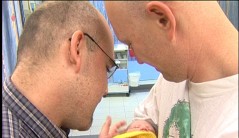
Two men, one woman and a baby constitute the formula for the alternative family documented in this film. Dafna, a single straight musician, is fed up with waiting for her prince charming. Her solution: teaming up with Itamar, a homosexual lawyer and actor, in order to have a baby. The third side of this dramatic triangle is Kai, a German flight purser and Itamar’s partner for the past ten years. After Dafna finally becomes pregnant, the relationship between the three rollercoasters as this fascinating, moving story progresses.

Ten artists, with language as an essential part of their life, speak about the relationship between their mother tongue, and Hebrew, Israel’s official language. Sometimes these artists live between two languages, and sometimes they do not speak the other language, but its music continues to echo…

In 1985 in Jerusalem, two cab drivers were brutally murdered three days apart. The first was an Israeli Jew; the second was a Palestinian, Khamis Totangi, the absent subject of this subtle and surprising documentary. With grace and a sure sense of plot, Eytan Harris weaves together the stories of the victim’s family, the murderer, the investigators and even a part-time poet, who adds a fascinating element of literary intrigue to this tale of lives forever linked by tragedy.

The peace process collapsed in the summer of 2000, and the Intifadah erupted. For two years a film crew documented the daily routine of the Alons, a family of settlers from Ofra near Ramallah. The violent incidents and the political developments are presented as perceived from their family living room. Against the mundane backdrop of familial quarrels and pleasures, the family’s sense of dread from an ever-imminent danger tightens like a ring around their necks until tragedy ultimately strikes.
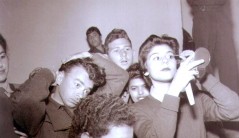
A historical documentary series that deals with one of Israeli society’s central sites of memory, proposing a contemporary and critical look at the phenomenon of the IDF bands. These are presented as a litmus test for understanding social and political developments in Israel. Created for the soldiers at the front, with an attempt to appeal to the citizens on the home-front, the IDF bands were from their very beginning a first-rate entertainment tool. The series tells the personal and collective story of those who were there, while identifying the ideological role of the bands.

These are the last days of the shantytown quarter in southern Tel Aviv, a poor rundown neighborhood that the municipality has always tried to erase from the map. The land was sold to a contractor and he plans to evict the residents and settle them in a couple of seven-story towers to be constructed on the same site. The film accompanies the director’s sister, Orly, who lives in a small house she inherited from their grandfather; Yitzhak, their uncle, who built the neighborhood’s makeshift houses with his own hands; Oshri, the postman; and attorney Ovadia, who calls upon the neighborhood’s inhabitants to unite and fight the eviction. For three years, Ovadia and the residents have been struggling against the municipality and the contractor in a public, legal and ultimately existential battle. This is their story.
Ronit, a 42-year-old music teacher, lives with her husband, Arie, and Sandy, the family dog. For seven years she has tried to get pregnant, but has been unsuccessful, which is why she treats Sandy the dog as her daughter.The film covers a period of three years, during which Ronit undergoes multiple fertility treatments, both conventional and alternative. Through the prism of the couple’s tension, brought on by the attempts to have a baby, the film raises basic questions, such as: What is the essence of being a woman?
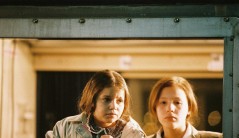
Menucha, a woman in her seventies, sets off on a quest to direct a movie that will relive a defining moment in her life: the separation from her sister Mindel at the train station in Warsaw. The film documents the often traumatic process of recreating the scenes of the past and examines Menucha’s obsession to memorialize her sister and separate reality from memory and fantasy in order to cope with the truth.

In the winter of 1992, a New York scientist isolated the material that love is made of: it is an unbelievable hormonal matter composed of three chemical elements. Ten years after that discovery, director Ari Folman goes out on a two-year journey in an attempt to investigate the material love is made of, as it expresses itself in eight unique and charming love stories. Alongside these love stories, the film hosts scientists, biochemists, geneticists, psychologists and philosophers, all of them are real, but in Rotoscope animation, brimming with fantasy, color and imagination.
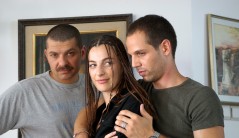
The body of a middle aged woman is discovered and Ataf, a promising young police officer, is assigned to the case. He is of Druze origin – a small sect whose religion is secret and whose members hold a firm belief in reincarnation. Through the course of his investigation, Ataf begins to experience some strange nightmares that carry him to his past. Could the nightmares and the murder be connected to a tragic past life?
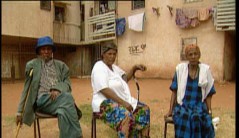
A violent crime leads us through a fascinating journey back in time from Africa to modern Israel, as we follow the hopes, frustrations and daily struggles of two Ethiopian women. The film tells the stories of Abuna Vessa, mother of five, who was strangled to death by her husband; and Ania Matiko, whose husband fails in his attempt to murder her. The film seeks to reconstruct what led to these two events, while exploring the women’s alienation and clashes with a society that is not sympathetic to their traditions.
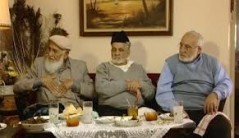
Yosef and Bracha married when they were 12 in Sana`a, Yemen and lived together for close to 70 years. Yosef became absorbed in his books, while Bracha took care of the needy. Before he dies, Rabbi Yosef Kapach hands his granddaughter Einat, director of the film, a bundle of pages which uncover a secret he has kept close to his heart his entire life- the secret of the theological war that split the Yemenite Jewish community. The documents tell of his persecution as a young orphan by the Jews of Yemen, a persecution that continues until the day he dies in Israel. Having read these words, Einat sets out on a journey to understand why he chose her to pass on the legacy and how he managed to turn his life around from such a lonely point and to become a world-famous Jewish philosopher.

Ever since 9 year old Roi remembers, he has wanted to be a ballet dancer, but he is ashamed. He’s afraid the kids in his class will make fun of him and ostracize him. Nevertheless, he plucks up the courage and sets out to make his dream come true. As it turns out, he is the only boy in a group of girls, a fact that makes him even more anxious to keep it a secret, and so he doesn’t tell anyone, not even his best friend, Asaf. But as time goes by, this secret wieghs on him. Will he overcome his fear and let his secret out?
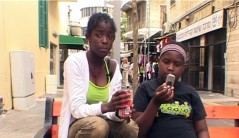
The memory of one’s first kiss is usually a nostalgic and sweet memory, which evokes in adults a smile and perhaps a longing for an age, in which everything was naïve and magical. But when you are 13 years old, it’s an entirely different story. Your first kiss is the most desirable, as well as frightening thing, the most intriguing but at the same time, the most disgusting. This is the moment we talk about time after time with our friends, but in the end, we are on our own. When you are 13, getting to your first kiss is like a race, and you have no intention of coming in last.
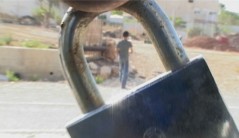
Ishaq, a 13 year old Palestinian boy, wants to play football with his friends. For everyone else, this is just another game, but for him it’s a real struggle. Ishaq lives in a closed military area which was created when the separation wall was built around his home, cutting the house off from Palestine and Israel. Ishaq must overcome many obstacles to get to the game, and his friends are losing their patience… Will he get to the game on time? Offside tries to portray the crazy situation caused by the Israeli occupation, through an abstract human situation, without going into politics. Ishaq wants to play football with his friends and to be free, as every child in the world is entitled to be.
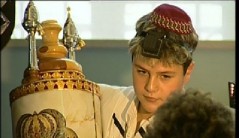
3 years after losing his father in a suicide bombing in a train station in Nahariya, 12 and a half-year-old Yam has to decide whether and how to celebrate his upcoming Bar-Mitzvah without his dad. And he has another mission: to get to the scene of the bombing and deal with the guilt he feels over his father’s death, for not being able to say sorry for the way he acted just beforehand and for not having the chance to say goodbye. This is the story of a boy, a victim of terror, who has a license to be angry, but no one to be angry with.
Three years have passed since the divorce of 10-year-old Shay’s parents. No one, not even his parents or his older brothers and sisters, has ever discussed the subject with him. In this film, Shay opens up for the first time and speaks freely about his personal pain and the lack of love that he feels. Over the course of the film, Shay falls in love with a young girl, a moment of hope that allows him to find the kind of love which he has been searching for.
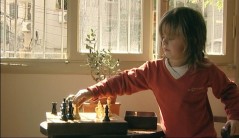
This film documents the imaginary relationship between 5 year old Noa and her friend, Toto, who lives inside her head. Noa has a very developed imagination, and her favorite pastime is painting. Animations of her paintings allow us a glimpse into Noa’s personal fantasy world, and help us understand where Toto came from and why he showed up in the first place.
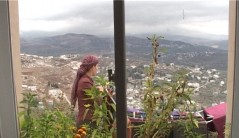
A highly personal documentary that follows a newly wed Jewish couple through their first few years of married life on a dangerous Israeli settlement in the West Bank. The diarist documentary exposes what life is like for Menorah, a young and nervous settler, who was married on the day of a terrorist attack, spent her honeymoon trapped inside her home because of terrorism, and sleeps with a gun under her pillow. The film follows the evolution of her relationship with both her husband and her home through their crucial early stages. From a terrorist attack the night of Passover that murdered close friends to the birth of her first child, Menorah turns on her camera to share highly personal moments.
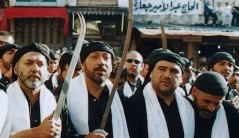
Reaching far into the realms of radical Islam, this film brings authentic voices from those willing to literally sacrifice themselves for God’s will. From Al-Quaeda supporters in Pakistan to women in religious schools, and the startling and bloody images from the Ashura festival in South Lebanon, people are willing to go all the way in the name of God. Their understanding of His intention determines the route, but another interpretation lies waiting which could change their direction.

Tamara is unable to have sexual relations with her partner Ariel. Any sexual physical contact is extremely painful for her. When she is told that an operation will not help, Tamara has an unusual suggestion for Ariel.
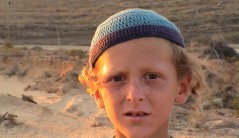
10 year old Yedidyah lives on the Morag settlement, the most southern settlement in Gush Katif. Yedidyah collects Kassam rocket shrapnel, bullet casings from rifles, machine guns, and so on – evidence of the complex reality he lives in. The film follows Yedidyah during the happy and busy day time and during the night, when the fear of falling mortars, terrorists and the disengagement plan is intensified.

Danielle, a young 23 year-old woman, deals with an unexpected personal disaster. Overpowered by shame, she denies herself any help from others and battles the pain on her own. Outside she is still the same happy and beautiful girl, but her inner anxiety threatens her entire world.
Moshe Margalit was born in Ludmir, Ukraine. He was 9 -years-old when World War II started. Steven Wermchok currently lives in Ludmir. He was 8-years-old when the war started. Wermchok was honored by Yad Vashem as a “Righteous Gentile” for rescuing 50 Jews from Ludmir, but Margalit was convinced that Wermchok never saved any Jews. Now he, along with other Holocaust survivors, will wage a battle against Yad Vashem in order to get Wermchok’s title annulled.
Shir is a national champion in ball-room dancing who is willing to pay a high personal price in order to keep her successful career moving. Tomer is a highly intelligent, talented boy who loses on purpose to his friends in Chess and Football as a strategy designed to keep friendship and social status.Two 11 year old kids, confronted with the emotional and social impact of their decisions, have to make a tough choice between love and career.
In 1996 the government of Israel approved the establishment of a Production Enterprise of the World Wide Giant Hi Tech Company Intel, in the development town of Kiryat Gat, in the southern part of Israel. The founding of the enterprise was accompanied by many promises to the local citizens, by the Israeli government as well as by the Chairman of Intel. The encounter between Intel and the local residents is the focus of this film. During the six years that Intel operated in Kiryat Gat, an ambivalent relationship was created between the company and the local population.
Kazchen is an 8 year-old boy of German origins, wants nothing more than to find his real father. After his mother dies, Kazchen moves in with his Aunt,but it quickly becomes apparent that she and his uncle cannot take care of him and he is sent to a kibbutz. Kazchen runs away and encounters the outside world for the first time. However, after he is finally caught he learns that his uncle committed suicide and his aunt has left for Vienna. Kazchen, afraid he’ll be returned to the kibbutz, persuades the officer to take him to his father. The union between the two seems harmonic, until it becomes apparent that Ernst, Kazchen’s father, is demented, and a tragic reversal of roles occurs between the sick father and his son, who has matured during his journey.
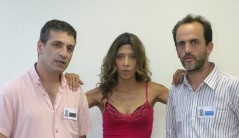
This is the story of Anat, a single mother, and one eventful year in her life as a stripper who gets mixed up in the seedy world of the diamond exchange and ends up involved in a murder. When a wealthy diamond dealer offers to make Anat his secretary, the opportunity seems too good to be true. But the plot thickens when he brings on a business partner with whom Anat has an affair. After a deal goes bad, Anat must choose between her contradicting loyalties while trying to repair her broken relationship with her daughter Natalie, all without getting caught up beyond rescue in an unsolved murder case.
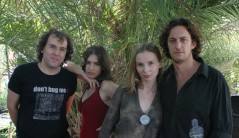
Tommy and Lia, and Ronny and Dana are two married couples living in Tel Aviv who meet to celebrate Dana’s 29th birthday and her new role in a television drama.Tensions rise when Tommy suggests they play the game of True and False. What seemed at the beginning of the evening as a harmless party game quickly becomes destructive as personal secrets come out. Each of the sentences is a confession of adultery, whether truthful or not, and each of the participants uses the game to his or her own manipulative needs. By the end of the evening, the biggest secret is revealed, the one after which, nothing will ever be the same again. This evening will change the lives of all four people, but even after the evening is over, they won’t ever know for sure, what was true and what was a lie.

Even Ehud Barak’s 1999 election victory can’t shake Tammi’s recent depression. She dreads going to the celebratory barbeque party with husband Ronni, and her friends who will only trash her. At the barbeque party the truth finally surfaces. The lies, that the “perfect couples” tell each other and themselves, sicken Tammi to the point where she can’t keep quiet. In an act of desperation, which is also an act of revelation – a sign of life from a woman that something in her has long been dead – she explodes and exposes the illusion that their lives are perfect, that their dreams will come true shortly, and that happiness is only a drive to Damascus away.
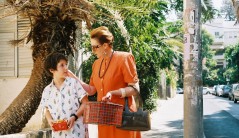
The Witch from Melchet Street is an urban legend, based on a book by Gadi Taub. It tells the story of a boy and an elderly witch, who live in the same building, in 1980s Tel Aviv.The boy is a dreamy kid, who falls in love with the new girl in the neighbourhood.The elderly witch, now retired, lost her love many years before.The relationship between the two teaches them that there is no magic needed in true love.
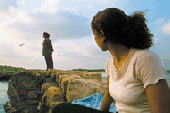
Faradis (“Paradise” in Arabic), a picturesque fishermen’s village overlooking the Mediterranean, is a Palestinian enclave inside the state of Israel, with a history that echoes stories of massacre and deportation. When the director investigates the secret past of her village, she learns more than she expects; as she uncovers the story of the village’s mythic “bad girl,” her troubles begin. Paradise Lost acts as a film-diary which recreates a lost history and re-defines modern womanhood within traditional Arab village life.

Shulamit and Danny’s son Eytan was killed in action almost nine months ago. The bereaved parents have been dealing with their loss in very different ways – while Danny has been going to support groups to help him cope, Shulamit stays at home somber and glum, obsessively tending to the flowerbeds in her garden.One day a young Kibbutz volunteer from Ireland named Diana comes into their lives carrying their son’s child.Danny responds with great excitement, hoping to raise his grandson, while Shulamit develops bitter anger towards Diana. When the two women finally get acquainted, the hatred and suspicion give way to friendship which changes both women’s outlook on life.
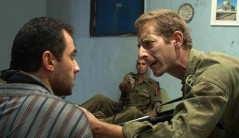
Three soldiers are ambushed while returning to their post. They manage to escape and hide in the home of a Palestinian couple while they await their rescue team. Hostility and lack of communication prevail between the soldiers and the couple, until a small detail is revealed which helps them find common ground. The two sides grow closer and begin to see their enemies as human beings until…

Subliminal is a proud Zionist rapper who, with fellow artist MC Tamer, a pro-Palestinian Arab, seeks co-existence in the underground Israeli rap scene. Their belief that the language of hip hop can traverse the political tensions of the region to reunite their people is soon shattered as lyrical battles begin to spill onto the streets. This documentary explores the tensions between the patriotism of Subliminal’s rhymes and Tamer’s Palestinian nationalism to create a unique commentary on the broader political conflicts within the Middle East.
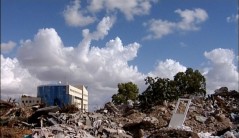
How would you feel returning to your hometown and discovering it’s become a center of drug-trafficking? How would you feel if you found out that your city has a 5,000 year-old history, most of it hidden underground? And what happens when the city’s everyday reality becomes a mirror image of life in the entire country? Tsipi Reibenbach left the city of Lydda/Lod in 1977, a war widow and mother to a little girl, and now returns to shoot a film about a city where Jews, Muslims and Christians live in a plethora of sounds and colors: the Muezzin’s call, the ringing of the church bells, and the bustling market. However, a violent and hostile urban ruin is now a surrealistic reality as Palestinian terrorism rises and Lydda/Lod, a city with no pity, becomes a microcosm of the conflicts and difficulties throughout Israel.
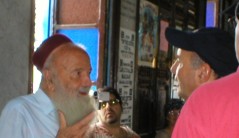
This 2-part documentary film tells the little-known story of the Jewish communities of North Africa during World War II, revealing how, had fate not intervened, it was only “a matter of time” until they would have shared the fate of their fellow Jews in Europe. Through archival and new footage, and interviews with surviving eyewitnesses and historians, the film depicts Jewish life in North Africa and describes the evidence of plans by German and Italian occupiers to carry out “the final solution” far from the shores of Europe.It describes the impact of racial laws, property confiscations, and the establishment of forced labor concentration camps in North Africa which create a unified sense of Jewish history.
Itzik Abramov, a theater student and trance party organizer, felt strong stomach pains one day. After a routine CT Scan, doctors discovered a large, malign tumor in his liver. Itzik’s only chance of survival was to find a live liver donor or else he would most likely die in under a year. Yaniv Kendell, a 28-year-old religious settler, married with children, heard about Itzik on the radio and wanted to help. The only thing the two shared was the desire to save and to be saved.This is a film about the will to live.

Miriam Fux, a Yiddish singer in Europe and the star of the nostalgic “Mr. Chibotero” series of commercials from the 1980s, sets out on a journey to investigate her mother’s past. Miriam, the daughter of Holocaust survivors, finds out that her mother’s Holocaust story is a lie and that her sister was not born in a concentration camp, like her mother had told her, but rather as a result of her mother’s secret love affair with a German man.

Amal High School’s graduating class of 2000 in Kiryat Melachi struggles through the highs and lows of adolescence and impending adulthood as their final year is filled with difficult studies for their matriculation exams, fears and trepidations in light of the imminent military service, afterschool jobs, and teenage fun. This film concentrates on the seemingly small and trivial day-to-day events of Israeli youth in a small town setting and finds in it a unique beauty.
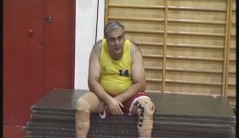
In Israel, the struggle to get a job becomes, for some, a game of survival. The Workplace Annual Basketball Tournament begins. Amongst the teams aspiring for championship are: Team IRS, Team “Hapoalim” Bank, the Ministry of Law team, the Jerusalem Zoo team and the Tnuva Dairy Delivery dream team. This film follows the Tnuva team’s hard working laborers who sweat all the way to pay day. The real contest is over keeping one’s job but as far as the six Tnuva milk truck drivers and team mates are concerned, the real battle is on the basketball court. The Tnuva team’s quest for championship is documented throughout the season. The team members’ greatest aspiration is to reach the ‘regionals’ in the southern resort paradise of Eilat: three days of fun in the sun, pool-side activities and free popsicles, all courtesy of the Tnuva management.
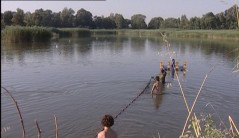
For 5 years Racheli Schwartz has been following the collapse and disintegration of her home located in the Upper Galilee in Kibbutz Hulata. Most kibbutzim in Israel are in a disintegrating state of economic and ideological bankruptcy. Agriculture, the source of pride to a people returning to their land, is no longer profitable; orchards are being uprooted and the dairy is being dismantled. People become suspicious, isolated and begin to build fences around their homes. Yehuda is found hanging in the citrus plantation where he used to work. The dismantling of the Kibbutz had rendered him unemployed with no skills for other work. The film follows a number of Kibbutz members, each deeply influenced by the imminent death of the Kibbutz.

My small and once close-knit has fallen apart. My father became religious, my mother converted to Christianity, my sister married a non-Jewish man and now my father hates her and won’t have anything to do with her or her daughters; I escaped all this and fled to Israel. After my divorce, I decided to return to my traumatic past, to my family in Russia, and to try to rebuild my faith in love. Will I succeed in uniting my shattered family?

The children of illegal workers in Israel live out their seemingly normal everyday lives in the shadow of the constant fear of deportation.This film focuses on the world of the children of illegal foreign workers who are forced to deal with a complex reality which includes tough questions regarding their identity. The children’s dreams, pastimes, and hopes are examined in a reality where the future is ever-frightening and unknown.

The film is about the things that we discard and how they have turned into an enormous pile of garbage. It’s about Hiria, a mountain of trash containing all the rubbish that people from the central area of Israel have disposed of over the past fifty years, like a snake shedding its skin. It’s about the people for whom Hiria is their life. It’s about proposals by famous artists from Israel and around the world, who were asked to give the mountain new form and meaning, now that it has ceased to serve as the main garbage dump for Metropolitan Tel Aviv. It’s about ecology and trash, and the winding ways that art tries to negotiate between the two.

How does it feel to have been pregnant or nursing for 25 out of 26 years of your married life? This and other questions are posed for the first time in this film as they expose the consequences of the commandment “be fruitful and multiply” upon the Ultra-Orthodox Jewish woman. The man is commanded to procreate, but it is the woman who is the instrument for fulfilling this purpose. The film follows the stories of four Ultra-Orthodox women and the oppression in Ultra-Orthodox society which ignores their spirituality, emotional needs and inner world.
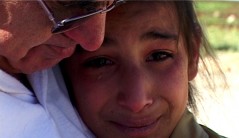
Many generations of Israelis were brought up on the Masada dichotomy of liberty vs. death. Almost two thousand years after the Roman siege over Masada, and the collective suicide of its defenders, this film aims to explore the possible objects of identification available today. Should we be identified as the mythic heroes of Masada, or as the murderous fanatics of Masada? Or maybe we would rather be identified as the Romans, the cruel conquerors of the land?
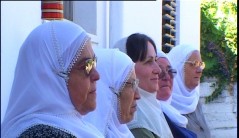
4,000 Circassians from Eastern Europe live in Israel in two villages, zealously safeguarding their unique tradition.They are Muslims but not Arabs and the men serve in the IDF. The story of this community is told mainly through the eyes of two single young people who must get married, keeping all the biding laws – life in a golden cage.
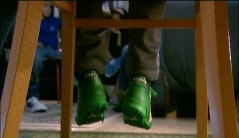
Through personal interviews, conversations with teenage boys, meetings with experts and considerable humor and self-exposure, Edan Alterman sets out to examine how height affects men who are shorter than others. Are shorter men funnier? Does a short stature create a tall character? Why do girls only want to date tall guys? And who do the short guys go out with? The film follows two short boys who still dream of being tall, and short adults, who have learned to live in a world that at times teases them, but generally just blocks their view.
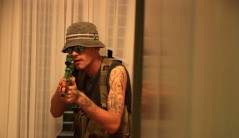
At age 24, Alex is released from prison after serving seven years for two convictions of armed robbery. When he returns to his parents’ home he will face a series of unsettling questions: How do you advance in Israeli society as a Christian Russian immigrant, an ex-convict with a body covered with tattoos? Who will give you the opportunity to make something of your life? Who can you trust? Who will befriend you? Who will love you? The film follows Alex over the period of a year and a half as he attempts to free himself from the self-destructive impulses that up until now have always controlled his life.

This is a personal film by Asaf Bason, who embarks on a voyage seeking his cultural and spiritual roots hidden in the complex figure of his father.
Yitzhak Bason, Magdi by his stage name, was a poet and singer of Arabic music on the one hand, and a Mossad agent on the other. He lived a life full of contradictions, between his love for Arabic culture and his identity as an Israeli Mossad agent; the conflict between being a poet and having to provide for his family; and the calling to serve national interest. In his quest, Asaf visits his father’s friends from both worlds – the musicians as well as secret agents.
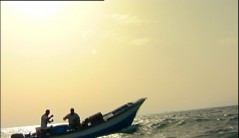
This film follows the Goren family over a period of 15 years as they are removed from the fishing village in the Israeli settlement of Dugit, located on the north of the Gaza Strip, near the Israeli border. In 1984 the Israeli government designated this area to establish a fishing village until it was dismantled in 2005. At first the settlers worked together with the Palestinian fishermen, but political tension made it increasingly difficult to maintain a normal relationship with their Palestinian neighbors. As the settlers are confronted with the growing number of suicide attacks and as the work on the security wall around Gaza progresses, the desire of both sides to leave increases.

This film follows a group of Ethiopian rappers, living on the margins of society and dreaming of success. During the making of the film, one of the rappers is killed in a road accident. His friends mourn him while trying to grapple with reality and make it in Tel Aviv. However, Israeli society makes it difficult for them, and in order to survive, they must work at odd jobs. Music remains their biggest love, but is an unfulfilled dream. The film reflects the face of the Ethiopian ethnic group, living on the outskirts of Israeli society but trying to fit in.
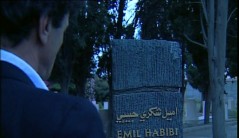
Following the involvement of two of his nephews in a terrorist attack, and the harsh reaction of the Israeli public to his new film, actor and director Mohammad Bakri visits the grave of Emil Habibi, a Palestinian politician and author and formerly Bakri’s mentor, to tell him about his life since Habibi’s death.
Against the backdrop of a Palestinian society in chaos and terror attacks in the West Bank continuing to rise, Mohammad tries to lead a normal and creative life and to continue to spread his ideas of coexistence among Arabs and Jews.
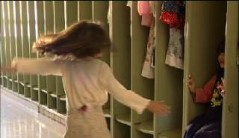
The film follows a new girl on her first day at boarding school, and accompanies an “ex-boarder” returning to the scene of her childhood for the first time in 35 years. Through their stories and using rare archival footage, the film tells the story of the Weingarten Orphanage for Girls, founded in Jerusalem in 1902 and operating today as a boarding school for orthodox girls. The film reveals a closed world with its own rules, a world of childhood with no parents in it.
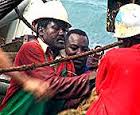
On the trawler, the Spirit of Namibia, moored off the coast, diamond mining goes on around the clock. The film follows the life of an international crew working in the service of a faceless mining conglomerate (De-Beers) that owns not only the ship but the surrounding waters as well. The men are drawn into contemplation of their situation. White South Africans spouting racist theories; Cubans who write poetry and speak of love; an Israeli security manager who acts as if he were the enemy; Namibian deck hands who find themselves colonized in their own country. It’s the heart of darkness in which diamonds are forever.
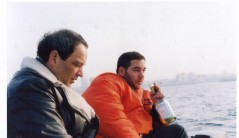
David Fisher, the director of this film, lost his parents one after the other, leaving him and his four siblings with a 45-year-old mystery. For two years he’s been searching for his sister, who was taken as a day-old infant from his mother’s bed in the maternity hospital. His parents, both Holocaust survivors, arrived in Israel broken-hearted and penniless, leaving five children to pay the price of healing their shattered lives. In this film, Fisher brings his family together on a mission that takes them to places that their parents hoped they would never reach.

The fascinating story of the special friendship forged between two women: Perla Ubitsch, the last remnant of a family of dwarfs that survived Dr. Mengele’s cruel experiments in Auschwitz, and researcher Hannelore Witkovsky, a German Protestant born after the war. Filmed in both Germany and Israel, the documentary accompanies Hannelore on her quest to find a lost film made by Dr. Mengele featuring Perla and her siblings.
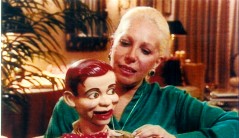
Pesachke Burstein was a singer, a dancer and a comedian born in a Jewish town in Poland at the end of the nineteenth century. When he was 14-years-old he ran away from home to join an itinerant group of entertainers. He went on to live a life of theater, and was famous for his incredible whistle. Young Pesachke arrived in New York in 1924 and soon became a shining star in the Golden Age of Yiddish Theater. In America he met a young actress named Lillian Lucas. After the war, the couple had twins: Susan and Mike (Mike Burstein who appears on Broadway stages), or as they were known on stage, Zissele and Mottele. The family wandered around the world, looking for whatever remained of a Jewish audience, who had been mostly exterminated. The family saga of the four Bursteins reveals the brief history in the stormy but magical heyday of Yiddish Theater.
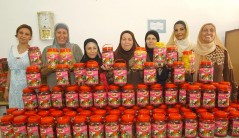
This is the story of eight Israeli Arab widows forced to enter the workforce for the first time with no vocational training.
As widows with no income, they are condemned to stay at home and raise their children on a meager social security allowance. The film tracks the progress and development of the unconventional pickle jar factory the women decide to create as they work to change their fate, and how their plan affects their personal lives – family weddings, bereavement, loneliness and some serious fun.
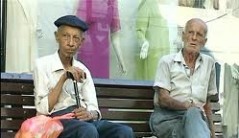
Between the years 2001 and 2004, Tel Aviv suffered dozens of terrorist attacks carried out by Palestinian suicide bombers. As a result, the security and economic situation deteriorated, and fear and despair became constant companions to the inhabitants of the city. The film looks at the impossible reality the Israelis live in and their attempts to survive this reality and somehow lead a normal life.
Michael Nathanson, a Russian immigrant raised by a single mother, found himself poor, hungry, and homeless after graduating from Buffalo University in New York. He found himself living in a park, playing backgammon for just enough money to live on falafel for a year. Now known as Falafel, he is the world’s greatest backgammon player. Like Deep Blue is for chess, Snowy is the undefeatable computer program for backgammon. Snowy analyzed that Falafel is the best because every time he rolls the dice, he chooses the most accurate course of game, and this is his story.

A visitor to the old city of Jerusalem is struck by the immense variety of people of various nations and religions thronging the narrow alleys. Each hat and headdress serves not only as protection against the weather, but also as an identity card, a product of many centuries of tradition. This is a story about hats, but it is actually an account of what lies beneath them. It is a film about external appearances and internal identities, and about people who live in Jerusalem.
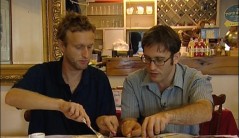
The Ashkenazim is a funny-sad film about young Israelis who are in search of their Ashkenazi roots. The film follows the changes in the lives of these young people as they reconnect to their Ashkenazi heritage. What are they longing for, why are they filled with shame and guilt, why do they feel rejected, and will they ever be able to bring some of their forefathers’ lost Ashkenazi culture to the Middle East?
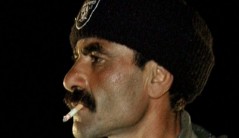
A film about Palestinian and Israeli fishermen on the Mediterranean shoreline, between Israel and Gaza; these are rough men, uninhibited and outspoken, who do not hesitate to speak their mind in a rude and direct language. The film depicts them as men of two nationalities, who work together against the elements, thereby forming a unique intimacy, men fighting something much greater than themselves, relying on each other for their lives.
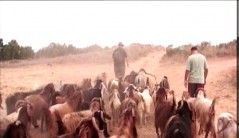
The film tells the story of the establishment of the first and only collective farm founded and run by and for the mentally ill. Genesis – the farm – was initiated by Arieh Shalev. His plan is to create a collective farm that will grow into a kibbutz, where mentally ill persons can work, create and live – giving them dignity, purpose and self-respect. The film introduces us to the indomitable spirit of each member of the group working to move forward despite all obstacles.
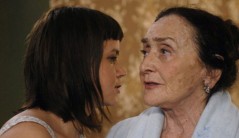
Paula, a 79-year-old Holocaust survivor, is pushed by her only son to move into an old people’s home. She doesn’t want to give up her home and independence and finds a young Polish woman named Valentina to stay with her and help her around. But Valentina brings back memories from Paula’s youth in Poland. Her childhood friend and neighbor, also called Valentina, had played a questionable role in Paula’s family being deported.
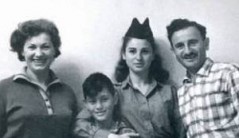
Traveling on his scooter through Tel Aviv, filmmaker Tal Haim Yoffe finds a discarded box of old photographs in a green dumpster. This docu-detective film, slowly unwinds a family history, beginning in Lodz, Poland, and traveling through the Siberian Gulag, a Samarkand sugar plant, a Ha’apala ship and the battlefields of the Sinai Peninsula.

This is a journey into the mysterious life of Aris San, the non-Jewish Greek singer who arrived in Israel as a young man in 1957 and within five years became a megastar, club owner, close friend of generals and politicians and lover of countless movie actresses and singers. In 1960s Israel, everyone was singing Aris’ hits and the gossip columns were full of his scandalous love affair with popular singer Aliza Azikri. Then rumors began that Aris was a spy and stories of a violent relationship with Aliza Azikri began circulating. Aris left Israel hurt, and set out to conquer America. He opened a popular nightclub in New York, where Hollywood stars, politicians, and mafiosi came to party enjoying the company of the singer, who hid behind an artificial wig, huge glasses, white suits, gold rings and a guitar. Aris became a rich man, and enjoyed all the wealth and excitement that America of the 1970’s and 1980’s had to offer. Aris thought he had found the key to success, but at the end of his meteoric rise came his fall, flight and mysterious end in Budapest. Shot in Israel, Greece, the United States and Hungary, the film uncovers the man behind the glittering smile, who had a contract with the muses and perhaps with the devil as well.
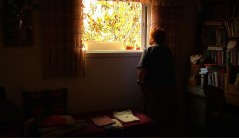
Grandma Rivka is forced to leave her home and memories to move in with her children and grandchildren. She finds the transition unbearable, but her family shows her love and sensitivity as they lead her toward a new life, where there is room for memories as well.
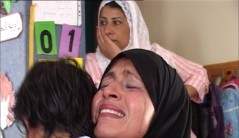
Khitam, A Gaza Band born Palestinian woman, was married off in an arranged match to an Israeli Arab, followed him to Israel and bore him six children. When her husband divorced her – in absentia – in the Sharia (Muslim) court he gained custody of the children and Khitam was left with nothing. She cannot contact the children and has no property. Although married to an Israeli, she does not have an Israeli citizenship. Now she is out on a dual battle, the most crucial of her life: against the Sharia court – which always rules in favor of the husband – and against the state, in an effort to gain a temporary permit to stay in Israel in a shelter for abused women, while fighting for custody of her children.
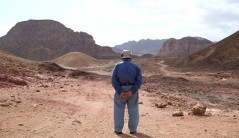
One slide follows another slide and another. A flower, a tree, a river, a memory, one last fight and a deep sense of longing. This film is a 95-year journey through the life of Azariah Alon, the father of nature and landscape conservation in Israel.
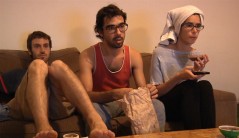
Ricki divorced her husband three years ago. Together with her daughter Noor, she moved in with her elder brother Yakir and his partner Ran. That temporary living arrangement became an especially alternative family when Ricki, her brother and his partner decide to have a child together and become a parenting trio. They face many challenges along the way and are forced to create their own family rules. Documented over the course of three years, this unique relationship raises fascinating questions about the conventional family. At the same time it depicts a very unusual relationship between a sister and her brother, torn between their mutually dependent relationship and their desire to live autonomous, independent lives.
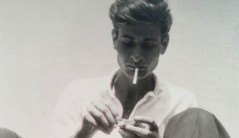
“Write Down, I Am an Arab” tells the fascinating story of the Palestinian national poet Mahmoud Darwish. His poetry molded Palestinian identity and helped shape entire generations on its behalf. Darwish grew up under a military government, which denied him freedom of movement and left him confined to the city of Haifa. In 1964 he wrote the defiant poem “Write down, I am an Arab”. The work succeeded in provoking the ire of the authorities. Darwish was sent to prison and became a national icon for the entire Arab world. Through his poetry, secret love letters that have only just been revealed, his intimate relationships and rare archival materials, we will get to know the man, the exile and the lover, whose words became the clarion call of the Palestinian people.

Avigail, the director of this film, is dealing with a break-up from her girlfriend and with raising a child that she had with her. At the same time, her religious family in Jerusalem is struggling with the “demons” threatening to overwhelm their daughter Ariella. Ariella is an Ethiopian girl, who was adopted by Avigail’s parents, Rabbi Daniel and Hannah Sperber, when she was four. She is the tenth child, with nine older siblings, each of whom chose a unique path to follow. But Ariella forces the family to contend with problems of another sort: alcoholism, petty thefts, and prison. Does the story of Ariella have an inevitable ending? Can she accept and absorb the love and concern that surround her? And will her family be able to love her unconditionally? This is a depiction of the fragile bonds that make up a family.
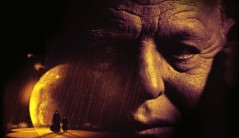
By the age of thirty he’d already become the most famous poet in the Jewish world. He spent very few years living in Tel Aviv, but he loved the city dearly. Some 100,000 people attended his funeral in 1934. “King of the Jews” is a portrait of the most beloved Jew of his day, Chaim Nachman Bialik. Combining special animation, a voice track by Chaim Topol, rare archival footage, long-forgotten photographs, poems by Bialik performed by Ninet and interviews with the foremost Bialik researchers and fans in Israel and around the world, this film retells the story of the little boy from the shtetl, who became King of the Jews.

Ever since Europe closed its gates to African refugees, thousands of Eritreans have fled the brutal dictatorship in their homeland and traveled north, to Israel. Many were seized by Bedouin smugglers as they crossed the Sinai desert. They are now held in camps and tortured until they pay a ransom. This film follows Eritrean radio presenter Meron Estefanos, who interviews thousands of refugees imprisoned in those camps from her home in Sweden. Through these radio interviews the film touches on many other moving stories. We hear about Hariti, 22, who gave birth to her first child in camp, while her husband tried to collect $30,000 in Israel to purchase their release; and about Timnit, 20, who disappeared along the Israeli-Egyptian border, and is still searched for by her brother.
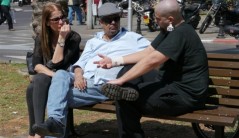
Ohad is an animal-rights activist. After years of being cut off from his family, he tries to heal the wounds and go home, but their decision to eat meat still stands in his way. Will the family manage to reconnect?

Shadya Zoabi, a 17-year-old Muslim girl from a small Arab village in northern Israel and a World Champion in Karate, lives according to her own distinct principles and does not want to be like other Muslim women. Shadya’s brothers disapprove of her practicing Karate. In their view, a Muslim woman has a specific path in life, and it is forbidden to stray from this destiny. In spite of the support she gets from her father, Shadya finds it difficult to overcome the social pressure from her brothers and the surrounding community. Will she succeed in balancing her ambitions after her marriage and will she remain a World Champion?
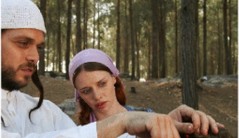
This is the story of a journey made by a young religious family: Yael, Yoni, and their three-year-old son Yiftach. Yoni, once a barely observant Jew, is now devoted to the passionately Hassidic Breslov tradition. His wife Yael has remained in a more moderate, mainstream branch of Judaism. Yiftach’s third birthday falls on the holiday of Lag Ba’omer, and Yoni wants to take Yiftach through a masculine rite of passage – the halakeh ceremony, where a boy’s hair is cut for the first time, leaving only his ear-locks. The long journey to Mount Meron brings their conflict into sharp relief. Their encounters with various characters along the way further highlight the chasm which has developed between them.
Military service is compulsory in Israel for all Jewish men and women. After 3 years of service, they are granted a discharge bonus, which many of them will use to fly to India. Approximately 90 percent will use drugs, and each year some 2,000 of them will need professional help due to drug use. The common name given to this phenomenon is “flipping-out.” Shot over a period of 2 years, this film follows the “flipping-out” of Israeli travelers, most of them under the age of 25. The Chabad houses, Jewish religious posts, a Warm House sponsored by the Israeli Anti-Drug Authority, a rescuer specializing in bringing these young people back home, and thousands of young Israelis are all part of this strange world that has become a must stop in the Israeli coming of age process. Together they portray a comic-tragic story of an entire society that has perhaps flipped out as well.
Aready on their second date, Amira took Michael to meet her therapist, so that the therapist could explain to him about her mental state. Michael wasn’t alarmed. They now have four children together, even if they live on the edge. Michael knows all the fastest routes to the emergency room and the psychiatric ward. Amira decided to stop hiding her mental illness (Borderline Personality Disorder) and to open up about her condition to her community. As a religious woman, she discovers that the restrictions of Jewish law make things especially difficult, but this only goads her to study the issues so that she can bring about a change in attitude among rabbis and the religious authorities toward people struggling with mental illness. This film tracks Amira’s dramatic struggle to stay alive, raise her children and examine what it means to be normal.
“The Birdman” is neither fiction nor a documentary. By imagining the story of a young man who sets out to find his past in the city of Los Angeles, the film documents the impossibility of returning to the places left behind. Through its effort to document what once was, it dives into the imagination to see what cannot be seen otherwise. Shifting between documentary and fiction, “The Birdman” weaves together a story of three men, each of whom must leave to find meaning somewhere else. Three generations – a grandfather, a father and his son – face the urge to disappear and reinvent themselves, so that they can do the most genuine thing of all: change their very lives.

More than 16 years have passed since furrier Stefan Braun passed away, but for Eliezer Rath, his lover and life-partner for 39 years, Stefan’s heart is still beating. Day in and day out he sits in Stefan’s room which hasn’t been touched since Stefan passed away, recording himself talking to him. Eliezer has recorded hundreds of tapes in which he tells Stefan about the events of the day, sings to him, and includes him in his thoughts and longings. Eliezer Rath and Stefan Braun’s love story began in the 1950’s in a young conformist state where homosexuality was outlawed, in Stefan Braun’s colorful and successful fur salon frequented by affluent residents and visitors from around the world.However, for Stefan’s family, the relationship between the two is not an amazing and harmonious love story. They describe Eliezer as someone who rapidly transformed from lover to servant, ready to endure humiliation and betrayal just so he could be near his lover, while Stefan became the master totally dependent on his servant’s close service.After Stefan’s death, Eliezer Rath is forced to prove his love for his life-partner. He is confronted by Stefan’s close-knit family who express suspicions about Stefan’s last days in light of the will he left behind. Conversations held between Eliezer and Stefan’s family, rare recordings, personal diaries, hundreds of stills and old 8mm films tell the fascinating and complex love story of furrier Stefan Braun and tailor Eliezer Rath.

The film takes place during the days of the Israeli withdrawal from the settlements in the Gaza strip, when the residents of the Katif Settlements were uniting to fight for their existence. Ruth, a teenager from one of the settlements, is also searching for excitement. When Ruth meets Erez, a photojournalist sent to cover the events of the disengagement, she realizes that she doesn’t belong anywhere. Ruth is a coming-of-age story of a young girl living in the most dangerous place in Israel. In a society demanding a united front and common beliefs, Ruth fights to interpret her faith in her own way. This is not a political struggle but the struggle of one girl for the privilege of holding an independent opinion in a social surrounding which strongly embraces a united point of view dictated from above.

The Buddhist concept of reincarnation, while both mysterious and enchanting, is hard for most Westerners to grasp. Unmistaken Child follows the 4-year search for the reincarnation of Lama Konchog, a world-renowned Tibetan master who passed away in 2001 at age 84. The Dalai Lama charges the deceased monk’s devoted disciple, Tenzin Zopa (who had been in his service since the age of seven), to search for his master’s reincarnation. Tenzin sets off on this unforgettable quest on foot, mule and even helicopter, through breathtaking landscapes and remote traditional Tibetan villages.
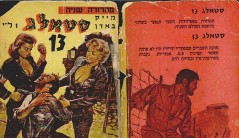
The improbable but true story of a wildly popular series of racy paperbacks called ‘Stalags’ that became national bestsellers and took conservative Israel by storm in the early 1960s. Their perverse and bizarre narratives, based on Nazi themes, were the only erotic ‘literature’ available in the country at that time. Disguised as American publications, it was later discovered that these tales of female SS officers with boots and whips were in fact penned and published by Israeli Jews. The Stalag phenomenon immediately followed the notorious Adolph Eichmann trial, which was credited as a factor behind the genre’s brutal and sadistic tone. At a time when Holocaust scholarship was in its infancy, for many young Israelis these pornographic fictions were their first exposure to the brutal realities of the Second World War.
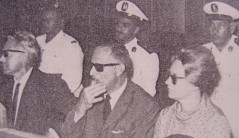
Paris 1962. Oded is 12 years old when his father reveals to him he’s a secret agent for the Israeli Mossad and makes him swear to secrecy because his life depends on it. When his father leaves on his mission to Cairo assuming the identity of Wolfgang Lotz – a German millionaire, ex Nazi, playboy and horse breeder – Oded struggles with the heavy secret and the longing for his father. As he penetrates the closed circle of German scientists developing missiles in Egypt, Lotz begins to succumb to his covert identity, living the high life, spending millions and even secretly marrying a German woman he meets on a train. Oded and his mother are left behind to the care of the Mossad, alone in Paris, waiting for his return.
After dramatic incidents, a sensational trial and a few years in prison, Lotz returns to Israel but never comes back home. Torn between identities, still addicted to the glamorous life his covert mission allowed him to taste, Lotz doesn’t find his place and ultimately ends his days in frustration and poverty, working as a salesman in a Munich department store.
In this dramatic documentary , Oded breaks 40 years of silence and sets out to explore his father’s real and covert identities, giving us a rare glimpse into the cloak of espionage, confronting the heavy personal and emotional price paid by those who stay in the shadows – the family of the spy.
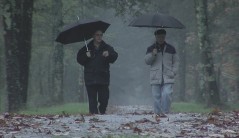
This is the story of two brothers who for decades feared to meet.
Attempting to repress their past and build new lives, the brothers buried dark secrets in their hearts. Only when rare letters were found, letters from their parents who were in a concentration camp at the time, to the orphanage where the brothers hid during the second world war, did Menachem and Fred start to re-establish contact and come to terms with their past.
Menachem and Fred live in two extremes of Jewish identity. Fred is an American aerospace engineer. His children are married to Christians. Menachem is religious, holds a doctorate in education, and lives in Jerusalem. His children live in West Bank settlements.
The film accompanies Menachem and Fred on an emotionally charged journey that examines their past and probes their psyches. A strange, unexpected relationship develops with the Hopp family, sons of the Nazi who deported their family to the concentration camp. Dietmar Hopp is one of the wealthiest men in Germany and owner of the software giant “SAP.” This controversial relationship between the sons of the murderers and the sons of the murdered brings about a surprising development between the two families.
The film raises existential questions pertaining to fate, survival, identity, life choices and their influence on the future generations.
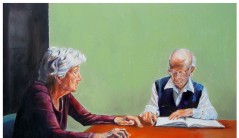
Dan Wolman documents his parents’ daily life in an attempt to find out what lies at the root of the childhood traumas portrayed in his feature films. While filming, he discovers many surprising facts, such as why there has been a photograph of a young man dressed in a German army uniform in his parents’ bedroom and also that his father was the private doctor of the Emperor of Ethiopia.
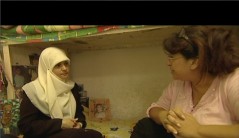
Ever since 17-year-old Rachel Levy, an Israeli, was killed four years ago in Jerusalem by a Palestinian suicide bomber, her mother, Abigail, has hardly found a moment’s peace. Levy’s killer was Ayat al-Akhras, also 17, a schoolgirl from a Palestinian refugee camp several miles away. The two young women looked remarkably alike. Through the personal stories of the two families’ losses, the film explores their mutual pain, despite differences in cultural and religious beliefs, the Palestinian-Israeli conflict, and ultimately the hope for peace. The film’s most revealing moment is in an emotionally-charged meeting between the mothers of the two dead girls.

Yishai Orian, the director of the movie and the owner of an old Volkswagen Beetle, is about to become a father. His mechanic says that the car will not last long, while his wife complains that the car is not suitable for driving a baby. Trying to keep his beloved car, Yishai goes on a journey that begins with the previous owners of the old Beetle, continues to Jordan to renovate the old car, and ends with the birth of his first born. The exciting, funny, sad, and intimate memories of the Beetle’s previous owners blend with the director’s personal story.
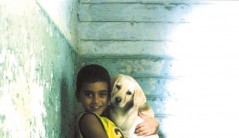
Taher, a little boy from Jaffa, dreams of having a dog. One day, that dream comes true when he finds a little puppy on the street and names it Ringo. But in Taher’s world, where his parents struggle each day to live a decent life, raising a dog is unacceptable.
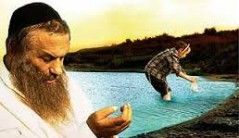
The tragic story of an Ultra Orthodox family. The film enters into the inner world of the believer faced with the silence of God. The story unfolds during three days of preparations for a longed-for trip to the Dead Sea, during an intimate and poetic journey to the protagonist’s world and the wishes of his followers – the mother and son. The film’s plot is a variation on the story of the Binding of Isaac and chronicles events that lead to the inevitable. The film corresponds with Krzysztof Kieslowski’s first episode in the Dekalog series, “I am the Lord thy God.” It allows us a rare glimpse into a specific Ultra Orthodox Lithuanian culture that has become more and more elitist and exclusive and has produced great leaders of the Jewish Ultra Orthodox community both in Israel and around the world.
Through the stories of four families from different parts of Israel, trying to build their own “dream house,” the film attempts to discuss this elusive subject that is significant to so many people. Four families, four stories, and four houses make it possible to discuss the ideal house, the ‘house’ as a concept, as a memory, and as a kind of solution. The construction of the house forces our builders to deal with their identity, with their past, and with the strange hope that the house will make everything warmer and safer.
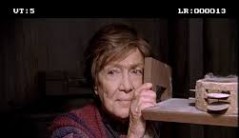
On her eightieth birthday, Pessia Goldfarb is determined to travel to her parents’ house in Poland. She intends to find a golden necklace, which she and her sister hid before they were taken to Auschwitz. The necklace is indeed located were it had been hidden, however this discovery leads Pesya to reveal her true identity to her granddaughter, who escorts her on this trip.

In the summer of 1942, when Rommel and his troops were 60 kilometers away from Cairo, the Israeli entrepreneur Yaakov Gendelmayer came up with an idea he considered no less than brilliant: he would bring the ex-heavyweight Jewish world-champion Max Baer to Israel and organize a fight between him and a Nazi boxer. Since Gendelmayer was sure that Baer, being a professional boxer, would beat the German amateur, he expected that the fight would raise the morale of Jews during the war, and that he would make enough money to immigrate to the United States. Baer arrived, conquered the hearts of Tel Aviv’s residents and the media, but when the fight started everything went wrong. Sixty years later, Joe Louis Gendelmayer, Yaakov’s son, travels to Israel and try to find a lost movie that would reveal what really happened. But a sports journalist, an assassin from an anti-British underground group, a Theater actress and two Tel Aviv gangsters, all well over 80 years old, take him on a different journey to discover the truth about Max Baer’s last right hook.
In 1970 after their Buenos Aires wedding, Ron and Jacqueline went on a journey to the Andes with backpacks and still cameras. Crossing Bolivia, on their way to Cuzco, they discovered the city of Potosi. 29 years later they return to the same places, this time with their three daughters. This is a journey into the city of Potosi as well as the story of this family. Potosi was once one of the largest and richest cities in the world, symbolizing the wealth to which western culture aspired. For the millions of indigenous people who were forced to work in the depths of the mountain, Potosi was the gate to Hell. After its silver mines were drained, Potosi was left poor and forgotten. Static and silent black and white reconstructed images of the voyage of 1970 are juxtaposed with the color footage from 1999. In the transition from black and white to color and from silence to a rich and full sound dimension, the director’s worldview changes.
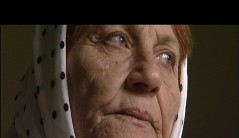
At the age of 78, Fatma Hawari, a Palestinian woman, confronts the Israeli pilot, a well known Israeli figure, who bombed her village in 1948, when she was 18, destroying her house, killing her family, and leaving her paralyzed and in a wheel chair for the rest of her life.
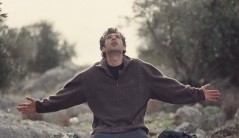
This film is based on a true story, portraying a human drama of rare intensity through the daringly inspirational love story of a young couple, Amad and Isabella. Amad (25), a Palestinian from Nablus (a city under the control of the Palestinian Authority), and Isabella (25), a Brazilian illegal foreign worker who lives in the city of Tel Aviv, attempt to navigate their lives between the obstacles that face them under the complicated, bleeding reality of life in Israel.The film offers a refreshingly humanistic and neutral perspective into the day-to-day lives of potential West Bank suicide bombers and their families as well as their immediate surroundings. It is a film about the ‘simple man’ who stands at the heart of the Israeli-Palestinian conflict. Despite all odds, all he seeks is to live a normal life, in a place which is far from being just that.
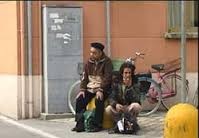
Shahar is an unemployed filmmaker. His father, Sleiman, suggests that Shahar make a film about the Jewish Brigade, in which he served during WWII.
Shahar becomes enthusiastic after discovering that his father may have impregnated two Dutch women while abroad and decides to make the film hoping to find his father’s lost offspring. Together they set out along the trail of the Jewish Brigade, beginning in Israel, through Italy and Germany, and ending in the Netherlands with a surprising discovery.
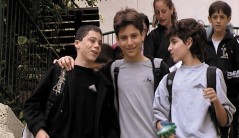
At the age of ten, during a family meal at the Maxim restaurant in Haifa, Oran Almog was injured in an explosion caused by a suicide bomber. He loses his father, his brother, his grandparents, his cousin, and his eyesight. Here starts his new life as he adapts to the terrible reality that took away all that is dear to him. Oran inherited a love for the sea from his grandfather, and dreams of establishing a sailing center in his memory, a center that will allow him to keep developing as a blind mariner. Many difficulties pile up on his way to adulthood, symbolically marked by the celebration of his Bar-Mitzva, but Oran is not a quitter.This is the story of a young teenager whose life was diverted from its course, and who tries to find a way to make his dreams come true and live a normal life while a family torn to shreds tries to pick up the pieces and move on.
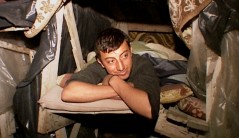
This film intimately documents the life of Palestinian men living in hiding in the hills surrounding the Israeli city of Modi’in. With unprecedented access, the film portrays life in the hideout of these young men, focusing on Ahmad (19) and Muhammad (20), as they provide for their families. The harsh conditions of being “illegal” workers and their emerging national consciousness do not take away their vitality, playfulness and youthful dreams. In the face of repeated persecution, arrests and ambush, they create a vibrant world-within-a-world where humor mixes with pain and longing. As the Separation Barrier threatens to cut off their only route into Israel, they become more desperate and fearful of the unknown. When the moment of truth arrives, they find themselves caught off guard and altoghether unprepared.
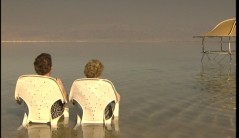
Every Saturday a group of elderly women and men carry plastic lawn chairs across the Mount Herzl National Cemetery in Jerusalem. In the shade of an old pine tree, they sit in a circle and discuss various matters. For over two decades, the “Mt. Herzl Academy” has held its weekly meeting at this cemetery. Seated between the graves of the nation’s dignitaries, they debate the history of modern philosophy, read poetry, eat lunch and determine the fate of the Jewish nation. The film reveals the intense, almost impossible, relationship between the members as death decimates the group that has given meaning to their lives and explores the conflicts and the family secrets that haunt them. The result is a poignant, intimate, sometimes hilarious portrait of the Holocaust generation as never seen before.

One night at a bar, an old friend tells director Ari Folman about a recurring nightmare in which he is chased by 26 vicious dogs. Every night, the same number of beasts. The two men conclude that there’s a connection between the dream and their Israeli Army mission in the first Lebanon War of the early eighties. Ari is surprised that he can’t remember a thing anymore about that period of his life. Intrigued by this riddle, he decides to meet and interview old friends and comrades around the world to discover the truth about that time and about himself. As Ari delves deeper and deeper into the mystery, his memory begins to creep up in surreal images.
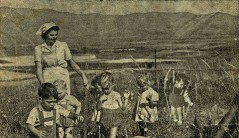
In the summer of 2005, the Tel Aviv Museum holds an exhibition called “Communal Sleeping” in which kibbutz-born artists living in towns portray through their works their childhood experiences of communal sleeping. This is a film about childhood experiences, sensations, pains and memories surrounding the unique experience of growing up on a kibbutz.The soul searching confrontation of each one of these artists with parenthood, the past and the kibbutz institutions is relevant to this day in their capacity as parents, as individuals, and, of course, as creative artists.
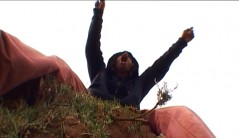
In an era when billboards dictate that the right formula for life is “Want More – Buy More,” I find myself constantly wondering what the right formula for happiness really is. On the one hand there’s Coco, my childhood friend, who often sits around smoking a joint and writing philosophical poetry. On the other hand, there’s my cousin Eyal, a rich and busy business man glued to his cell phone. Which one of them has the right formula? Do I have any chance of breaking through the chains of the 21st century, the god of money and ever-present temptations…? I need to find out.
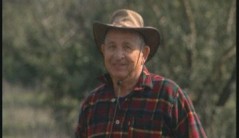
Eliezer “Bubaleh” Shahor served as a horseman fighter in the Israeli Army during Israel’s Independence War in 1948 helping to prevent Arab war refugees from coming back to their villages. To what extent did he have to go to fulfill his mission? Just before my oldest son’s enlistment in the army, I ask my father for the first time difficult questions about things he did in the past and events in which he participated.
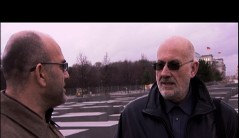
Naftali Gliksberg sets off on a journey following stories, people, events and places in which contemporary Anti-Semitism is manifested. This series investigates the roots of this modern Anti-Semitism, as evident in recent years around the world.
Throughout its 4 episodes shot in 10 countries in Europe and the USA, viewers are exposed to incredible discoveries about the depth of Anti-Semitism and the new form it has taken. Parades in the streets and Neo-Nazi ceremonies have been replaced by a kind of social culture, shared by apparently ordinary, educated people, as a component of complex social networks, which will most likely never disappear.
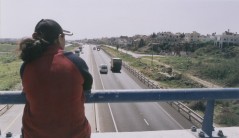
A rare glimpse into the life of the residents of the village Jisr E-Zarqa, who cope with daily poverty, deprivation, discrimination and alienation. The film focuses on the stubborn struggle of a group of young, single women, trying to lead the village to a better place. These women struggle with tradition, family hierarchy and often with their own womanhood. This is a story of a long lasting survival attempt of a unique village, estranged from the Israeli society, the Arab society and its own location at the sea shore.
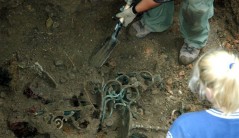
A young Israeli hears from an elderly vendor a fantastic story about a Jewish treasure buried in Polish soil – next to the infamous Auschwitz extermination camp. During the next 5 years, he pursues these lost religious artifacts, and manages to organize a unique archaeological excavation to unearth the treasure. The digging crew begins to lose hope until one morning a shovel hits a metallic object in one of the ditches.
Everything is going great for the director: he inherited the benefits of two generations of New York Jews who turned their backs on their religious past and re-defined themselves in America. But when his ex-pat hustler Israeli pal Shimon walks into the trendy Kabbalah Center in Los Angeles one day and walks out newly religious, with a one-way ticket back to a yeshiva in Jerusalem, the director’s world is turned upside down. Following Shimon to Israel, he moves through different religious and spiritual communities investigating and wondering whether everyone, not just Madonna and Shimon, has lost his mind.

This film is a journey following the metamorphosis of one Jewish melody, an ancient prayer of parting from the rain and bringing the dew – and following its many incarnations, which bring it to its final dramatic stance – to be the anthem of the State of Israel.
The tune of the melody can be found in many variations and yet this is not a detective thriller about who wrote the “Hatikvah,” this film is a search for a truth, which remains elusive. The journey following the melody and the encounter with today’s upholders of tradition evokes the richness and the tremendous depths of the Jewish culture that has been nearly destroyed; the beautiful face of Judaism that has been lost.

Alin and Shani are two young Israeli women who look normal on the outside, but on the inside exists a monster threatening to burst at any time. Both women suffer from Tourette Syndrome in the most severe and extreme way. Alin (30) is living on the edge, wild and rebellious, she loves to drink and have a good time. Shani (18) is sweet and intelligent but suffers from social isolation. The worlds of the two are entirely different: Alin comes from the slums of Haifa whereas Shani is a “good girl” from suburban Ariel. The director Boaz Rosenberg followed the two young women over three crucial years, during which they matured, experienced emotional turmoil and dealt with the problematic relationships they have with their homes and society. Especially prominent is the close yet complicated relationship with their mothers. The film culminates with an experimental brain surgery Alin goes through in her efforts to fight her illness, while Shani reaches a point in which she can no longer stay at her parent’s home and has to deal for the first time with real independence. ‘Involuntary’ gives a freshand intimate look at the survival of two characters in a world in which they feel “abnormal” and different.

Fifteen years ago, Neima Tefilin, an Iranian born Jew, came across a news story on twelve refugees from Iran – her homeland, detained in an Israeli jail, while innocent of any crime. Appealing to the High Court of Justice on their behalf, she succeeded to release them from jail, and dispersed them around the world. These Iranian refugees, members of an underground organization “Mujahedin Halek,” are at the heart of this documentary and their journey to freedom, spending the rest of their lives detached from their families, homeland and culture.
As a young child during World War II, Josef, now 70, was raped repeatedly by Nazi guards. Since then he has lived a desolate and miserable life working mostly as a waiter in a Jerusalem cafe. One day Maria, a German tourist, appears in the cafe, and Josef’s life is forever changed, just like in a fairy tale.

“My mom always says that my military service is to blame for everything that has happened to her little girl.” Seven years after completing an IDF course for female combat soldiers, the director returns to the place where, for the first time, she fell in love with a woman – her commanding officer. Over the course of 66 days and nights, the film follows the girls in one of IDF’s most rigorous combat courses and looks at the relationships that develop between girls in an environment subject to strict military codes. The film reveals the mechanism that enables the transformation of 18-year-old girls from daddy’s little girls into fierce, disciplined soldiers. Through the intimate relationship that develops between the director and one of the characters, questions about identity, sexuality and the discovery of femininity arise.
If you “Google” the name “Dov Binder,” you will get 22,400 results. My father, Dov Binder, a 60 year-old suburban truck driver – Is a “Talkbacker.” There are thousands of Talkbackers who just won’t shut up. How have the Talkbackers become the new public opinion leaders? And does anyone really listen to them?
This film reveals the painful relationship between my 87-year-old mother and me, her son, who has suffered all his life from the silence that dominated our family. My mother’s silence always stood between us. It concealed secrets concerning our family story, during the Holocaust, and created a sense of distance and anger within me. The film is a first and last attempt to break this silence and it constitutes a fascinating emotional document of the relationship between mother and child, about memory, guilt and old age set against the backdrop of WWII and the effect it had on the lives of the survivors and their children.
“Now we’ll all be movie stars. … The whole world will see us on television …” declares Hezi, a resident of a Herzliya home for the mentally challenged. This film provides an intimate and moving encounter with some of the home’s residents, revealing their daily routines.
Yasmin is accused of helping her brothers kill their sister over a forbidden love affair. She and Nizar, the film’s director, set out to find the murdered sister’s grave. The search emerges as a metaphor for the political relationship between men and women, a relationship based mainly on the struggle for power.
Decades after the Holocaust, many survivors still bear vivid memories of the trauma they experienced. This film follows the lives of a group of survivors who have stayed long-term in the Psycho-Geriatric Ward of the Abarbanel Mental Health Center. G. is like a robot, unable to stop working; H. continues to clean the bathrooms and A. keeps looking for her dead son as if the war was not over. What caused these people to break down? Why couldn’t they rebuild their lives? Has madness become their only refuge? Is their stay in the hospital the direct result of their illness, or does it perhaps reflect the failure of Israeli society to care for these silent victims who remain hidden from the public eye?
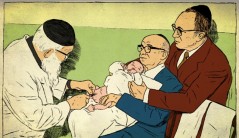
Oded Lotan, an Israeli-born film-maker living in Germany, dares to cope with one of the ‘holy cows’ concepts of the Jewish tradition – the circumcision. Lotan embarks on a journey to seek the historic origins of the custom, as well as his own family history. His investigations go in two directions – one is historical and demographic research which leads him to the discovery of the practice across the globe. More interesting, however are the discoveries he makes in Israel, questioning family, rabbis and mohels (the specialists who perform circumcision), people who oppose the tradition, and people who approach it in an almost mystical manner.
An apartment building in Jaffa is home to both Jews and Arabs, representing opposite extremes of the political spectrum. Haski is head of the tenants’ committee; Omar, a Muslim, hopes that things will change for the better; Charlie and Samia are Christian Arabs, trying to impart Christian values to their children; Itzik is Chairman of the local Elvis Presley fan club, and is opposed to having Arabs move into the building; Mazal is constantly snooping on her daughter, after catching her datin an Arab; Oded loves dogs as much as he hates Arabs; and Ilana is a member of “Women in Black,” and demonstrates every week on behalf of the Palestinians, but remains aloof from her own neighbors. This delicate coexistence comes to a climax one wintry night, when the residents meet in their moonlit courtyard to discuss yet another threat by Haski to quit the tenants’ committee.
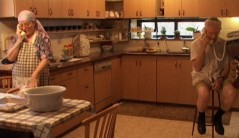
Gush Katif, 2005. The Freiman couple, Yaakov (78) and Miriam (68), follow the meticulous routine that is natural for their age. A crisis on a national scale threatens their entire system of personal loyalties – their life as a couple, their religious convictions, and value system. They suddenly face an ordeal, the likes of which they have never experienced before. To deal with this crisis they entrench themselves in their kitchen and focus on their daily routine.
After the first cup of coffee in the morning, they read Psalms together. Everything happens in the kitchen: telephone calls, cooking, and guests. Under normal circumstances, the atmosphere in the kitchen would be warm, calm, secure, and filled with laughter. But the storm raging in the outside world begins to penetrate and bursts through the Freiman’s defenses. The settlement’s public address system broadcasts a message. Miriam carefully opens a window and hears: “Emergency meeting for all the members.” She hurriedly closes the window to avoid the danger. As the days pass, trial, tribulation, and doubt enter their “fortress.” Their love for each other and belief in God are put to the test. This intimate and emotional film provides a glimpse into an aging couple’s relationship and beliefs during a critical time.
The film documents the struggle of a middle-aged woman from Yavneh who sets out in search of her husband, Danny Sa’il, who was a member of the Israeli Black Panthers organization, and disappeared twenty years earlier under mysterious political circumstances. His wife, Mazal Sa’il, is considered an agunah under Jewish law and is forbidden from remarrying without a divorce or clear evidence of her husband’s death. Mazal’s search for the truth leads her to uncover two contradictory stories surrounding her husband – some claim that he was working for the Mossad, while others claim that he was a traitor working for the anti-Israel Arab front. Her quest leads her to take on both the military and the religious establishments in Israel.
The film reveals the story of the Jaradis, a Jewish Yemenite family, one of many that were brought from Yemen to the US by the Ultra orthodox Satmar Community which operates a propaganda machine against the immigration to Israel. The story exposes a deep cultural gap between the Yemenite families and the Yiddish Satmar Community that became distractive and tragic to families who have traveled thousands of miles to an entirely different planet of their own, with strange rules, norms, morals and lifestyles. Still in Yemen, Yemenite Jewish families are brainwashed by skillful missionaries, unable to defend themselves in the eye of this intricate and deceptive operation. The film follows the life of Yahia and Lauza Jaradi who were brought from Yemen into the Satmar Community.
This film deals with me and my partner’s decision to leave Israel. It is the physical and emotional journey of a young Arab couple, who decide that Israel is not the right place for them, caught between rational considerations and emotional ones. Our story is intertwined with the stories of other people, similarly disappointed by this place. All these stories create a collage of feelings that move between the desire for a better life and an unexplained love for a homeland that is not a homeland.
A fringe theater group that brings the stories of gay people in Israel to the stage takes on the Edinburgh Theater Festival in Scotland. This film follows the troupe from the birth pangs of their English-language production, through its trip to Scotland – the initial disappointments upon arriving there are swept away when the actors play to sold-out audiences. With its focus on the special dynamic of an unusual group of performers, the film captures all the mayhem that comes from working together so intensely, as well as the relationships between a predominantly gay theater cast and its few straight actors.

Throughout their lives, Yoav and Lior have looked in the mirror only to see a stranger staring back at them. Both born female, they have always known their true identities to be male. In this very personal and thought-provoking, real-life story, one couple struggles to become what they were meant to be in a world that doesn’t understand them. Yoav, who has been living as a man for several years, is now fighting to be recognized as one by law. Lior has just begun the transition process and with each physical step feels more and more at peace: Having his long hair cut short, hearing his voice lowering and seeing the stubble growing on his face is like coming home. Yet gaining the understanding of their family and friends poses new challenges. Together, Yoav and Lior face each obstacle with humor, love and their absolute certainty of who they truly are—inside and out. Coming out as trans is sometimes the easy part.
Two years ago a prison revolt was brutally suppressed by Warden Ronny Lefkowitz and his guards. Beersheba Prison now seems quiet, but sounds of discontent still seethe among the inmates. Lefkowitz is about to retire and the appointment of his successor, Shlomo Twizer, raises tensions and expectations among the prisoners and guards. Twizer grew up in a violent Beersheba neighborhood, has served as warden elsewhere, and knows the prison population intimately. He has already declared his intention of implementing a more open policy and engaging each prisoner in dialogue. Beersheba Prison, 1993 – six months in this closed world, concealed from all but a few, where every hour is an eternity.

This cinematic adaptation of the award-winning play, “Arbeit Macht Frei”, accompanies the Acre Theater Group as it probes the innermost recesses of the Israeli psyche in the generation after the Holocaust. The film takes the viewer along the most difficult collective journey faced by Israeli society – the Holocaust – with an impact so sweeping and so real, it can truly be said that all of us – Moroccans, Iraqis, Germans, and even Khaled Abu-Ali, the Palestinian protagonist – are survivors of the Holocaust.
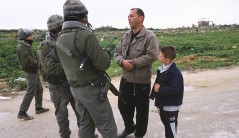
The West Bank and Gaza Strip have been under Israeli military authority since 1967, forcing over three million Palestinians to live under Israeli occupation. When traveling from one village or city to another to go to work, visit relatives, or seek medical care, they must pass through Israeli checkpoints. These checkpoints, acting as the first point of contact between two distinct groups, have enormous significance in the Israeli-Palestinian conflict.
From 2001 to 2003, director Yoav Shamir filmed at these checkpoints, bringing us a chilling look into the destructive impact of the occupation on both societies.
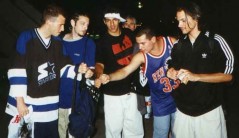
A very young director follows his older (and much adored) brothers to the “Big Apple” in order to document their attempt to become a world famous hip hop group. New York’s stormy music scene, dingy night clubs, and dreams of sold-out stadium performances all serve as the background to this film which documents the very personal coming of age process of the filmmaker.
In the Spring of 1945, Holocaust survivor and psychologist Lena Kuchler single handedly created a home for orphaned Jewish children in Krakow, Poland, following World War II. In 1949, a wave of violent anti-Semitism forced Lena to flee with the children to France and later to Israel where Lena says goodbye to the children as they are accepted into the Schiller Kibbutz as equal members. In the film, ten children from Lena Kuchler’s children’s home return to Poland and reminisce and reflect on their past.
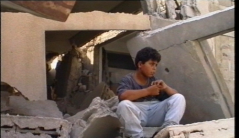
Arna Mer Khamis was a legendary activist against the Israeli occupation. Born into a Jewish family, she married a Palestinian Arab and and moved to the West Bank. She founded an alternative education system for Palestinian children whose lives had been disrupted by the Israeli occupation. In the Jenin refugee camp, Arna opened a theatre group where she taught the children to express anger, bitterness and fear through acting and art. The children slowly grew to trust and to love Arna: “She’s like my mother,” says one child. “She helps us. She saved us from the streets.” Arna’s son, Juliano Mer Khamis, was a director at the theater group and filmed his mother and the children rehearsing and performing over a six year period. When Arna died of cancer in 1995, the theater group struggled to continue for another two years but ultimately did not survive.
Five years after Arna’s death, Juliano returns to the camp to discover what happened to Arna’s children. Shifting back and forth in time, the film juxtaposes the sweet-faced young boys with the fighters and suicide bombers they become. Arna’s Children reveals the tragedy and horror of young lives trapped by the circumstances of occupation.

Watermarks is the story of the champion women swimmers of the legendary Jewish sports club, Hakoah Vienna. Hakoah (”Strength” in Hebrew) was founded in 1909, in response to the notorious Aryan Paragraph, which most Austrian sports clubs adopted forbidding the acceptance of Jewish athletes as their members. Its founders were eager to popularize sport among a community renowned for such great minds as: Freud, Mahler, and Zweig, but traditionally alien to physical recreation. This was about to change. Hakoah rapidly grew into one of Europe’s biggest athletic clubs while achieving astonishing success in many diverse sports. In the 1930s Hakoah’s best-known triumphs came from its women swimmers who dominated national competitions in Austria. They were stripped of their medals when they refused to represent Austria in the 1936 Berlin Olympics. After the Anschluss, in 1938, the Nazis shut down the club but the swimmers all managed to flee the country just before the war broke out thanks to a Hakoah escape operation.
Sixty-five years later, director Yaron Zilberman meets the members of the swimming team in their homes around the world and arranges for them to have a reunion in their old swimming pool in Vienna. The journey evokes memories of youth and femininity as well as strengthening lifelong bonds. Told by the swimmers, now in their eighties, Watermarks is about a group of young girls with a passion to be the best. It is the saga of seven outstanding athletes who still swim daily as they age with grace.
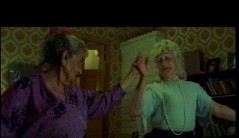
A voyage from the Ukraine to New York to Israel, portraying the wanderings, hopes and illusions of the vanishing Odessa Jewish community.
To the occasional onlooker, my childhood yard may appear like just another shabby parking space in a Jerusalem ultra-orthodox neighborhood. To me, it is the first “outside” I encountered, the landscape of the only home I have ever known. I have been living in this yard for 34 years. As an adult, it continues to fascinate me with its ever-changing mood. It has embraced secular, religious, and ultra-orthodox atmospheres, but today, we are one of the last non-Ultra orthodox families living here.
From the “Conversion” Project
Rona Segal’s work, Flesh and Blood, takes place in the theater storeroom where Anton Ostrovsky works. In his free time at work he dresses up as different characters and fabricates an imaginary theater where he alone acts as all the characters. The carnival-like atmosphere and the multiplicity of costumes uncover Ostrovsky’s character, and underscore the difficulty in completely overhauling one’s image.
From the “Conversion” Project
Shady Srour’s work, A Moon Over Galilee, is a story of the journey of village children who want to escape the world of adults. The work fuses a number of aesthetic styles and echoes children’s legends about deceit: it suggests the shift into the fantastic, which is also the world of cinema, as the only refuge that may prove to be a passageway.
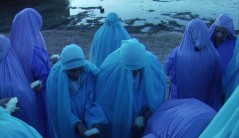
From the “Conversion” Project
Raida Adon’s work, Rebirth, is centered on a kind of baptism ceremony experienced by the artist. Christianity sees baptism as a cleansing of the subject from the original sin, a symbol of rebirth. The work draws attention to the aesthetic elements tied in to conversion, so imminent to the essence of a ceremony, as the shift from the space of actuality to that of symbolic action, while also pointing out the obsessive attention to the body as the basis of this transition.

From the “Conversion” Project
Nurit Sharet and Tami Gross’ work, The First Home, recounts the testimony of an officer in the Israeli army who deports three Palestinian women as told in the voice of one of the filmmakers. The imagery shown is a series of glimpses into Tel Aviv apartments during the routine hours of the evening. The immoral actions in the work, the deportation of the Palestinian women, the two artists filming the inhabitants of these apartments without their consent, and the appropriation of the narrator’s voice, all create a poetic of immorality, one that raises questions about the banality of evil.

In Dor Guez’s work, Dear Jennifer, we see a young girl reading a letter over and over again in an attempt to achieve a perfect performance. She is reading a personal farewell letter which she has received from her reflexology instructor after her successful graduation. The letter reveals the instructor’s surprise by the fact that the student is Arab. The work points out how generating meaning involves the use of repetitive patterns and is very often reflective. Thus the work suggests the perpetual tension between reflection and performance as one that holds the ability to expose social and aesthetic structuring.
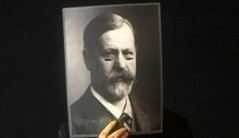
From the “Conversion” Project
Michal Heiman’s work, Con-ver-sa-tion, shows the artist wearing a Sigmund Freud mask, sitting by a bed where a young girl lies, as is customary during psychoanalysis. The artist reads a case study described by Freud in his research of hysteria, which he additionally describes as the conversion of a repressed traumatic memory into a physical symptom. New readings of this research criticize it extensively, all the while allowing it the stature of a fascinating text. Thus, while the question “Is the mister a doctor?” echoes in the work, the artist’s image in the mask signifies the performative-creative aspect tied in with the act of interpretation.
Love and humor are plentiful, but success is scarce, in a small Tel Aviv insurance agency where nothing runs as it should. Perennially on the verge of bankruptcy, the failing agency is run by three middle-aged, divorced, and not particularly successful men. They may be highly intelligent, well-educated, warm and good -humored, but they have no inkling about running a business. This documentary offers an amusing behind-the-scenes look at the operations of the firm over one fiscal year, as the manager’s son – also the film’s director – joins this motley crew in a last-ditch attempt to save his father’s collapsing business. A personal documentary that is also an endearing father-son journey.

My mother came from Iran, my father from Iraq. They met at my mother’s home in Be’er Sheva during the 1960s. They fell in love despite my grandparents’ vehement disapproval. After four years, having no more power to resist, they agreed to the marriage. But the years of fantasy shattered in the face of reality. My father couldn’t quite assimilate, and every few years declared bankruptcy. My parents remained in the old and neglected neighborhood, in one house, but at distant ends of the heart. Asmar tells the story of my parents’ long-ago, wild love affair; the letters, pictures, their secret meeting places, and their current reality. I get to meet them all over again, as human beings: vulnerable, dreamers, lovers.

Danielle, a Jew who grew up as a Muslim in Morocco, struggles for the right to bring up her son, Nasser. Nine years after she was forced to leave him and moved to live in Jerusalem, she returns to Morocco to fight for custody. She sets off to meet her son, now 14 and her Muslim family. To her surprise, the greatest difficulties come from the Israeli society the Jewish bureaucracy which puts at risk the fragile relationship.

Ziv Koren’s photographs, depicting the horrors of the Middle East conflict, have become instantly recognizable icons that have shaped our perception of this difficult reality. This film follows Ziv through intense days of shooting in the heart of riots, terrorist attacks and violent clashes, but it is also a romantic tale about a heroic man, who risks his life on a daily basis to tell the truth and the heavy price he has to pay in order to do so.
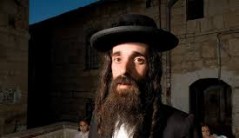
In the heart of Jerusalem is a tiny self-made Jewish ghetto – Naturei Karta. It is home to anti-Zionist Jews who refuse even to recognize the existence of the State of Israel. Television and radio, newspapers and magazines are all forbidden. The only form of media is the printed wall poster – the Pashkavil. This film portrays Yoel, who leads Naturei Karta’s battle against Israel, a member of a more ‘liberal’ Ultra-Orthodox sect. The battle rages on and off the Pashkavils. This is the first time TV cameras have ever penetrated this community’s walls of rejection.

What’s the Israeli circus? A Jewish circus? And what does it mean?
Josef, a clown from Kiev, performs all over the country. Volodia, who was the director of popular circus shows in Russia, dreams of starting a circus school in Israel, but now works as a janitor. Orit, a trapeze artist, set up a non-profit organization using her father’s money, who is a Professor at the Haifa University. Her dream is to buy a circus tent. and set up a circus in Israel. All these people have a dream to start a circus in Israel, but will it ever become a serious possibility?
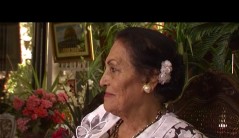
Abandoned by its Palestinian owner in the 1948 war, requisitioned by the Israeli government as vacant, rented to Jewish Algerian immigrants in 1956, and purchased by a university professor who renovates it in 1980, this West Jerusalem building is no longer the microcosm it once was 25 years ago. Its inhabitants dispersed, this common space has disintegrated, but remains both an emotional and physical center at the heart of the Israeli-Palestinian situation. Amos Gitai completes the trilogy, which began with 1980’s HOUSE and continued with 1998’S A HOUSE IN JERUSALEM. Creating a sort of human archeology, Gitai explores the relationships between the house’s inhabitants, past and present, and between Israelis and Palestinians as each in his or her own way becomes a sign of the region’s destiny.

Monkey Business is the story of the other Israel, a land of crime and poverty hidden under the smiling facade of Tel-Aviv. The Yair family lives a constant battle to keep their heads above the water; small crimes, petty frauds, dubious characters, and monstrous debts are their only way to keep going. Giori (18) is the oldest of four siblings. Though he tries to provide for his family, everything he does seems to turn into a disaster. Hagai, the youngest brother prepares to celebrate his dream Bar-Mitzvah. All his family wants is for Hagai to enjoy this one day where he can have a normal party and be just like everyone else.
The family manages to save $1000, but Giori gambles it away, losing it to the mafia. Now he has just a few months to get it all back in order to save his own neck and maybe even his brother’s birthday.

Ten 17 year-old Israeli boys and girls, the best of the Israeli Scouts, were chosen to tour the United States. Their mission is to spread the “spirit of the Israeli state.” Determined to spread the word, they cross the continent long and wide, appearing before anyone willing to listen. As time goes by, it becomes less clear to these kids what exactly they wish to accomplish. Even worse, they are starting to lose the fundamental feeling of being ambassadors to a just and moral country.”Be Prepared!” is an amusing film about a strange group of people, determined to sell Israel, a complex product to market.
Filmmaker Uri Rosenwaks arrives to Rahat, a Bedouin town down in Israel’s Negev Dssert, to teach a group of Black Bedouin women a class in filmmaking. Rahat, partially populated by Black Bedouins who were originally brought to the Negev as slaves, is afflicted with pessimism, unemployment, poverty and violence. Kidnapped in Africa by Arab slave traders, they were auctioned-off in Saudi Arabia, Egypt and Zanzibar. Until fifty years ago, the Black Bedouins were enslaved by the White Bedouins. Only after about 18 months of working and making short films together did the director work up the nerve to suggest that they make a film telling the history of the Black Bedouins. Suddenly, a small and modest course in filmmaking becomes a place in which a great taboo is aired. The women, who still confront discrimination to this day, unveil a story which has rarely been told.
Nadia and Chanoch used to share the same desk in their class in Kfar Haroeh elementary school. Over the course of their eight years together, Chanoch was never conscious of the difference between them – Chanoch, a religious Jew, born and raised in Kfar Haroeh and Nadia – an Arab Muslim, born to the Abu – Isa family who lived near Kfar Haroeh village. Nadia and Chanoch’s class consisted of kids from all kinds of backgrounds – Jews and Arabs, religious and non-religious, from European origin and from North African origin, from politically right and left families. Now going on 40, Chanoch decides to set off on a journey to look for his classmates, and organizes a class reunion for the first time in thirty years. In his meetings with his classmates he realizes that almost all of them have abandoned the principles they were raised on and have chosen new and different ways of life. This is a journey into the past, to what was once the idea of religious Zionism and to what it has become today.
This is the story of five women who, in their youth, chose to leave the comfortable city life to pursue the ideological struggle of the settler movement. For more than 14 years, they firmly kept their yearly tradition of taking a holiday together, far from their husbands, their work obligations and their many children. This is how they created for themselves a haven in the midst of the messianic fervor that characterized life on the Samarian settlement of Elon Moreh.Two years ago, a terrorist succeeded in penetrating the settlement, and murdered one of the women in her home. This event unraveled the fragile tapestry of the female camaraderie, and each went on her own separate way. The film brings the four remaining women back to their traditional vacation as they examine their individual and collective journeys.
Almost ten thousand Palestinians, designated by the Israeli government as “Security Prisoners,” are incarcerated in Israel today. Most Israelis consider them murderers and criminals, but most Palestinians regard them as freedom fighters. Granted rare permission to film inside the country’s highest security facilities, Israeli filmmaker Shimon Dotan shows everyday prison life, including biweekly family visits, internal elections, periodic security searches of cells, and relations between inmates and prison staff. HotHouse also features interviews with many Palestinian prisoners, including those involved in suicide bombings. Although their political demands are understandable, the bloodcurdling confessions of these proud, unrepentant and often smiling terrorists expose the moral disconnect required for such inhuman actions. HotHouse also makes it clear that the Israeli criminal justice system uses imprisonment to stifle or control Palestinian democratic political life. The Palestinian experience in Israeli prisons has become a national symbol in Palestine, and the prisons themselves have become virtual universities for Palestinian nationalism.
In the winter of 1941 on the banks of the Danube, one thousand Viennese Jews wait for their fate to be determined by Mossad agents in a hotel room in Istanbul. Originally, filmmaker Nachum Laufer intended to tell the story of how he fled from Europe with his mother. However, while researching, he came across the story of another woman, Ruth Klieger, “the Lady of the Mossad.” His research takes us on a painful and complex journey through the history of the Jewish community in Palestine before WWII.
Does a high fence make better neighbors or will it leave a wound that will never heal? This three part film series follows the building of the fence between Israel and Palestine over a period of three years. While focusing on the physical essence of the fence/wall, its construction, the effect it has on the local inhabitants, the political, the economic and ecological aspects- this series takes it a step further showing the battle over the image of the fence, the righteousness and the March of Folly on both sides.
Filmmaker Ido Sela documents a visit to a magical childhood landscape transformed into the scene of a crime. It is a journey to the past, juxtaposing testimonies from the Holocaust, moments from the 1960s, and tormenting memories from the late 1980s and the first Intifadah. But there is also the present times in Israel, during which the violence of the second Intifadah mixes with the evacuation of the settlements.
In 1990, 22-year-old Marisa Villozial left her two small children with her parents in Bolivia and traveled overseas to look for a job in the West. She spent fifteen years doing hard menial labor in Israel, sending her pay home. In 2005, Marisa returned to Bolivia to reunite with her children and family, but was shocked to find her children, now 16 and 18, quite hostile towards her. With teary eyes she realizes that the money she’d sent to her father for the house had been squandered and her children’s lives made miserable. Her story reflects powerful and painful global themes: poverty, alienation and displacement in the new global economy and the plight of international migrant workers. This is a story which demonstrates the extremes to which individuals will go to in order to save their families.
In these times of economic recession, Israel’s truck drivers are crushed by debts. Their homes are mortgaged, they sell their vehicles, fear losing their families, and sink into poverty. Motti Eliahu, 40, has been driving big trucks for 20 years. He has immense debt and lives in his trailer, but tries to cope. His day begins at 3 A.M. and ends at 7 P.M., having covered 800 kilometers. Even in these tough times, Motti takes part in the the Truckers’ Union, but many improvements need to be made and the union is powerless against the banks. Eli Romano, 63, drives his own truck. His savings are spent and his truck is hocked. Eli wants to retire but can’t because his only pension is the minuscule National Security allowance. This film juxtaposes the rugged, masculine image of the legendary truck operator with inexorable realities.
Illegal immigration motivated by financial benefits is recognized as a worldwide problem that many countries are attempting to eradicate.
On August 18th, 2002, Israeli Prime Minister Ariel Sharon announced Israel’s decision to fight illegal immigration by activating a strict anti-immigration policy. To date, 121,995 people have been deported and another 192,412 suspects reviewed. The new anti-immigration sector is decked with a massive annual budget of about 170 million Israeli Shekels, 473 officers and around 90 vehicles referred to by the persecuted foreigners as “Fifty Two Fifty.” With the help of a professional crew of volunteers, armed with cameras, we latched on to the “Fifty Two Fifty” cars to film these officers in action. The film documents the volunteer recruitment process, the officers’ fears, and follows the illegal immigrants from the streets to their arrest and finally to their deportation.
Israel: A Home Movie tells the story of Israel and Palestine from the start of the 20th century up to the late seventies by means of personal home movie footage alone, filmed solely by amateur photographers; private citizens who owned cameras in 16mm, 8mm or Super 8mm format, as well as any unprofessional format from before the Age of Video.
Weddings, vacations, trips, family events, random or deliberate clips of pivotal historical events, literal “home movies”, mementos and any and all other sorts of photography that simply use film, like one square of a dizzyingly intricate patchwork quilt, all will be used, as the movie itself attempts to piece together this aforementioned quilt, accompanied by narration of the film makers or their families. A narrative of 20th century Palestine and Israel which has, all too regretfully, not yet been told.
The vast significance of this project, beyond its readily apparent historical value, lies in its innovative and challenging viewpoint. In fact, this is a one of a kind endeavor, an attempt to tell history not from official, overarching perspectives, but to tell the grand story of a people, a land, an era, a society, a conflict and a nation through the most personal and intimate voice available, the oh-so-subjective eyes of the individual, filming without a vested interest, without the sponsorship of some agency or another, without any underlying goal save recording for recording’s sake, for the sake of that one person behind the camera Jewish, British, Palestinian or Israeli.

Lucy, Rosa, and Flor, the three daughters of the Valderama family in Trujillo, Peru, are part of the Bnei Moshe community – former Catholics seeking a path to Judaism. They want to convert and immigrate to Israel and believe that this is their destiny. In February 2005, a rabbinical conversion court sent by Israel arrives in Trujillo, to cdecide who are eligible for the conversion process. The film accompanies the sisters throughout their difficult conversion process, their departure from Peru, and the complex decisions to be made before leaving Peru and upon arriving in Israel – where they face the harsh reality and the culture shock of Israeli society along with shattered personal dreams.
A luxurious hotel turned absorption center, a place where time has come to a standstill. Eight floors, 700 rooms, 600 people. long corridors, a reception office, a club, green lawns and the vestiges of a pool. The Hotel Diplomat in Jerusalem was once a five-star hotel. For nearly 20 years it is home to 600 immigrants from the former Soviet Union. Never having integrated into Israeli society, its residents have created their own little island, secluded from the outside world. Many of them never leave the haven of its walls. After all, even their most basic needs like medical care and cultural activities can be provided for by their neighbors down the hall and in their own language, Russian. A film about a world within a world and the people who live there.
It begins with a dream about an impossible encounter between Avi Mograbi and his grandfather, Ibrahim, outside their Damascus home in 1920. What language did they speak? Avi’s Arabic is rudimentary, while his grandfather Ibrahim had yet to learn Hebrew. In the dream, Avi’s grandfather informs him that the family has decided to leave Syria for Palestine, Damascus for Tel-Aviv. In the dream, Avi decides to stay. “You go to Palestine,” he tells his grandfather, “I’ll stay here and look after the house.”
So as to bring the dream to life, Avi turns to his Arabic teacher, Ali Al-Azhari, offering him a filmic partnership, to make a movie together, “to the last touch,” as Ali puts it.
Ali is a Palestinian from Saffuriyya, a village near Nazareth, and a refugee in his own homeland since 1948. Ali has spent most of his adult life living in Tel-Aviv, married to a Jewish woman, with whom he fathered his daughter, Yasmin. The way Ali has conducted his personal life poses a political challenge to one of the main tenets of Israeli, but also Palestinian, society: Separation.
Together, Avi and Ali commence with pre-production and start looking for locations that attest to the lost history they share.
Super-8 letters from Beirut begin to appear. A mere three-hour drive from Tel-Aviv, for Ali and Avi it is light-years away; an out-of-bounds place they can only dream of.
The letters tell the story of love and loss between a man and a woman—Lebanese Jews—torn apart when the borders of the Middle East were redrawn.
Once I entered a garden fantasizes an “Old” Middle East, wherein communities were not divided along ethnic and religious lines; a Middle East in which even metaphorical borders had no place.
In Ali and Avi’s joint-adventure: the journey they take to their own and each other’s communal histories in a time machine born of their friendly encounter, the Middle East of yore—the one in which they could coexist effortlessly—resurfaces with commensurate ease.
To Be Like Avi is the coming-of-age story of three friends, refugees who fled Africa and left their families behind. They study in the Galilee and dream of following in the footsteps of Avi (formally Ibrahim), the only refugee who somehow obtained an Israeli citizenship and enlisted in the IDF. The film follows them during their senior high-school year. At the end of the year they will find out whether they can achieve the impossible and join the IDF or be deported back to their countries – and to a certain sentence of death.
The trio deals with familiar teen-age topics like falling in and out of love, tradition and progress, idealism and reality. However, their story unfolds in a complex social and political reality and highlights the problems of the African refugees’ in Israel.
For four years, the director documented Reut, a girl who was in an out of shelters, and ended up on the street. At the age of 17 Reut had her first son, who was taken away from her by social services. During filming, while fighting the State for custody of her son, she meets a Palestinian man and marries him. She moves to an Arab village and has two more children. Along the way she meets people who try to help her but also take advantage of this lost child. Amongst other things, an impossible relationship develops between Reut and her son’s foster family, a religious family from Gush Katif. Over the years the director manages to slowly reveal her introverted but heart-warming personality. She only wishes to find a place of her own and some peace and quiet, but her life is full of twists and turns that surprise and shock, until the tragic end of the tale.

Gitit spent 18 months filming her parents, Jacob and Tzipora, who after 50 years of marriage are forced to confront repressed fears and frustrations. Jacob has suffered a stroke, and after months of rehabilitation returns home in a wheelchair, accompanied by a live-in Filipino caregiver. Tzipora refuses to accept this new reality – a changed husband, a changed relationship and a changed home, and, feeling helpless and depressed, considers leaving. A penetrating look at a relationship in crisis, told through a daughter’s eyes.
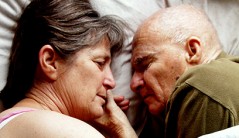
The project My Parents is comprised of a series of documentary films, in which each director tells the story of his/her parents’ relationship. Each film is an independent documentary creation with its own cinematic language. The projects are: Tzipora and Jacob, Tami and Jacob, Shanti and Martin, Nitza and Dick.
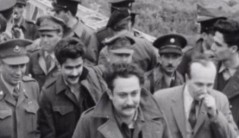
Meir Moses is on a quest to expose classified details about the affair that turned him into a haunted man. His story takes us back to one of Israel’s big myths of heroism and self sacrifice.
58 years ago he was one of an elite group of Israeli soldiers that fell captivate in Syria while on a covert military operation. After weeks of interrogation, one of his unit members hung himself in his cell. When his body was returned to Israel, notes fall out of his clothes. One of them reads: ‘I did not betray, I killed myself’. General Dayan quotes it at the funeral in an emotional eulogy, turning the young soldier, who chose death over disclosing military secrets to the enemy, into an ultimate hero.
This will prove disastrous for Meir Moses and his friends, still held in the Syrian captivity.
Indeed, upon returning as part of a prisoner-exchange deal they find themselves in a new ordeal. Reality has changed; the hero who returned in a coffin casts a dark shadow over the POW’s who returned alive. Meir Moses is court-martialed for cowardice in the face of the enemy and treason. The decorated officer is stripped of his ranks and cast out to live a life of public humiliation and denunciation.
In his personal quest, Meir yearns for redemption, but his story reverberates loudly in a society that still battles with the same dilemmas today.
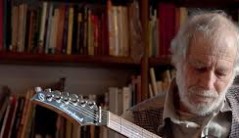
The five discs that Yankeleh Rothblit put out during the period of 1978-2011 tell the story of a dual life; a dialogue with the daily reality of Israeli society alongside the personal development of an artist. The Journey to Peace examines these parallel lines. Yankeleh Rothblit rose to fame mostly as a result of texts that he wrote and that were set to music and performed by others. These songs, as beautiful as they are, tend to be on the lighter side. They are not especially complex or demanding of the listener in the way of his independent work. The film exposes the audience to the entirety of his work – from the writing of the texts, to the composition of the music and to the performance of his own songs. His is a rich, complex and thought-provoking oeuvre.
A 91 year old professor and a theatre manager reclaim a chemical process from the distant past, which could change our future. They transform wood pulp to sugars which can be used by the food and fuel industries.
The process is clean, reliable and very cheap. The film documents the chemical process and the human process of a unique Israeli Start Up from a small lab in Jerusalem to industrial production of renewable energy. This is the story of a big dream that overcomes big obstacles.
In this heartwarming and often humorous documentary, Mickey Arbel, the Israeli Ambassador in Cameroon, Africa, sets out on a long and exhausting journey into the deep jungles and arid deserts of Africa, to persuade the villagers of the need for drip-irrigation, which would resolve once and for all the severe irrigation problems of this very underdeveloped country. Israel, recognized as the world leader in drip-irrigation technology, shares its innovative technologies with countries around the world – but, on the ground, things don’t always go as expected. Filmmaker Jonathan Paz follows Arbel on this cinematically colorful journey – a journey that is by turns frustrating, exciting, surreal and funny. For the charismatic and driven Arbel, it is also an inner journey deep into himself.

The final chapter in the breakdown of the director’s family – one of many who did not survive the trials of immigration. The last thing that prevents the family’s collapse is a ground-level apartment in Jerusalem, where they managed to strike some roots. When the father leaves as well, they are faced with a dilemma: should they rent it or hold on to it as a final encore of stability? The decision is postponed until renovations are completed.

The Katzman Tapes is a feature length mocumentary, that tells the story of the state of Israel and Zionism in an ironic and satirical way, while maintaining a serious facade. The film is lead by director Amnon Winner, who is following the elusive character of Samuel Katzman and his non recorded influence on the historical events . The Katzman Tapes is a satire on the political establishment and the Zionist dream, using a lyrical and poetic cinematic language. The film was shot over a course of a decade around the globe and is intended not only for audiences familiar with the history of the State of Israel, but also for anyone who has ever embarked on a quest in their life.
The loneliness and solitude of the individual within his family is exposed through the relationship between the director and his elderly mother.
The mother suffers from a severe case of obsessive hoarding. The situation worsens when a Palestinian carpenter from East Jerusalem warms his way into the heart and daily life of the mother and causes turmoil within the already crumbling family unit. The family must pull together to try and rescue the mother from her self-destructive tendencies.
Where’s My Stuff documents the stubborn argumentative reality of a family that is capable of showing warmth and compassion at the same time.
The line between parent and child becomes blurred as the story unfolds and the film pushes boundaries and raises questions about ageing, honor and voyeurism.
Part of New-Media Project
A new buried futuristic history is recovered 88 years from now, under the old city. A mysterious young boy discovers unknown architectural spaces and patterns that lay buried underneath the old city of Jerusalem.
Vast layers of underground interiors unfold through huge architectural shrines built by an unknown force or machine. The Third Temple which is known to never have been built, is possibly found, built in secrecy, in the form of a particle accelerator. Clearly built by advanced machines or aliens, these spaces employ an advanced system of data reproduction. Illusive hovering lights, mutated and endless interiors, and nano relics are now all abandoned. Through a breach in the Well of Souls under The Temple Mount, a small explorer, possibly a modern day Seraph, travels deep underground into the magnetic force fields into an estranged reality. A city called Ursulimum is the first reference to Jerusalem in ancient Egyptian records in 1330 BCE. The oldest part of the city was settled in the 4th millennium BCE making Jerusalem one of the oldest cities in the world. During its long history, the city has been destroyed twice, besieged 23 times, attacked 52 times, and captured and recaptured 44 times. When new emperors conquered the city, they built streets on top of the existing ones. Layers and levels of undiscovered quarters still remain buried to this day.
Fluchkes ( “flabby arms” in Yiddish) follows the creation process of the dance performance Gila. A group of colorful, energetic women in their seventies and eighties bravely confront the hardships and demands of the art of dance. At the same time, these honest and conscious women openly share their personal experiences and feelings of getting old. Each one of them presents a unique personal view of aging. The film follows the group through a year of rehearsals, through moments of hardships, failures and inside intrigues as well as moments of friendship, happiness, noble beauty and great success. Finally in front of an applauding audience a truly artistic professional performance is born.
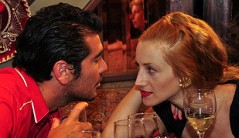
Vicki, a Mexican salsa dancer and a poor single mother, leaves her young son with her mother and flies to Israel dressed as a nun in order to sneak in. She plans to work and follow Beto, her boyfriend and the father of her child. On the plane she meets Yoni, a young Israeli scientist, who is on his way back to Israel from a research trip, to marry his rich girlfriend Dafna. During the long flight, a strange, amusing friendship develops.
The hospital never sleeps. Its eternal existence assures us that there will always be someone to keep us alive. It represents the myth of eternal life, to which the trauma surgeon has the key—a carte blanche. As the only trauma surgeon at Ichilov Hospital, Dr. Dror Soffer is always on call. He has to defeat death at any cost. “In my court, I condemn everyone to life,” he states with a smile. The social violence that challenges the workforce cycle doesn’t allow him to sit still. He is obliged to use all his resources to revive his young patients back to life. Dr. Soffer offers his patients refuge and relief in order to show them a safe path back to society. Carte Blanche is a tragic portrait of a trauma surgeon, who does everything in his power to release his patients from the cycle of violence, in which he himself is trapped.

At the age of 96, Miriam Weissenstein never imagined that she would be facing a new chapter in her life. But when “The Photo House” – her late husband Rudi’s life’s work – was destined for demolition, even this opinionated and uncompromising woman knew she needed help. Under the cloud of a family tragedy, a special relationship is forged between Miriam and her grandson, Ben, as they join forces to save the shop and its nearly one million negatives that document Israel’s defining moments. Despite the generation gap and many conflicts, Ben and Miriam embark on a heart-wrenching journey, comprising many humorous and touching moments.

“Dear Max – All that is left in my estate must be burned completely, without reading. Yours, Franz Kafka.” Almost a century after he wrote the best-known will in the literary world, the remains of Franz Kafka’s estate, one of the twentieth century’s greatest writers, find their way to an apartment in Tel-Aviv’s Spinoza Street, where Eva H. lives with her several dozen cats. Kafka’s unburned manuscripts are worth millions and are at the heart of a heated literary and political wrangling between Israel, Germany and Miss H.
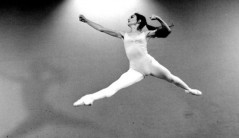
Jeannette Ordman is a petite, aristocratic and powerful woman, who dedicated her life to dance and to her dogs. The film presents the exclusive story of her life: a combination of contrary worlds. On the one hand, an uncompromising sisyphean and exhausting work in the Israeli dance world; on the other, a long and special relationship with the Baroness Batsheva de Rothschild.
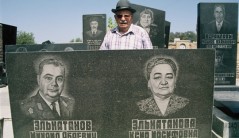
A look at the Bukhari identity of three men in the director’s family. In an attempt to confront the shame he feels in his ethnicity, the director follows his immigrant father, an isolated figure, both in his family and in his adopted country. The search for his authentic roots leads him to join his grandfather on a visit to Uzbekistan, perhaps his last. The three men form different versions of failed integration into Israeli society, over generations, from Tel Aviv, to Or Yehuda, to Uzbekistan.
She died more than four decades ago, but even today, Leah Goldberg is still an enigmatic figure – she is Israel’s most beloved poet, a powerful woman, who lived with her mother and never married, a woman who invented herself from the ashes of World War I through her magical poetry. The film is a cinematic fantasy in five acts, using animation, after affects, archives, still photos, original music and interviews that celebrate the fascinating story of Leah Goldberg.
4Shbab is the first Islamist musical channel ever launched in the Arab world. 4Shbab’s story takes place in Cairo, Egypt. The two main characters are the channel’s boss, Abu Haiba, and veiled model, Yasmine Osman, as they try to achieve their dreams. Both reflect the melting pot of cultural contradictions that is the Middle East today: how to be modern, fond of music and Muslim? They want the same things anyone else does in the 21st century: fame, glory, and success. But they want it the Islamic way, without compromising their values. Young Egyptian film maker Ismail Elmokadem offers us a unique way of discovering the inner dynamics of Islam in today’s troubled Arab societies.
The Hebron Hills garbage dump serves the Israeli settlements in the area and is a source of an eked-out livelihood for 200 Palestinian families from in and around the Palestinian village of Yatta. The stories of eleven-year-old Harun, seventeen-year-old Ibrahim, forty-year-old Yusuf, and sixty-year-old Badawi, expose a daily struggle for subsistence in an inescapable reality of occupation. These are the children of the Occupation, born after 1967, who know no other reality. The violent daily struggle for every scrap of metal in the dump distracts from other everyday pains: a son who sold lands to the Jews, a woman who cannot reunite with her family in Jordan, a father serving a life sentence in Israeli prison, and illiterate parents who push their children to work in the dump while simultaneously holding onto the dream of seeing them break out of the vicious cycle and completing a high-school degree. For the average person in Yatta, who has lost all faith in politics, personal success and education have become a personal weapon against the Occupation, one that might extricate them from the suffocating trap of the garbage dump, both literally and figuratively.
For the first time, the world largest Ultra-Orthodox seminary opens its doors to a camera crew.The Ponevezh Yeshiva, founded in 1943, was the first Yeshiva to be established in Israel. Among the constant prayer and scholarly study of 1,200 students, stand fragile confused young men.
The filmmaker, a former student of the Yeshiva, captures daily authentic moments of hopes as well as sadness and loneliness in a place where an individual can be swept away by the massive crowd.
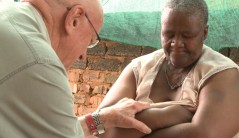
Can the means used to resolve the conflict in South Africa be applied to the Palestinian-Israeli conflict? As someone who experienced both conflicts firsthand, Robi Damelin wonders about this. Born in South Africa during the apartheid era, she later lost her son, who was serving with the Israeli Army reserve in the Occupied Territories. At first she attempted to initiate a dialogue with the Palestinian who killed her child. When her overtures were rejected, she embarked on a journey back to South Africa to learn more about the country’s Truth and Reconciliation Committee’s efforts in overcoming years of enmity. Robi’s thought-provoking journey leads from a place of deep personal pain to a belief that a better future is possible.

This seemingly innocent bittersweet comedy tells the story of a man who suffers from hyper-acoustic sensitivity. His life in Tel Aviv, one of the noisiest urban locations on earth, becomes a living hell. In light of his revelation that according to science noise can kill en masse and that Nazis were secretly developing mass-destruction acoustic weapons, he decides to act.
He constructs a special surveillance apparatus in order to monitor and control the invading noise from the street and neighbors. It does not take long before he has to pay the price.
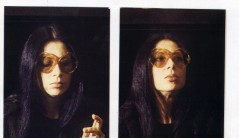
Tülay German: Years of Fire and Cinders focuses on the legacy of influential singer Tülay German in a time of social unrest in which her music became the launch pad of political activism. A vigorous and committed woman, German defied family and social expectations with her professional, political, and love choices (her partner was the left thinker Erdem Buri. Didem Pekün gives her personal and sympathetic view of the Turkish artist as she explores the connections between art, politics, and identity –a key issue in the context of the current social and economic crisis.
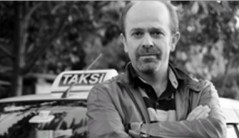
While Everyone Else Sleeps tells the story of an extraordinary taxi driver who takes stunning photographs of homeless people without any training, while he works at nights. His only purpose is to create public awareness for helping those people in need.
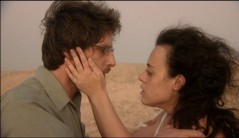
This modern adaptation of S.Y. Agnon’s story takes place in a small city at the edge of the desert. In this barren landscape, Tirza, a young woman who lives alone with her father, becomes entranced by Akaviah Mazal, a lecturer at the college where she is studying. As she gets lost in the secrets of their entwined past, enchantment turns to obsession and Tirza does everything in her power to get Mazal’s attention and win his heart. Despite the warnings and fears of those closest to her, Tirza pursues her dangerous quest for love. Will she succeed in righting the injustices of the past and break the tragic cycle of fate, or will she simply perpetuate it?
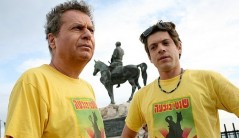
Since 1938, the bronze equestrian statue of Alexander Zaid, a legendary Zionist pioneer who founded the Hashomer defense organization, stood guard proudly in Beit Shearim National Park in Israel. In 2007, thieves toppled the statue, presumably to sell it for scrap. This comedy, inspired by that incident, depicts the efforts of Zaid’s grandson to recover the statue after it was stolen by Israeli Arabs and later sold to a sleazy scrap metal dealer.

Through the innovative Growing Pains program, Israeli film directors were invited to create documentaries intended for, and focusing on, teenagers. The project encourages the viewing of documentaries through creating films that relate to the lives and issues of teenagers in Israel today. The six short films made in the framework of the program provide a multifaceted and sensitive glimpse into the lives of Israeli youth today, in all their complexity and diversity.
Tami and Jacob, husband and wife, have lived on their kibbutz for over forty years. Nir, their son, spent the last three years filming their relationship, one in which Tami takes care of a husband with advanced Parkinson’s disease. He films his father completely dependent on his wife, as he tackles with the simple details of a daily routine: showering, using the toilet and lying in bed. Over and over again, Nir’s mother loses her temper and treats Jacob without the compassion one would normally extend towards a helpless man. He watches them and sees hell. And yet, he also find in this picture of hell moments of grace, moments of touching physical intimacy. His mother hasn’t given up: she’s stayed with her man. He films love. The film is part of “My Parents” – a documentary project curated and edited by Tali Shemesh, comprised of a series of separate documentaries in which directors film their parents’ relationship.
Shanti, Jason’s mother, left his father after twenty-two years of marriage. When she left, Jason and his sister felt abandoned and cut off all contact with their mother. Now, three years after the family was torn apart, Jason visits her for the first time in a small hut on a beach in Egypt’s Sinai Peninsula. Shanti tells him the story of her life with Martin, his father. She does this by reading aloud from her diaries. The picture of a happy marriage, the one he had stubbornly clung to throughout the years, breaks down quickly and is replaced by something new. Shanti is strong and allows him to delve as far as he wants to go so that her son may finally understand that she’s a woman, long before she’s a mother.
This clever and heartfelt mockumentary unfolds like a detective story exploring the disappearance of a fictional Yiddish actor 25 years ago. The only clue: a mysterious inscription on the door of his house reading “schund”.
Along the way, we meet the very real colorful characters who made up Israel’s vibrant Yiddish theater scene during the country’s first decades. Yiddish theater thrived even as it drew ire from an Israeli establishment bent on suppressing what it felt was a threat to the primacy of Hebrew culture.
Hamas’ takeover of Gaza turned it into one of the most controversial organizations in the world today. While the most prominent members of the group are men, most of its field work is carried out by cadres of women supporters. These women of Hamas are the most powerful women in the Palestinian territories. Some serve as leaders of the movement, whether as elected representatives in the Palestinian parliament or as ministers in the Hamas government. Others are recognized for their social welfare activities on behalf of children and especially women and for being the mothers of suicide bombers. Suha Arraf obtained unprecedented access to three women who are active members of the organization in Gaza; shining a light on the work of those who spend their life in the shadows.
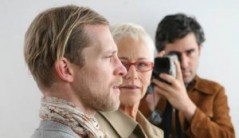
Seventy years after his grandfather escapes from Nazi Germany to Palestine, Israeli documentary filmmaker Tomer Heymann returns to the country of his ancestors to present his film Paper Dolls at the Berlin International Film Festival, and there meets a man who will change his life.
This 48-hour love affair develops into a significant relationship between Tomer and Andreas Merk, a German dancer. When Andreas decides to move to Tel Aviv, he not only has to cope with a new partner, but to manage the complex realities of life in Israel and his personal connection to it as a German citizen. Tomer’s mother, a descendent of German immigrants who was born and lived all her life in a small Israeli village, watches her children one by one leave the country she and her family helped to build, and now cannot help but try to influence the life of Tomer, the one son who remains in Israel.

Systema follows a young woman, a member of Israel’s national synchronized swimming team, during her last year before being drafted to the army. The film explores the dynamics between the individual and the group: the individual’s attempt to find her place in the group, and her systematic shift, while going through adolescence, from a localized set of rules to a set of rules that is national and total.
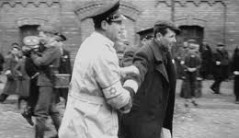
At the end of WWII, 60 minutes of raw film, having sat undisturbed in an East German archive, was discovered. Shot by the Nazis in Warsaw in May 1942, and labeled simply “Ghetto,” this footage quickly became a resource for historians seeking an authentic record of the Warsaw Ghetto. However, the later discovery of a long-missing reel, inclusive of multiple takes and cameraman staging scenes, complicated earlier readings of the footage.
A Film Unfinished presents the raw footage in its entirety, carefully noting fictionalized sequences (including a staged dinner party) falsely showing “the good life” enjoyed by Jewish urbanites, and probes deep into the making of a now-infamous Nazi propaganda film.
Do we exist beyond the electric interactions of brain tissues? Our love, body movement, memory, depression, or religious beliefs – all are expressed electrically in our brain. This film follows people suffering from neurological disorders, who are undergoing groundbreaking medical treatments involving the electric stimulation of the brain. The prospect of manipulating our minds with machines has for decades been considered science fiction, but the accelerating advancements of brain sciences today are materializing into a genuine cure for the millions of people suffering from brain disorders. The Electric Mind raises significant questions about the interface of man and machines, ethics and technology, our body, and the mystery of our mind.
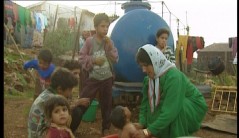
The film documents a period of twelve years in the unrecognized village of Arab al-Na’im in the Galilee. The Bedouins, who have lived there for over century, serve as scouts in the IDF. They have been living in tin huts since 1963, without electricity, rationed water and an asphalt road. Despite the village being officially recognized in 1999, the bureaucratic red tape of government offices and political considerations have delayed the construction permits. Fahim, the protagonist of the film, strives to combat the injustices faced by his community and to secure access to essential services.

A short film that zooms in on all the small conversations, the intimate interactions and the energy that must be released during the 25 minutes of the main recess at high school. The film was made in the framework of the Growing Pains program, in which Israeli film directors were invited to create documentaries intended for, and focusing on, teenagers. The project encourages the viewing of documentaries through creating films that relate to the lives and issues of teenagers in Israel today.
The goal is to spread the word of the Rabbi Nachman of Breslov. Natan’s family runs a widespread book-distributing operation from their house in Meiron. Once a week, a group of about five men leaves on a distribution journey of several days, travelling throughout the country. They have no planned route, they stop according to their gut feeling, they don’t know where they’re going to spend the night or what they’re going to eat, and they often sleep in dilapidated apartments, living off of the donations they receive while dancing. Whenever they meet people, they stop, put up stickers on cars and break into dance in the streets to the sound of eclectic musical genres. They’ve got trance music and Hassidic music, as well as pop songs.
This film depicts the “behind the scenes” world of the Breslev Hassidic Jews who dance at traffic junctions – as seen through the eyes of a boy, Natan, who grew up in a privileged family central to the group’s activities. The film was made in the framework of the Growing Pains program, in which Israeli film directors were invited to create documentaries intended for, and focusing on, teenagers. The project encourages the viewing of documentaries through creating films that relate to the lives and issues of teenagers in Israel today.

Full Gas is the story of 17-year-old Omer, an exceptional young driver and Israel’s go-karting champion. Omer suffers from a unique form of ADHD, but stays focused as soon as he hits the race track. The film follows Omer and his family over a single but critical year, as he tries to turn his racing hobby into an international racing career. The film was made in the framework of the Growing Pains program, in which Israeli film directors were invited to create documentaries intended for, and focusing on, teenagers. The project encourages the viewing of documentaries through creating films that relate to the lives and issues of teenagers in Israel today.
Ten years after he immigrated from Russia, Yafim’s father loses his will to live. His mother is the sole provider and stirs up heartbreaking quarrels every day. Yafim decides to take control over his disintegrating family and revive his father. The film was made in the framework of the Growing Pains program, in which Israeli film directors were invited to create documentaries intended for, and focusing on, teenagers. The project encourages the viewing of documentaries through creating films that relate to the lives and issues of teenagers in Israel today.
A short film about a group of teens who were removed from their homes and raised in a boarding school. As they approach their eighteenth birthday, they participate in a special workshop intended to give them the skills needed to cope with the world outside their school. The film was made in the framework of the Growing Pains program, in which Israeli film directors were invited to create documentaries intended for, and focusing on, teenagers. The project encourages the viewing of documentaries through creating films that relate to the lives and issues of teenagers in Israel today.

In the Disengagement of 2005, the Israeli government evacuated 10,000 Israelis from their homes in the Gaza Strip and handed the territory over to the Palestinian Authority. Shir was 11 years old at the time. His family decided to stay and struggle with the soliders until the last moment of the evacuation, and by doing so, forsook their rights to relocate together with their community.
The film exposes the complex situation of children who live in a conflict zone, who lose their innocence and need to choose a political side at a young age. Shir is the youngest of eight brothers who all grew up in Gush Katif, and he struggles against the impending withdrawal. As Shir fights for the home where he was born and raised, his faith is strengthened by the sense of being a biblical David defeating the mighty Goliath. In the six years following that fateful summer, Shir’s struggle is replaced by a sense of solitude. Homeless, his family moves between four hotels in six months. His brothers resettle in different parts of the country and his parents channel their grief into long work hours. Shir, who spends much of his time alone, puts on weight and becomes a surly young man prone to angry outbursts. The film was shot over the course of six years and provides an intimate personal story in the shadow of historical events in Israel.
Piece of Innocence was made in the framework of the Growing Pains program, in which Israeli film directors were invited to create documentaries intended for, and focusing on, teenagers. The project encourages the viewing of documentaries through creating films that relate to the lives and issues of teenagers in Israel today.

The musical and soul-searching journey of Gabriel Belhassan, musician, former orthodox Jew and recently diagnosed with manic depression. After being released from a mental institution he began working on a solo album. But leaving his family and moving to Tel Aviv frightens him – the urban solitude, pressure, disturbed sleep and totality of the music bring on the disease again. His manic attacks have him standing on the brink of sanity, reaching out to God, just as he did when he was a child. Refusing to give up, he struggles to finish the album and receive the artistic acclaim he so desperately wishes for.
“My father… I never called him father in the first person singular. What’s the point? Father doesn’t hear”. A touching film about a father and son’s journey in a search for their dreams. The father, Peretz Rivkin, former captain of the deaf basketball team, renounced his dream of being a basketball player to support his family.
His son, Dori, an up and coming filmmaker, decides to bring his father back to the basketball court. Along the way, father and son discover that dreams change as years go by, and they also discover each other.

Filmmaker Asher Tlalim, one of the many Jerusalemites who left the city during the past two decades, observes the Jerusalem of today through its people: those living in West Jerusalem and those in East Jerusalem, Jews and Palestinians, secular and orthodox, those who still see Jerusalem as their home. Inspired by their evertday lives, as well as by the poets Yehuda Amichai and T.S. Elliot, Tlalim moves freely from the actual to the historical, from poetry to politics, from the personal to the universal, and from love to despair. Jerusalem, with all its internal conflicts, is a microcosm through which we can gain fascinating insights into Israeli society as a whole.
Four promising Bedouin directors from the Negev desert turn the camera on themselves and their society to record a self-portrait of their community and its hardships. This unprecedented and authentic account tells the story of the nomadic Bedouins who were forced by the Israeli government to relinquish their lifestyle and relocate to villages and townships characterised by poverty, neglect and crime. While they try to move forward and progress, they are still held back by desert traditions and by the discrimination they face from the Israeli establishment and society at large.
In cooperation with filmmaker Uri Rosenwaks, who founded a film class in the Bedouin city of Rahat over six years ago, four first-time directors bring modern Bedouin life to the screen. The four short films are intertwined with rare archival materials on the history of the Bedouin minority in Israel. The film moves back and forth between the personal and the general, the past and the present. Back and Forth is the second documentary feature produced within the independent cinematic project in Rahat led by Uri Rosenwaks.

Following the stories of three mafiosi-cum-businessmen, Thieves By Law paints a fascinating tableau of men that would make Tony Soprano cringe. Most intriguing, though, are their personal histories interwoven with the evolution of the Russian Mafia itself. Beginning in Stalin’s Gulags and slowly transforming into an international organization, the mafia and Code of Thieves have always directly correlated to the political struggles of the Soviet Union – reflecting society back to the government like a funhouse mirror.
While fighting for her five-year-old daughter’s right to receive adequate treatment for her leukemia, Aisha – a Palestinian woman living in the West Bank, undergoes a process of empowerment. Suddenly, this battered woman is no longer afraid to stand up to her husband, to her occupiers, to the authorities and to anyone who is in the way of her daughter’s path to health. Director Rima Essa brings to the screen a unique testimonial that avoids self-pity and victimization, focusing instead on Aisha’s process of empowerment.
The incredible story of the Yatza Affair – an affair in which Brigadier General (Res.) Yitzhak Yaacov (nicknamed Yatza), a member of the Palmach and Deputy Cmmander of Gush Etzion during the War of Independence. Head of Warfare Development in the IDF and the State of Israel’s first Head Scientist, Yatza was charged with severe espionage against the State of Israel. After living in New York for thirty years, Yatza returned to Israel to celebrate his 75th birthday. Instead of a birthday celebration, and as an alternative to the Israel Prize, senior defense officials and high-tech executives organized a tribute event in his honor.
The following day, at Ben Gurion Airport, he was clandestinely arrested and detained in a holding cell at the National Unit for International Investigations. At the end of the interrogation, he found himself behind bars for 18 months; during this time, his trial took place behind closed doors. For the first time in a feature film, the long arm of the “Secret Kingdom” of the Israeli defense system is revealed. This is a journey into the most primeval fears of Israeli citizens.

Night after night a group of Palestinian women go on a border-crossing journey from their village, crawling on the ground through a hole in the fence and into Jerusalem. Here they pretend to be Israeli, blend into their surroundings, and go to work in order to support their children. On these nightly journeys they share with each other their lives, pain, hopes and dreams. These women maneuver their lives between the men who forbid them to work and the Israeli soldiers who pursue them. They risk capture and arrest every night to work as cleaning ladies in Jerusalem.
‘The Invisible Men’ tells the untold story of persecuted gay Palestinian who have run away from their families and are now hiding illegally in Tel Aviv. Their stories are told through the film’s heroes: Louie, 32 years old, a gay Palestinian who has been hiding in Tel Aviv for the past 8 years; Abdu, 24 years old, who was exposed as gay in Ramallah and then accused of espionage and tortured by Palestinian security forces; Faris, 23 years old, who escaped to Tel Aviv from the West Bank after his family tried to kill him. Their only chance for survival — to seek asylum outside Israel and Palestine and leave their homelands forever behind.
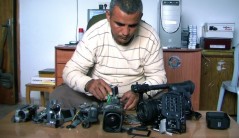
Nominated for an Oscar®, the film is a deeply personal, first-hand account of life and non-violent resistance in Bil’in, a West Bank village surrounded by Israeli settlements. Shot by Palestinian farmer Emad Burnat, who bought his first camera in 2005 to record the birth of his youngest son, Gibreel, the film was co-directed by Burnat and Guy Davidi, an Israeli filmmaker. Structured in chapters around the destruction of each one of Burnat’s cameras, the film follows one family’s evolution over five years of village upheaval. As the years pass in front of the camera, we witness Gibreel grow from a newborn baby into a young boy who observes the world unfolding around him.
Past present and future mix in this eloquent and intense portrait of documentary filmmaker David Fisher and his siblings, as they retrace the footsteps of their late father—a Holocaust survivor who was interned in Gusen and Gunskirchen, Austria. David’s journey takes him to the U.S., where he meets American WWII veterans who participated in the liberation of his father and Gunskirchen camp. This sparks a remarkable journey to Austria by the Fisher siblings. They joke, kibitz and quarrel, and remind us that history and memory require active discussion among the later generations.
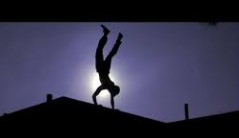
Ahead of his father’s release from prison, the virtual reality of the Parkour world in which Avshalom is a super hero, begins to crack. The inevitable showdown with the man he testified against, is going to dictate his mother’s fate. The father’s arrest three years ago shocked the Gil family. The father was sentenced to three years in jail for domestic violence, and Riki remained the sole provider for her family of eight. The court banned Avshalom’s father from seeing his children. The film accompanies the internal and external conflicts Riki and Avshalom face. How will they deal with the father’s return?
The Hoess family did everything they could to ignore the horror.
The windows were boarded up so that they couldn’t see the chimneys and the gas chambers from their mansion. Family photos show children playing outside and other idyllic scenes that don’t betray the presence of the camp. The only things they couldn’t ignore, explains Rainer Hoess almost 70 years later, was the stench of burned bodies and the thick layer of ash that covered the garden. His grandfather was the commander at Auschwitz, and his father grew up there. After a long time, Rainer finally managed to summon up the courage to visit the former concentration camp together with a Jewish friend. Hitler’s Children introduces us to close family members of prominent figures from the Nazi regime. They explain what it is like to have to live with the weight of their family history. Himmler’s great-niece married an Israeli Jew, Goering’s great-niece had herself sterilized, and the son of the camp’s executioner attempts to process his family’s past through writing. We watch Hitler’s traumatized children filmed in a suitably austere style – there are no eye-catching camera movements, no fast edits, and no dramatic musical flourishes. This style underscores the utterly earnest tone of the film and the fact that the German soul still bears deep scars two generations after the Holocaust.

In an attempt to bridge time, space and culture, Israeli rock musician Dudu Tassa takes on the original music of his grandfather and great uncle, who were among the leading musicians in 1930’s-1940’s Iraq. Salah and Daud Al-kuweiti were Jewish-Iraqi musicians considered to be the creators of modern Iraqi music, and two of the greatest Arab musicians in history.
In the 1950’s, they immigrated to Israel – where no one took their music seriously. Dudu’s grandfather and uncle were not accepted as legitimate musicians by the young Israeli establishment and as a result they forbade their family to engage in music. An eye-opener for anyone interested in music, as well as those wishing to deepen their understanding of Israeli society.

How does a white boy with Alabama roots become a Flamenco guitarist in Andalucian boots, and what happens along the way? The film tells the story of “David Serva,” born David Jones, through his five women and five children—one of whom is the director. After all, who knows the-man-who-came-and-saw-and-conquered (and conquered and conquered), “strumming their pain with his fingers, killing them softly with his song,” better than they? A tale about self-invention and the pursuit-of-happiness (no matter the cost to others), Gypsy Davy is a personal and political portrait of a man, a family, a generation.
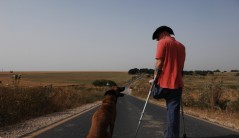
In March 2002 an IDF tank ran over an explosive device in Gaza killing three soldiers. Matan Berman, the dog handler who accompanied the unit, became shell-shocked following this tragic event. A few weeks later he started to complain of horrendous pain in his leg, which was subsequently diagnosed as CPRS, a mysterious pain syndrome. The slightest touch – the whisper of wind or a drop of water – now causes him pain that can only be contained with the use of large doses of morphine. Seven years later, Matan decides to put the past behind him, and to amputate his leg.
The film reveals layer by layer the soul of a man who fights for his life and keeps coming up against inner demons that give him no peace. The surprising finale awakens speculation about the complicated connections between body and soul.

A documentary that takes an intimate and poignant look into the relationships between three men working in the western Negev near Gaza. They run a dairy farm that is a microcosm of the outside world, and that brings together three seemingly disparate men who are actually very similar: Yossi, an Israeli, has owned the farm for nearly fifty years; he works alongside Ibrahim, a Bedouin from Gaza, and Eddie from Thailand. Together, they form a makeshift family.
He drew sketches on tiny pieces of paper and sent them, from the trenches, to a young cellist who was waiting for him in Berlin. She thought he was a genius, and after WW1 she helped him become the busiest architect in Germany. When she planned to leave him for a communist poet, he built a perfect house for her in which every detail was meticulously planned. When the Nazis came to power, the couple fled the house and Germany forever. Erich and Louise Mendelsohn wandered between continents, between world wars, between success and failure. The buildings that Erich built around the world, scattered like the trail of their journey, have shaped the history of architecture. Incessant Visions is a cinematic meditation about the untold story of Erich Mendeloshn, whose life and career were as enigmatic and tragic as the path of the century.

Morad lived in an Arab village in the north of Israel. He was socially popular, loved by his family, an athlete, and a good student. One night, during the fall of 2006, he was cruelly beaten by his classmates, who mistakenly accused him of having an affair with their engaged cousin. Physically, he recovered within days; however, he was unable to speak or respond to anything for weeks. Rather than hospitalizing him in a mental institution, psychiatrist Dr. Ilan Kutz sent Morad to Eilat to undergo dolphin therapy.
Surrounded by endless desert, red mountains, and the deep blue sea, Eilat becomes a sanctuary for Morad. He begins to undergo therapy and develops an exceptional relationship with the dolphins. He becomes an excellent diver and starts speaking after three months; however, the “reborn” Morad detaches himself from his past and refuses to return to his village; instead, he develops a relationship with a Jewish girl. This documentary is about the devastating havoc that human violence can wreak upon the human soul, and about the healing powers of nature and love.
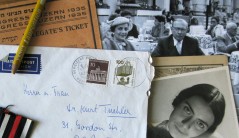
The flat, on the third floor of a Bauhaus building in Tel Aviv, was where my grandparents lived since they immigrated to Palestine. Were it not for the view from the windows, one might have thought that the flat was in Berlin. There it was, furnished with heavy European pieces, with the best of German literature, and laden with layers of dust and history. And then, at age 98, my grandmother died and we were called to the flat to empty what was left. Objects, pictures, letters, and documents awaited us, revealing the complex lives of my grandparents Gerda and Kurt Tuchler, as well as traces of a troubled and painful past. Suddenly, I found myself going through every drawer, trying to make sense of the hints left behind.
What is the importance of knowing one’s family history? Is it just a heavy and unnecessary burden? In my family’s case, this question never came up. To be honest, we never discussed anything about the past. That is, until we opened the closets…. The film develops into a riveting adventure, involving unexpected national interests, a friendship that crosses enemy lines, deeply repressed family emotions, and even reveals some secrets that should have probably remained untold.
Duma (dolls in Arabic) is based on stories of sexual abuse in Arab society in Israel. Abeer, the creator of a puppet theater show which deals with the subject of sexual abuse during childhood, decides to take her camera and journey from the north to the south of the country and document women who have experienced sexual violence. In her journey she meets four women who dare to reveal the sexual abuse they endured in their close circle of family and friends. They all look for a way to express their pain and to break the silence that was imposed on them by their relatives and by society.

Ameer Abu Ria is about to go to the army. As opposed to the majority of 18-year-old boys in Israel, for whom army service is mandatory, Ameer is exempt from military service under the assumption that his enlistment might endanger Israel’s security. That is because Ameer, an Israeli citizen, is a Moslem Arab. Nonetheless, Ameer decides to volunteer. He believes that his induction is the way to equality, he believes this is the way to belong to the state he lives in, the state he wants to love. He is considered an enemy, a fifth columnist in the eyes of Israeli Jews, and a traitor of the worst kind in the eyes of Arab citizens; the kind who turns against his brothers. All alone, Ameer sets out on a voyage to civic- and self-definition, while carefully navigating the thin line between Jewish and Arab societies. Ameer, an eternal optimist, wishes to be both a proud Arab and an enthusiastic Israeli. His only enemy is reality.
Part of “The Makom Project“:
A portrait of six people and the short story “From the Journal of a Blind Girl” by Israeli playwright Hanoch Levin, reflect a culture and a place.
Part of “Moments, Israel 2002“:
“Radio could be the most wonderful public communication system imaginable…if it was capable not only of transmitting, but also of receiving, of making the listener not only hear, but also speak.” (Bertolt Brecht 1933)
Part of “Moments, Israel 2002“:
I turned my camera on the ruins of the refugee camp in Jenin. My regard is turned inward, to myself, to us, to the darkness.
Part of “Moments, Israel 2002“:
“It has been a woman’s task throughout history to go on believing in life when there was almost no hope. lf we are united, we may be able to produce a world in which our children and other people’s children will be safe.” (Margaret Mead)
Part of “Moments, Israel 2002“:
The text written by Doron Rosenblum in 1990, “Longing for the present,” precisely expresses the abnormality of life here, a way of life that has become almost trivial. It is so hard to believe that the possibility of a normal life has disappeared like this, and that we must now make do with occasional moments of grace that are granted to us from time to time.
Part of “Moments, Israel 2002“:
Until now, only the Palestinian suicide bombers are filmed before carrying out their attacks. Here is an opportunity to meet the Israeli casualties before they die.
Part of “Moments, Israel 2002“:
When concerned people living abroad ask me what will be, I tell them I’m about to have a son, and that they should ask him when he grows up. Although he’ll probably tell them to ask the next generation. A sort of cautious optimism for the coming fifty years.
Part of “Moments, Israel 2002“:
When I go to my parents’ house in Beit-El, I take my fear with me, as well as my love and many question marks. The drive there is like a video game – you either make it through or you don’t… Just close your eyes until the nightmare is over.
Part of “Moments, Israel 2002“:
Many Israelis feel they live in a chaotic nation whose leadership is leading them into the abyss, but most of us continue our lives in the hope that maybe tomorrow morning we will wake up and the world will be different. How many of us are willing to begin today to make a change for tomorrow?
Part of “Moments, Israel 2002” :
We will be better and stronger if we pose questions, rather than wallowing in the vain belief that we already know – or that what we don’t already know isn’t worth discovering.
Part of “Moments, Israel 2002“:
Times are pretty bad, right? So they tell us day and night! The radio and television do not stop chanting, and with each bombing the reporter is a poet.
Part of “Moments, Israel 2002“:
The well-known saying that “when the canons roar, the muses should be silent” should be put differently. When the situation is really bad, the muses should take shelter. The true muses will know when to be quiet and about what.
Part of “Moments, Israel 2002“:
The Holocaust is the central and most formative aspect of my life, and through it I am able to deal with our conflicted lives, here and now. The closer I go back to that time, the closer I come to myself, to my family, to us as a society.
Part of “Moments, Israel 2002“:
There is so much hate, our leaders are blind and there is nothing I can do to change the situation. On the other hand, I am willing to do anything, even the most absurd things, to stop this madness. Who’s with me?
Part of “Moments, Israel 2002“:
Life as a banal game; our leaders are children; the ability to press “pause” has not yet been proven, but nor has it been entirely ruled out; we hope that the ending will be pastoral.
Part of “Moments, Israel 2002“:
Natasha is hurt and Sasson doesn’t understand why. All he did was sing a little song in Arabic. That’s how it is when there are difficulties in communication. That’s what happens when you don’t speak the same language.
Part of “Moments, Israel 2002“:
What is the sound of fear? This short presents a cacophony of sounds related to Israel’s contstant state of alert.
A Palestinian in Ramallah, Mosab Hassan Yousef grows up angry and ready to fight Israel. Arrested for smuggling guns at the age of 17, he’s interrogated by the Shin Bet, Israel’s security service, and sent to prison. But shocked by Hamas’s ruthless tactics in the prison and the organization’s escalating campaign of suicide bombings outside, Mosab agrees to spy for Israel. For him, there is no greater shame. For his Shin Bet handler, Gonen, there is no greater prize: “operating” the oldest son of a founding member of Hamas.
Based on Yousef’s bestselling memoir, Son of Hamas, The Green Prince is a story of two men, spy and handler, whom history insists must be adversaries. That they could reach a point of trust or friendship seems absurd. Embroidering a tangled web of intrigue, terror, and betrayal, Nadav Schirman builds superb tension throughout a surprisingly emotional journey. Ultimately, The Green Prince is less about political struggle and more about personal coming-to-terms with responsibility and moral duty.

During the Second Lebanon War, Motti and Keren, a young religious couple from the north of Israel, look for a place to stay to escape the tense situation in their hometown. They find themselves at Yali and Boaz’s bourgeois apartment in Tel Aviv.
Due to differences between the couples, conflicts begin to arise.
The apartment becomes crowded and tense and Keren’s obvious pregnancy becomes a painful reminder of the life Boaz and Yali will never have. Through the development of these couples’ relationships, the film reflects some of the much greater issues facing Israeli society today.
The story of the Israeli “bear” society, through the eyes of one group of gay, overweight men with similar preferences, who are struggling with weight problems, loneliness and their pasts. The film focuses on four main characters, Paz, Daniel, Motti and Motti, and follows them on their journeys for survival, during which they will have to choose between life and death and between being alone or being in a relationship.

“Mika’s Homecoming” tells the story of Mika, a 15-year-old girl who returns with her family to Israel, after living in Los Angeles for several years.
During summer vacation, Mika creates a deep friendship with her new neighbor, Roni. But just before school starts, Mika gets a once-in-a-lifetime offer from Danielle and Netta, the most popular girls in her future class: if she terminates her friendship with Roni, she can join their popular clique. Danielle and Netta demand an immediate decision: does Mika choose to be part of the in-crowd or one of the rejects?
Mika chooses popularity, betrays Roni, and becomes a leading member of the in-group. As the class prepares for a homecoming-style dance that Mika imports from LA, Mika gradually realizes the heavy price she’s paying for social acceptance. She learns to understand her true values, and finally finds the strength in herself to act on them.
Part of “Moments, Israel 2002“:
Kheira Abu Hassan lost her baby while waiting at an IDF roadblock.
Now she cannot control her smile. Her smile is used as a barrier that the occupied can place before the occupier.
A young family that falls on hard times moves to a community on the Israeli border with Gaza, only to find themselves dealing with a reality that puts them in a constant state of insecurity. How will they face this new challenge and what will they learn about the boundaries of happiness?
During the October War of 1973, Israel’s military and political leadership, so confident of its superiority, suffered a nervous breakdown, as Israel faced a surprise attack by the Egyptian and Syrian armies. Senior officials, headed by Minister of Defense Moshe Dayan, devised wild and desperate ideas, among them the use of nuclear weapons. This 4-part series highlights the war’s dramatic events while taking us down a historical path of failed diplomacy and missed exit points, leaving us to wonder how the superpowers, jolted out of their complacency, were driven to the edge of Armageddon.
In this digital, multi-channel, post-modernist, virtual age there is often a need for that which is real, concrete and meaningful. A specific “place,” (”makom” in Hebrew) chosen from a personal and creative point of view, can become a revealing and enlightening fragment of reality. A “place” can tell a story, have its own atmosphere, a “feel” that is the direct function of a human presence, motion, time, and a given space. Some places can be inviting, mysterious and attractive, demanding a lingering gaze, others might seem trivial and banal, lacking in meaning and relevancy. A creative cinematic and artistic approach can imbue a place with new meaning while recreating it as an experience of discovery. That which is foreign and mysterious, as well as the seemingly mundane, take on a new presence and aesthetics.
In “The Makom Project,” twenty Israeli artists, filmmakers and authors were commissioned by producer Amit Goren to create a 5-minute digital video shorts about a place of their choosing, one that has a personal meaning and relevancy to them. The cinematic styles of the different films vary in genre from fiction to experimental and from video art to documentary. The result is an inventive, creative and varied collection of stories about places that in their accumulation tell a story about the human condition in Israel and Palestine in the year 2001.
1. The Blind Girl/Tamar Getter; 2. Prince of the Tranist Camp/Yitzhak Gormezano Goren; 3. Bloomfield/Zohar Behrendt; 4. Moscovia/Aner Preminger; 5. Spurt/Maria Pomiansky; 6. My Room/Joshua Saimon; 7. Don’t Open the Door/Ariella Azoulay; 8. Schindler 13 Passengers/Miki Kratsman; 9. Murder on Pinkas Street/Inbar Tavor; 10. Carousel/Meir Wigoder; 11. The Plucker/Keren Ben-Rafael; 12. Fin, Fin/Uri Tzaig; 13. Yellow/Amit Goren; 14. The State of Neve Sha’anan/Haim Deuelle Luski; 15. Recorder Disorder/Chen Sheinberg; 16. Ramallah Short Cuts, Summer 2001/Suha Arraf; 17. Desert Oasis/Pavel Wohlberg; 18. Inventory/Doron Solomons; 19. Allenby Passage/Nurith Aviv; 20. Naan/Macabit Avramson, Avner Faingulernt.
17 very short films by 17 Israel filmmakers, presenting the different faces of Israel and exploring the complexity and intensity of life in Israel.
- In the Name of Defensive Shield/Anat Even
- Kheira’s Smile/Ariella Azoulay
- Security Groove/Idan Alterman
- Hatikva/Rafi Bukai
- Status Quo/Gur Bentvitch, Nir Miterraso
- 72 Virgins/Uri Bar-On
- Crazy/Uri Barabash
- Times are bad/Amos Gitai
- Mouth of the Abyss/Oded Davidoff, Shlomit Altman
- You for a mother/Tha’ir Zouabi
- The Journey/Eyal Zayid
- Survival and the Art of the Joystick/Tsipi Houri
- Congratulations/Eyal Halfon
- Three Minutes to Four/Eliav Lilti
- From now to now/David Perlov
- Longing/Dina Zvi Riklis
- Nira and Sausan – Mothers/Nira Sherman, Sausan Quoud
After being forced by tragic circumstances to put her only daughter, fathered by a Muslim Bedouin man, up for adoption, an Israeli woman returns to Israel many years later to find her lost child. She soon finds herself along with her director friend in an unusual cinematic creation of her life, a voyage that covers three decades and a number of countries and encompasses oblivion, survival and loss. Her loves, her escapes, and the men in her life all serve as an echo to that one fateful act. In an unusual manner, the heroine finds herself facing, as if in a Greek chorus, a re-examination of her life.
A group of youths, some religious, some secular, decide to postpone their mandatory military service and spend a year living together in the Gilo neighborhood in Jerusalem to promote understanding and cooperation between both communities, whose schism is tearing Israeli society apart.While concentrating on seeking mutual understanding among themselves, the group members find themselves at the outbreak of the October 2000 Intifada, under fire from nearby Beit Jala, witnessing any hopes for external peace being crushed before their eyes.
In 1970, a protest movement led by young people from disadvantaged neighborhoods in Jerusalem burst into the public consciousness with its anti-establishment and sometimes, violent actions. They became known as the “Black Panthers.” Filmmaker Nissim Mossek, who was enchanted by the enthusiasm and sincere intentions of the rebellious youngsters, followed their revolutionary course, which he saw as just and immediately began to document their dynamic activities resulting in the protest movie, “Have You Heard about the Panthers, Uncle Moshe?” Many years later, Mossek embarks on a tour in quest of the original Black Panthers and the characters who appeared in the film.
Rafi is a compulsive gambler at a crossroads. He must choose between his beloved wife and daughter and the football lottery, his life’s obsession. He is overtaken by all too familiar fantasies of wealth, the possibility of answering only to oneself and the joy of commanding the respect of others.
A new angle on the inner conflicts that plagued the Moroccan Jews in Israel throughout their efforts to assimilate, “Ancient Winds – Moroccan Chronicle” explores the historical identity of Moroccan Jews with an emphasis on questions of belonging, denial and animosity. Told through six fascinating characters from the second generation of immigrants, they tell the dramatic and poignant story of their assimilation into Israeli society, one filled with repression and racism, including memories of their time in immigrant camps, settling the borders and the establishment of development towns, the dissension, the uprising at Wadi Salib, the Black Panther demonstrations, the establishment of the Shas political party and finally Ehud Barak’s apology.
Naomi Golan, daughter of producer and filmmaker Menachem Golan, travels to India following her father while he shoots “The Return from India” in hopes of repairing their troubled relationship. After many years of failed attempts, Naomi decides to talk to her father in the only language he understands – the language of film. She puts a camera in front of him, and through their meetings Naomi tries to understand the reasons behind this difficult relationship. Meanwhile Menachem begins to reveal his unique production methods, his dreams, and the difficulties he faces. Menachem’s total commitment to his movie despite his daughter’s attempts reveals the conflict between a career and family life, and between life and cinema.
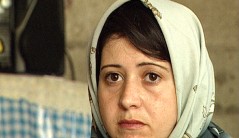
This film examines life inside the closed Gaza strip for both those imprisoned inside and those existing outside of the walls as a joint Israeli-Palestinian film crew observes the human conditions, the politics, and the economics of both sides of the electronic wired fence which encircles one of the most densely populated areas in the world. Palestinians who live under closure, and Israelis who quarrel about it, are chronicled in the film, which asks if the bloody red curtain which stands between the two can ever be lifted and if the peace process will ever succeed.
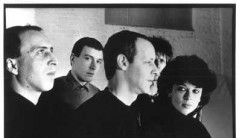
Twenty years after the Israeli rock group “Minimal Compact” was founded, the filmmaker, a lifetime fan, sets out on a journey to uncover the extraordinary story of the band which was popular in Europe in the 1980s, whose members are now scattered around Europe and Israel. Through interviews with former band members Rami Fortis, Berry Sakharof, Malka Spiegel, and Sami Birenbach, the “Rashomon”-like story of the band is revealed. From his childhood in the 1980s as a “Minimal Compact” fan, to his present interest in the band’s history as a filmmaker, the director tells the story of the band’s transformation while simultaneously chronicling his adolesence in Israel.

Mike Brant’s body was found on the sidewalk on Arlanz’e St. in the 16th quarter of Paris, on the morning of Friday, April 25th, 1975. He was lying on his back, facing the sky, in a blue shirt and barefoot. Seemingly intact on the outside, but shattered to bits on the inside, he was 28 years old when he died.
Born Moshe Brand, he was born in a British internment camp in Cyprus and raised in Haifa, Israel. He was the star of the Rondo Club on Mt. Carmel and reached stardom in Paris in the 1970s. His albums sold millions, his music was played on the radio in Europe and Canada, and his songs hit the top of the charts. But fame and fortune soon took their toll. A tale of injustice, aggression, money and the loss of innocence. The film includes original performances, songs and interviews never seen before.
Samuel Makanda is a man living two very different lives. He was born in a small village in Northern Kenya where his wife and children now live in a stone house with no electricity or running water. He visits them for one month each year. For the past ten years, the rest of his time has been spent living with the film’s director, Hai Cohen, who was permanently injured in a diving accident in 1986. For board and a monthly salary, Sam helps Hai accomplish the daily tasks he is now unable to perform, such as showering, squeezing grapefruit juice, or opening presents. The relationship that developed between the two can almost be compared to the one a person might have with his own hands. Samuel’s life includes two such different worlds, and passing between them is almost like traveling through time. He journeys between the two, motivated by a strong sense of duty.

Grisha Starosta was 21 years old when he left his wealthy bourgeois home and followed his dream to become a pioneer in Palestine, but he had to leave the orange groves of Kfar Saba and return to Romania just a few months later when he learned he had a daughter. Many years would pass until he would begin his long journey back to the land of Israel.
Only now, after reading a short article in the newspaper, regarding the story of the ‘Struma’ – a ship carrying Jewish refugees from Romania to Palestine that was sunk in 1942 – will Grisha’s great-grandson begin to uncover the full story.Grisha Starosta was 21 years old when he left his wealthy bourgeois home and followed his dream to become a pioneer in Palestine, but he had to leave the orange groves of Kfar Saba and return to Romania just a few months later when he learned he had a daughter. Many years would pass until he would begin his long journey back to the land of Israel.
Only now, after reading a short article in the newspaper, regarding the story of the ‘Struma’ – a ship carrying Jewish refugees from Romania to Palestine that was sunk in 1942 – will Grisha’s great-grandson begin to uncover the full story.

Purity tells the story of a subtle female rebellion within the religious world, expressed through the personal viewpoint of the director Anat Zuria and three of her friends. Their openness to the camera breaks a profound taboo of silence rooted in two thousand-year-old laws and contemporary social pressures and provides a rare and special look into the world of Jewish religious married life and sexuality while illuminting a hidden path of struggle for religious women in the framework of strict, patriarchal religious law.
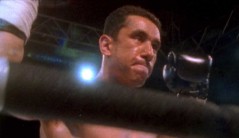
Boxer Johar Abu Lashin dreams of winning a world title in Nazareth and then in his hometown of Gaza, but faces challenges amidst the political situation in the Middle East. Can his journey to winning a title prize in the ring make him a hero in the eyes of both Israelis and Palestinians?
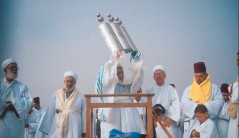
The Samaritans, the world’s smallest and most ancient people, are caught between the State of Israel and the Palestinian Authority. A religious community of less than 700 people, the Samaritans strive to maintain their traditions and rituals which date back to biblical times, including the Passover sacrifice. This film follows the lives of two young Samaritan couples as they face the challenges of the modern world against the backdrop of the Palestinian-Israeli conflict
This biography of veteran peace activist Uri Avneri follows both his personal and political life in a detailed account combining new, revealing interviews with original archival footage. At 79, Uri Avneri is still a complex, respected figure of the Israeli radical left who is a lifetime proponent of Israeli-Palestianian peace.He is a controversial figure who embodies the spirit of the era and the quarrelsome history of Israel.

This is the story of a girl who dreamt of being an officer in the IDF, who was a great patriot and who was shot and wounded in a 1978 terrorist attack on an El Al flight crew in London. Now a grown woman with daughters of her own, this mother does not allow them to leave their home for fear of Palestinian suicide attacks. Patriotism, to her, now means trying to reconcile with the terrorist who shot her 22 years earlier, who is still in a UK prison. In a climate of violence and terrorism, she observes the Middle East and sees that hatred is the only universal language. The pain and fear of the past shatter her world. Will she be able to write in support of her terrorist to the parole committee?
Pinchas Cohen-Gan is an Israeli artist of Moroccan descent and extensive Western education who chose to live in Israel “because here I am a refugee only once and not twice.” In order to examine his identity and position in Israel as an oriental immigrant, Cohen-Gan plans a journey to Germany and an installation of his work at the site of Hitler’s bunker. Tensions rise as plans for the art installation grow increasingly complicated, and Cohen-Gan alternates between enthusiasm and regret as he must decide whether to follow through with his project or not.
Following the fall of the Soviet Union, Jewish Russian immigrants began arriving to Israel daily by the hundreds. Alice Neiman arrived in Israel on October 26th, 1990, at the age of twenty with 750 others seeking a new life. A decade later, she examines to what extent the hopes and fears of some of those who arrived with her on that day have been fulfilled. Alice’s story provides a panoramic backdrop for the journeys of thousands and forms a larger story within the landscape of Israeli events. Funny, emotional, and at times heart-wrenching stories of the people she meets reach deeply into the history of Israel during a decade beginning with the Gulf War and leading up to the shattering events of the second Intifada.
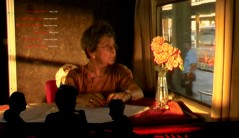
After making an impossible decision to support the man she loves, Eva, a Yugoslavian war hero and human rights activist, is forced to desert her only daughter Tiana when she is sentenced to time in the infamous women’s prison “Goli Otok.” Deserted by her mother, Tiana grew up on the rough streets.
After being released from prison, Eva seeks her daughter’s forgiveness. Through a meeting made possible by Tiana’s daughter, the three women meet in Israel and travel together to Yugoslavia, a journey which enables them to come to terms with their past.After making an impossible decision to support the man she loves, Eva, a Yugoslavian war hero and human rights activist, is forced to desert her only daughter Tiana when she is sentenced to time in the infamous women’s prison “Goli Otok.” Deserted by her mother, Tiana grew up on the rough streets.
After being released from prison, Eva seeks her daughter’s forgiveness. Through a meeting made possible by Tiana’s daughter, the three women meet in Israel and travel together to Yugoslavia, a journey which enables them to come to terms with their past.

In an absurdist romp reminiscent of Nanni Moretti’s Dear Diary, Mograbi sets out to make a film about what it is he hates about August in Israel. After a series of false starts derided by his wife as morbid and uninspiring, the true theme of his project emerges: recording people’s reactions to his own artifice as filmmaker. Arab workers, wealthy Jewish suburbanites, soccer yobs, Palestinian stone throwers and Israeli policemen – no one escapes the dogged gaze of his camera, the acerbic righteousness of his wit. A curious, scathing satire of a society fuelled by hatred, intolerance and misunderstanding.
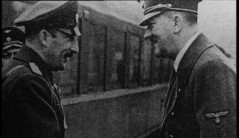
Tami, an Israeli Journalist, travels to Germany to interview Israelis who have chosen to live there: Dr. Ruth Hertz, a judge in Colonge, Dr. Yoram Levi, a plastic surgeon in Garmisch, Naomi Tereza Salmon, a photographer in Weimar, and Prof. Michael Wolffsohn, a history lecturer at the German army Officers’ Academy in Munich.
While Tami is initially critical of their decision to immigrate, she eventually comes to terms with her own guilt stemming from her family’s past in Germany before they perished in the Holocaust. During her journey, she is flooded by memories of her childhood in Tel Aviv, of her parents’ silence surrounding her family history, and of their fondness for German culture. In Germany, of all places, she obtains a deeper insight into the significance of denial and memory.Tami, an Israeli Journalist, travels to Germany to interview Israelis who have chosen to live there: Dr. Ruth Hertz, a judge in Colonge, Dr. Yoram Levi, a plastic surgeon in Garmisch, Naomi Tereza Salmon, a photographer in Weimar, and Prof. Michael Wolffsohn, a history lecturer at the German army Officers’ Academy in Munich.
While Tami is initially critical of their decision to immigrate, she eventually comes to terms with her own guilt stemming from her family’s past in Germany before they perished in the Holocaust. During her journey, she is flooded by memories of her childhood in Tel Aviv, of her parents’ silence surrounding her family history, and of their fondness for German culture. In Germany, of all places, she obtains a deeper insight into the significance of denial and memory.
A documentary is a desperate attempt to document that which cannot be documented.
Heresy thoughts of a veteran documentarian.
A neighborhood in the city of Ramat Gan. A grocer, a watchmaker, dancers, sheep, a hairdresser, a furious prophet and more.
Real? Staged?
Fragmentary – like cell phone chats, like TV broadcasts, like life itself.
Finally someone asks – Is God counting us again?
Has the Lucky Number, Heaven forbid, been picked again?
At 80 years of age, Colonel David Rokni prepares to command the national ceremony on Israel’s Independence Day. Just like in each of the last 30 years, he goes through an arduous series of training, routine formation and foot drills for the traditional military parade – a job of which no other person is capable.
A week before the ceremony, a disaster strikes unexpectedly. For the first time Rokni has to cope with an unfamiliar situation during a ceremony that transforms his life.
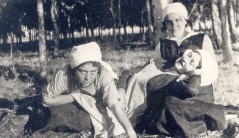
The women pioneers who came here a century ago wanted to build a new world and create a new woman, just as independent as men.
A few dozen of these women established Ein Harod. Writing about themselves and their world, they described their fight for equality and protested against how they were silenced. They struggled against the constraints of the traditional world they came from and the way men interpreted the world that they created.
They lived passionately and experienced many painful failures. In the end, they abandoned their struggle as women to focus on achieving the dream that they shared with men–the dream of creating a new nation. Women/Pioneers tells the story of their turbulent lives through the journals they wrote, which provide a new perspective on archival materials from that time.
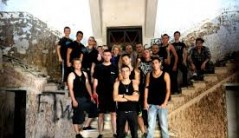
There’s always place for hate – the inconceivable story of a Nazi gang in Israel. The deceivingly peaceful Sea of Galilee is the backdrop of an inspiring story of violence, hope, and rebirth of one young man and the unexpected people who love him.
In the 1990s a million former USSR Jews arrived in Israel. The immigrants, who dreamt of a better future, were despised by the local population who feared their “invasion.” While many embraced the Israeli lifestyle, others were enraged, conforming to a life in self-made Russian ghettoes. These ghettoes were a fertile ground for self-hating Jewish skinheads.
White Panther is the story of Alex, a young Russian immigrant, whose family falls apart after the death of his father in the Israeli army. In retaliation, Alex joins a skinhead gang, led by his older brother. An unexpected meeting with David, a religious Moroccan Jew, gives Alex a chance to pursue his longtime dream of becoming a boxer like his father. Alex finds himself torn between his two father figures – his violent older brother and his new Jewish trainer – only to discover the truth about those he so admires.

A poetic journey in the Israeli desert shot through a thermal camera. In apocalyptic surroundings, detached from time or place, lies a fascinating encounter between ancient mythologies and the political present.
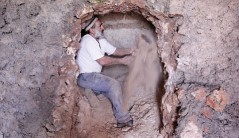
Forty years ago, while searching for his place in the world, Nissim Kahlon (67) made his home in a limestone cliff under the Apollonia National Park, north of the Herzliya coast. Amidst the sound of the waves and the fragile limestone mountain, he dug a cave to live in, to shield him from the heat and cold. For years he lived without electricity or running water. Today the “home” that he built out of anything and everything – rocks, trash, sand – contains countless caves and tunnels, and Nissim insists on continuing to work on it every day. His work never ends. The sea, which he loves dearly, constantly gnaws at his house, threatening his life’s work. The unending building also takes a toll – his body aches and betrays him.
After years of estrangement, Nissim suggests that his son, Moshe (18), who was born in the cave and will soon join the military, move in with him and inherit the cave. Together they work to dig out the cave in which he will live in. Through their hard work, a complex relationship between father and son is revealed.

To this day, only sixteen people in the world have earned the title of World Chess Champion. Boris Gelfand of Rishon LeZion was the first Israeli to compete for the title. All his life Boris prepared for the occasion. From the age of six, he was raised to be a chess champion. His father devoted most of his time to developing his son’s chess skills, setting an ambitious and demanding daily schedule and obsessively documenting every event in the child’s life. This is a film about a clash between the two strongest minds in the world, but it is also a film about parental choices and the dilemma of whether to dictate for one’s child the way to self-fulfillment or to be a liberal and lenient pushover.
Halil Efrat, himself an average chess player, sets out in the footsteps of the fascinating character of Boris Gelfand, and in search of the answer to the question: can every one of our children, with a little bit of good Soviet education, turn into a genius?
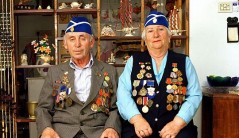
Veterans focuses on WWII veterans, once fighters in the Red Army and now uprooted immigrants, fighting for their place in society. These people, who experienced the twentieth century’s bloodiest war as Soviet soldiers, immigrated to Israel after the collapse of the Soviet Union and found themselves in a society that is totally indifferent to their glorious past. The film offers a close and compassionate look at the veterans’ lives, fueled by complexity, pain, and an almost silent insult, alongside joy and self-deprecating humor. The feeling of living on borrowed time drives the veterans to embark on what may be their last adventure. Through this comic, sentimental, and somewhat sad journey, they will be confronted with the way they have remembered the past and face the new reality in present-day Russia.
Like all good Westerns, Wild West Hebron challenges the ideas of hero and villain. In the often-violent area of Mt. Hebron, a conflict between Palestinians, Israeli settlers, and anti-occupation activists may seem clear-cut, but the journey of one settler defies common preconceptions.
Yochanan Sharet, born to a Protestant family in Bavaria, visited Israel as a young man and decided to stay. After converting to Judaism, Yochanan made this his home and built a farm on a desolate hill near the settlement of Susia. Soon, he became notorious for his harassment of Palestinians and his clashes with left-wing activist, Ezra Nawi. Two years ago, he suddenly found that the tables have turned. Yochanan’s neighbors from Susia have been attempting to drive him off the land. Accusing him of being a Nazi, these settlers will do everything in their power to evict Yochanan and destroy his farm. With his life and home in danger, his only hope is the settlers’ greatest enemy, Ezra Nawi. Meanwhile, Ezra has been working to bring the Palestinians back to the land they lost, including reclaiming Yochanan’s farm.
What makes a hero? What is heroism? Against all odds, what compels someone to maintain his/her integrity, go against the grain and fight for what is just? In this documentary, director Yoav Shamir sets out on an entertaining and insightful international travelogue, exploring the notion of heroism.
In a journey spanning three years, Yoav travels from San Francisco to New York City, the Congo, Germany, South Africa, and back to Israel and Palestine, to explore these ideas through a myriad of colorful characters: from those who work with heroes, to primatologists, biologists, neuroscientists, geneticists, egoists, righteous gentiles, everyday heroes, freedom fighters, and ultimately, the transformed hero. As in Yoav’s previous films, his quest leads him to some humorous, dramatic, and unexpected places, while sometimes confronting some hard and perplexing realities.

Magdalena Kopp was married to the most wanted terrorist in the world – Carlos “the Jackal.” She followed him through the birth of international terrorism, of which he became the star. From the small conservative Bavarian town where she grew up, to the 68’ revolutionary zeitgeist of Berlin and the radical leftist cells of Frankfurt, Magdalena was easily influenced. Driven by a need to belong, she found herself in the arms of the man who quickly became the first celebrity-terrorist in the world. She trained with Palestinian freedom fighters, fighting alongside their national heroes. She followed him into dangerous international intrigues, from Damascus to Bagdad and Paris, in a nebulous world of secret services and shady governments, and gave birth to their daughter Rosa on the way. When Magdalena realized that the political ideals were long gone, and only greed for power stood behind their violent struggle, it was too late, she was too deeply involved.
For some, Carlos is a revolutionary, for others, a murderer. But for Rosa, he is a father – one she has not seen since she was five, one she only knows through the media. While Carlos stands trial in Paris, mother and daughter take a courageous journey beyond the shadows of his myth.

Newsletter Signup
Sign up to our newsletter to receive updates about events and submission deadlines
Greenhouse Website

Our Facebook




 With the support of the Ministry of Culture - The Israel Film Council