



Haltura
Search the Site



Newsletter Signup
Sign up to our newsletter to receive updates about what's going on at the NFCT
Archives
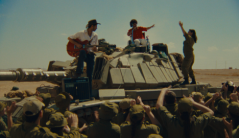
The year is 1985. Jackie, a disabled singer, and Yehuda, his guitarist, travel the desert in a search for gigs, money, and appreciation. Jackie is obsessed with performing, while Yehuda just wants to provide for his family. After a failed gig, Jackie will do whatever it takes to win back the audience – but risks losing his loyal partner. One day, 700 kilometers, three gigs, barely any cash. From gig to gig, the tension grows, putting their partnership to test.
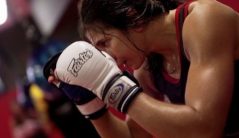
Amid her remarkable career as a world champion in Thai boxing, Nili faces the sacrifices of personal dreams such as love and family, along with a journey to shape her identity beyond the ring. Those around her, who in many ways live in the shadow of her success, struggle to see the price she pays along the way. Her close relationship with her coach, a source of confidence and achievement, also brings challenges and complexities that put her to the test. As Nili prepares for the most important competition of her career, she discovers that sometimes the most significant battles take place outside the ring.
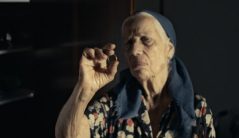
Yamima, an elderly woman, sets on a journey from one side of her town, Beit Shehan, to the other. To visit her ill husband and feed him with her cooking.
Along the journey that takes a whole day she makes peace with the nearing parting with her husband and forgives him for abandoning her.
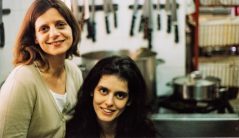
Twenty-six years after the iconic “Orna and Ella” restaurant opened in Tel Aviv, having become a celebrated culinary institution, Orna Agmon and Ella Shine decided to close their shared life’s work.
During the restaurant’s final week, director Tomer Heymann—who worked there for six years and for whom it was much more than just a workplace—documents the intense dynamics of the last days. Farewells to customers, recipes, and staff spark intimate and once-in-a-lifetime conversations.
The film reveals the complex relationship between these two groundbreaking women through a spectrum of powerful emotions: love, dependence, conflicting desires, and fears. It boldly raises questions about self-fulfilment, the cost of freedom, and nostalgia for an era that will never return.
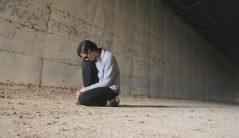
After losing her husband on October 7th, heartbroken, Noga – a creator, musician and mother – begins documenting the first year of her mourning.
The film “Nothing is Wrong” is a personal, courageous and uncompromising diary that charts her path to dealing with an unimaginable loss, and with the forced title of an “IDF Widow” – a title she did not pick, and which does not match who she really is.
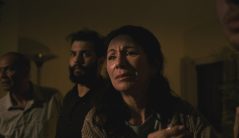
In the name of FAMILY HONOR, the conservative al-Hawi family buries their daughter, Fadia, alive. The neighboring liberal Snour family rescues and hides her in their home, where she attempts to make sense of her life after the crime. A suspenseful dramatic thriller that explores the attitudes toward women, the psychology behind the heinous act of honor killing and the oppression crushing women who live under the threat of their own families and communities.
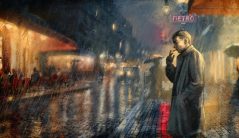
They said he started it all. On November 7, 1938, a gentle looking seventeen-year-old Jewish boy, an illegal resident in France, entered the German embassy in Paris and fired three bullets at German diplomat Ernst vom Rath.
Two days later, vom Rath died of his wounds. And Joseph Goebbels, the Nazi propaganda minister, sent the German people to take revenge on all Jews. More than a thousand synagogues were burned, hundreds of Jews were murdered or committed suicide, thousands of businesses were looted, and tens of thousands of men were sent to concentration camps.
Goebbels, the master of propaganda, called it “Kristallnacht”.
“Proud Jewish Boy” is a fascinating documentary journey following the story of the young assassin Herschel Grynszpan, the boy accused by Jews of being responsible for the pogrom that started the Holocaust and by the Germans of starting World War II.
Through new historical discoveries, rare archival materials, family members and researchers who investigated the affair, the film brings for the first time the full, yet untold story of the circumstances that led to the assassination, and the dramatic sequence of events that followed it, an unknown story that culminates in a battle of wits between Goebbels, the second most powerful man in the Nazi regime, and the “poor Jewish boy” from the infamous Leine neighborhood in Hanover , who refused to turn the other cheek.

Naomi’s Questions is an intimate and poetic documentary about Naomi, a 34-year-old woman with Williams syndrome. Filmed by her father over more than thirty years—mainly in their family home in Old Jaffa—the film explores Naomi’s journey toward independence after leaving home at 21. Blending archival footage, present scenes, and poetic re-enactments, the film becomes a cinematic letter—a dialogue between a father and his luminous daughter. Through this personal and collective memory, it questions how we perceive difference, vulnerability, and intelligence.
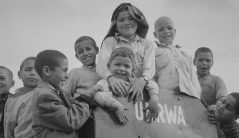
Following the October 7th massacre and allegations that UNRWA staff were involved in the kidnappings, the agency made headlines around the world. Israel enacted legislation to suspend cooperation with UNRWA, despite the ongoing humanitarian crisis in Gaza. The film presents a historical examination of UNRWA’s role—a temporary agency, initially mandated to resolve the refugee crisis following the 1948 war, which has never ceased its operations and, after 75 years, continues to perpetuate generations of refugees
An Israeli-German co-production by Zygot films and Beetz Brothers
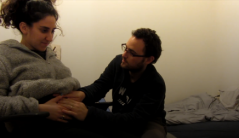
Evyatar (28) and Aviv (28) are expecting their first son. This is an amazing time for them. They know that against the whole world they are strong as long as they are together. After Arbel was born, Aviv doesn’t leave the bed. The depression that suddenly emerged in the lives of these new parents leaves Evyatar in a daily struggle with caring for Aviv and Arbel. He cries out to the universe for something to change, and for the family he dreamed of to return to normal reality.
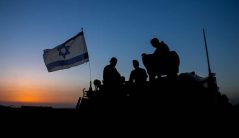
In an ongoing war, Dede and the artillery soldiers find themselves in the midst of “Harvot Barzel” deep in a dugout, surrounded by hundreds of shells and constantly on edge. On one hand, Dede understands the importance of his role in protecting the combat forces, but on the other, he fears the moment when they’ll need to fire. Through honest and heartfelt dialogue, he reveals his feelings about working on the home front, the mental toll, and what he experiences during the war. No Heroes is an unfolding personal diary in real time.
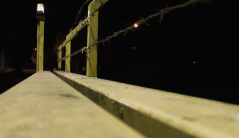
The yellow gate, which stands at the entrance to every kibbutz, was in the past a symbol of security and protection. Through conversations with the guards at the gate, we are exposed to thoughts about the unstable reality and the feeling that at any moment something might happen. Will the gate be able to protect us next time?
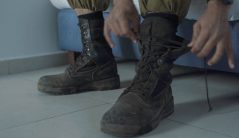
The war and refugees that suddenly entered Rotem’s life on October 7th sent her on a search for a home. Throughout a restless night, she moves between houses, seeking protection and warmth from the men she encounters but unable to find comfort. The dark streets of Tel Aviv mirror her loneliness. As dawn breaks, both Rotem and the city feel emptier.
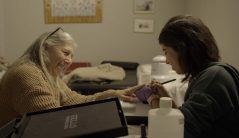
To the studio in the hotel come women who have been evicted from their homes. Through the women’s ritual, they confess and break down, while outside there is war
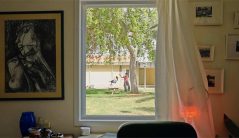
in Kibbutz Mafalsim, 4 kilometers from the Gaza border, inside a small apartment, through a window overlooking a big tree, we see A frame within a frame of the changing landscape of reality, before and after October 7th. While the exterior view remains untouched, the overwhelming feelings of uncertainty and fear are flooding these four walls that once felt safe. Through phone calls between mother and daughter, the daugher shares her feelings of confusion being a survivor of the attacks on the kibbutz. Together they Share thoughts about life, death, and war.
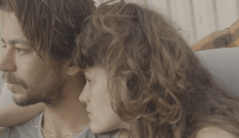
The October war starts and Annabel, a new immigrant from Germany, finds herself torn between two identities. She is stuck now with Israelis and afraid of reaching out to her old German friends. Israel, formerly a strange country to her, suddenly turns out to be a new home. Waiting for her soldier boyfriend to return from fighting and the fear of a new wave of antisemitism in her old home country leads her to the question: Is this what it means to be Israeli?
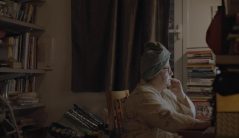
Tamara is 52 years old and stuck in a mediocre life. On the first night of Hannukah, she and her husband are helping their daughter prepare for her trip abroad. Throughout the night, Tamara understands just how estranged she is from her daughter and husband, and is forced to confront her menopause and the loss of her motherhood and femininity.
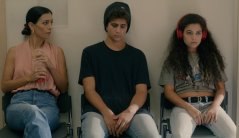
Liri and her mother, Elinor, seem less like mother-and-daughter and more like co-parents of Omer, Liri’s younger brother. After a suicide attempt by Omer, the three arrive at a psychiatric unit to have him hospitalized. Elinor, upset by what she witnesses at the hospital, drags all of them away for some family time in the nearby mall. In attempt to create a facade of normality. While the mother is in denial of Omer’s condition, it’s up to Liri to take on the mother’s role for the three of them.

Simcha is a dust monster who has lived for years under a boy’s bed, forging a unique friendship with him. As they both grow older, Simcha faces the fear that the boy might not need this friendship any longer.

The A-Kitzar Program, an initiative of the New Fund for Cinema and Television (NFCT) in collaboration with the Culture and Arts Council of Mifal HaPais and the Jerusalem Film and Television Fund, is a program designed to support and provide a platform for Haredi women filmmakers who wish to develop and produce independent, powerful short films. Filmmakers accepted into the program receive comprehensive mentorship, from script development to the film’s release, with the guidance of a professional team from all areas of cinematic creation. The third cycle was dedicated to the theme “At the Sheitel Macher’s” – in Jerusalem, and the three films in this compilation reflect different perspectives on the wig salon and what takes place within it.

Roni, who fights to preserve her special relationship with her twin brother Alon, goes through a journey that leads her to realize that true love for him means respecting his choices, even at the cost of separation.

After many attempts to restore her marriage, Kati is facing her second divorce. Together with her son, the filmmaker, she tries to understand what really led to it. Past traumas float to the surface as one question constantly echoes in the background – what keeps people together and what separates them?
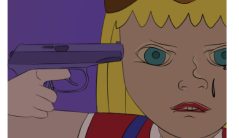
Kofifa lives with her animal-like family, who are trapped in a repetitive routine. Desperate for their attention, she disrupts their world, but the tension she creates—along with her growing frustration—is about to reach a breaking point.
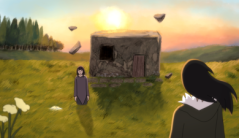
A wolf and a crow transform from animals to humans. They are Kelsi and Airi, a couple trying to survive the end of the world. Airi tries to make the world more pleasant to live in while Kelsi tring to make sure they survive. They find a place that seems safe but soon enough a pack of wolves come to hunt them. They run away until they have nowhere to go. Kelsi snarls and turns into a wolf, Airi runs away from her in fear. Kelsi is left alone, she remembers her past where she wounded other wolves and decides to turn back into her human form and not succumb to her instincts. She is overwhelmed by the wolves, but suddenly Airi returns. Airi drives the wolves away and reunites with Kelsi. Kelsi and Airi find a safe place, and both try and make it beautiful, not thinking only of survival.
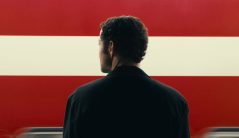
A successful Israeli choreographer living in Spain, is invited to create a dance piece in the south of Israel. On his way, he encounters scenes of war and occupation. The reality gradually seeps into the rehearsal room

A portrait of Jewish life in Ukraine today, in the mirror of history and in the shadow of Russia’s full-scale invasion.
”The Community” captures the strength and resilience of Ukraine’s diverse Jewish community as they navigate the hardships of war. Through personal stories and interviews with a range of characters, the film reveals their essential role in Ukraine’s struggle and explores their experiences amidst accusations of Nazism that have cast a shadow over the nation. As the film’s director and someone who once called Ukraine home, I returned to witness this powerful reality firsthand, seeking to understand why, despite everything, the Jewish community continues to see Ukraine as their home.

Shiri, 33, a conservative-bourgeois woman, planned her perfect maternity photo shoot, but her photographer is Lidor, 35, a liberal trans woman. When Shiri’s husband leaves the photo shoot in the middle, the meeting between the two different women raises demons and questions about their changing bodies and their identity in the world.
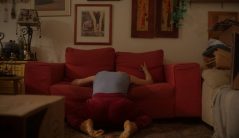
Michal, 38, a dancer, returns to live at home with her mother, Smadar, 72, a retired hoarder. A void separates them.
Smadar’s house is overwhelmingly packed with belongings. Michal longs to find space for herself but also a place for creation and beauty.
When the movers finish their work, Michal, left alone for a moment in the living room, begins to dance on the red couch she brought with her—only to be caught by Smadar mid-movement, performing an unusual dance gesture. The void between them deepens into an abyss. But later that night, Smadar attempts to reach out to Michal and make room for her—by trying to replicate the same dance move in front of her.
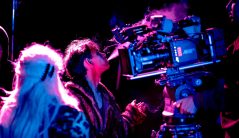
Alon, the film’s director, returns to a traumticexperience during their nights as a sex worker in Jerusalem. Through the power of cinema, they seek to reclaim control over a painful memory — and to retell the story that left a lasting scar.
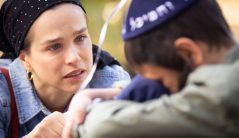
After leaving the ultra-Orthodox world, Dasi defies a court order to see her son. Their secret reunion in a quiet park stirs old love and new tensions. When faith and fear collide, Dasi is left behind—hoping one day to hear her son call her MOM again.
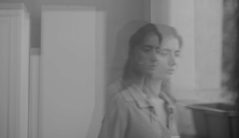
Alone in her apartment, 24-year-old Amal, confroniting her desires. She tries to wash away the anxiety of right and wrong but the more she cleans, the dirtier she feels.
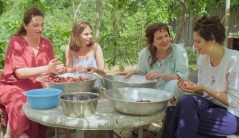
Grandma Ketino lives alone in rural Georgia, surrounded by other grandmothers. In summer, the village fills with grandchildren who come to visit from the city and abroad, all busy with one thing—making wild plum sauce.
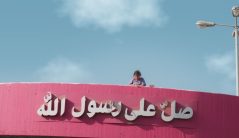
In the heart of a bustling intersection, a Palestinian girl named Sila finds herself begging within the borders of Israel to support her family. There, she encounters Yusuf, whose presence threatens her livelihood. Despite her attempts to drive him away, an unexpected bond forms between them, rooted in their shared struggles.

A worker flees during a coffee commercial shoot. As the presenter pursues her, their chase spirals through a world of advertisements, exposing the dark reality of consumer culture.
Mila finally returns home to see her daughter Kasia in person, not just through her phone screen. She is temporarily leaving the seaside villa where she works in upscale Caesarea, Israel, and also says goodbye to her thrilling, secret love affair. For years, Mila has worked tirelessly to build a better future for her family, who remained in a poor Polish village. But when she returns, she finds a reality very different from the one she imagined. She realizes no one has been waiting for her. Determined to reshape her life, Mila tries to tailor the reality by her expectations and regain control. Eventually, she will have to face the cost of her choices.
I ran away from home last October, just when the war started. In this liminal time, I encountered both the beauty and grief of being connected and attached.
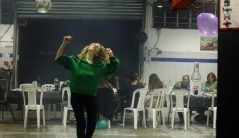
Michal, 49, is a boss lady—a mechanic in a man’s world—she is looking for a man for herself. At the age of seven, Michal was repeatedly assaulted by her neighbor for years, an experience that deeply damaged her trust in men. And yet, she chose to surround herself with men in every way—her employees, the mechanics she works with, and the men she dates.
Why did Michal choose to work in such an entirely male-dominated world, fixing cars? Perhaps it’s her way of healing the wound, of trying to mend and piece together what was broken inside. Or maybe, it’s her way of confronting the masculine world—both outside and within herself.

Lonely and forgotten, Edna finds refuge at the beach. An unexpected meeting with an abandoned dog, black as death yet full of joie de vivre, revives her femininty and upend the symbiotic relationship with her daughter Yael.
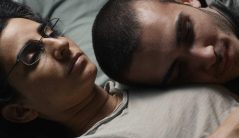
Anat, a poetry-loving elementary school teacher and a single mother, eagerly awaits her son Ido’s army discharge and the joint trip they planned to India. But on the long-awaited day, a soldier is abducted on the Lebanese border and a new war breaks out in Israel. While her father’s, Yaakov, a war-traumatized veteran, conditions decline. Her son Ido calls to inform her Tshall discharges have been canceled. Anat sets out to bring him home, and after pleading with officials, Ido suddenly returns. She’s overjoyed—until she learns he’s only home for the night to demand she stop interfering. Her spirit breaks when she discovers that he volunteered to fight and that discharges were never truly frozen. Their once-symbiotic relationship begins to unravel. Ido returns to the border as the conflict escalates. Trapped between her father and her son, Anat decides to take matters into her hands and stop the tragedy—just before Ido enters Lebanon.

Aya awaits her husband at the airport’s arrivals hall, but following an innocent mix-up, she pickes up a complete stranger instead. An immediate sense of intimacy sparks between the two, but ends abruptly when the man disappears, leaving Aya with a key to his hotel room and a yearning that perhaps only a complete stranger can fulfill.
Based on the Oscar-nominated short film “AYA”.
The Israeli lawyer, Marina, appears to have escaped her suffocating, traditional Georgian roots. Now, she returns to Georgia, representing Nino, who left Georgia 11 years ago, leaving her son behind and now wants him back. Determined to bring the boy back to his mother, Marina arrives to a small, forgotten village high up in the snowy mountains of Georgia and reaches Dato, Nino’s brother and the child’s caretaker. Despite his hostility and great anger over his sister’s abandonment, he agrees to help.
The more time they spend together, the more the two strangers share a journey that will change their perspective on life.
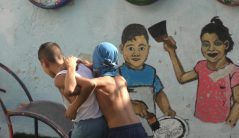
One Street in Silwan tells the story of “Batan al-Hawa” Street (East Jerusalem), which overlooks the Temple Mount and serves as a microcosm of the Israeli-Palestinian conflict. On one side of the street, live Israeli settlers in a house that once belonged to an evicted Palestinian family. On the other side, a Palestinian family faces eviction, alongside 750 of the neighborhood’s residents. The eviction is due to the plan of establishing more settlements. Told in segments through the perspectives of children and residents, the film sheds light on the chaotic realities of life on that street.
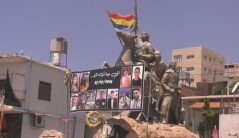
The story of the Druze community in the Golan Heights—conquered in 1967 and annexed by Israel in 1981—is told through two characters from Majdal Shams: 19-year-old Aya, who dreams of joining Israel’s national hockey team and is willing to accept Israeli citizenship to achieve her goal, and her older uncle Ayoub, a journalist and farmer who identifies as Syrian and firmly rejects Israeli citizenship. Filmed overthe course of three years, the documentary explores the deep identity crisis of a lost community striving for a peaceful life on its ancestral land while caught in the grip of a turbulent fate.
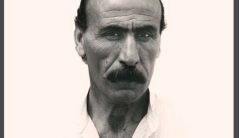
Although he spent most of his life fighting ethnic discrimination, Yosef Shiloah is best remembered by the public for his comedic roles in Bourekas films. Yet behind the clownish image that clung to him was a deep, complex, and courageous artist who sought to change Israeli reality. He met with Yasser Arafat in his office and fought for peace—actions that ultimately forced him to leave the country. Shiloah was also a prolific writer—of songs, poems, screenplays, and more. Through his writings and rare, personal footage filmed by his daughter, we gain insight into the inner world of a man who began supporting his family at age nine and became one of Israel’s greatest actors.
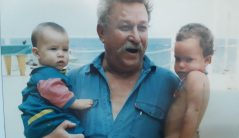
Talia’s idyllic childhood in the kibbutz is shaken when the true identity of her adoptive grandfather is revealed. The home videos he filmed conceal and reveal a family secret kept for 30 years. Through her camera lens, she confronts the truth, reconstructs her story, and asks questions about love, control, social norms, and whether the truth is always desirable.
A Thai worker named Not has been working in southern Israel for the past five years. He has built a life, made friends and together they raise chickens for cock fights. But his visa is about to expire and his wife back home has left him and their two children. He now has to decide between staying in Israel illegally and going back to his family in Thailand.
A young filmmaker is trying to make choices about his future while his country is in turmoil. As the political climate grows more volatile and right-wing activism gains traction, he questions his future in a country headed in a dangerous direction. Armed with a camera, he is concerned that he is documenting the end of an era.
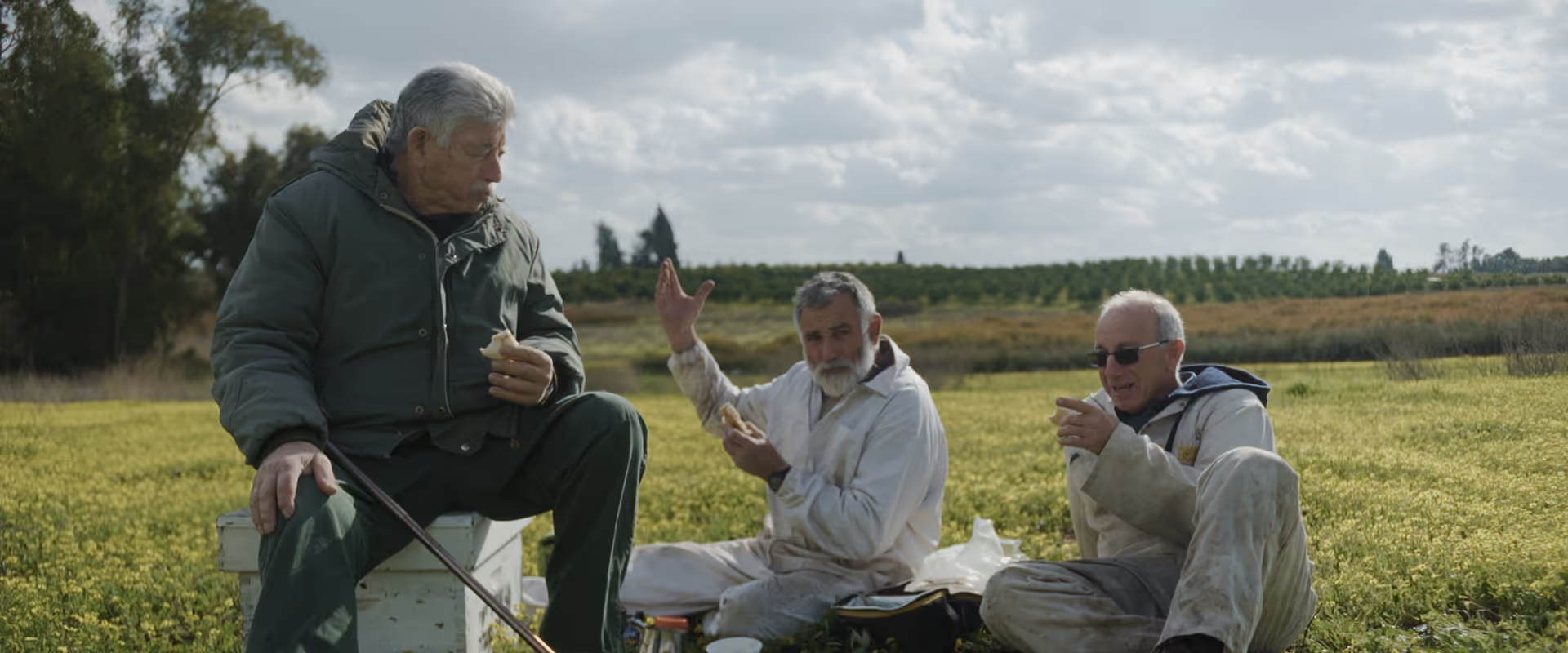
A swarm of bees found by Grandpa Yishai in 1959 began the Ofir family’s beekeeping tradition. When he is hospitalized, his granddaughter, Adva, begins documenting the family’s occupation. For over a decade, she observes and ponders the family’s deep connection to the bees, nature, and each other. Through the seasons, she experiences uncertainty, anticipation, aging, death, and renewal. This is an intimate love song to the land, agriculture, and Israeli nature, conveyed through the story of one family.
A docu-drama starring Leora Rivlin and featuring animation, telling the little-known story of Ada Sereni: The Lady in the Black Dress. Who was she? And why have we never heard of her?
Ada was the first woman to command the Mossad LeAliyah Bet in Italy – a secret intelligence organization that would later become the Mossad. Her skills, courage, and determination, allowed thousands of Holocaust survivors to sail to Israel aboard the clandestine immigrant ships. Ada was forgotten and erased from the pages of history. This film brings her back to the center of the historical narrative — where she deserves to be.
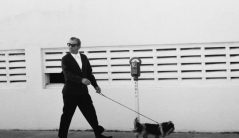
Everyone knows Meyer Lansky, the Jewish gangster who instilled fear during Prohibition-era America, yet few know his significant contributions to Zionism and Israel’s founding. This three-part documentary series explores Lansky’s dramatic escape to Israel, revealing his secret involvement, alongside fellow Jewish gangsters, in raising funds and procuring arms for Israel. It uncovers the dark history of Jewish organized crime, challenging perceptions of morality, Zionism, and heroism.
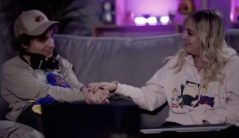
Game Changer is a series that brings the stories of people from different corners of Israeli society, for whom video games are not only a way to escape reality but also a way to cope with reality. This is a series about people and their emotional experiences. The games in the series function as a framework for personal stories about facing difficulties and challenges. Besides being gamers, many of the protagonists in the series come from communities that sometimes feel alienated by Israeli society (immigrants, LGBT people, minorities, people with disabilities, and more). Game Changer deals with a topic that is relevant to all of us: how a work of art and creativity can give strength or inspiration to cope with life.

A young girl from a good home starts dating a slightly older man, and it is not long before she starts falling out of her other connections and relationships, swallowed up by a closed world that only has two people (and a few big dogs tied to the front door). Although she hasn’t experience violence at home, she fears that if she leaves him, something terrible will happen. Out at Six tells the story of Livi, the filmmaker, through a timeline divided into eight stages based on research taken from hundreds of cases in which women were murdered by their partners. The film is compiled of seires of interviews with the people closest to her, reflecting how the surrounding environment witnesses the reality of such relationship.
After a decade of silence, the director returns to her ultra-orthodox home, uncovering a hidden family archive that blurs the lines between fiction and reality. The journey challenges her life, offering a complex tale of self-discovery and redefining the meaning of family in a compelling exploration of hidden pasts, roots, and personal narratives.
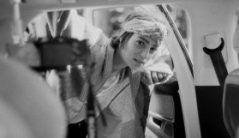
It was a chance encounter, unexpected and jarring for both women. Anna, a photographer, arrives at Tel Aviv Old Central Bus Station as part of an artistic project and offers a ride to Eileen, nicknamed “Flower,” a young homeless woman, drug addict, and sex worker. A deep mutual curiosity leads them to initiate further meetings, and the two embark on a road trip through the dark and violent backstreets of Tel Aviv. During their weekly meetings, Flower’s life story gradually unfolds. Anna’s car becomes a safe space, a confessional booth into which Flower and others whose lives are intertwined with hers occasionally enter. This is not a story of salvation but of a profound emotional bond that reveals the cracks and strengths of human existence.

At the age of 30, Ella receives a mysterious suitcase with home tapes from the 1990s, which have been kept secret to this day. The videotapes uncover her mother’s, the singer Dafna Armony, life. This happens while Ella is helping her mother pack up and move – another consecutive move forced upon her due to a complex economic reality. Through the videotapes from the past, Ella discovers that behind her mother’s iconic figure hides a personal and painful story. For the first time, she is also being exposed to the identity of her father – a mysterious figure around whom rumors have hovered throughout her life. Girl, Women is a family portrait of two women who merge into one: the mother, a former legend, and the daughter, a filmmaker.
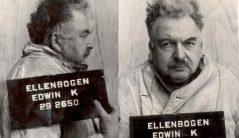
A biographical and psychological portrait of Dr. Edwin Katzen-Ellenbogen, a man of extraordinary abilities but very little conscience: a brilliant physician and a pioneer of psychiatric research, but also an elusive con artist who became the only Jew in history convicted of Nazi war crimes.
The film traces his journey from a small town in Galicia to a career as a groundbreaking psychiatrist in the US; his exploits as a lover, hypnotist, swindler, a spy between the two world wars, and his actions in the Buchenwald concentration camp, which led him to stand trial as a Nazi war criminal.
Katzen-Ellenbogen’s story is an allegory of how individuals adapt to moral darkness — and the ways they find to thrive and blossom in the darkest of times.

Efrat Tilma, a trailblazing transgender woman, was forced to flee Israel as a teenager in the 1960s after a police officer threatened to kill her if he ever saw her again walking the streets of Tel Aviv in women’s clothing. Today, at 75, she is a prominent LGBTQ+ activist and the first transgender volunteer in the Israeli police force. As the country descends into an unprecedented social and political crisis, Efrat confronts the traumas that shaped her life and once again fights for her place in the world.
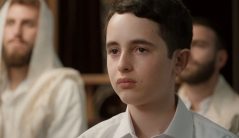
Aviad, a devout Jewish boy, starts his first full fast of Yom Kippur, the holiest day of atonement. But a nocturnal incident during the fast shakes his inner world and threatens his identity.

On October 7th, 1973, two gun patrol boats were sent alone on a suicide mission to attack the Egyptian coast. Miraculously, the boats returned after being stuck on the shallow shore under heavy fire. After 50 years, the investigations revealed the story of the hero from the battle whose story disappeared till this day, the late Hertzl Elmalem, along with the story of the fighters who returned. The Battle of Marsa Talamat in his name, became part of the battle ethos of the ISR Navy on Yom Kippur and in general.
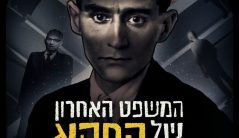
After Franz Kafka’s passing, he left behind a trove of unpublished manuscripts with explicit instructions for his close friend Max Brod to destroy them. Despite Kafka’s wishes, Brod chose to preserve and publish the works, introducing the world to one of the most influential writers of the 20th century. This act of benevolent betrayal set forth a multi-generational saga that spans a century and ends with a real-life Kafkaesque trial.
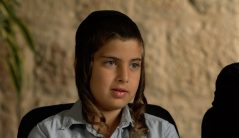
Meni Philip believed the days of teachers physically disciplining students belonged in the past, along with vague memories of abuse he suffered in school years ago. A viral post online proved otherwise, detailing brutality suffered at the hands of teachers in ultra-Orthodox Jewish schools and eliciting hundreds of similar stories. The responses sent Meni on a journey to lift the veil on this ongoing system of abuse that transcends generations and happens all over the world.
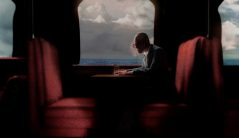
OUTSIDER. FREUD is a new creative documentary film, that takes us on a journey into the life and work of Freud in four acts – a combination of animations, dreams, leading psychoanalysts in the world, in a thought-provoking journey about Judaism, biography, psychoanalysis, and the role of marginalization as a strategy of power in shaping one of the most influential figures in modern times, with Itay Tiran as Freud.
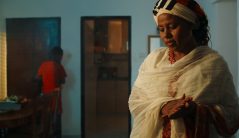
Yanesh (40) conducts the “buna” (coffee) ceremony at her home, an Ethiopian communal custom and she does it alone. As soon as Yosef (12) her son, intends to go out, she starts the regular sequence of actions to prevent him from going out, the reason this time being so that she won’t have to drink the coffee on her own.
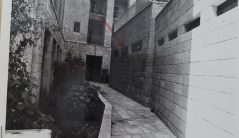
It all started with a watch, or more precisely, with over 106 rare European timepieces. One piece alone, made especially for ill-fated French queen Marie Antoinette, was valued at a whopping $30 million. On a quiet Friday evening in 1983, the collection disappeared from Jerusalem’s Museum of Islamic Art. It wasn’t seen again for a quarter of a century. The biggest art theft in Israel’s history left the police scratching their heads. When the timepieces gradually resurfaced a quarter of a century later, the enigmatic thief was dead and his widow Nili Shamrat from LA shares his and her story, for the first time.
Alongside policemen, lawyers and curators who shed light on the mystery.

The fascinating bond between beings who transcend language to communicate and love beyond words. The animals, residents of the freedom farm sanctuary, and their caregivers. Each episode shares tales of Farm volunteers and unique relationships, blending comic and tragic moments, coping with physical and emotional pain alongside joy, humor, optimism, and love. Through their stories, we witness the personalities and souls of the animals, survivors of the food industry, made of the same essence as our own souls.

A pioneer of Israeli rock, Bert Vaknin was one of the first to perform music of bands like Led Zeppelin and Black Sabbath on the Israeli stage. Personal tragedy forced him to pause his musical journey, but now, at 70, he’s ready to rock again, reviving his iconic band, ‘Bereshit’.
The army’s field observers play a significant role in managing hostile security incidents and preventing them, but sometimes they are “transparent”, they deal with tough situations, without receiving any mental support. The film, which was shot before Oct 7th, is about six female observers who share stories from their army service, among them is also the film’s director. They all suffer from PTSD, discovered only years after their discharge. They never received proper help and treatment to process the sights. With the help of the testimonies she encounters, the film’s director finds some closure.
Dov has creatures coming out of his head. It happens every morning and he leads each of them into the shadow under his bed.When one creature sneaks out, making way for the rest of them, Dov will have to deal with what he hid in the shadows.
In the small and historic town of Mazkeret Batya, Ron Glaser (Tuval Shafir) and Tal Dreifuss (Leah Lev), two rebellious and sarcastic teenagers, dream of escaping their stifling, monotonous reality through their rock band, “Kill the Hipster” – their ticket to changing the world. But when their bandmate, the disloyal Tomer Weinstein, unexpectedly quits, the two embark on a surprising journey that challenges their intense friendship and forces them to confront their fears and ambitions.
“I Hate My Friends” is a bittersweet coming-of-age comedy that blends the dark humor of Israeli adolescence with the charm and spirit of American indie cinema.
Zosia (12) and her sister Klara (5), live with their mother and grandfather Paweł in a Polish village. Grandpa Paweł adores his little granddaughter Klara, but his relationship with Zosia is more complicated. She is the one who questions his actions. It seems that under the disguise of a loving grandpa, hides a cruel racist man. On Good Friday, Paweł leads the entire village to participate in a brutal ritual of beating and burning the puppet of Judas Iscariot. The event ends in a tragedy that shocks the entire village.
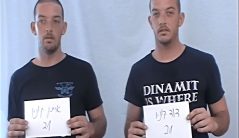
A Letter to David is a personal cinematic letter from filmmaker Tom Shoval to David Cunio, who was taken by Hamas from the Nir Oz kibbutz on October 7, 2023, and has been held hostage in Gaza ever since. Ten years ago, David and his twin brother Eitan starred in Shoval’s award-winning debut feature film Youth (Berlinale 2013), which focused on the powerful bond between brothers and, in a tragic and unimaginable twist of fate, revolved around a kidnapping. Through unedited behind-the-scenes footage and audition tapes from that film, Shoval creates a multi-layered documentary that explores profound questions about the inexplicable connections between life and cinema, memory and reality, and the catastrophic consequences of war.
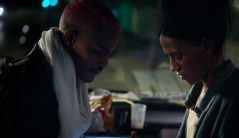
On her 34th birthday, Ronit, a solitary Ethiopian woman, spends the night with a stranger—a younger, injured trucker who, like her, carries the weight of loneliness.
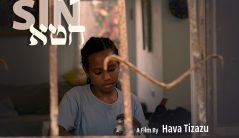
Ten-year-old Sara is accused of theft at her school. Following a confrontation with Sara, the principal calls her father, Mologita, and informs him of her suspension. Once home, Mologita enters Sara’s room and discovers a large stash of sweets hidden in her closet, fueling his anger and frustration. As he prepares to exit the room, Sara pleads with him not to leave, tears welling up as she mourns the loss of her mother.
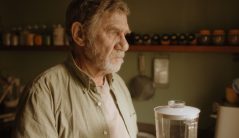
Shlomo, who is newly widowed, refuses to accept his wife’s loss. Determined to relive their planned vacation, he flies with a dummy in the image of his wife. When Yaron his son, returns home he discovers the dummy and in a moment of rage, throws it away. When Shlomo discovers the act he confronts Yaron, but the dummy has already been taken to the dump. They decide to embark on a poignant journey to the garbage pit, searching for the dummy, while trying to contend with their refusal to accept the loss.
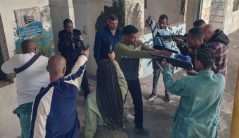
A group of young Ethiopians in a neighborhood in Ashdod, go to war against the local police who control terror in the neighborhood. They kidnap a policeman who deliberately caused the death of one of their friends in order to change the rules of the game against the establishment. The group is led by two young men, Indal and Salam, who decide to go all out in order to make their voices heard. What starts as an act of personal revenge becomes a real opportunity for social change.
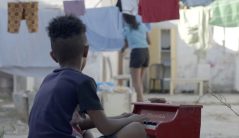
Jerusalem (Yerus) is an Eritrean asylum seeker growing up in south Tel Aviv. Daily, she takes care of her younger brother, Dilet, while their mother works long hours. The siblings’ relationship is shaken when Jerusalem seeks to take care of herself.

In 1993 Israel, 15-year-old Bukharan immigrant Natasha spends her days selling balloons on the beach. Determined to break free from her socio-economic status and patriarchal family, she finds herself drawn to her co-worker Arthur, a 21-year-old Russian immigrant. Natasha sees Arthur as her ticket to a higher status in Israeli society. However, as the night unfolds, Natasha’s hopes clash with harsh realities as Arthur takes advantage of her innocence, leaving her confused and ashamed. Her journey sheds light on the complexities of immigration and the pursuit of a better life.
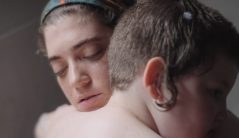
Henya is bathing her autistic son at the end of another frustrating day; A sudden gut feeling drives her to make an unusual move hoping for some eye contact with him.
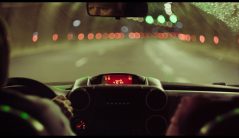
Hezi and Shmuel are driving in a taxi, navigating through changing landscapes from urban roads to highways. Missed calls from Raz, Hezi’s son, echo throughout the journey, guiding their direction while pain and hardship arise.
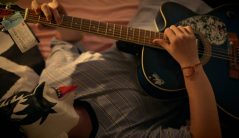
16-year-old Jonathan, a daydreaming musician, arrives at his best friend Lia’s house to finally declare his love for her. Instead, he finds her older sister on a bad psychedelic trip caused by a broken heart.
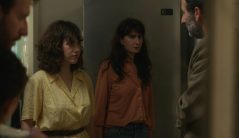
Alma attempts to create a perfect family for herself, on top of the ruins of her broken one. She invites her new boyfriend, who is two decades older than her, to Shabbat dinner at her mother’s house, only to discover that her father intends to destroy everything.
Daniel, an Israeli film director, prepares for his debut premiere at a prestigious New York film festival, only to discover that his girlfriend’s ex, Amir, a big-shot Israeli director, is also in the competition.
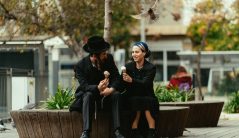
In an ultra-Orthodox Jewish community in Jerusalem, Bati has a seemingly perfect life. She is happily married to Lazer and the young couple have three children. But their world starts to crumble when Lazer is blackmailed and Bati discovers his secret affair with his male study partner. Desperate to protect her family and keep the man she loves, she supports Lazer as he attempts to “cure” his homosexuality, whilst uncovering her true desires.
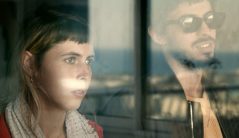
Tamara and Adam, a wild unstable couple, are about to become parents and their life is a mess. Just before being evacuated from their apartment in Tel Aviv, Tamara decides to search for their new home in Adam’s home town Haifa. During one unforgettable day of apartment hunting, the journey to find a home turns into a journey to the heart of their passionate yet impossible relationship.
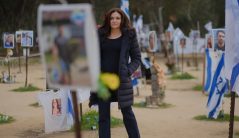
Screams Before Silence is a documentary film led by American businesswoman Sheryl Sandberg, that explores the sexual violence by Hamas during the Hamas-led attack on Israel, on 7 October 2023, including events at the massacre at the Nova Festival and abductions to the Gaza Strip.
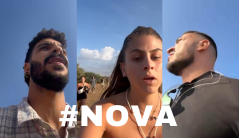
The film presents the tragic events of the October 7th massacre at the Supernova music festival, as they unfold, minute by minute, using only festival survivors’ camera footage, and terrorists’ body camera recordings.
The Nova tribe, a community of over 10,000 psychedelic trance music enthusiasts, has in recent years, gathered together for an annual outdoor festival. This year’s event, held on October 7th in southern Israel, close to the border with Gaza, ended in a devastating tragedy, with the cold-blooded massacre of over 300 partygoers and the abduction of a further 40. During the days following the event, director Dan Pe’er, who was engaged in volunteer efforts to aid survivors, started receiving a multitude of video and audio clips from survivors. #NOVA chronicles the harrowing atrocities as they unfold. With no outside intervention, the raw documentary reveals the true, bone-chilling atrocities of October 7th.
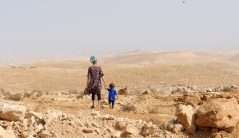
Avital, a mother of five, moves into a converted truck on South Mt. Hebron to establish a farm. However, the physical and emotional hardships make her question whether she and her children can continue to pay the price for her dream.

The year is 2624. All life on Earth has become extinct. Walker, an android, embarks on a journey to secure humanity’s resurrection on a new planet. Walker is guided by a robot-drone, named Polaris, who attempts to convince him that the mission is a terrible idea.
Friendship, love, and freedom—these ideals drew young hearts from around the globe to Nova’s EDM music festival in the south of Israel. But as the sun rose on October 7th the fantasy shattered. Rockets sliced through the sky, and the music cut off. Confusion morphed into terror as gunfire erupted amidst the chaos. Hamas terrorists breached the border fence and unleashed barbarity in its rawest form. It is a stark portrayal of the experiences of those who survived and those who didn’t. The film meticulously reconstructs the horrifying events, capturing the raw emotions and heroism that emerged amidst the senseless violence.
A Sephardic Baalei Teshuva family tries to integrate within the insular Ashkenazi Haredi community in Bnei Brak. Their son Raphael, a prodigy, is not accepted into a prestigious yeshiva. His mother, Ahuva, tries to handle the situation peacefully, but his father, Shmuel, a handyman with great faith, struggles to accept the situation. Shmuel fights to change this decree, leading to the family’s ostracization and their children’s expulsion from local institutions. A dramatic event shakes both the family and Haredi society, probing their shared faith. The film explores the struggles of Baalei Teshuva, their faith, their escape from the past, and the personal cost of their journey.

Amir and Eliyahu, two teens living on the outskirts of Jerusalem, try to survive in a world of adult neglect. An unusual encounter on Passover Eve leads them on an unexpected journey.
Gali works as a mine clearer at a mine clearance site in the south of Israel, the only female in the team. The crew members, different types of people who escape from their world, live together and become each other’s family, and Gali feels like she belongs there.

Tamar, an ultra-Orthodox girl from an extremist community, is taken to the hospital by her beloved father, who thinks she has had sex. Her relationship with her father and her virginity are tested.
When Naomi duplicates a key for her boyfriend without asking her roommate, a war of attrition ensues. They spare no means to destroy everything in the battle to win over the apartment.
A phone call wakes me up early in the morning. My older brother got into trouble. Again. After another entanglement, I realize that I can no longer ignore the problems that follow him around, and which seem to be taking over my life. I use the camera to get answers from my family and a wall of silence melts away. Through a mix of amusing, intense, and eye-opening encounters, I begin to understand how relations in my family, especially with my mother, were influenced by an unspoken expression. Strange Birds is an intimate film that reveals an unspoken story about special parenting and the children who grow up in its shadow.
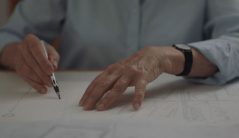
Ada Karmi Melamede is one of the most prolific architects of her generation in Israel and abroad. Through the lens of her daughter’s film camera lens, an extraordinary protagonist is revealed whose life story is intertwined with the story of the turbulent and complicated country she loves. Ada offers an unusually evocative perspective on ideas such as “place,” “home,” and “state” as someone working toward improving the public sphere while that sphere deteriorates and becomes increasingly fraught. As so many are shaken by the fragility of the democracy we call home, Ada gives us ways to think about what we seek in our personal and public lives, and the spaces and places in between.
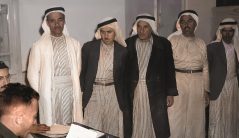
Zvi Elpeleg, the director’s grandfather, was a military governor of the Arab citizens of Israel after the establishment of the State. The positive image Zvi presented slowly crumbles when the director reveals his true actions as a ruler in both his military and family life. As she uncovers a family secret, the personal and political merge, reflecting on one another. The film investigates the subject of control and draws a portrait of a country that has, and still is, constantly and obsessively, since its inception, dealing with controlling populations.

While alive, Amos Guttman was a red flag for Israel’s conservative film establishment. A Romanian migrant, he never found a place in his new home. As a gay filmmaker, he created the nation’s first films on the subject. Guttman aimed to make films for the few, yet he also wanted global connections — films that Derek Jarman or Pedro Almodóvar could watch by chance and feel understood. Despite his adventurous spirit, Guttman made only four features before dying of AIDS. TABOO – Amos Guttman uses excerpts from his last interview, letting historical materials tell his story and reevaluate his choices on and off the set.
The story of Yamin Masika, the “Don Quixote” of Israeli cinema — a director, social activist, and cultural entrepreneur who played a pivotal role in transforming Mizrahi culture from the margins to the mainstream. In the 1990s, after repeated rejections by the Israeli film industry, Masika began creating underground, low-budget films and music videos featuring Mizrahi artists like Avi Bitter, Tamir Gal, Moshe Cohen, Sarit Hadad, and Zehava Ben. Though ridiculed and dismissed by the establishment, these films resonated deeply with audiences who had been excluded from mainstream media for decades, leading to a cultural revolution.
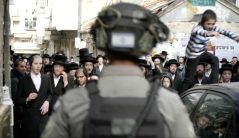
The death of Jacob Israel de Haan is commemorated annually by both the ultra-Orthodox Jews of Neturei Karta in Jerusalem and the LGBTQ+ community in Amsterdam. He is a pioneer for both. In the early twentieth century, he published the first LGBTQ novel in the Netherlands. He then returned to his Jewish roots, migrated to Palestine as a Zionist, but became the spokesperson for the Orthodox community, spearheading its fight against Zionism. He was still publishing queer poetry in Dutch. He was killed in Jerusalem in 1924, and his assassins were never caught. Today, never-before-heard audio recordings shed new light upon the mystery of the first Zionist political assassination.
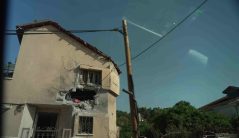
The film “All That Good” presents difficult questions about Israel, about the political-social complexity and the void, the fracture, and the disconnection that appeared in the days before the war, and may deepen in the future.
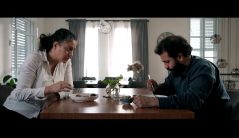
Christmas is coming and Nour starts organizing a party for his students, although his mother Sahar, doesn’t like it. For any other family, Christmas is the happiest time of the year, but not for this one. Soon the relationship between the two will reach a boiling point, during which Nour’s true intentions become clear, intentions that are related to a traumatic event that the two experienced several years before.
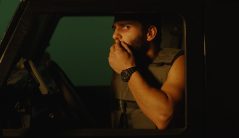
Driven by mysterious voices from the sky, Ohad breaks into his father’s house, kidnaps him at gunpoint, and drags him into a chaotic quest to fulfill the absurd fantasy he never got to realize – becoming a post-traumatic war hero. His father tries to have him hospitalized, but Ohad will do everything in his power to gain the recognition he deserves.
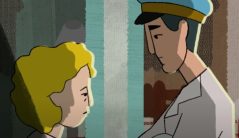
Hadassah and Arye Cohen are a couple of immigrants from post-war Europe. Arye, a police officer in his position, came to the help of his friends on a stormy night, saving babies from a maternity home whose roof had collapsed. Arye and Hadassah, childless, are asked to look after a baby of Yemeni origin named Nissim, until his family is found. The months pass, but no one comes to claim little Nissim. Hadassah grows increasingly attached to the soft baby and Arye is worried. One day, at the police station, Arye sees an ad looking for Nissim. What will he do now? Will he tell Hadassah? Will they have to say goodbye to the toddler who grew up in their home and became their child?
Yam doesn’t like when people tell him no. No, you can’t act on stage, no, you can’t fly with your family, no, you can’t go out with your friends for a beer. Especially not if the reason is his wheelchair. But when they tell him he can’t be drafted into the army, he sets out on the battle of his life. Not a Hero is a hand-in-hand journey with a disability.

An adaptation of “The Ugly Duckling” built from the personal and family archives of the director, from his birth, until he is 30 years old.
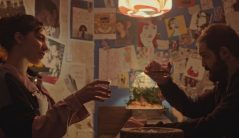
Midnight at a local gallery in a small town, where Siwar is at the end of her shift. Siwar’s boring routine changes beyond recognition, when a mysterious stranger appears at the gallery’s doorstep claiming he needs help.
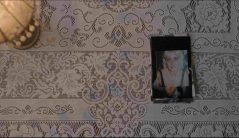
On her 50th birthday, Tatiana Haikin was stabbed to death by her partner. Her body was left unclaimed at the Institute of Forensic Medicine. As a Ukrainian immigrant, she had no close relatives in Israel. The sole items she left behind were recipes in her handwriting. This film sets out to uncover her life, with the help of her friends and family, who gradually piece together her story.
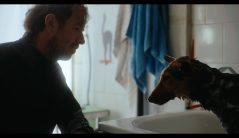
Nikolay’s home is falling apart before his eyes during an NOP renovation. The October events left destruction everywhere and the fighting in Gaza fills him with memories of his military past. In order to maintain his sanity, he adopts a rescue dog from Gaza. Together, they confront the harsh, incomprehensible reality.
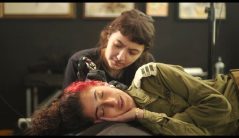
Liraz was one of the lucky ones. She survived the night that took away everything she loved. Her partner, her friends, her dreams. They all died in a senseless massacre at the NOVA party on the 7th of October. Now, she has a mission. To create a fractal tattoo that will immortalize the 364 souls who perished that night. She finds people who share her pain and her passion. She tattoos them with fragments of the fractal, each one telling a story of loss, fear, faith, love and hope. As she connects the dots, she also reconnects with herself. She finds the courage to face the good she did that night and the hope she deserves to have in her life. ‘Tattooed4Life’ is a film that explores the healing power of art and the human spirit in the face of tragedy.
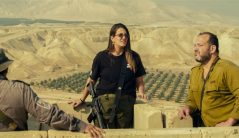
The borders of Israel are fraught with high tension. Since October 7th, uncertainty about the enemy’s next move has left residents in a state of perpetual anxiety. The pressure leads to bizarre situations, with no clear end in sight. Stories oscillate between tangible borders and imagined ones, painting a picture of a society struggling to rise from the ashes.
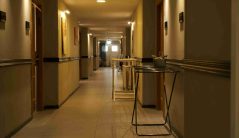
Following the October 7th massacre, Netiv HaAsara and Kibbutz Zikim residents were evacuated to the ‘Ye’arim’ Hotel in the Jerusalem hills. The film portrays a diverse array of characters including evacuees, hotel staff, and volunteers, presenting a mosaic of voices and stories. Amidst the uncertainty and questions about returning home, it explores the reconstruction of the notion of “home” and coping with an unclear future.
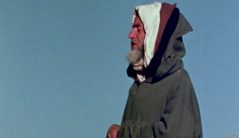
The Last Righteous Man portrays the story of the Abuhazira family, a Jewish-Moroccan dynasty that has been leading Jewish-Moroccan and Israeli communities for two centuries. Through the story of Baba Sali and his younger brother Baba Khaki, the film reveals the story of a Moroccan aristocratic rabbinical family and its transformation into a leading family in Israel. The film moves between Morocco and Israel, from the great wave of immigration from Morocco to present-day Israel, through the biography of Baba Sali and Baba Khaki, and the public activity of the second generation: Rabbi Baruch Abuhazira and Aharon Abuhzira, who took the reins of leadership, shaping Israeli culture, society and politics.

Sand, gravel, water, and cement blend into a fluid that pours over the ground and solidifies. Thus, the neighborhood of Ir Yamim was born. “An amazing combination of modern architecture, beach, and nature. An Israeli, sporty atmosphere in the center of the country.” But what existed here before? An old picture reveals rolling hills, three children running, the howls of jackals echoing in the background, harmonizing with the hues of the sunset. Ir Yamim celebrates 18 years. In the name of ‘The Economy,’ Population Explosion’ the remaining piece of nature around it is constantly under threat. Will it be stopped?
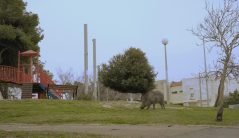
After a historical shift of power in Haifa’s city hall, the relationship between the city’s residents and the local wild boars becomes more intense than ever. In the streets of this sleepy port city, a primal struggle erupts over the fate of the new guests.
Through several points of view, five years and two election campaigns, the film documents this local affair, which encapsulates worldviews, fears, nostalgia and questions about the relationship between nature and humans.

In the sweltering heat of northern Israel’s Beit Shean Valley, a group of young activists leads a protest with a simple goal: demanding kibbutz Nir David to allow access to the river that flows through the kibbutz, as the law permits, but its members deny.
The director of The Waterfront joins them as their protest evolves and intensifies, raising questions about social inequalities, accumulation by dispossession, and the rule of law that extends far beyond the valley’s borders.
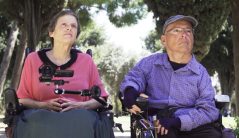
Sima Shimony, age 69, embarks on a mission to find her friends and staff from the “ALYN” Institute for Children with Disabilities, that was situated in the secluded San-Simon monastery on a hilltop in Jerusalem, in the 1960s. Armed with a small camera attached to her wheelchair she sets on a journey across the country together with her friend Pini Newirth, also a polio-child, to unfold and reclaim the story of the children of the Polio epidemic. In a futile attempt to rebuild their bodies so they could walk – the children were subject to excruciating medical procedures with no parents or family at their side. But growing up together forged a group of remarkable, self-driven women and men with disabilities, who eventually launched the Disability Rights movement in Israel.
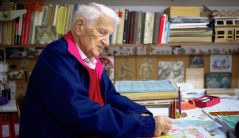
As a young architect, he designed buildings across Israel. Today, not being able to recall it, he still feels compelled to create. At 95, he can no longer draw architectural plans. Yet, every morning he attends his office to color children’s booklets. Baruch Meshulam and his wife Gila founded an architectural firm in the sixties, constructing hundreds of buildings. As Baruch’s dementia worsens, their grandson starts documenting the inevitable decline of their lives, their work, their home, and their 65-year marriage.
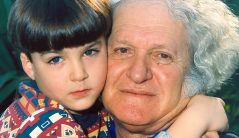
The remarkable life story of Natan Yonatan, one of Israel’s leading poets and lyricists, whose life became the soundtrack of the Jewish people in the land of Israel.
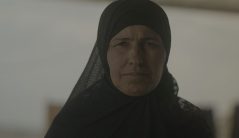
“Death in Umm Al-Hiran”, tells one of the most shocking and significant stories that happened in Israel in the last decade, as it reveals the mechanisms behind the killing and defaming of Yaqoub Abu Al-Qia’an, a Bedouin teacher who died at the hands of the police during an eviction raid. For the first time, the film will consistently and comprehensively reveal one of the most tragic and political affairs ever to have occurred in Israel between the Bedouin population and the State of Israel.
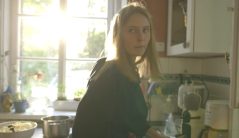
Three generations of women grapple with their family’s legacy of the Holocaust, its affiliation with the Nazi regime, and their resistance.
“It Happened on Our Ground” is a sensitive exploration of guilt, memory, and the strength needed to heal.
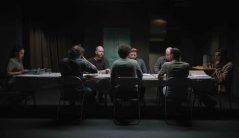
The film delves into an almost forgotten event that took place in Kfar Qasim in October 1956, when 47 innocent civilians were shot and killed by Israeli Border Police soldiers. Through a gripping narrative structure, like a suspenseful legal drama, the film unfolds the historical, political, and psychological reality that had shaped and triggered the event. A cinematic montage created by the intertwined plotlines, emphasizes immense gaps, conflicting narratives, and deep divides between Jews and Arabs who are destined to live together on the same land. If we begin to recognize these gaps, will there be hope for reconciliation?

The story of women’s relationship with their breasts unfolds in the fitting room of a Jaffa bra shop. With each curtain opening, a woman confronts herself in the mirror, her mood dictating the framing of her shot. While attempting to find a bra that fits, she narrates her story because the story of boobs is the story of life itself. From birth, when it gives us life to the sobering reminder of mammograms, alerting us to the fact that breasts can also take it away. In between, there is a lifelong relationship – thrilling, sexy, and funny but also messy, burdensome, sometimes threatening. It’s a story that bursts out, always one step ahead of you, and even when you can’t or don’t want to tell it, it is etched on your body.

In 1945, an SS officer was shot by a Jewish woman near the gas chamber in Auschwitz. It is said that the act of heroism was done by Francesca Mann, a Jewish dancer from Warsaw. This act of heroism did not receive the resonance it deserved, perhaps because of the rumours that Francesca was an accomplice.
The multitude of versions gave birth to a myth, built on a grain of truth (the officer was shot and died by a woman, and the shooting was carried out with his gun). Francesca left behind almost nothing – a few photos, a few press articles about her appearances in Warsaw before the war and an abundance of different and contradictory testimonies about her conduct during the war.
The filmmakers weave together the historical stories and build the myth that is Francesca. The myth takes different forms, according to the different witnesses and their worlds.
A balladeer/ dancer/ whore/ stripper/ partner, who of all these was she?
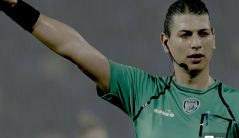
Sapir Berman is part of the global revolution taking place today in professional sports all over the world in relation to the LGBTQ community. Sapir was born near Haifa and began her career as a soccer player. She progressed at the highest speed, and at the age of 26 was appointed as a referee in the Premier League. Everything happened while she was still in the closet, without telling anyone about her true dream. Then, one day she announced to everyone, I am a woman and always have been. And so began her long-standing struggle to continue refereeing, while going through the process of gender reassignment. Today, she is still the only referee among 20 male referees in the Premier League.

On October 4, 2001, Oksana Zelser, aged 38, boarded a flight from Israel to Russia for a family visit. A long-range missile fired at the plane caused it to crash into the Black Sea, claiming the lives of everyone on board, including 51 Israeli citizens.
Oksana’s son, Iliya, was only 13 years old when he received the devastating news. And he can’t remember anything from that day.
20 years later, now married, Iliya decides to unlock his well-sealed Pandora’s box and find out: Who fired the missile that led to the plane crash, and why? Is Israel’s collective amnesia about this tragedy linked to the fact that most victims were new immigrants? And will he succeed in reclaiming the lost memories of his mother?
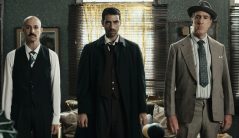
In a dark city, in a fictional world, during an unknown time, on an exceptionally stormy night, Sarah Bennett (Moriah Akons) arrives at the office of Detective Joe (Amit Ullman). She asks him to find her missing sister. Though he knows nothing good will come of it, Joe agrees to open an investigation. The investigation quickly entangles, and Joe finds himself alone facing the most dangerous criminal in the city.
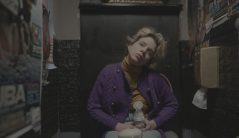
Tala (33) is a quirky musician and a newly single mother. To support her baby daughter, she is forced to take a job at the Milky Way, a repository for mother’s milk where women can pump and sell their breast milk. It’s an awkward set up, but everything could work out fine if only Tala could get out of her own way and stop getting into trouble. A chance encounter wit a wealthy woman who has been buying Tala’s milk sets her off on a surprising journey, where she will discover what it really means to be a mother.
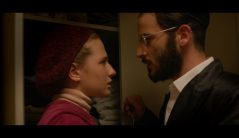
Minkush, a young ultra-Orthodox Hasidic woman, struggles to reconcile conflicting desires, hoping to win her husband’s physical affection in a battle of love versus religious law.

When Bashir, a 75-year-old artist, watches the film Rambo III, he sees much more than Sylvester Stallone fighting against the Soviets in Afghanistan. In the mute and grainy desert background, Bashir sees the Negev Desert in the south of Israel and a document of his dispossessed tribal land. In the 80s, he was hired to make the special effects for Rambo III. Today, Bashir returns to the desert film locations, where he finds material remnants and ruins left behind in the sand.
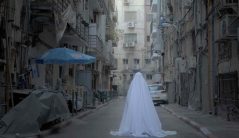
At 12 years-old, I wrote a tale about a family curse that led me to flee Mexico trying to avoid
it, only to find it followed me. A decade later, I return to Mexico with my grandmother and
my imaginary childhood friend, seeking the origin of the curse that led my family down the
path of domestic violence. Including my grandmother witnessing her mother’s death, my
mother’s violent childhood, and my own abusive relationship.
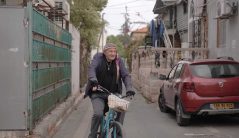
”Like a butterfly”, is an intimate short film documenting pieces from the extraordinary life of Alfred, an 80-year-old, colorful street philosopher, adored by women and who was a valued former art director. Alfred’s life took a turn after the separation from his ex-wife, Ruth (77), with whom he hasn’t spoken for 18 years. The family was torn apart and now, his courageous daughter sets out with a camera in hand to confront the past and try to mend the broken pieces of the family.
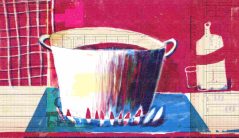
“The Poetry of Non-Self” is a short animation film that deals with moments that hold beauty, from which the sense of self is absent. It portrays the notion that this is, in a way, what childhood is like – a beautiful, moonstruck stare, which is lived moment by moment and passes in a blink of an eye. The film animates a text that deals with those matters, showing the protagonist’s mental experience while staring inside a boiling pot in his kitchen.
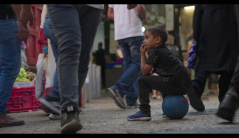
The film was produced in the framework of the “Souvenirs” program – a film lab for Israeli and Palestinian filmmakers in the Old City of Jerusalem. The film follows the day to day life, fun and games of the children in the Old City of Jerusalem, over their summer vacation.
The film was produced in the framework of the “Souvenirs” program – a film lab for Israeli and Palestinian filmmakers in the Old City of Jerusalem. The film follows “Abu Taher”, who manages a number of workers who prepare brooms at the Arab Blind Association. Abu Tahar, also sings the Koran in a small mosque in the Old City.
The film was produced in the framework of the “Souvenirs” program – a film lab for Israeli and Palestinian filmmakers in the Old City of Jerusalem. The Film follows Isaac, a third generation to 144-year-old family that runs a tahini mill. Every night at 3 AM, Isaac gets up to prepare the tahini for the next day.
The film was produced in the framework of the “Souvenirs” program – a film lab for Israeli and Palestinian filmmakers in the Old City of Jerusalem. The film follows pilgrims walking the path of Jesus on his way to the crucifixion. While immersed in their religious experience, the daily reality in the old city unfolds.
Ron Glaizer is a rebelious young teenager who has to fight for his cat’s life, while his best friend slips away from him. He goes on a journey to fight for his last two best friends.
On the morning of his daughter’s birthday, Natan (73) decides to throw a big party. He wakes Hagar (69) and expects her to get up and help organize. They start the morning organizing the house for a party, hanging balloons and baking a cake. When hagar can’t find any strawberries for the cake, Natan volunteers to go on a mission and buy strawberries at the neighborhood grocery store. Getting tangled up in this simple task exposes him and his family to the bleak future they face.

After a scholar’s immense investment in his life’s work, he is shaken to discover that another creator preceded him. The film focuses on the emotional upheaval experienced by the creator, and touches on existential questions, about value and uniqueness, by interweaving the story of the creator, with an ancient legend about the diminishment of the moonlight in the glare of daylight.
Since she was a little girl, Daniella fantasied of becoming a professional basketball player. Now her dream is closer then ever, scouts from the national league are about to visit her school. Although she knows that they are only interested in the boys she is determined to be noticed and get her chance at advancing her basketball career at any cost.
My commander in the military called me to his office in the middle
of the night. He took out a hand gun from his drawer, loaded it and placed it between
us on the table. He ordered me to shoot my own head. By using
animation I recreated that night.
Daphna, 41, who was until recently a promising detective in the major city of Tel Aviv, finds herself in small town Afula, dealing with petty crimes, seeking shade from the heat, and dodging the nagging question: “how come you don’t have any children?”
The disappearance of Orly Elimeleh ,36, a beautiful and rebellious army widow, soon raises another troubling question for Daphna: why isn’t anybody looking for her?
Orly’s uncertain fate shakes Daphna to the core. Fearing the worst, Daphna will stop at nothing in order to solve the mystery.

I grew gynecomastia a year before my Bar-Mitzvah. I was ashamed of my Un-male body and spoke to my parents to understand what could be done. my Pediatrician sent me to a genetics test due to a hunch he had. He was right, I am unique, I have a syndrome that affects 1 in 600 males. I have an extra chromosome triplet in DNA, XXY-47.
This makes the right side of my brain dominant and is also responsible for my male infertility. The films tells the story of my coming to terms with the fact that I may never be a biological father.
When it comes to love, Roberta knows what she wants – and it’s not what she’s getting. One night she takes matters into her own hands. A comic fantasy starring two of the dance world’s most exciting performers.
At the end of a night out at a Jerusalem gay bar, Aaron can’t find his bag. Without the bag he cannot return home. Sefi, the bartender, tries to help him. Their fates will be linked tonight.
Zehava, a young trans woman, was denied asylum by Israel and repeatedly imprisoned due to her “second-class” status as a Palestinian. She fled from the West Bank to Israel after surviving sex trafficking and attempted murder—only to face new obstacles as an undocumented, homeless Palestinian, with the constant threat of deportation.
In her perilous journey amid the conflict, Zehava tries to navigate the multiple layers of oppression and discrimination converging on her intersecting identities.
Moishi falls in love with Rachel, a young woman whose previous husbands have all died. Moishi runs away from his parents, who are angry at his decision, straight into the arms of Haim the butcher, who turns out to be the devil himself. Haim, the devil, who turns out to be a romantic character, tries to understand why Moshi insists on marrying Rachel. If Moishi sticks to his decision, Haim will have no choice but to kill him.
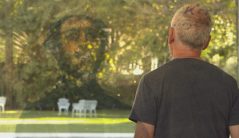
I never knew about my great-grandparent’s art collection. One day in 2016 I received an email from my aunt’s German attorney, Mr. Fritz Enderlein, who informed me that such a collection existed.
This new information sent me on a quest that took me back in time to the cultural and artistic world of the Jews in pre-war Berlin.
Accompanied by Roberto Graetz, whose grandfather owned a collection of 250 artworks, we encounter a world filled with power struggles over these works of art, a battle that still continues to this day, revealing a dark world that overshadows any work of art.
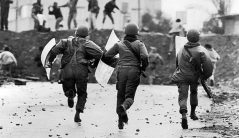
Ben Shani and Shai Lahav, two young soldiers at the time, go back to the first Intifada, which we all wish to forget.
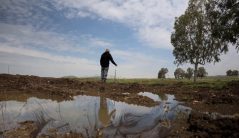
A cinematic journey investigating the brutal massacre of 17 Israeli prisoners by Syrian Soldiers in the Golan Heights. The two tragic events depicted in this film, clouded in secrecy and lies by the Israeli Defense Forces for over 50 years, serve as a metaphor for Israel’s weakness and blind arrogance during the early days of the terrible Yom Kippur War.
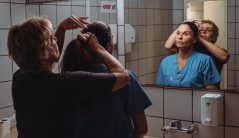
Debbie Lasri celebrates her 51st birthday in a psychiatric ward. Riva, her partner, arrives at the ward with Michal, her video-therapy student, hired to make a personal video with Debbie. Michal is drawn into Debbie’s world, but her story is full of gaps. As curiosity and over-motivation become an obsession, Michal crosses the lines looking for answers. Following Debbie’s trail of crumbs, she locates all the sub-characters of the story. The pieces of information revealed through her camera suggest that there is more here than meets the eye.
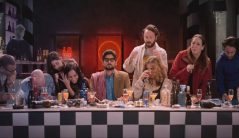
An Israeli chemist becomes the 21st century’s most notorious drug baron after inventing a legal psychoactive drug from Cathinone. As his empire grows, he must constantly navigate legal and ethical challenges while maintaining his power and influence.
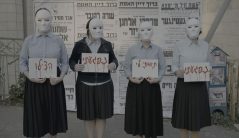
This is the story of four Ultra-Orthodox women, who dared to shout “we won’t be silenced!”.
Through their revolution, we are able to get a glimpse into this very closed community, which has a very clear code of silence with regard to sexuality in general, and sexual assault in particular. The world of each of these women has been overturned, whether because she herself has been a victim of sexual assault or a woman in one of her close circles.

In his journeys to save Yiddish libraries and cultural treasures from destruction, Mandy Kahan visits the homes of the last Yiddish speakers, and gives their favorite books a home in the center he established at the central bus station in Tel Aviv. The film will tell the story of a dying culture through the hopeless struggle of one Don Quixote.
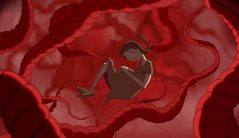
After a nuclear disaster in Chernobyl, A pregnant Snejana must leave the house to save herself. She faces a hard decision, to wait for her husband or to accept he will not be back.
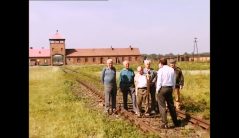
On September 1993 Israeli Holocaust historian and Auschwitz expert, Prof. Gideon Greif, arrived at Auschwitz-Birkenau, accompanied by six of the last Israeli survivors of the “Sonderkommando” (‘The special squad’) – the squad of Jews forced by the Germans to serve as slaves at their killing installations in Auschwitz. At the camp, these ex-prisoners reconstruct the “work” they had to do there.
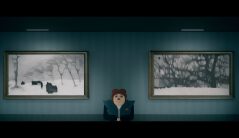
Deep inside a municipal art museum, a single guard is the sole queen of a small exhibition. When she is forced to leave the room, her exile becomes a journey in search of a new home.
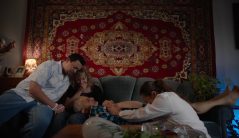
Ella and Edik, two brothers from a traditional Bukhari family (Uzbek Jews), arrive early on the eve of a Jewish holiday, to their parents’ home in a small town in Israel. There they find their homophobic father dead and dressed in women’s clothes. While their mother is on her way home, they have to decide what to do.
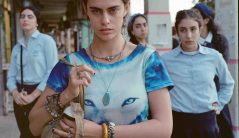
In 2000s Jerusalem, Arava reluctantly goes on a trip with her best friend, Tzipi. The two
hitchhike through small-town Israel, on their way to visit the mystical gravesites of the northern city Safed. Along the way, they’re confronted with the intricacies of their individual identities, hopes, losses, and their relationship to one another.
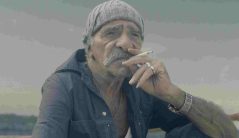
For years, Sammy, a veteran fisherman from Acre, has struggled to support his family. When he is about to give up hope, a talking fish appears, offering him an opportunity he cannot refuse.
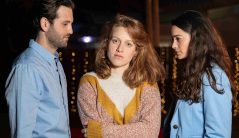
Maya gives Omer an ultimatum: “Until the cigarette runs out, you must decide – him or me”. Three people, two love stories and one fateful night that will change their lives.

After her estrangement from her family, Asia comes to find a dilapidated childhood home. During her visit, Asia realizes her siblings are suffering from the same neglect that she had suffered from as a child. Now, she’s torn between escaping the anguish caused by her abusive mother, to her duty to her siblings.
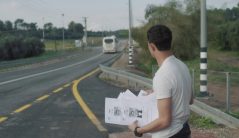
17-year-old Gil hates his life in the village he lives in. He lives with his Father, Avishai, and his 10-year-old brother, Yuval, who he blames for their parents’ divorce. He dreams of joining the army as a combatant, as an excuse to escape his life. One night, the brothers have an ugly fight about a video game. Yuval, upset by Gil’s words, decides to run away from home. Gil and his father Avishai embark on a journey, searching for the missing brother. In this coming-of-age journey for Gil, he also learns to take responsibility for his actions and discovers new sides to his relationship with his father.
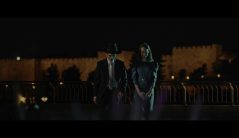
Yair, a Yeshiva student, opens an electronics shop in “Geula”, a neighborhood that is the shopping epicenter for the entire Ultra-Orthodox community in Jerusalem. The religious character of the neighborhood is enforced by the “Geula Committee” and Yair strictly adheres to their rules. His shop is introducing a world of advanced technology that overnight becomes a magnet for every Ultra-Orthodox household. But the increasing intrusion of modernity is an affront to the committee, leading to an inevitable conflict that forces Yair into a desperate struggle for survival.
A dangerous and deadly virus is spreading around the world. Zombies are everywhere, and citizens are forced to lock themselves inside their homes. Esther, an elderly woman who has cared for her sick husband for years, wants only one thing: for the outside world to leave them both alone. A visit by a young and inexperienced policeman is about to destroy everything.
When her ex-best friend – with whom she hasn’t spoken in two years – is about to get married – Yael (24) decides to attend her bachelorette party. During the party, old tensions arise until the inevitable explosion.
After Nazi forces take his father away, 11-year-old Emil must use the only two things he has left—creativity and imagination—as he embarks on a perilous journey to find his father. Inspired by the true coming-of-age story of a Holocaust survivor.
Since his boyfriend left him, Yotam hasn’t slept one night alone. Obsessed by dating apps, he spends his nights in the arms of strangers, until he discovers that he has been infected by an intolerable skin disease.
Aya is young, sensitive and very much in love. Love, in fact, is her essence. When she realizes that her boyfriend is about to break up with her, she runs away in a desperate attempt to hide from the inevitable.
In Grandma’s old living room, Michael, a religious young man escorts his father to mourn their aunt Dina. He is exposed to his father’s traditional family, who are fervently guarding a dark truth from the past.
A quirky lesbian mom discovers a love letter written by her 11-year-old son to another boy. Concerned for her son’s social status, she crashes a birthday party he is attending to keep a close eye on him.
Israeli and Palestinian filmmakers took part in a 10-day film lab in the Old City of Jerusalem, and the resulting anthology of four films breaths energy and life into the stories of the city, opening a window into the lives of the locals, who are regularly overlooked by tour guides: a 144 year old family tahini mill; manufacturing broom sticks at the Arab Blind Association; pilgrims walking the Via Dolorosa and boys bouncing a soccer ball. This film dives deep into the intricacies of the Old City of Jeruslem.
August 1st, 2009. An armed man bursts into the “Barnoar”, an LGBTQ+ center, and opens fire. The bullet that hit me, turned my life. 13 years later, I embark on a journey to revisit old wounds, deal with the trauma and talk with my family for the first time about that evening and the secrets revealed in its wake.
A dance film showing Tatiana, a 76-year-old resident of Sderot, who immigrated to Israel from Moscow. she goes to the market twice a week and has to carry the full bags on her own. The film illustrates her fantasy to be free.
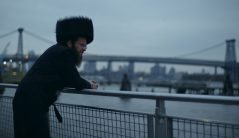
Mohorosh, an admired American Ultra-Orthodox Rabbi, establishes an extreme and segregated cult between Israel and Brooklyn.
Going from underage marriages to sexual assaults, through house burndowns to big money flowing into the Rabbi’s pockets. This corruption went on for decades, yet no one ever dared expose the painful truth.
When the Rabbi died, an ugly and violent inheritance war between the Rabbi’s son, Moishi, and the leaders of the community erupted. As a result of the fierce infighting, the vile truth of what had been going on in Yavniel and Brooklyn comes to the surface. This battle continues today and still, the victims pay the price.
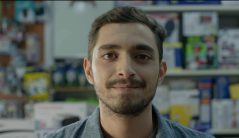
Darwish, a young man with existential fatigue, returns home from work with one concern: to fix the broken fan in his house. While his neighbour gets shot and wounded in front of the building and is taken away to hospital, Darwish finds himself stuck in the crime scene looking for solutions for his fan, while police officers investigate the scene.
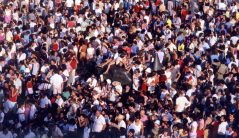
The Tel-Aviv Museum of Art’s plaza has always been a place where art and life meet. Even the museum’s own opening ceremony had a protest event organized in the plaza in front of it. Ever since its establishment, the museum plaza has been ground zero for artistic expression, protests and demonstrations. By studying the plaza’s history, THE MUSEUM PLAZA offers a closer look at the museum – tackling issues of both high culture and the day-to-day.
Produced in the framework of a special joint film project of the NFCT and the Tel-Aviv Museum of Art, in celebration of the Museum’s 90th anniversary.
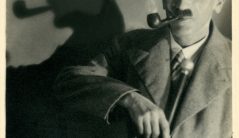
1933. Dr. Karl Schwartz is invited to Israel by Tel Aviv mayor Meir Dizengoff, to be appointed director of the first art museum in Palestine – The Tel Aviv Museum of Art. Schwartz left Berlin and arrived in Tel Aviv to discover, much to his surprise, that the museum in question consisted of nothing more than three rooms in the mayor’s own private residence. A TALE BEGINNING WITH THREE ROOMS revolves around the establishment of the Tel Aviv Museum, and delves into the chilling connection between the development of the museum and the horrifying tragedies endured by the European Jewry in the 1930s-1940s.
Produced in the framework of a special joint film project of the NFCT and the Tel-Aviv Museum of Art, in celebration of the Museum’s 90th anniversary.
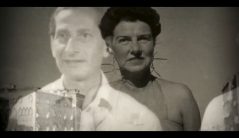
In 1955, a collection of contemporary artworks, including some made by the world’s leading artists of the time, was donated to the Tel Aviv Museum of Art. Thousands flocked to the museum to see the new collection; but how was it exactly that Eugen Kolb, then the museum’s director, managed to obtain such an impressive collection to begin with? What motivated a famous art collector such as Peggy Guggenheim to donate a collection of her greatest pieces to such a small, unknown institute? NOTHING EXPECT 34 PAINTINGS examines the relationship between Kolb and Guggenheim, addressing these questions through their correspondence.
Produced in the framework of a special joint film project of the NFCT and the Tel-Aviv Museum of Art, in celebration of the Museum’s 90th anniversary.
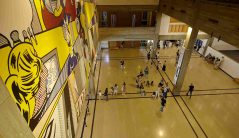
The entrance to the Tel Aviv Museum is the exposition — with which begins the visit to the museum. It is a place of gathering and discourse, a space dedicated to artistic expression and events. Each work hanging in it demonstrates a fascinating chapter in the museum’s collective memory and history. THE FOYER inspects the artistic choices made in the museum’s foyer over the years, and through them attempts to analyze the changes this artistic institution has undergone, as well as its cultural influences.
Produced in the framework of a special joint film project of the NFCT and the Tel-Aviv Museum of Art, in celebration of the Museum’s 90th anniversary.
A compilation of 3 short documentary films made by 3 women filmmakers from the Arab Society in Israel, produced with the support of the New Fund for Cinema and Television, in collaboration with the Friedrich Ebert Stiftung.
These debut films were created in the framework of a development and mentorship hub, led by filmmaker Michal Aronzon and provide different and personal points of view on the lives of young women in current-day Arab society in Israel.
Something of My Own/Rosalin Agbaria
My Rock/Arkan Husseny
Drop in the Ocean/Malak Orok

Over a year ago, 22-year-old Zura’s mother left home, leaving him and his father behind. Since then, Zura’s father suffers from depression, and is busy drowning his sorrows in alcohol. Zura is forced to take care of him, while his soul longs for peace and freedom.
An encounter with a captivating girl named Daniel will send Zura into an eventful evening, from which there will be no way back.
After 25 years of blindness, Dan gets a chance to see his wife and children for the very first time. It may also be his last.
18-year-old Anton hangs out with thugs who steal cell phones in order to blackmail their owners. But when Anton pinches Meitar’s phone, he becomes obsessed with the world she has compulsively been recording on her phone.
For seven decades, Yosef Dadush concealed a private diary, securely locked away in a closet at his home. Only after his passing was the diary unearthed, granting us a precious opportunity to peer into the harrowing existence endured by the inmates of Giado—a concentration camp situated in the heart of the Libyan desert. “GIADO” chronicles the relentless struggle of a man who fighting for recognition of the Libyan holocaust, even as he shielded his own children from its haunting truths.
It’s lockdown in northTel Aviv. A pleasant neighborhood. A pleasant apartment. One imprisoned woman. Rona. Her distress intensifies and forces her to go out. Even she is allowed to throw out the trash.
She runs to save her soul and attempts to cross a bridge, but is stopped at the barrier.
She is ordered back to her permitted space, but rebels.
The neighborhood women’s mikveh is open despite the lockdown. She hesitates, then enters.
For the first time in her life, she finds herself standing naked, facing a mikveh attendant. Her body is wounded; she needs someone to notice her pain. Will the attendant respond to her plea?
Unable to escape the truth of her life, she faces the eyes of the attendant whose call of “Ko-sher” is the final blow.
She leaves the water, leaves her former life, and only the still waters remain.
In December 2010, a man was found dead in one of Israel’s maximum-security prisons.
The guards did not know his name, nor what crime he had committed. He was only known as “Prisoner X.”
When the story broke two years later, the suicide of this anonymous Mossad agent revealed the agency’s faults, failures and systematic silencing.

At the age of 75, Geula breaks up with her husband Arik, 77. A contractor is hired to build a wall that divides the family house in two, and each of them now lives in their own half.
Director Shai Gal points his camera to his parents in an attempt to find out what happened to their love. Why did it take them 55 years to break up? And what does life look like on both sides of the new wall?
This film is an intimate, funny, surprising and painful family journey about secrets, insults, desires, compromises, loneliness and parenthood. About the end of love.
And what about your love life?
Or (10) adapts to a new situation, when his mother experiences postpartum depression. Through his young eyes, we are exposed to the moments that force him to choose between his own desires and the good of his family.

“Budapest Diaries” depicts the events of the final year of WWII and the Holocaust of the local Jews as documented in diaries written in real time by the Jews, their persecutors and bystanders. The diaries, written by “ordinary people” document the various perspectives of the persecution of the Jews, the battles that almost destroyed the city and the sobering up at the end of the war. They chronicle the rumors, the hopes, the bitter news and intimately detail without filters the feelings of the authors, their worldviews and often their darkest secrets.
In the ultra-Orthodox community men are educated not to look at women or think about them and a girl practices modesty in clothing, actions and thoughts. Marriage requires complete strangers to suddenly encounter their partner for the first time in an intimate situation with only rudimentary information. According to Jewish law, they are required at that first intimate encounter to consummate the marriage. The forbidden becomes permitted, the impure pure, and modesty turns into full exposure. What was considered sinful transforms to the Holy of Holies.
The film draws a portrait of a society and a place: women and men speak bravely about their hidden feelings during matchmaking, the engagement period, the guidance of brides and grooms, the canopy, the special “Yihud” room, until the morning after marriage.
Tysir is 15 years-old and is released from prison on parole. The only one waiting for him is Yonatan, a social worker from the Prisoner Rehabilitation Authority. Yonatan tries to help Tysir overcome the sad statistics that say that 3 out of 4 teens end up back in prison.
The deal, which seems attractive behind bars, becomes a rocky journey in an impossible reality.
Shaya (30) is literally attached at the hip to his handgun. As a result of the need to renew his firearms license, Shaya embarks on a journey of clarification regarding his fears and their effects, in the hope of unchaining himself from them.
A journey following a belief beginning with stars and ending in the Kibbutz. Over a decade ago, Alain left everything to live a spiritual life in Germany. One day he returns home.
As the filmmaker gets closer to the grandfather she never had, she asks him to look at who was left behind. A fragile relationship is formed between family and faith.
After being kicked out from every available at-risk youth establishment, and after facing criminal charges for drug trafficking and violence, Kiki is about to enter a youth prison by court order. Gal, his sister, manages to convince the authorities to give Kiki one last chance.
Gal is a caregiver for an at-risk youth organization that takes yougnsters on experiential, therapeutic field trips through the desert.
Gal and her co-workers take Kiki on a field trip to the desert. She is determined to succeed where everyone else has failed. Will the journey enable Kiki to grow and to take responsibility for his own fate?
This is the story of The Midrashia, the mothership of religious Zionism in Israel, “the Mother of all high school yeshivas”. It’s a story about an educational start-up, founded before the establishment of the State, having produced thousands of quality students that placed themselves in all the centers of power in Israel. This is a story about a school that in a complicated and surprising process, changed it’s manner, and from an elitist and luxurious school that educated successful and dedicated students – became an anarchist and wild place. This is a chilling and unbelievable story about an educational vision that collapsed, about brotherhood, the loss of control, coming-of-age, and about the human spirit in which the good and bad, cruelty and grace, are mixed together.
Nora built a shelter in a rural village, where she lives with 500 fruit bats, a gang of turkeys all named Hertzel, a mayna bird named Itzik and her beloved dog Koper. Isolated from society, she provides care for the bats and every other animal that crosses her path.
She soon discovers that there is no shelter far enough or secluded enough to protect them from the pain, loss and love that life brings.
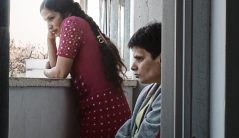
After 30 years of failed efforts, Tahel (Rachel at birth) finally persuades her sister Tzipora to leave Abarbanel Psychiatric Hospital and move in with her. Together, the two sisters challenge and dismantle language – both verbal and cinematic – until once again it becomes a tool they can use to speak the silence, the oblivion, the dissociation: the black abyss of trauma, what it is they cannot remember and therefore, unable to forget. It is an encounter that takes its participants, if they are willing to join this harrowing journey, back to the starting point; to uncharted, and therefore, terrifying territories of the psyche.
A 16-year documentation of a struggle with the existence of a raw traumatic excess, which cannot be spoken or mediated verbally.
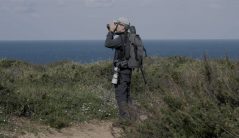
The film is a journey that follows the observation diaries written by Amit Geffen – a young bird-watcher. The diaries beautifully and elaborately describe the observations he conducted from his childhood until his death at 21 from a rare disease.
Why would a young boy, who knows that his days are numbered, choose to dedicate his time to birds? Why would he want to document all the birds he saw?
By following the diaries, the film explores the need to observe and document the world around us, and the way in which it fills our lives with meaning.
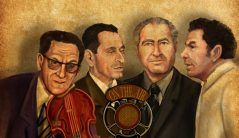
The film brings for the first time the story of the Israeli radio station Beit Shidir. With the establishment of the State of Israel and the immigration of Jews from Arab countries, the radio station was an active site for producing intelligence and political warfare against Arab countries in the 1940s, 1950s, and 1960s.
From the outside, it was a radio station that broadcast news and songs in Arabic, whereas in practice, the broadcasts were used by the administration for propaganda, psychological warfare, changing public opinion in Arab countries, and activating agents through codes implanted within the broadcasts. Soon the broadcasts became the most terrifying threat that agitated the rulers of the Arab world, and the broadcasters in it were named by the competing radio stations ‘The Israel Broadcasting Corporation’s Propaganda Orchestra’.
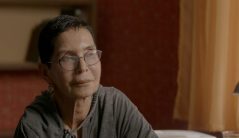
Michal Ben Horin reveals her childhood secrets. Through a personal film archive in which she holds private conversations with the world’s most psychopathic criminals, including Charles Manson, Richard Ramirez – The Night Stalker who murdered 18 people, Lynette Fromme – a member of the Manson family and the woman who tried to assassinate President Ford, and more.
Michal asks them questions she couldn’t ask her stepfather, Motke Keddar, a Mossad agent who murdered his informant and became known as prisoner X, but for Michal he is the man who hurt her, and the biggest psychopath of all. The protagonist embarks on a 30 -year journey in which she wants to understand the dangerous madness behind the stamp of genius and logical proficiency of her stepfather.
Raised in an orthodox home, Amos Dov Silver dreams of becoming Prime Minister.
But when the State continues to shun him, he soon finds unexpected solace in the velvety smoke of Marijuana. Spreading his new Torah, he establishes an online community using a mobile app that turns into the largest marketplace for drugs in Israel, raising Silver to Messiah status.
Through exclusive footage of Silver, his family and his partners’ investigations, as well as secretly filmed footage of Silver in the Ukrainian prison, a polarizing portrayal of the man charged with heading a crime organization emerges. Champion of the people, or a lost soul corrupted by power?

Many remember the evening of Rosh Ha’Shana 25 years ago, when the news announced that 26-year-old Inbal Perlmutter was killed in a car crash. Despite her young age, the rebellious rocker had already achieved fame as lead singer for Ha’Mechashefot. Her career, as well as her personal life, had been turbulent, up until the inevitable end.
The film reveals for the first time her personal diaries, rare archival footage, and intimate encounters with those closest to her. Some of them were not aware just how powerful the beast of darkness lurking beneath the good fairy had become.
If You Let Me Go dives into the depths of a groundbreaking musician’s soul, who herself plunged into the abyss, leaving a profound mark on Israeli music and culture.
In the winter of 2006 13-year-old Tair Rada was found dead inside a locked toilet stall at her school on the northern tip of Israel. A week later the police arrested Roman Zdorov, a Ukrainian Immigrant, who had worked there as a temp, and eventually he confessed to the murder. But many still believed he was innocent, and had their own theories as to
what had happened that day. “Shadow of Truth” is a Rashomon-like exploration of this murder mystery, which raises serious questions regarding the Israeli justice system and its ability to reach the truth. Five years after the first season aired, the supreme court ordered a re-trial and released Zdorov to his home. The new and final episode follows the re-
trial and tells the story for the first time from Zadorov’s perspective.
“Innocence” tells the story of soldiers who enlisted in the army despite their discomfort with the military world and contradicting conscientious values. Their story is told through narration based on writings found after they died during their military service.
Late night, September 1997, a force of the commando marches into a deadly ambush in Lebanon. 11 of them are killed, the body of one remains behind – my brother, Itamar. 25 years after Itamar was killed, his sister, director Aya Elia, goes back to observe the bereavement rituals in Israel. “Knock on the Door” is a film about how we as a society remember, and about how we lose. Through the film we meet the informers: volunteers who go through a professional training process that prepares them to deliver the terrible news to the families of fallen soldiers, the end point of which is a knock on those families’ doors. The process exposed through the film, brings to the surface the director’s own coming of age journey, of a childhood left behind. The two faces of loss, the personal and the public, present an original portrait of bereavement.
In 1992 a Boeing 747 cargo flight from JFK to Tel Aviv, on a stop off in Amsterdam, crashed into an apartment block in the Bijlmer, an immigrants’ neighborhood, shortly after take-off, claiming dozens of lives and injuring many others. The official story is that a technical failure occurred after take-off. But in the weeks that follow the crash, while the media and the public focus on the victims and the survivors, an unseen drama begins to take shape in the background.
This was just the beginning. In the three decades that have passed, the truth has yet to be unearthed from the mountains of lost evidence, covert operations, financial corruption and political whitewashing.
The story continues with a present-day attempt to reinvestigate the story, with newly obtained materials from thawed archives, inside sources, characters and unseen footage.
Jewish Settlers, with the help of American Christian Evangelicals, are trying to appropriate lands in the West Bank through vine roots to fulfill an old Biblical prophecy.
A blend of wine, boycott, and conquest in a complex terroir.

Angelo is a 12-year-old Filipino boy who studies at “Hayarden,” a school for refugee and immigrant children in south Tel Aviv. While fellow foreign and immigrant workers and families are being expulsed from his neighborhood, his class is chosen to participate in a unique cinematic project. They are asked to create a short drama film about a topic close to their hearts.
The process of working on the film introduces us to the fears and dreams of Angelo and his classmates. They live in a provisional reality that undermines their sense of security.
And although none of the children have a passport or identity card, their journey crosses borders after their film is chosen to represent Israel at the Venice Children’s Film Festival.
Yaeli is a 20-year-old Ultra-Orthodox woman, who dreams of love. Her heart is beating for David, a handsome and smart yeshiva boy, but Yaeli is also a barren woman. Yaeli’s father, a charismatic and strong man, is looking for a man with children for her, and is not willing to introduce his daughter to a single yeshiva boy, claiming that he is not allowed to, because he has a mitzvah to have children. Yaeli adores her father but she understands that she needs to take responsibility for her own life and fight for her inner wishes.
She disobeys her father and goes to meet David.
Ronen didn’t planned to steal the Torah scroll that night. He’s about to become a father and decides to go ahead and try to sell the stolen goods. This night is going to be a bumpy journey of faith – and of fatherhood.
With the passage of over 50 years, the director chooses to look back at his days in the “Garin Gilboa”, a religious Nahal military platoon where he did his military service after the Six Day War.
Towards the age of 70, his friends from the “Garin” opened a WhatsApp group and renewed the ties between them, which had been loose since their release from the IDF.
The correspondence in the WhatsApp group encourages the director to investigate his past, and to look at some of the changes and radicalization that took place in Religious Zionism.
Mother and daughter try to renew a relationship that was broken in the shadow of childhood trauma. Armed with a camera, the director returns to her childhood home in search of recognition. Between bags of clothes that her mother has been collecting for her, the generation and memory gaps are revealed. Despite the mental distance between them, they share a need for love and closeness. A strong, poignant and uncompromising portrait of the consequences of sexual abuse within the family. The filmmaker reveals her personal story with painful honesty and directs her camera at her mother who failed in her role.
Ruthy returns to Argentina to clear out her late parents’ apartment with her twin sister Judy. Using various objects and private archive materials, the film is both a nostalgic look at the past and a very personal portrait. It deals with the complexity of the immigrant’s identity, sibling relationships, and the function of objects as conduits of personal and periodic memory.
Achinoam, 29, arrives at a meditation center with lots of self-hatred and doubt, feeling too tall for this life. Through an encounter with a woman who is suffering from cancer , she allows herself to grow and stand tall in her own life.
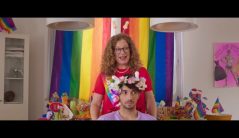
Ronit throws her son Nadav a grandiose surprise party, celebrating the one year anniversary of his coming out of the closet. However, he struggles to cooperate.
Happy BirthGay is a sad farce about the mother’s closet, rather than the son’s one.
The untold story of Project Cassandra, launched in 2008 by the Drug Enforcement Administration to investigate how Hezbollah turned cocaine trafficking and money laundering to make billions of dollars to finance its military and terrorist activity, and how the U.S. administration aborted the operation just before its peak moment.
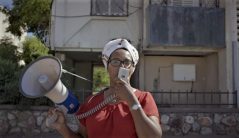
The Kiryat Moshe neighborhood on the outskirts of Rehovot is home to a large Jewish Ethiopian community. Nowadays a national priority construction evacuation project guarantees the residents a safe exit from the neglected and poor ghetto. Hana, a single mother who is worried about her teenage son, jumps at the opportunity for a change that will keep him away from drug dealers in the neighborhood. She joins Kevret, a young idealist, head of the tenants’ committee, in leading the neighborhood residents.
They embark on an 8-year journey to try and change the fate of the residents, while battling cureaucracy and real estate sharks.
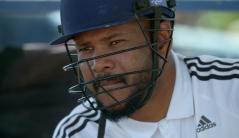
For the last thirty years David Talker has been father, heart, and soul of the cricket team Dimona Champions. He dreams of building the first cricket field in Israel, but his dream comes with a high price tag. Now that his team is about to fall apart
he gazes courageously at his past and reconnects the pieces of his life.
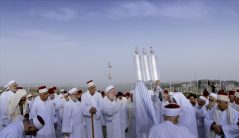
Good Samaritan laws protect do-gooders and Good Samaritan hospitals heal us. Samaritans appear in our holy texts— in the Bible, the Talmud, and the Quran.
The Samaritan people today number 850 souls, down from a million in the time of Jesus. They are split between Israelis and Palestinians. The Samaritans may soon go extinct, a tragedy that would end their 3500-year history— but not if the Samaritans can help it!
Five years of fieldwork have resulted in this intimate and compelling insider’s view of the Samaritan struggle against all odds, of their heart-wrenching choices, their joys and sorrows.
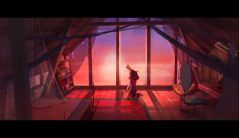
Mindy, A shy nerdy young girl, is trying to catch a star. While she looks at the sky, her neighbor watches her. From here on starts a competition between the two that will make the main character learn an important lesson about friendship.
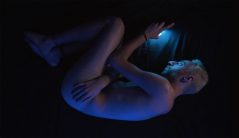
In a technologically saturated world, a young Jerusalemite with a longing for human contact and addiction to screens, goes on a digital journey in search of a mysterious girl with whom he is in contact only through digital means and loses his identity online.
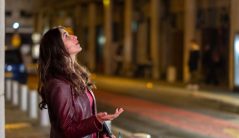
The film, which is based on a true story, follows Salma, a young, beautiful and rebellious Arab woman. Salma tries to break the social norms and customs .she lives in conflict between her lifestyle and the conservative mentality of her family. Salma suffers from violence in her family.
She tries to achieve independence, therefore she leaves her parents’ home, gets a job in a pharmacy and goes to the university. Eventually she goes to the police to file charges against her violent brother.
When high school ends and adulthood begins, Benjamin and Joshua Israel, two identical twins of Jewish origin, start feeling burdened and without a future. Being in your twenties and having a sassy attitude is not enough if you have an intellectual disability and the world makes it hard for you to fit in. Joshua would like to have sex for the first time, while Benjamin chases the utopia of love. Although they clash repeatedly, the two brothers share an unbreakable bond. They will soon learn that growing up also means giving the other space without casting a shadow.
Eliav is a young commander in the Jewish Underground in 1947. But his real name is Yosef, and he is the last descendant of his family, who all perished in the Holocaust. Yosef suffers from survivor’s guilt and concentration camp syndrome, which brought him to change his identity. Yaakov, a childhood friend of Yosef makes Aliya as an immigrant and joins Eliav’s team. And then Eliav must face the pain he was trying to escape from.
The film follows Azmi, 56, who recovered drug addict, who was imprisoned for drug trafficking, and was released from jail, with connections and knowledge, which led him to pursue a life of crime for many years.
Then, he decided to own up to his drug problem, clean up and leave the life of crime. Instead he started working with groups of youngsters, at-risk and normative youths and with NA patients.
The film takes us into the complexity of the Arab-Palestinian society in Israel, many of whom fall into the cycle of violence and drugs, which forces them to give up on both their collective, as well as their individual dreams.

At night, Keren is unable to fall asleep against the backdrop of her husband’s moans of pain. She leaves him with Lior, their son, and goes for a night stroll around the city.
Alex has social difficulties, so writing academic essays for students is the perfect occupation for him. The outside world is strange and terrifying, and only the written word, within the realms of his home, provides him shelter.
One day a young enigmatic student refuses to pay him for an essay he wrote for her, Alex is compelled to get out and demand what’s his.
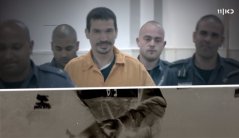
The largest investigation case in Israel of all times, has become a battle between the most dangerous international criminal Itzhak Abergil and the threatened prosecutor, Nisim Marom, who exclusively exposes their story while the trial is taking place. After a global investigation of over 20 years, the Israeli court is about to convict the head of the most powerful criminal organization in Israel, with the charges of heading of a criminal organization, drug trafficking, assassination attempts and the murder of innocent people. He will be sentenced to over 100 years in prison.
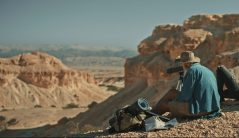
80-year-old Tzvi tries to educate his rebellious grandson and takes him on a trip to the desert, only to find that the generation gap between them is as wide as the extreme sceneries surrounding them. The impossible journey comes to its end in the only imaginable way.
“Air born” brings the story of the children who grew up in the air force bases housing projects of the 1960s and 1970s, in a civilian housing complex surrounded by a bustling military base where their fathers served. A childhood protected by a fence and a guard with an endless feeling of freedom and security, but exposed to the militaristic world, full of dramatic and tragic events that influenced the fates of the children – A childhood in the shadow of wars.
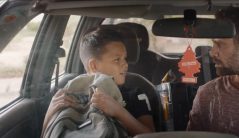
A relationship between Dror, a deaf child, and his father, Moshik, who finds it difficult to accept his deafness. Moshik insists Dror goes to a school for hearing children, but Dror feels rejected and experiences bullying. Moshik doesn’t read the signals, even when Dror angrily breaks his precious hearing implant in protest.
The rift between them grows bigger, when Dror violently attacks the class bully and is expelled from school. Moshik first sees his distress, and the two have to learn to communicate in order to find solutions.
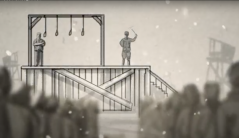
January 1945, four forced laborers women, Estusia Wajcblum, Rosa Robota, Alla Gartner, Regina Safirstein were hanged in public, accused of sabotaging the Nazi war machine.
Sabotage unfolds the unknown story of the women’s underground operation in Auschwitz-Birkenau. A story of feminine heroism, resistance, and tragedy, told through the eyes of Anna Wajcblum Heilman, Estusia’s sister and youngest member of the women’s resistance.
Under the horrific inferno of Auschwitz, Anna writes a diary describing the dramatic story of the women’s resistance. The day-to-day routine of the camp consists of many little moments of camaraderie between young women shaped under harsh circumstances.
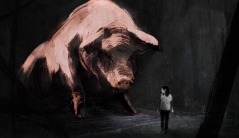
A Holocaust survivor reads a letter he wrote to the pig who saved his life.
A young schoolgirl hears his testimony in class and sinks into a twisted dream where she confronts questions of identity, collective trauma, and the extremes of human nature.
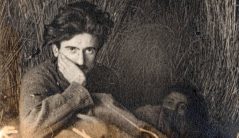
The story of Mundek Lukawiecki and his wife Hannah Bern, who fought the Nazis with the Polish partisans and hid in the forests. Mundek not only employed his bravery and cunning, but also his Leica camera, giving us a rare glimpse into the life of the partisans.
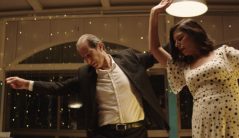
The world of Meir and Tova, a middle class couple in their 60’s, is shaken up when Itsik – a pleasure seeking bachelor with a fondness for karaoke – moves into their building, causing a stir in their lives.
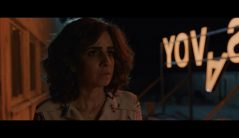
Kochava Levi, a 31-year-old housewife of Yemeni descent, was taken hostage during an attack on the Savoy hotel in Tel Aviv (March 1975). Over the course of one night, she transformed herself into a fearless heroine. However, by dawn, she was left with nothing but shame.
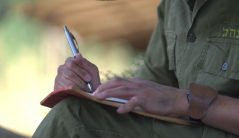
Over the span of fifty years, the Israeli military censorship secretly copied soldiers’ personal letters, extracting their views on the most contentious issues facing Israeli society. The findings were presented to leaders in a top-secret report identified as “The Soldier’s Opinion.”
About 700 Palestinian minors are arrested and jailed every year by the Israeli security forces in the West Bank. They are taken from their homes at night and interrogated, with mental and physical pressure, which violate international law. Almost all of them are convicted and sent to prison. The most common offence is stone throwing; but behind the official reasoning, there’s an underlying systemic motive to these mass arrests of children: it’s the most efficient mechanism to deter the population and preserve Israel’s 50 years long occupation of the West Bank. The security forces exploit this fragile point of Palestinian resistance to curb any uprising, mostly in the villages closest to Jewish settlements.
Diana, Ilana, Rona, Shelly, Rucha and Liat openly speak about their life in prostitution: from the initial lure, through learning the rules, to survival strategies.
They present stories of independence, resourcefulness, pain and trauma, expressing an extreme feminine and human experience. Michaela (pseudonym) – a young woman currently engaged in prostitution, sounds off on the struggle to survive, turning her cellphone camera into a weapon. The women challenge what is expected of them – to be ashamed and conceal themselves.
In 2007 Livi, a photography student, moves into an empty building in downtown Haifa. Just before her loneliness urges her to leave, Shahar, Zvi, Iddo and Talia move into that very building – young artists themselves. The friendship ignites in an instant and when Zvi can’t pay his rent, they decide to rent a space together, half of which will be Zvi’s dwelling and half – an art gallery and bar. The joint work thrives and their voice is heard across the distance, but cracks begin to show, the gallery closes and they disperse. For 12 years, Livi follows their journey to fulfill their dreams as they face the reality of livelihood difficulties, manic depression and alcoholism, unfolding both intimately and lovingly, revealing the story of five friends and their coming of age.
Arabs and Jews have lived in ongoing conflict for over a century. A group of dreamers decided to challenge everything they know about their nationalities and histories and founded a village in 1970s Israel as a social experiment. The film follows the many children who were brought up in this unique environment. In this bold attempt to raise a new generation their internal struggles and the outside conflict challenged their revolutionary eco-system. The children of peace are now grown men and women dealing with the harsh reality of political turmoil, war and societal segregation.

Not everyone has time to die. Yael did. The director met her ten years after their first encounter, after which they drifted apart. Now, as a new, scared patient in the Oncology ward, Yael, an old hand, showed her a way through the darkness. Yael didn’t use her time for ‘bigger than life’ experiences. Rather, she dived head first into the depths of the soul, and took a long, clear look at the fear of death. What she saw there, she passed on to Mia her daughter and Rani her partner, who are left to continue their lives. The film moves between then and now, between life and death, where there is clarity to see what is important.
Home videos shot during his childhood send director Shauly Melamed on a downward spiral, inspiring a search for other LGBTQ adults who documented themselves during puberty. Shauly finds many such individuals who, in their youth, exposed their non-conforming identities without understanding the secrets the camera beheld. Tom, transgender, grew up in the Ultra-Orthodox town of Safed and unwittingly documented his journey of self-discovery; Betty, born to Iranian immigrants, obsessively filmed her intimate relationships with girlfriends; Rumia found her roots in drag as her mother came out of the closet; Shauly explored his own homosexuality in the aftermath of his father’s sudden death. Through watching their childhood films, the four LGBTQ adults are forced to confront the most formative people and experiences from their past.
A chronicle of a death unforetold. After his brain stroke a daughter tries to make her father into a filmmaker and a parent once again, while unknowingly documenting his last years. A film about the fragility of the father figure
evolves into a story on the power of clinging to life through a shared act of creation, even in the face of death.
A few weeks before the opening of the Eichmann trial, transcripts of recorded conversations that Adolf Eichmann had with a Dutch Nazi journalist, Willem Sassen, were mysteriously handed over to prosecutor Gideon Hausner. The conversations were held a few years before Eichmann was brought to Israel by the Mossad. During the trial, Eichmann tried to convince that he was only a bureaucrat who carried out orders, but in the transcripts, Eichmann was found boasting and proud of his significant role in planning and executing the Final Solution. For the first time, we will confront Eichmann with himself in full color, revealing the hidden factors and motives that succeeded in hiding these recordings.
In the 1950s, a young British couple go on their honeymoon. They arrive at “the end of the world,” a small desert town, and decide to stay.
In faraway Eilat, Israel’s southernmost city, they begin their new lives, while maintaining their British core.
This is the story of Dr. Morris and his wife Fay. For decades, Dr. Morris filmed his family – the births and deaths, joys and tragedies, dramas and quiet days spent in the sun – all unfolding in the heat of the Israeli desert.
Years after his death, the forgotten film was found and landed in the hands of directors Itamar Alcalay and Meital Zvieli. Together with the Morris family, they created a spectacular work about an extraordinary family, who are just as ordinary as everyone else.
In the past 30 years, Yosef Hurriye has worked in the chaotic watchmaker’s shop he inherited from his father. Yosef was the town genius, but his hometown was no place for genius children; Today he is 60, with mounting debts and looming local elections he decides it’s time. Against all odds he decides to run for office as a one-man party, to right wrongs and give Kiryat Malachi a future. But there is still one more obstacle: receiving his father’s Victor blessing.
Yosef’s journey is accompanied by singers, musicians, and dancers – a “Greek Chorus” They give Yosef and the town a musical identity, waking it from it’s coma, turning it momentarily into its twin city – Los Angeles. Maybe Yosef will one day make that a reality.
Five penniless citizens set on a crusade against the most powerful figures of the financial system In Israel – and beat them.
After his girlfriend is issued with an illegal repossession order, attorney Barak Cohen launches a public campaign against the heads of Israel’s banking industry.
That was the backdrop for the suit filed against Cohen and his fellow activists. The severe criminal charges were straight out of racketeering case but Barak and his friends remained undaunted. For them, this was a golden opportunity to turn the tables and transform the trial into an indictment of Israel’s banking sector, proving that when you believe you are right, you are destined to win the fight.

Ari Nagel, is a serial sperm donor and a father to more than a 100 children. Ari’s actions turn into a concerning Habit, jeopardizing his relationship with his eldest son and his Jewish religious family.
H2 is the name given to the eastern part of Hebron – the only Palestinian city with a Jewish settlement in it. Here, along a one-Kilometer road, lies the holy Cave of the Patriarchs, where Jews and Muslims believe their common father, Abraham, is buried. Here the massacre of 1929, known as “year zero” of the conflict, took place; here the Jewish settlement movement was born, and here a policy of ethnic separation was first implemented by the military.
Through rare archive footage and interviews with Hebron’s military commanders, H2: The Occupation Lab tells the story of a place that is both a microcosm of the entire conflict and a test site for the methods of control Israel is implementing throughout the West Bank.
In the middle of the day a young Haredi woman is called in to her son’s school because there’s a problem. She comes, determined to fight for his place and her own.
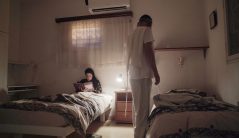
For years Leah has been abused by her husband, who suffers PTSD (Shell Shock).
One evening with the help of her little daughter she decides to change her life.

Dasi, an Ultra-Orthodox woman, makes a pact with God – she will donate a kidney to a stranger and in return, her daughter will mend her ways. But she is put to the test – just before the surgery, she discovers that the recipient is an Arab woman.
Tali, a single mom, finds out her bank account is blocked. The kindergarten payment fell through and her daughter is banned. She is lost between call centers, until she decides to gain back some self-respect. She takes her daughter to the call center of the insurance company that screwed her.
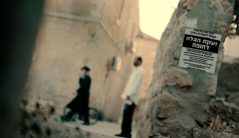
In the picturesque alleys of the ultra-Orthodox Nachlaot neighborhood in Jerusalem, a mother discovers a bite on her son’s penis. Two weeks later, 14, then 100, and finally 145 children from the crowded neighborhood tell of shocking sexual assaults on a network of pedophiles that leads children through tunnels to churches, where they are harmed, as the perpetrators also try to convert their religion.
But the film investigates both sides of the story, to reveal this might be some sort of witch hunt that even led to murder.
The film dives into the childhood memories of 10-year-old Rosalie in a Jerusalem slum, when her father leaves home. While Rosalie escapes to the gum trees of the Galapagos islands, her mother, a French immigrant, tries to preserve the delicate ideal of a family. Both try to remain hopeful, while delving into a world of fantasy, where escapism is the cure.
A 5-part docu-drama that examines the concept of the total artist. Its protagonists are all iconic figures, “paragons of culture,” whose contribution to the cultural landscape was decisive and unique, and yet they never considered their work as being a separate, distinct part of their lives. These are people who responded to the state of culture at the time with a combination of scorn and rage, and who strove to create an avant-garde alternative. They led wild, scandalous lives, in which conventional boundaries were blurred at best. They gave up on a traditional family life, whether willfully or of necessity, and on property, basic comforts, their health, and even their futures. They strove to achieve great things, and were imbued with a sense of mission and revolutionary zeal. They were megalomaniacal narcissists, destructive to both themselves and their surroundings. They came face to face with madness, with death, and even confronted God Himself (or at least what they thought was God). Yes, their very essence was religious: they held on to an ardent belief tinged with mystical experiences, which actually turned them into gurus of a sort. They transgressed the clear boundaries of morality, and they were expunged for it. Their end was tragic, lonely, and bitter.
Episode 1 – Pinchas Sadeh
In the 1960s and 1970s, the book Life as a Parable had a cult following. Poet Meir Wieseltier said that it had the same “revelatory impact as the launching of the Sputnik into space.” Young people followed Pinchas Sadeh like a prophet, and came knocking on his door in the middle of the night. Hagai, a troubled, self-destructive teen from a religious kibbutz, was one of them. He felt that Sadeh could change his life, and perhaps even save it, so he worked up the courage to meet with him and photographed their encounter on his Super-8 camera. A single knock on the door began a relationship that lasted thirty years, in which Hagai would document Sadeh up until his death. His admiration turned into anger and criticism, though it finally turned into acceptance. Through this relationship he was able to get an intimate look at Sadeh’s total approach to life, at the young women who surrounded him at all times, and at the young people nearest the author, many of whom ended up killing themselves. We come face to face with all the scandals, but also with Sadeh’s books and poems.
Episode 2 – Yona Wallach
In the last two years of her life, the poet Yona Wallach suddenly became a public figure. The scandal caused by her poem “Tefillin” had serious cultural and political implications, her poems set to music became radio hits, and the way she dealt with her cancer was covered intimately by the entire media. Hagai met Yona once as an adolescent and was exposed even then to the cruelty and madness so closely associated with her. He returned to her years afterward to document her as she took account of her life and described the love she felt for the young man living with her. Yona speaks the way she wrote and lived, with boundless intensity, intoxicatedly beautiful language, and rare courage.
Episode 3 – Moshe Kroy
Soon after the Yom Kippur War, a short philosophical tract entitled Life According to the Intellect was published in Israel, and Moshe Kroy, a twenty-five-year-old Doctor of Philosophy became a kind of local guru for one turbulent year. The Theory of Rational Egoism that he developed fell on the eager ears of all the people fed up with all the fallen ideologies. Hagai, who was now about to enter the army, becomes a student of Kroy and documents him too. For years he follows the dramatic turnabouts in Kroy’s philosophy but also in his life. He even follows Kroy to Australia to confront him about what seemed at first to be like a return to religion, or was it to madness?The remarkable story of Moshe Kroy is one of the most extreme examples that this country has known. It is the story of a genius who paid every imaginable price in his uncompromising effort to reach the truth.
Episode 4 – Aviva Uri
The artist Aviva Uri may well have been the most important and influential woman in the history of modern Israeli art. Her relatively late breakthrough in the mid-1970s served to inspire a new generation of artists, who venerated her. It was in these years that Hagai began to document her and her larger-than-life love affair with her elderly husband, the artist Moshe Hendler. Together, they were a tempestuous couple, whose whole life was art. Over the years, however, more and more dark secrets were revealed about Aviva’s life and the price she and those closest to her paid for her total dedication to her art, up until her tragic death.
Episode 5 – Epilogue
In the fifth episode of The Accursed, eighteen-year-old Emanuel Levi, a film student and the son of the series’ creator Hagai Levi investigates the unique format of the series and the motivation behind it. With the help of rare archival footage, he attempts to figure out why his father chose now, of all times, to return to these individuals, and what their message is in the present age. He examines where the need for this unconventional style of documentary came from, with its unusual combination of reenactments and the documentarist’s personal biography. More generally, he investigates what about this series is real and what is fiction.
Romy, along with her two younger sisters, embarks on a maritime quest aboard a floating bed. While looking for a treasure, they come across different components of their house: the living room has turned into a siren-filled lagoon, and their dad into a giant.
Jerome, a failed farmer, finds his eldest son’s dead body in the family’s shed. He struggles to tell his wife Aliza and his young son Tomer about the tragedy but the blame and tension lead him to a violent burst.
The last three weeks in Lena’s (99) life cast light on her complicated relationship with her daughter, Miri (75). Miri came to Israel to say goodbye, after learning that her mother disinherited her. Will this last visit be able to mend their relationship, with the shadows of more than 70 years looming behind?
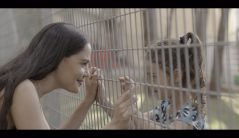
After losing a custody case, Maya realizes that unless she commits an extreme act, her ex-wife will disappear along with their mutual daughter, Shai-Li.
On that same day, Maya shows up at her daughter’s kindergarten and takes her for some “quality time” with no intention of bringing her back.
Ben is a bar owner and Moran is the waitress. They have a non-binding affair. A quarrel between the two leads them to different places, in which they separately go through a night neither of them will soon forget. They meet the day after, but everything is forever changed.

Yotam Regev, a teenage boy and the son of the Mayor, is waiting alone in a room at the local police station. A youth interrogator enters and Yotam starts describing the incidents leading to his arrest, all revolving around his attempt to court a girl, following his father’s somewhat militant teachings. When Yotam’s father abruptly arrives to take him home, Yotam has to choose: to tell the truth about his father, or hide under his wing and be released.

The world of 17-year-old Tamar is shaken when a new piano teacher arrives at the kibbutz. Knowing she was adopted, Tamar wonders whether she might be her biological mother.
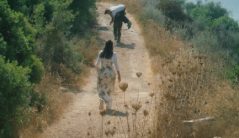
Recoil is a coming-of-age film that takes place in a religious settlement, and centers around the story of Lior, 17, a gentle boy who will do anything to prove his masculinity to himself and to everyone around him, even at an unbearable cost.

Neri, a film student, skips school and goes to visit his father, a renowned Orthopedic Surgeon. There he finds out that his father is dying of cancer, and also sends him out to run some errands for him. During his quest, he realizes that he needs to find a way to get closer to his father and experience a few moments of warmth before the end.
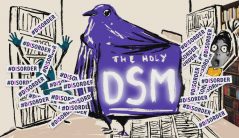
The manual of mental disorders, the DSM, grows thicker with each new edition. There seem to be more and more psychiatric disorders, notes the maker of #AMiNORMAL, Mika Orr, whose father is a psychiatrist. In eight 15-minute episodes, the series takes a humorous and compassionate look at various disorders. People from all over the world talk openly about their experiences in online interviews, in their own familiar environment. A psychiatrist then explains more about the condition in question.
Comic animations keep the documentary light and accessible, and thanks to the diverse backgrounds, genders, and ages of those interviewed, any viewer can find something to identify with. The format of the documentary series raises questions about what normal behavior actually is, and where the dividing line lies between, for example, being not very sex-oriented or having sexual arousal disorder.
An intimate portrait of one of Israel’s leading screen and stage actors, Sasson Gabay, and his relationship with his son, Adam, an actor and filmmaker himself.
The film is part of “Muses”, a 6-part documentary series about inspiring Israeli cultural figures, a collaboration between the NFCT, the Makor Foundation and Kan 11 – the Israeli Public Broadcaster.
For the first time ever, Zeruya Shalev, one of Israel’s most prolific writers, grants a documentary film crew access to her writing process, from concept sketches and character research, to the cover design and print release of her new book. In the course she reflects upon her writing habits, how her personal life and literary characters intertwine, bridging the route between the more intimate writing process and the public spotlight of releasing a book to translation, critics and readers worldwide.
The film is part of “Muses”, a 6-part documentary series about inspiring Israeli cultural figures, a collaboration between the NFCT, the Makor Foundation and Kan 11 – the Israeli Public Broadcaster.
A child immigrant from Iraq succeeds in breaking poetic and geographic boundries through his art. Ronny Someck symbolizes true Israeli poetry. His books have been translated into 44 languages, and his poems embody the essence of Israeli culture, connecting east and west, everyday life and high culture, the private and the public.
His poetry tells the unique story of his life, starting out as a young, Arabic-speaking immigrant, and becoming a beloved poet, who has mentored many students.
The film is part of “Muses”, a 6-part documentary series about inspiring Israeli cultural figures, a collaboration between the NFCT, the Makor Foundation and Kan 11 – the Israeli Public Broadcaster.
When the State of Israel was established in 1948, war broke out and hundreds of Palestinian villages were depopulated in its aftermath. Israelis know this as the War of Independence while Palestinians call it “Al Nakba” (the Catastrophe). This is a story about one such village: Tantura. The film examines why the Nakba is taboo in Israeli society and explores the country’s inability to come to terms with its dark past.
A family of Ethiopian immigrants to Israel deals with the unexpected escape of its patriarch, Malkamo, back to his homeland. His duaghter-in-law Bunchi is left to care for her demented mother-in-law, her deceitful husband and their two adolescent daughters. When Malkamo unexpectedly returns to Israel, raising hopes and a promise of relief, Bunchi is forced to confront her innermost dreams and secrets.
The film is about my young sister, Hadar, who shortly after the birth of her eldest daughter, developed Guillain–Barré syndrome overnight. Paralyzed, mechanically ventilated and unable to speak, she implored through her alphabetical board: “film me!”
“57 Muscles” captures life’s fleetingness and follows Hadar’s continuous struggle to regain control of her life.

The film follows an adolescent girl’s stream of consciousness as she tries to cope with her unfamiliar femininity, the same process that every girl goes through when they get their first period. The entire process is accompanied by the changing moon, which becomes fuller as the girl’s understanding of herself develops. Her thoughts are weaved together, much like the girl’s braided hair, creating surreal images that reflect her situation.
A week before her wedding, 28-year-old Ada was diagnosed with ovarian and uterine cancer. In light of their new reality, Ada and her husband Vlad learn how to maintain a loving and healthy relationship, albeit the difficulty following the diagnosis of the disease. Despite everything Ada continues to choose life.
Through the camera lens, and through the art works of a painter and a poet who grew up with him in the Israeli settlement of Psagot, this student director descibes his growing awareness of the neighboring Arab city of Ramallah and how it impacted his coming of age.
We’ve all heard about the national catastrophe that took place in 2021 at the tomb of Rabbi Shimon Bar-Yohai in Meiron; but many of us are not familiar with the site and do not understand the essence of the faith that causes hundreds of thousands of people to visit the tomb every year. Rashbi’s Secret presents a poetic and intimate reflection of this special place via a collection of authentic moments and personal accounts of a number of women. What is that power of faith associated with the Rashbi? And what happens when that faith is put to the test?
When my father, Meir Ariel, got into the Medical Cannabis Industry he never realized that after nine years he will be struggling to build the first production logistics factory of medical cannabis in Israel.And so, our family found itself joining my father’s dream and taking key roles in the company.This movie follows my father at the most important year of his life, the daily bureaucratic difficulties while the clock is ticking. Losing the fight means losing his house and comprimising the financial future of the entire family.
The film follows Elroei and Dafna, a couple with cerebral palsy from birth, who have raised four beautiful healthy children. Through the publishing of Elroei’s book, his fulfillment of a lifelong dream and ten years of work, a courageous story spanning generations is revealed. One man’s “Sack of Talents”, and how he copes with life’s daily challenges and struggles is a story of faith and inspiration for all.
After being kicked out of every school, 14-year-old Kiki is about to enter a closed institution for juvenile delinquents for violence offenses and drug trafficking. Just before, his sister Gal manages to convince the welfare authorities to give him one last chance: an experimental therapeutic journey in the desert. With the help of her friends, Gal disconnects her brother from the world for one month in camping in the desert.
The attempt to save her brother forces Gal to contend with the painful family truth from which she herself is trying to escape. At the end of the journey Kiki’s option to return home is also closed. The solution that Gal will offer Kiki will be for both of them.
While researching footage for a documentary, an Israeli archive researcher comes across a few tapes titled “Loot.” Why are they there? To whom do they belong?
In 1982, The Israeli army invaded Beirut. A film archive of the PLO’s filming unit, containing hundreds of hours of raw materials, disappeared.
“SHALAL” is a story of a lost Palestinian film archive, delving into three historical events captured in the footage. It is the story of the Israeli–Palestinian conflict—from a new viewpoint. The real war is a reel war, fought not with firepower but with access to historical records and visual archives.
A dark secret is lurking under the floorboards of the house the four siblings are about to sell. In this personal documentary, the intricate balance of one family; questions about parents, siblings – and the echoes of one person’s story within the family are examined. The memories of the four children are presented in a dream-like reality in which they confront a painful past.
Amnon (Shifra), 69, hangs dolls decorating the entrance of his home to process his childhood experiences. The film traces the sad clown’s journey in the wake of childhood loss and gives voice to Amnon, who tells his story with a lot of love and emotion.
One sunny day, Jetta, a 50-year-old caregiver who came to Israel from Moldova, enters the life of Jack, a 90-year-old widower.
The connection between them is quick natural and full of charm.
In the film we look at their lives in their daily routine, the family events, the moments of joy and humor, as well as the tougher sides of life.
The Dead Sea. Among the masses of tourists vacationing are disabled veterans, entitled to a state-funded retreat. A journey to the body and soul of those who were hanging between life and death, located in the lowest place on earth.
The relationship between 15-year-old Hemi, and his conservative father is taking a down turn. Hemi is forced to take swimming lessons like his father wanted him to, but feels more like he’s drowning emotionally. Everything is about to change when he takes a trial dance class, and something stirs up within him. Between classes he meets Dani, a 15-year-old Russian dancer, who sparks all kinds of emotions in Hemi. He then steals money from his dad to fulfil his dancing dream. Will Hemi’s new adventure affect his relationship with his father?

TAZOO was originally conceived in order to rediscover the Tel Aviv Zoo, which operated in the heart of Tel Aviv from 1938 to 1980 and is based on the stories of the local community. The Zoo re-creation is developed using location-based Augmented Reality (AR) technology. Through this technology, visitors in the gardens surrounding the mall built there, will be able to envision the zoo as it once was superimposed on the actual gardens via a mobile interface – allowing the user to fuse the past, present and future.
After naming her rapist online, Dana, a crime journalist, is interrogated by a young policewoman who must determine if Dana is a slanderer or a survivor. Once the station chief barges in, the two women realize Dana’s fate will be sealed in the interrogation room.
Eden, a teenage dancer, is bullied on a daily basis. Her loneliness drives her long for the attention of Neomi, her dance teacher, in the hope of gaining, through her, the sense of closeness and intimacy she so desperately needs.
My childhood’s landscapes – the hills of Latrun. The village “Oasis of Peace”, was established on hill 314, and founded on values of coexistence, understanding and acknowledging the Other. Ibrahim, a Bedouin shepherd, has lived there with his family for 51 years. In a settlement signed in 1999 between the village and the nearby Monastery of the Silent Monks of Latrun, the landowners failed to mention Ibrahim and his land and since then he has lived under constant threat of deportation.

On a wild island live four women in harmony.
A bra from different times, washed ashore on a stormy night, violates the balance of life on the island, causing chaos and destruction.
The new object becomes the focus of a quarrel.
“Carried away” is a parable of the immense power inherent in the female collective and its destructive potential.
Tamar’s daughters keep trying to tell her of a wonderous land they’ve found, but she is too overworked to hear them. When a strange recurring melody finally forces her to pay attention, she follows her daughters into the depths beneath the film, beyond the story itself. Venturing to the far end of an ancient liminal space, Tamar meets a little girl who’s both familiar and unknown, the one whose mysterious melody (which turns out to be a song) belongs to.

Yoni is a 7-year-old girl who lives in Kibbutz Merhavia in the late 60’s. She doesn’t cope well with the communal sleeping in the children’s home.
During bedtime, Yoni’s mother kisses her goodnight and goes out.
Yoni lies in bed and can’t sleep. Out of the shadows creep the Havzuls. Fear overcomes Yoni and she runs to her parent’s house.
Her mother lets her in. Early the next morning, Yoni’s mother brings her back to the children’s home.
Two teenage brothers play outside on a sunny day until, suddenly, they witness a mysterious supernatural phenomenon. When they try to get closer, their game becomes very dangerous.
When Parkinson’s disease overwhelms Shoshke’s husband and their financial situation becomes impossible, Shoshke decides to take her fate into her own hands and sell cannabis to survive. But what started as a temporary solution becomes a big business, providing even bigger troubles.
The film follows a day in the life of three young teens living in a neglected ghost town in post-Soviet Europe.
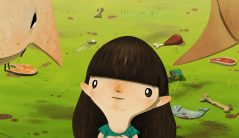
“Let Sleeping Dogs Lie” is a short animated dark comedy, set in a wild and crazy world where a little girl struggles to retrieve her lost dog.
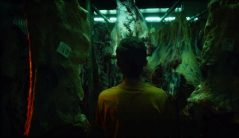
Cousins Gabriel and Omer spend the end of their summer break working in a packing warehouse owned by Omer’s dad, Elisha.
The film follows the two teenagers, during another routine day at the warehouse from Gabriel’s perspective.
Gabriel is a bit of an outsider. He is a slim boy, who likes to observe what’s happening around him while Omer is a much more masculine figure.
they play innocent games that become masculinity tests.
For the first time in their lives, they will have to understand that every act has consequences.

Newsletter Signup
Sign up to our newsletter to receive updates about events and submission deadlines
Greenhouse Website

Our Facebook



 With the support of the Ministry of Culture - The Israel Film Council